

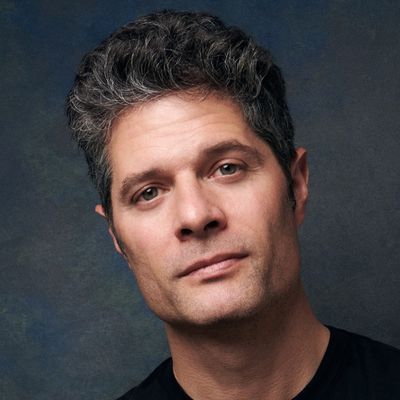
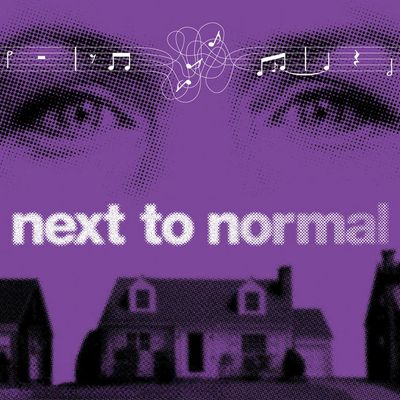
Tony®, Grammy, Emmy Award- and Pulitzer Prize-winning composer Tom Kitt talks about Next to Normal, his writing process, and new songs debuting at his upcoming show at Feinstein's/54 Below... Read More
From the show: The 54 Below Podcast
Guests
Featured Shows
About
Tony®, Grammy, Emmy Award- and Pulitzer Prize-winning composer Tom Kitt talks about Next to Normal, his writing process, and new songs debuting at his upcoming show at Feinstein's/54 Below.
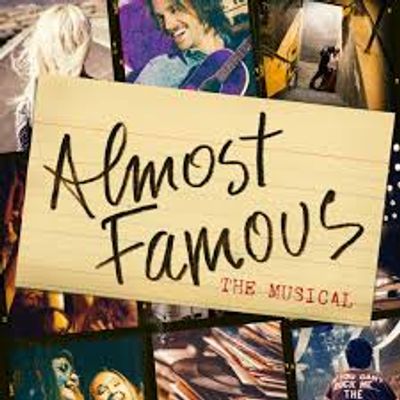
Tom Kitt is thrilled to return to Feinstein’s/54 Below with his new solo concert, where he’ll be at the piano performing original songs from his musicals including Next to Normal, If/Then and Superhero, along with songs from his new album Reflect. The audience will also get to hear brand new material, including songs from his upcoming musical Almost Famous and some special surprises. For more info about Tom's upcoming show, visit 54below.com/TomKitt
The Feinstein’s/54 Below podcast is hosted by Nella Vera and Kevin Ferguson, and produced by Michael Allan Galvez, with support from the Feinstein’s/54 Below marketing staff.
Original artwork design by Philip Romano.
Follow Nella on Twitter and Instagram at @spinstripes.
Transcript
This transcript was automatically generated and might contain errors.
[0:00] Nella Vera: Good evening, everyone. Welcome to the fabulous Feinstein 54 Below. Before we get started this evening, just a polite reminder, please take this moment to silence your cell phones and also there's no flash photography, please. Welcome to the Feinstein’s/54 Below podcast. I'm Nella Vera, the club's director of marketing. Our guest today is a Tony, Grammy, Emmy, and Pulitzer Prize-winning composer. He's known for shows such as Next to Normal, If/Then, Flying Over Sunset, and many more. On May 1st, he returns to Feinstein’s/54 Below with his solo show Reflections. Tom Kitt, welcome to our podcast.
[0:41] Tom Kitt: Thank you. It's a pleasure to be here.
[0:43] Nella Vera: I would love to know, actually, just to start off, how did you start in music? Did you know when you were in school that this would be your path?
[0:52] Tom Kitt: Well, I started playing the piano when I was four years old. I have an older brother, Jeffrey, and sister Catherine, and both of them were taking piano lessons, and I just sat down and started playing what they were playing. I was able to make sense of it. And they were studying with a teacher named Gloria Hugh out on Long Island. And my mom took me to Mrs. Hughes' house one day to see if she might get me lessons. And she said, I don't usually work with students that young, but I got on the piano and showed her what I was able to do, and she said, okay, I'll teach him. And it went from there. And what I realized years later is that I was born with what's called perfect pitch, which basically means that you can hear notes and know exactly what they are.
Explain it as the memorization of sound. It allowed me to just make sense of music really, really early and play by ear. So I was doing a lot of just sitting down and playing what I was hearing in those early years and writing music. And I just knew that it was something that really spoke to me. It was a language I really understood. I had a great passion for it, and I couldn't imagine a life where music wasn't part of it.
[2:05] Nella Vera: Wow. That's incredible. Are your brothers still in the music world or no?
[2:10] Tom Kitt: They've moved on. My brother is not, but he has perfect pitch too. I joke with him because he's not involved in music. I say it's a waste of perfect pitch on you. And my sister, yeah, she performs. She studied opera in grad school. So she's still involved in music, does a lot of singing near where she lives.
[2:31] Nella Vera: Oh, how amazing. I must have the opposite of that.
[2:32] Tom Kitt: Whatever perfect pitch is, because I cannot tell one note from the next, usually. I just know that it sounds beautiful and I love it.
[2:44] Tom Kitt: It's something that people, it fascinates even musicians, because when I was 16, I was at Interlochen, which is a wonderful summer program. It's actually an academy during the year as well. But I was there for their summer program and I was rooming with a number of really talented musicians, but they were all fascinated with perfect pitch. So they would do something like take an object and throw it on the ground and say, okay, what note was that? And there are certain things that don't really make a pitched note. So but they turn on their razor, you know, anything that made some kind of drone. They would they wanted to test me.
[3:15] Nella Vera: That's hilarious. Well, you must be very intimidating in an audition room.
[3:21] Tom Kitt: No, I hope not. I try to be very warm and engaging in an audition room because I understand the nervousness that comes into that situation. I've auditioned. So no, I always try to have a smile. But you ended up at Columbia, which is not necessarily known for their music program, or are they?
[3:40] Tom Kitt: Well, I have to say, I had a wonderful experience studying music at Columbia. I was an economics major, but I took a number of music courses. A couple of professors in particular, Mark Tucker. I studied Duke Ellington course and a jazz course with him, and then Elaine Sissman, who I really credit with pulling me back into a love of classical music because when I got to school, one of the reasons that I was interested in Columbia was I had this dream of being a singer-songwriter in the mold of Billy Joel and Elton John, two of my heroes growing up. So I wanted to go somewhere where I could potentially form a band and perform in clubs and had that dream of you're a budding singer-songwriter and you're in a club and there's an A&R rep there and you're discovered.
So Columbia to me was a wonderful place to get an education, but also potentially this place where I would discover my dreams. And I was thinking very much in terms of writing and performing. And I walked into Professor Sissman's class. It was a Mozart class, and she lasted Mozart's Requiem. And I just was it was one of the most visceral experiences. And I suddenly became so fascinated with Mozart. And I also had this wonderful professor named Joel Rosen, who opened me up to some composers that I had never studied before. And I think that growth directly is in line with some of the things I've been exploring and as a writer for the theater. So in any case, those courses really influenced me and inspired me. And so even though I didn't know what I was going to be studying in terms of music at Columbia, I really got a lot out of the music program.
[5:17] Nella Vera: Yeah. I heard a musician once told me, because he was a math major, and he seemed to think that there was a correlation between being really good at music and math. Do you think that's true as an econ major?
[5:31] Tom Kitt: There's definitely something mathematical about music, just in terms of rhythm and meter. So I think that it definitely works the same part of your brain. But then there's other things like English and history. And I really think anything that works your mind and points you towards being creative, any kind of creative thinking is going to bring a wonderful impact to any sort of endeavors as an artist.
[6:00] Nella Vera: Yeah, I think that's so true. And young people ask me for advice sometimes, and they say, Well, you don't have to go to a theater school, you can, but directors need perspective and they need history and psychology. And actors' languages, I think is amazing for actors because it shapes how you pronounce things and it works that part of your brain. So, you know, I think there's a lot there.
[6:22] Tom Kitt: Yeah. I completely agree. And one of the shows that I wrote with Brian Yorkey, If/Then, is a story of, I guess you could boil it down in some ways to opportunity cost, which is something my father always talks to me about. But it's a basic economic principle that says you the cost of doing something. If you're here, then you can't be there. And what is that cost? And the story is rooted in someone who says, Well, I always analyze every single choice that I make. And we watch a life split in two and see what the life lived is versus the other life that could possibly be lived. So I think my economics background definitely made that kind of idea also explored in something like the roads of Destiny and Sliding Doors.
And you know, it's something that we're fascinated with. We always think about the life that we're living versus what could be. And I think that I was excited to explore this romantic idea of maybe the life you're living is the life you're supposed to be living, and fate plays a hand in finding your happiness.
[7:28] Nella Vera: We're jumping ahead of my questions, but that your If/Then is my favorite of your shows. I saw it a bunch of times. And I don't know, maybe because I was close to the age of the characters, but it really affected me. Just thinking about is this the life I'm supposed to be leading? And is it too late? Just recently having turned 40 at that time when I saw it. Is it too late to change my life? I mean, I just I couldn't believe it the first time I saw it. And I went alone, you know, I just had nothing to do. So I bought a TKTS booth early in previews, a ticket, and then I dragged all of my friends who were my age to see it. And I was like, oh my God, this show. Where did the idea come from?
[8:10] Tom Kitt: Well, thank you. I should say I'm so happy that it resonated with you. I actually someone told me that seeing the show inspired them to call someone that they had been in a relationship with and hadn't spoken to, and they got back into a relationship, and I think they're still together. So wow. I was I was quite moved here that the show played a role in bringing two people back into orbit. The idea really came, it's something that I've always been fascinated by. I look at Columbia, my time at Columbia. It's where I met my wife. It's where I met Brian Yorkey. I mentioned the important musical experiences that I had, and there are really important friendships to this day that are a wonderful part of my life.
Being there at that moment really changed the trajectory of my life. And I don't know if I would be writing for the theater if I hadn't met Rita and Brian when I did, because I didn't go to Columbia with that dream. I love theater and I had just my senior year in high school, I had just gotten a role in Into the Woods, which totally knocked me out and inspired me. So I was thinking to some extent about the theater, but it was really meeting Rita and Brian that put me on that path. So I think we all have a similar story where we say, if I hadn't been in this moment, in this place, what would my life be? So that just seemed like something rich to explore and also really theatrical, because if you tell that story in a book or you tell that story on film, there's editing that can be done.
But when you're seeing it in real time in the theater, there's a theatrical language and magic that has to come into play. And I thought that was going to be an enormous challenge and something that would be thrilling to try and pull off.
[9:59] Nella Vera: Yeah. That was fantastic and really deeply, deeply moving and profound for those of us who were, you know, of that age to really think about your life choices. I think if I maybe if I'd been 25, I wouldn't have appreciated the message as much.
[10:15] Tom Kitt: But yeah, loved it.
[10:18] Nella Vera: That's why we decided to write for a character that was in the world of 40, because we and we talked about this, but a younger character who has their life in front of them, those choices don't seem. I mean, not to say everybody's choices at any time in your life have huge weight. But I think for someone who has maybe been down the road to some extent, doesn't and feels the clock a little bit more at that point in their life, this next choice, we felt that character was going to put even more weight on what they do and trying to get it right for themselves.
[10:52] Tom Kitt: So certainly the story could work for any age. And I have young children who feel like every decision they're making is gonna has a role in how the rest of their life is going to play out. But I think it definitely felt like the place to go in terms of having someone who had a little experience.
[11:08] Tom Kitt: Yeah, yeah. And I find that too not to go off topic, but with the pandemic, for those of us that are older, to lose three years or two years is pretty significant. Whereas I know everybody's suffering, and I know that young people also felt this deeply. But I sometimes tell my young friends, you're 25, two years won't seem so terrible in 10 years, but when you're older, it is as you get closer to not to be more of at the end of your life, two years is pretty significant. I think that for everybody these past two years, they were at an important moment in their life. And whether you feel, as you say, the mortality of the moment and time lost, or whether you were supposed to graduate with your friends, you were supposed to go off and study somewhere, you were supposed to have a major event, some important moment for your life, or for my older son, you were starting high school with a brand new group of students.
[12:17] Tom Kitt: So no. What my son said, I'll never forget my son said to me, we were sitting on a park bench. This was probably a year, maybe more into the pandemic, and he said to me, he basically termed this as his lost year. And I said, I know you feel that way now, but the artist in me, the father in me chooses to look at this as something that with some perspective, you'll see that you actually got some things out of it. First of all, you have lived through it. You had some time with your parents, maybe too much. But the walks that he took with Rita, the things that he saw and experienced being in New York City during that time are going to serve him well. Because this, as we know, life throws things at you that you don't expect. And you're not gonna be able to sit in a comfort zone. You have to adapt, and there are gonna be difficult things to live through. And yeah, this one was obviously as big as it gets.
[13:19] Tom Kitt: Yeah. So I'll never forget after 9-11, I went and saw the first Lord of the Rings film, The Fellowship of the Ring. I probably get this wrong, this exact quote. But I was in New York City during 9-11 and was going through a lot of PTSD in those months after, and I was it was December, I think, when that film came out. And there's a moment where Frodo basically asks Gandalf why this is happening to him, why he's being entrusted with this enormous task. And I think Gandalf says something to the effect of it's not up for us to determine the times we live in, but to do all we can with the time that we're given. And I just always think about that. And I quoted that to my son to say, you're in this moment, you didn't choose it, but it's come to you.
And now, how are you going to grow? How are you going to take this and bring it into your life experience going forward? And I think that's important because on the other side of it, you could say it's a lost year and this is horrible. And yeah, but that's how I began. And I was able to turn around and write and record an album in the pandemic. So we always have to be searching for how we can grow, how we can move forward, how we can inspire.
[14:28] Tom Kitt: No, I think you're very right. And I think the one comforting thing that I would think for young people like your son is that he didn't experience it alone. Everybody experienced it. So when something terrible happens to somebody, they feel like, why is the universe picking on me? And this is something that we collectively went through. So that's a bit comforting that you weren't left behind and everybody else was moving in a different direction. We were all stuck there with you. The hardest part of that was you couldn't be in community to grieve and to find comfort. Everyone had to go and get through this on their own, yeah, and isolate. So they couldn't see their family, they couldn't get together and sing.
[15:13] Tom Kitt: Yeah. The act of performing became dangerous. Yeah. This thing that really speaks to all my kids. Because I have I talked about Michael, but my daughter Julia, my son Charlie, they all love music. And they all had birthdays one after the other. So they couldn't celebrate with their friends. Rita did she, I can't say enough about how she was able to bring special birthdays to them, even in those first months, because it was March, April, May of 2020, and they all turned had birthdays. So I think that was one of the really challenging things was yes, they weren't alone, but in a lot of ways they were alone.
[15:50] Tom Kitt: Yeah. Yeah, that's true. What was your first theater project? You talked about Brian and Rita influencing you. Is that how it was at a Columbia or my first first theater project was the varsity show at Columbia, which has this wonderful history and um group of alumni that have contributed to it? I remember telling Rita, I can't write a whole score. Writing writing just one song, it takes a lot of energy. How am I going to be able to write 10 to 15? But that first Varsity show I wrote with Brian was an incredible learning experience for me. And just the fact that I had to write a song at 7:30 p.m. to be taught at 9 p.m., right under those kinds of deadlines. There was enormous growth for me and confidence to just be able to sit down and knock something out.
And not only that, it was so fun to get to write for other voices, to get to write comedy songs. So Brian and I wrote two Varsity shows together. And then we decided we wanted to continue and see if we could make a career as collaborators for theater. And we got into the Lehman Engel BMI musical theater workshop. And that's where we started writing what was called Feeling Electric, but would become Next to Normal.
[17:06] Tom Kitt: Fantastic. We're going to take a break here. And then when we come back, we're going to talk about Next to Normal.
[17:11] Nella Vera: So we'll be right back.
[17:15] Nella Vera: All right, we're back. So let's talk about Next to Normal. Is it fair to say that Next to Normal changed your career?
[17:22] Tom Kitt: Yes. With the wins, you know, Philadelphia, the Tony, the Outer Critic Circle, etc. Did the success of the project surprise you?
[17:31] Tom Kitt: Yes. I had just uh my first show, a show I love and had the greatest time writing. My first rubber show was High Fidelity, based on the Nick Hornby novel. And I wrote it with my friends Amanda Green and David Lindsay Bear and Walter Bobby directed. Great show, also.
[17:50] Tom Kitt: Thank you. We ran about 10 days on Broadway. We pretty much opened and closed. And I go and visit my show poster at Joe Allen often. Very proud to be on that wall with somebody incredible. It was so good the show as a Gen Xer. I loved it.
[18:08] Tom Kitt: Well, it's just as I've I've been on the carousel number of times. There's so many factors that come into play when you're birthing a new piece. But I truly love that show. But certainly after going through that experience, my confidence was shaken, and I was nervous about being able to sustain a career in the theater. Because even if people would say things to me like, well, but you're a Broadway composer now. And I would use the analogy. I kind of feel like a baseball player that got called up from the minors and went out in what's 0 for five or something and made an error. And then you wonder, Am I gonna get called up again? Am I gonna have a chance? That's the analogy.
[18:47] Tom Kitt: On opening day. Exactly. That's a good analogy to have. Um so next to normal followed High Fidelity. And first I was just looking for some kind of positive experience, something that would that would give me some confidence and allow me to say, okay, I'm I'm gonna be here to stay. It's gonna be okay. I'm gonna be able to build on this. Everything that happened after was completely surprising and exhilarating, because the trajectory of Next to Normal was not your typical Broadway trajectory. We opened to mixed responses at second stage, and then we went back. We went out of town to arena stage in Washington, DC, and then we came back to Broadway in the midst of the financial crisis 2008, 2009.
I believe that the winter before we came in, there were a number of shows that closed actually in that fall. I was the musical director of Jason Robert Brown's beautiful musical 13. And just remember feeling the climate of what was happening in terms of the economy was very challenging. So now we're bringing this musical into Broadway in April that has a subject matter that you don't necessarily say, okay, we're banking on huge receipts. But I always felt that the stories, emotions, were what made it commercial because people wanted to go and see a part of themselves and feel something strong and that could potentially relate to their lives in some way, whether it's their own lived experience or lived experience of family and friends.
[20:21] Tom Kitt: But I just always felt that there was a collective experience in that theater that would be its selling point because people would want to experience that. But I also said before we opened, whatever happens, this has already been a dream come true. That this piece that began in a workshop. I always had this romantic idea that would blink my eyes, and suddenly you would see actors in a real production singing these songs that Brian and I wrote. And that happened. And that was an unbelievable feeling. And everything else that happened was really continuing just an unexpected dream coming true.
[21:00] Tom Kitt: Yeah.
[21:01] Tom Kitt: No, fantastic.
[21:02] Tom Kitt: Obviously, one of those landmark productions that I don't like getting old, but I love having seen some of these shows with the original casts and being able to tell people I saw that. And that's one of those productions where just everything about it was so perfect and timely and just it's funny because I work in a musical theater field, but I wasn't a big musical girl ever.
[21:28] Tom Kitt: And it wasn't until I started seeing the more modern musicals that I felt like, oh, okay, I do love musicals. Not that old-timey musicals aren't fun, they just didn't speak to me necessarily as sometimes as like a good solid play would. And then I started seeing the Rents and the Tommies and the Next to Normals, and I thought, oh, okay, yes, this is my genre. I just had not been seeing the right shows for me. So yeah, ushering in like a new era of musicals. What's been so rewarding about Next to Normal is that beyond that initial production, the show has continued to thrive in the world. I will be seeing the Westport theater production, which I'm so excited to get to see. I was just zooming with the company in South Korea who's embarking on a new production.
Brian and I have been in contact with a wonderful theater company in Japan where it's happening. I think it continues to happen in Argentina. It's been announced there's a new immersive production that Brian and I've been working on that's going to be debuting in Spain. I saw that this summer. So the fact that Next to Normal is really playing around the world, Brian and I, you know, we are all human beings. We are all we have a chemistry, we are wired in certain ways. This is a show about the human experience. And I think that any human being will relate to that. So it's just wonderful to see how it's being embraced and performed. When Brian and I saw the first production outside of the United States, we both went to Norway and they started singing in Norwegian.
I just burst into tears. I was just so moved. Again, it was that blink your eyes, and yeah. And suddenly you're here seeing your piece in this way. These gifted artists, it's the greatest compliment. And I see now also there are a number of productions happening in this country, certainly, but I also just was in contact with a production in Melbourne. They tried three times in the pandemic to do the production and they had to keep shutting down. They finally were able to realize it. And I just always try to, you know, I can't be everywhere, but to all the artists who are breathing life into the story, nothing could move Brian and I more. It's just the greatest gift. So I thank everyone who is in rehearsal, who is thinking about being in rehearsal, who's listening to the cast recording.
It's just this wonderful gift for us. I love that it's a I never realized what a global community the musical theater is. I thought it was a uniquely American art form that they embraced in London and a couple of other hot spots. And then I was in Spain last fall, and I saw just saw Billy Elliott in Barcelona. I saw The Play That Goes Wrong in Barcelona, A Chorus Line in Madrid, and all brilliant, and was so shocked at how good the translations were that made sense and just fit so beautifully. And I had never given a thought to this worldwide community of people embracing our musicals. And it was really humbling and wonderful to think, you know, because I work in the theater in New York, so we're in our own little bubble here that the rest of the world has their eye on what we do and takes our shows and puts them up with like their amazing actors, you know, their stars.
So yeah, it's great to see that that's so fantastic and immersive production in Spain. I might have to go back and see that. I've decided Spain is like my new second home, so yes, that sounds nice. I have to put that on the list. Is there something that when you begin to write a musical, do you start with the story? Do songs come to you? Like what's your writing process like? Well, I think the idea is first. So just what is the world of this musical? What's going to be the sensibility, the tonality? That first phone call I had with James Lapine when he pitched me Flying Over Sunset and told me he envisioned a musical centered on the experience of the experimentation with LSD, that put me in a world.
Okay, the music is going to probably really be formless to an extent or it's going to have a kind of shifting nature to it, a big emotional aspect, unpredictability. But once we then honed in on the story and the characters and the things that we're going to be singing about, similar to Next to Normal, I wanted to write songs that speak to an emotional experience. You could say, oh, let's just write songs that are trippy and weird, and it's like, but I think an audience wants to, if they're going to be emotionally invested, they're going to want to feel some kind of emotional content to it because at the end of the day, what you're seeing and experiencing is real in that moment and it's bringing out real human emotions.
So I did get a chance to experiment, but I also got a chance to write some songs with Michael Corey that I'm incredibly proud of. And I felt with that score that it was a new gesture for me. So that's just one example. But I think that once you have your basic world that you're in and the kind of music you think that you're going to be writing, not that it won't shift and change, then you can start to song spot and say, okay, what about a song for this moment? This character needs this song. When I started working on Almost Famous with Cameron Crowe, we just basically went through the script together and there were song ideas that he had because he had already been through a draft. So there were song ideas that were there.
There were some that we thought of together, some I pitched to him. And once we agreed on, yes, we want to write the song for this moment, then we would just sort of send it back and forth. And that was fun to just kind of really go beginning to end through and just keep sort of checking off the songs that we were writing. So there's no real set way you have to do it. You could go out of order. And then in terms of my own process, if I get a lyric to work from, usually I'll start to have music form if I just sit down and start to get a rhythm of those lyrics. If I'm writing music first, I try to think of the energy and start to just experiment with vamps and musical motifs. And if I'm writing music and lyrics, they usually both come at the same time to some extent.
I'll just, even if they're placeholder lyrics, I'll just start to create something with both in mind. And then once I get far enough along, I'll think, okay, do I continue with the lyrics now that I have a form? Or do I want to keep going with the music and figure that out?
[28:04] Nella Vera: I love the world that you create with the music. I mean, I saw The Visitor, which I loved, and I thought that the music was just so extraordinary and really fit kind of the world of the characters and fit the characters.
[28:19] Tom Kitt: So I really, really love that. I know that was a smaller show, not like your biggest.
[28:24] Tom Kitt: There are no small shows. Every show is a big show.
[28:28] Nella Vera: It's true. It's true. I know.
[28:29] Tom Kitt: But that's another show that I really got this enormously gratifying experience to create music that I'm very passionate about. I worked with the brilliant orchestrator, Jamsheed Sharifi, just getting a chance to collaborate with him and realize the tonality that the instruments were fantastic. The instrumentation, and I can't, that band, that versatile band, some of those musicians playing multiple instruments, six people sounded like 50. So it was an extraordinary musical experience and extraordinary company.
[29:05] Nella Vera: Yeah, that was a wonderful experience.
[29:08] Tom Kitt: Yeah, I really came out of there so moved and just felt like that was just was really impressed by just the music, the musical world that you created with that.
[29:18] Nella Vera: You're debuting some new songs from your new album, which you mentioned a little bit at the top of the podcast. So what inspired this album and what's on it?
[29:27] Tom Kitt: The album Reflect was inspired by the need to speak to, for me, the need as an artist to in some way speak to what was happening in the pandemic. Because those first two months, three months, I didn't have any creative spark. I was just struggling to find a creative space and just find some positive energy that made me want to write. And Rita and I were talking one day, and she said, this is really a moment for artists. You need to find your voice. And I suddenly had a fire lit, but I also knew that this moment is obviously bigger than any one of us, and there's so many things happening that need a voice. So what better than to reach out to my community, to my friends with this ask, would you consider writing a song with me?
Basically, you would think on something that you want to express. And then it could be a poem, it could be an essay, it could be lyrics, but send it my way, and I will go off and create something and bring it back. And if you're feeling good about where that song is, then we can continue to hone it together and then record it. And so I have this extraordinary group of artists that came on as collaborators, fellow songwriters for this album. And the subject matters are just beautiful. What an enormous privilege it was to get to live with these artists and their thoughts and passions and fears and create something personal. So that's where the album came from. There are a couple songs I wrote on my own.
My kids are all on that album. Julia and Michael sing on a couple of the songs, and then Charlie Kitt ends the album. I guess you call it the hidden track. If you listen long enough after Elizabeth Stanley's song, you'll hear Charlie ask a question, which she actually asked me early on in the pandemic. And I just, my heart broke when he asked it. So I wanted to, I thought he should have the last word.
[31:27] Nella Vera: Oh wow. That sounds fantastic.
[31:28] Nella Vera: Oh, we're so excited for your show.
[31:31] Nella Vera: Well, Tom, thanks so much for joining us today. We're looking forward to your show, which is on May 1st at Feinstein's/54 Below called Reflections: A Solo Concert.
[31:42] Nella Vera: Tickets are available at 54below.com.
[31:49] Nella Vera: You've been listening to the Feinstein’s/54 Below podcast, part of the Broadway Podcast Network. Subscribe and rate us on Apple Podcasts or your favorite podcast app.
© Broadway Podcast Network, All Rights Reserved