

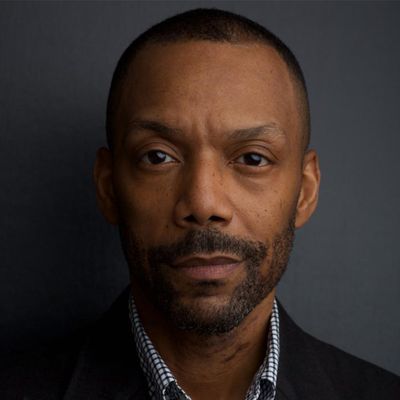
Hadestown's new Hermes, T. Oliver Reid, drops by the podcast to talk about representation on Broadway, co-founding the Black Theatre Coalition, and teaching the next generation of artists. Director of Marketing Nella Vera hosts. T... Read More
From the show: The 54 Below Podcast
Guests
Featured Shows


About
Hadestown's new Hermes, T. Oliver Reid, drops by the podcast to talk about representation on Broadway, co-founding the Black Theatre Coalition, and teaching the next generation of artists. Director of Marketing Nella Vera hosts.
T. Oliver Reid has spent the past 20 years working on Broadway shows, (Hadestown, Once On This Island, Sunset Boulevard, After Midnight, Sister Act, Mary Poppins, The Wedding Singer, Chicago, La Cage Aux Folles, Never Gonna Dance, Thoroughly Modern Millie, Follies, Kiss Me, Kate), which have amassed more than 20 Tony Awards from the American Theatre Wing’s Tony Awards. He is also an accomplished cabaret artist and multiple award winner for his solo show, “Drop Me Off In Harlem” which he directed, wrote, and starred in. He has produced and directed concerts for Feinstein’s 54 Below and continues to work in film and television (“Inventing Anna,” “GIRLS,” “Ray Donovan,” “The Blacklist”). He has been an adjunct professor at NYU-Tisch’s Grad Acting Program and Columbia University School of the Arts Grad Acting program. He sits on the Board of Visitors for the University of North Carolina School of the Arts. He is also co-founder of Black Theatre Coalition (www.blacktheatrecoalition.org). He’s currently in the critically acclaimed, Hadestown on Broadway.
For more info about T. Oliver Reid's upcoming show, visit 54Below.com/TOliverReid
The 54 Below podcast is hosted by Nella Vera and Kevin Ferguson, and produced by Michael Allan Galvez, with support from the 54 Below marketing staff.
Original artwork design by Philip Romano.
Follow Nella on Twitter and Instagram at @spinstripes
Transcript
This transcript was automatically generated and might contain errors.
[0:00] Nella Vera: Good evening, everyone. Welcome to the fabulous Feinstein's 54 Below. Before we get started this evening, just a polite reminder, please take this moment to silence your cell phones. And also there's no flash photography, please. Welcome to the 54 Below Podcast. I'm Nella Vera, the club's director of marketing. Our guest today is a seasoned Broadway performer who has had a 20-plus year career performing on Broadway. He is a co-founder of the Black Theatre Coalition, an adjunct professor at NYU Tisch and Columbia, and he's even a former producer here at Feinstein's 54 Below. His credits include roles in Dreamgirls, La Cage Aux Folles, Thoroughly Modern Millie, Once on This Island, and more. Most recently, he was announced as the newest Hermes in Hadestown on Broadway. On July 24th, he returns to Feinstein's 54 Below with his solo show that Sunday that summer. T. Oliver Reid, welcome to our podcast.
[0:59] T. Oliver Reid: Thank you very much, Nella. And you have the best name in all of show business.
[1:03] Nella Vera: Oh my gosh. That's so sweet. I love it. It's so great to have you here. I would love to start by asking you, how did you start in musical theater and performing?
[1:16] T. Oliver Reid: I started singing in a choir in my church in Gastonia, North Carolina, when I think I was four years old, the first time I started singing. I was in gifted and talented classes in elementary school, and my guidance counselor was on the board of our local little theater. She asked me if I would audition for a production of Shenandoah that they were doing. At that point, I was nine, but I had been watching Turner Classic Movies, TNT, those Saturday mornings when they would do the MGM movie musicals. So every Saturday I would watch something. Sometime between seven and nine, the national tour of Annie was going around. Every afternoon after school, I would get home and I would put on that cast recording of Annie and sing every song, every part in every song.
My parents finally were like, "Annie's coming to Charlotte on tour. We're taking you to see Annie because we never want to hear that song again." So that's really how I got it started. I was nine years old doing my first show, which again was Shenandoah.
[2:19] Nella Vera: Oh wow. Amazing. Did you also have any special dance training? Because I know you've danced quite a bit in that.
[2:27] T. Oliver Reid: I did not at that point. It literally was in Shenandoah. The choreographer there would teach me some steps, and I was like, okay, I picked those up. She also ran a ballet school in my hometown. So for about six months, I took classes, I think between sixth grade and seventh grade. I was at that age when young boys are usually like, "Yeah, I don't want everyone knowing I'm dancing." There were several female-identifying dancers who were in the class, and I was like, "Yeah, I don't know if I want to be in dance class with them right now." So I didn't dance again until I got to college. I went to the North Carolina School of the Arts, now known as the University of North Carolina School of the Arts, and I was a music major.
We all had to take a dance movement for singers class. Yula Pondi, who was a ballet instructor, convinced me that I could actually dance, and then he convinced Susan McCullough, who was the dean of the school of dance, to allow me to take classes in ballet and modern when they could fit into my music schedule. So I really didn't start dancing until college.
[3:35] Nella Vera: Oh wow. But you obviously are pretty good at it. Had a knack for it. So that's good. Because usually dancers, they say, you know, you want to, you have to start young and all of that, but that's great. You've done so many iconic shows throughout your career. Is there a role or two from your resume that has a special place in your heart?
[3:58] T. Oliver Reid: Well, I would be lying if I said that Hermes in Hadestown didn't have a special place. It truly does. I think more so the connections from shows and friendships or mentorship from different shows are the things that stand out. I've been able to understudy a lot of amazing people, but to be a part of what was my first Broadway show, which was the first revival of Kiss Me, Kate with Brian Stokes Mitchell and the incredible Marin Mazzie, directed by Michael Blakemore, being able to work with Kathleen Marshall that first time, that is one of those things. Like I learned so much from that show and hold on to so many of those relationships over the years. Similarly with most of the shows, Thoroughly Modern Millie, because it was Sutton's first Tony nomination, was Rob Ashford's first big Broadway show where he wasn't assisting someone else.
La Cage had its own joys, The Wedding Singer just because of who the cast was. We had such an amazing time with that show. We did a reunion at 54 Below years ago. So there are so many things about each of the shows that hold my memory. Probably less so than a track or a performance. Again, I'll say Hadestown number one, Hermes, and also Once on This Island because my first professional job after graduating from UNCSA was the second national tour of Once on This Island. So that all felt like a full circle moment to come back to that show. The original, my original time with the show, I played Daniel, and to come back and to cover Agwe and Tonton Julian and Papa Ge, all those things that I wish that I had been able to do when I was 23 years old.
[4:35] Nella Vera: Yeah, of course. And I've seen so many of those shows. And you know, that production of Kiss Me, Kate was just perfection.
[5:54] T. Oliver Reid: Iconic.
[6:03] Nella Vera: I you were the suitors, right?
[6:05] T. Oliver Reid: I was one of the suitors.
[6:05] Nella Vera: Yeah.
[6:07] T. Oliver Reid: But I also did another production of Kiss Me, Kate at Shakespeare Theater of DC several years ago. It was one of those things once you've done it, and you know, Alan Paul, who directed that version, it was a sort of tango of how do we change these scenes that Michael Blakemore directed between Marin and Stokes? At one point we were all like, there's no reason to change them. They're exceptional. The way that they staged those in those dressing rooms, there's no better way to do them. So why try and fix something that ain't broken?
[6:39] Nella Vera: Yeah, exactly.
[6:40] T. Oliver Reid: It's so funny. I was listening, I was seeing Stokes this week because he's playing at our club. And I, you know, I'm one of these people that for 20 years has been begging the universe for a revival of Ragtime. And then I'm watching him sing "Wheels of a Dream," and I think to myself, do I really want a revival? Because that was pretty much perfection. And you're not gonna get better than that, Nella. So maybe that was it. You know, maybe that was the one version for many of us.
[7:13] Nella Vera: Yeah, I mean, it's amazing. I do want to congratulate you for everybody who's listening, and of course everybody already knows this. It was recently announced that you would be the new Hermes in Hadestown on Broadway. How fantastic. How did you find out that you had the role? And how did you react, and what was that like? Who told you?
[7:34] T. Oliver Reid: Okay, okay, but so for all of it, it was a long process. One, it feels like I had the longest rehearsal process in history since I've been with the show since it went into rehearsals on Broadway. Part of the reason that I wanted to do the show was to be able to watch the process of André De Shields and Patrick Page because I just think they're both amazing craftsmen, craftspeople, and how they build roles. So to be able to watch them, and also I've always been one of those people who's like, I want to be able to do more than one role in something. So for me, covering has always just kind of made sense. It was sometime originally in like January or February, I had a call, had a conversation with a producer because it was thought that maybe André was going to go from eight shows to like six shows a week, and it's like, would you stand by?
Would that be fine? It's like, yeah, let's start to have that conversation. Then André changed his mind and said that he was giving his notice. So then there was the back and forth of what will happen next if they will look for a celebrity name to come in to fill that position or where we are. I got a call from my agent and manager saying that they wanted to offer me the role. So I'm here through September 4th right now, and we'll see what happens after that.
[9:01] Nella Vera: Amazing. That's so wonderful. And of course I went back to see it the last week that André was there because you have to see it. And now I have to see it again before in September again.
[9:12] T. Oliver Reid: Yeah, it's such a great show, too. There's so much in it. You can watch any area of the stage at any time. So multiple viewings are necessary because there's so much going on. Just to hear the music. I mean, when I found out that the show was coming to Broadway, because I had been a fan of the music, I'm friends with Chris Sullivan, so I had listened to that New York Theatre Workshop recording over and over. For a while, it was the only thing that was on deck that I was listening to, playing on my phone. I literally just went from song to song to song. The music and to come back and hear different parts of the music because there are things that you may miss in one showing, and like you said, with being able to see around the stage and see what's going on, there are reasons to come back and see the show again, just like you would with your favorite movie.
[10:06] Nella Vera: Yeah, exactly. And obviously, it's a huge testament to your talent that you get to follow André De Shields in this role. Now you've watched him for quite a while doing the role. What lessons do you think you're taking from him as you take over the role?
[10:25] T. Oliver Reid: I think some of the lessons are things that he said in his Tony speech when he won the Tony for Best Featured Actor in a Musical. One thing that he always says, it's not one of those three things. The first, he always says the universe is conspiring with you. So that is something that I've kept with me since I first heard him say it probably two and a half years ago. Every day there's a moment I'm like, the universe is conspiring with you. The universe wants what you want to happen. It wants that for you. You just have to be open to it. You have to look for the door that it's asking you to open. You have to look at the person that it's saying you need to speak to, and not void that, not turn your back to it.
When the universe says it to you, it's waiting for it to happen. But also, you know, to make sure that you surround yourself with people whose eyes light up when you walk into a room. I think more and more that is happening, and it allows me to say yes and to hear people and to take what they have—criticism or love or joy or mentorship—and use that also to know that the fastest way is not always the best way. For me to watch him and to watch the pace in which André moves through life is a testament to just keep walking, walk in the way that you walk, do what you do. You don't have to run someone else's race. I mean, as you know, you've probably seen André walking through Hell's Kitchen at a very steady but very metered, slow pace.
He's going to get exactly where he needs to go. It is that just to know that, and with the role, I mean, there are things that were set on André. So there's a lot of things that for me, it's like, let's keep that because that makes sense. Similarly to Michael Blakemore's direction in Kiss Me, Kate. If something is not broken, you don't need to fix it. Just keep it and make it work for you. There are also moments now that it's like I don't have to hold on to that because I'm not understudying or standing by for André. This role is now mine to infuse more of T. Oliver into it as opposed to holding on to all those moments that were, "Oh, that's an André-ism." There are some of those that are so joyful for me. It's like, yes, we're holding on to them. But there are also some that's like, "Oh yeah, this the way that I want to actually say this text is not the way that André said it," and that's okay.
[13:06] Nella Vera: Yeah, yeah. That's what's so fantastic about theater is when you go back and see different actors in the roles, and it just never gets old. You know, it's so silly. But you know, I was an intern on Chicago back in the year, and I've seen so many Roxy's and Velmas over the years, but it's always fun because they're all different, and some of them are really wacky, and some of them are just serious, and some of them are... I mean, it's just so great to see what actors bring to the part with the same text, with the same dialogue, with the same songs. And that's the thing you really want. It's like if there's a cookie cutter of André who's just coming in and doing and speaking exactly the way André did, wouldn't you rather just see André?
If you were seeing Ragtime and you're seeing the cookie cutter of Stokes, wouldn't you just rather see Stokes? It's the joy of bringing someone else in and knowing what the staging needs to be and knowing what the notes are, but then allowing for an actor to find their version of their character within the staging, within the dialogue, within the music.
[14:25] T. Oliver Reid: Yeah, uh Hermes is obviously it's such a showman's part. He is the guide, he is moving the action forward. I think you know, uh just being the center, uh just being so much the heart of this musical.
[14:43] Nella Vera: Um do you have are there any of your past experiences in past shows that you think have prepared you for this particular role?
[14:52] T. Oliver Reid: I I think yes, uh, but not only past experiences and past shows, I think also life in general. And for me, this this story has always been about in some ways about the mentorship of Hermes to Orpheus. It's also that moment, you know, from the beginning of the show to the end of the show of Hermes saying to the listeners to the audience that I'm gonna tell you exactly what's gonna happen. And then we're still going to have to retell this story because someone's not going to get it. And every every night there's something else that's happening in on on the planet that that by the end of the show is is wrapped into that statement for me. Several weeks, you know, several weeks ago or probably probably several months ago now, it was Ukraine.
Then a month and a half ago, it was Buffalo, and then it was Uvaldi, Texas. And there are more and more things, and today it's going to be, you know, this evening it'll be that we're talking about, you know, the fact that, you know, uh abortion rights have been stripped away. It's like all of these things put us back in that place. Like, this is why we have to tell the story again. We've not, we've not, we've not understood how we need to and can be compassionate and take care of each other and be better than we were yesterday. And until we learn that lesson, we're gonna tell the story again.
[16:17] Nella Vera: Yeah, absolutely. It's a little bit almost like you know, the second act of Groundhog Day, um, where you're just going, Oh, your heart is breaking for Andy Carl. And it's just, you know.
[16:31] T. Oliver Reid: Um, and a little bit of impossible dream, too. You know, this song of, you know, we're just gonna move and do this, and it's not, you know, we may not win this battle here, but we're gonna go for it. We have we have yeah, we have to stay in the race. And we have to understand that that we we cannot be tomorrow who we were yesterday. And there's there's a lot of us holding on to, grasping onto where we were yesterday because it's comfortable. But yeah, there is no growth, there is there is no new storytelling, there is no, there is no medicine that's been given to us to to soothe our hurts if we aren't moving forward, if we aren't looking for new ways to tell stories, if we aren't allowing growth and and more space for people to take up that space.
[17:21] Nella Vera: Yeah, absolutely. So, in a Broadway season where swings and dance captains and you know, understudies have been the unsung heroes. You yourself had to step into a role that is usually played by a female presenting actor. And everybody that saw it completely raved about you in the role. So tell us how that happened. And also, do you see a future for more sort of non-gender specific writing casting on Broadway?
[17:53] T. Oliver Reid: I uh yes, I let's answer the first part, well, the last part first. I think there's absolutely room. Uh, there are clearly, there are clearly stories that have been written for male or or female identifying characters, but there's so there's so much gray space, gray area in there. That's why can't it be? Or conversations with with playwrights or with directors, like, why can't this be that? Uh yes, it was one way in your head, but there's nothing that there's nothing in the universe of the world that says that this character that in my head was male identifying has to be that. Uh, and with with what happened here at Hades Town, uh, I it did open a door. So after I went on for a couple of shows, uh, Tomas Matos, who is non-binary, then they were able to go on for a fate as well while they were here as a as a vacation swing.
[18:45] T. Oliver Reid: But the way that all happened was as you all know, we're in the middle of a pandemic. Uh and and as as people go on the 10-day non-vacation, as I like to call it, shows have shifted and shows that have been around for you know, many years have many people, cast members over the years who've either been on tour or in the Broadway company, they were able to call them in for us because we were, you know, within a a year, a bit year old before the pandemic and reopening, there we just didn't have, you know, the coffers of cast members going back and forth. So we knew on Tuesday night that we're gonna have four workers. We normally have five. So I I left the theater Tuesday night, went home, going through my head, okay, this is how we make all of these things happen with four workers.
Great, good. Got up Wednesday morning, gonna go to the gym, clear my head, be ready for for the four worker show. Got to the gym, got a text from stage management. We're down to three workers. Okay. So everything that I had got had figured out in my head as Dance Captain Tuesday night, none of that makes any sense anymore for three workers. I was supposed to be Hermes that afternoon and we're gonna have three workers. So I had gone back through all of that in my head and then realized it was going to be easier if something went wrong for me to actually be one of the workers so that the other Hermes understudy would go on for Hermes and I would be one of those three workers because two of those workers were gonna be were going to be vacation swings.
[20:08] T. Oliver Reid: Oh my so we get to the theater before the matinee we get through the entire show spacing through of what exactly we were going to do, changing papers, adding fates in where they weren't supposed to be there at all, figured it out. It's gonna be great. I look across the stage, uh one of the fates was walking towards me. She says bye and then I look at stage management and stage manager says they are out of the show this afternoon. At that point that's what we canceled the matinee and it was like okay so apparently I'm going on for a fate. It it would have been something because I teach that material in auditions. It was, you know, we we laughed and joked about it and then it happened. It also happened to be the the the highest of the three fate part one it sticks out so it's it was always in my head is the thing that I always sang when we were in rehearsals or whatever else.
So I knew most of I knew most of the the vocals. I knew all of the staging. What I didn't do is know how to play a violin. So I I did the most unimaginable uh just fakery with plucking those strings all night long. But so that's what happened.
[21:16] T. Oliver Reid: Um Nanette, who's our our was our amazing uh wardrobe supervisor, she just retired. She ran out, purchased a couple of dresses. Kevin, our our our wig supervisor, we ran over to Alcone and got a bunch of makeup. Uh, and by at that point, by 6:30, we were ready for me to go on. And I went on that Wednesday night and went on Thursday. And I have to say is like the thing that I didn't I didn't anticipate was the literally the open-mouth sort of like unbelievability of what certain people were seeing. And I think really for the first time, them seeing that there was a place for them on the stage, those those young people who identify as as non-binary to see, oh, there's a place that makes sense for me. There's a possibility for me, whereas I didn't think there was really a possibility before I was either gonna have to do this or that. But there is there is now a space that that really lies between the two in a really uh inspiring way, I hope.
[22:20] Nella Vera: What an amazing, amazing story. I mean, I hope everybody that's listening can understand what goes on to put on the show.
[22:31] T. Oliver Reid: I mean, so how many workers did you end up with then? Did you have three?
[22:36] Nella Vera: No, that's so that night we ended up having, oh gosh.
[22:41] T. Oliver Reid: We ended up still having three workers that night. Uh but someone someone who was going to be out in the afternoon still came back tonight. So it it was still, oh, it was, you know, the Wild Wild ball west on stage. But we were able, we were able to do the show for the audiences that you know had already already paid for tickets because that was the other thing. You know, we were they canceled that matinee at it was a two o'clock matinee. They must have canceled it at like 1 30, 135. Which, you know, there are people standing outside waiting to get in and they're being told, actually, we're not doing a show today.
[23:22] Nella Vera: Oh.
[23:23] T. Oliver Reid: But amazing, amazing, amazing. And uh again, I can't, I I don't even understand how people's brains work who can cover roles like that and learn choreography for all those roles. It's I I could never do that. And I have such appreciation for people, you know, when somebody's like, Oh yeah, I'm coming three roles. Oh my god, like there's no way it's so it's it's the way that I've always learned. I mean, from that first show, I didn't know not to learn everyone's parts. So Shenandoah, I could sing any of the brothers, I could sing any of the women's parts because all I knew was to learn it all. So I was also I was that precocious kid when someone didn't remember a line in rehearsals, I could I could tell them line because that's what I knew.
So for me, it's like that's always been in my brain. It's like so all these parts, it's just it's once I started working on Broadway, it then became a hey, just compartmentalized, so you know exactly what this role is for, and also it's like once you know for me, it's always been once you know one track, it's so easy to learn the others because it's oh, this person has to cross this person because then they go over here and they they shake this person's hand, and it starts to make sense so that sort of as you're walking around stage, it's just remembering which which role you're doing.
[24:39] T. Oliver Reid: You mentioned Chicago. Uh I did the second national tour of Chicago with the wonderful Ann Ryan King. Uh and it was a cast that it was the tour that had the seasoned veterans, I will call. So Sandal Bergman and Cheryl Clark, uh Stephanie Pope and Karen Zamba, all of those. And Darren Lee was in that cast. Darren Lee, who I remember before I started working on Broadway, I was like, oh my gosh, it's Darren Lee. Every time I saw him was like, oh my gosh, it's Darren Lee. He's so amazing. So there's one day, Darren had been out for a few days, and I had been on for him. He came back in, then I was on for someone else that next show. So I'm on stage, we finish all that jazz. I look at Darren and my head goes, Darren. So I start to go into his track, and he literally taps me on the shoulder and says, I'm here today. I was like, oh yeah.
[25:30] Nella Vera: So quick question about uh now that you are Hermes, do you still have to be the dance captain?
[25:37] T. Oliver Reid: I I I am still the dance captain. And I think I think it may be the I think it may be the first time on Broadway that this is this is happening. The star of the show has to be the dance captain. Well, and it's also it's it's a it's also a process of of weaning off so that the assistant dance captain is is taking on more and more. Uh, but yeah, it's yeah, it's it's it was not a clean break from one to the other.
[26:05] Nella Vera: There's definitely no people like show people, I have to say.
[26:08] T. Oliver Reid: Very true. Um I want to ask you: you've had a massive impact on the industry with the founding of the Black Theater Coalition, along with Warren Adams and Reggie Van Lee. Can you tell us your journey and experience with that and how the coalition came about?
[26:25] T. Oliver Reid: Absolutely. Well, the coalition came about, uh, and I I mentioned the wedding singer earlier, which I did and made these amazing friendships. One of those was with Eric Lewan Summers, who who passed away several years ago. And when Eric was was sick and we were going to the hospital to visit him, Warren Adams was almost always in the hospital room at the same time I was there. And we had seen each other over the years but had not officially met. And it was then that we both said, like, we should, we should sit down, because I'd had this initial idea about a series of concerts that would not only have black and brown bodies on stage, but make sure that all the other areas were black professionals as well, so that people who've not been giving an opportunity would be able to have a light shone on them on the level of things that are happening on, you know, on Broadway and in New York.
And as we started talking and looking at you know, a three and a five-year plan, we realized there were some areas that it would just we would just be using the same person over and over because there were so few people, you know, i.e. lighting designers or sound designers who'd worked on on the level or scale of Broadway in New York. And we realized like there was we needed to fix something. And then comes along the pandemic and shuts us down and gives us gives us both a lot of time to sort of sit and think and how and and figure out what we wanted to do and how we wanted to address some of these issues.
[27:48] T. Oliver Reid: Uh and that's that's when we both sat down with our our third co-founder, Reggie Van Lee, who has who is a philanthropist and a huge arts person uh on every board you could probably think of, but also a genuinely wonderful human being. And he said to us, like, absolutely, I I want to, I wanted to be on this journey with you. So that that was that was the start. And as we as we looked and started literally going through uh old school going through our Rolodexes wait and calling and emailing everyone that we knew and saying this is what we want to do. How can you be a part? And we had so many people who jumped on immediately and said I want we want to be a part of fixing this industry. We want to be a part of making sure that the industry that we love looks like the looks like the community that we live in.
[28:37] T. Oliver Reid: And so that when young, you know, young people of color come and see a show, they see people who look like them not only on stage but front of house and in the box office. And in stage management, all these areas, so they realize there's a possibility for a life in this business for them that doesn't require them to sing, act, and dance. If they don't sing, act, and dance, that someone who loves theater can be a music supervisor or a music contractor. Someone who loves theater can be, you know, a lighting designer. Someone who loves theater can be, you know, a wardrobe supervisor. There are all of these possibilities that so many kids just don't even know about and so many people who are either, you know, transitioning from one part of our industry to another to know that like it's possible to do it and the doors aren't always shut. Sometimes it's just asking the question.
[29:23] T. Oliver Reid: So for us, this past year has been more than we thought it was going to be. We thought we were going to start small, but as we got moving, we just realized that there was so much that needed to be fixed. And as people ask us if we would be a part of things, the answer was yes. Our hope is that, you know, in 10 years, you know, what we're doing is obsolete because the industry actually looks like the world around us. And that's not just Broadway, that is the entirety of the American theater industry. So as you look at regional theaters as well as college programs and who's teaching and what they're teaching and also getting those nine to 12-year-olds when they have that spark of interest in the theater to start, then really helping them find their way.
[30:11] Nella Vera: That's fantastic. I love what you said about, you know, the backstage and the administrative and the creative staff jobs. Because you, you know, if you're not an actor, you think there's no place for you here. And I had that experience, you know, I was on my way to law school after college, and I just thought you didn't work in this industry unless you knew somebody, and I knew nobody.
[30:35] T. Oliver Reid: Yeah.
[30:35] Nella Vera: And by chance, I ended up crazily applying for a job at the Shakespeare Theater in DC.
[30:41] T. Oliver Reid: Oh wow.
[30:42] Nella Vera: And only because a friend of mine got a job at an agency in New York and was working for a theater agent. And I thought, well, if he got a job, and he doesn't know anybody, and his parents don't have a lot of money, maybe I can get a job. And the Washington Post had an ad, and I applied, and I got it. And I was a company manager right out of school, didn't go to law school. But honestly, like nobody ever told me there was no counseling, this was not a viable career path. It just seemed very mysterious. Like, how do you even do that? And I guess it's different today too, because people have access to the internet, but that, you know, yeah.
[31:18] T. Oliver Reid: I think there's, it is extremely daunting. And as you said, if you don't know someone, you don't know that it's possible. And so many people are afraid to ask for help or ask if it's okay. But, and there's a part of me that thinks that it has stayed mysterious purposely, so that those who have been in the room are able to stay in the room and stay in their space in the room. And for us, it's like let's either push away from the table to make room for others or let's just build a bigger table so that we have space for everyone, so that, you know, whether you identify as African American or Latino or Asian or whatever, wherever you find yourself on the spectrum, to be able to say there's a space for me in the theater that doesn't require me to be a white gay man or a white heterosexual man or a white man.
[32:14] Nella Vera: So there's space for others to be able to say a rich person.
[32:19] T. Oliver Reid: Or a rich person.
[32:20] Nella Vera: Yeah.
[32:20] T. Oliver Reid: And for me, it's like it's not so that we're in positions of not just cashing checks, but able to write checks, producers, general managers, all that, that there's a possibility out there that many people just don't know about.
[32:33] Nella Vera: Yeah. No, it's so important. And I think you've made such a difference. And, you know, there's still a ways to go, but I think we're on the path, and you've created a kind of a path and a roadmap for the rest of us. You know, I think about all the time, because I'm a Latina. How do we get more Latinos? We're a third of the population. And we're like on Broadway. And that is the thing. It's like, yeah.
[32:57] T. Oliver Reid: Yeah, we're a third of the population and we're like three or four percent of the Broadway parts.
[33:05] Nella Vera: How is that possible?
[33:06] T. Oliver Reid: And it's, and that has to change. And again, it's like, and for me, it's like you, whether again, whether you're South Asian or Latin or African American, it's like if there's a playwright that's telling a story and it's a story of humanity, guess what? We're all gonna come and see it because we know the struggles of family, we know the struggles of, you know, mother and son, mother and father, whatever that is, we'll come and see that if it's a story that brings truth for us. But what we won't do is be pandered to or see that you're only bringing us in for this when you don't seem to care about us when it comes to other shows that we may want to see, other things that we may want to address, and when there are opportunities that could be for us, but you're not seeing us or inviting us to the table. So it is about making sure that, you know, that we're there, that we're being seen.
[33:56] Nella Vera: Yeah.
[33:57] T. Oliver Reid: And that's what I love about Hadestown. It's like they're deities. They can be anything.
[34:01] Nella Vera: Yes.
[34:03] T. Oliver Reid: And even the states. So they're supposed to be three old women, but who knows what that means, really, you know.
[34:08] Nella Vera: Yes, absolutely.
[34:10] T. Oliver Reid: I mean, it's like, you're okay. I'm so glad you said that. I mean, it's very true. It's like, what would, what is the definition of woman a thousand years ago? What does that mean? And how can we reshape the story and the text in a way that tells us the story as we are in 2022, as we want to be in 2022.
[34:34] Nella Vera: Yeah.
[34:37] T. Oliver Reid: You're a highly acclaimed Broadway actor, but you're also a multiple award-winning cabaret artist. Are there different acting muscles for cabaret?
[34:49] T. Oliver Reid: There are. I think because the rooms are usually so much more intimate, there's a connection that, and it's so odd because I have, you know, friends who work on Broadway all the time or in principal roles, don't like cabaret because there is no veil, there is no fourth wall, there's nothing keeping you from the audience. And to be able to, you know, open up in that way and be that intimate with text and with people who are, you know, six feet away from you is a different way of storytelling. It's a different way of really having to stay connected. And yeah, it's, for me, it's like there are many things that are similar, but there is definitely the intimacy factor that plays into cabaret that's so joyful for me.
[35:43] Nella Vera: Yeah, I mean, so many times it can feel like you're singing to just one person in the room.
[35:50] T. Oliver Reid: And yeah, I do feel that, you know, there's, well, the intimacy, but also it's, you're removing kind of the mask and revealing yourself to people. And I can understand why that is so scary to some actors who go into acting because they want to put on a character and a costume, and then, you know, you come to cabaret and people, and I find, you know, especially our audiences, they really understand the difference between somebody getting up and doing a wonderful set of show tunes and somebody really burying their soul and having a connection with them.
[36:29] T. Oliver Reid: Absolutely. And those are obviously, there's a room for all shows because we have 700 shows to produce a year. But, you know, those are my favorites are when you can see the person, yes, really see them.
[36:45] Nella Vera: You're also an acting professor at Columbia and NYU. How do you find the time to teach and do cabaret and be a dance captain and a leading man?
[36:59] T. Oliver Reid: And I also add to that Ryder University. I'm a full-time faculty there. It's like I have always done better when I'm really busy. And I feel like I have really put that to the test over the pandemic. But I have to say it's like, you know, when everything shut down, and so many, so many of my friends and peers were scrambling for what they were going to do for work, I was lucky that I was in a position and that I knew that the work at Columbia and NYU was going to continue. And then I had someone ask me if I wanted to teach at Ohio University. So I did that as well during the pandemic over Zoom with the students there, which was amazing. And then I had this opportunity to apply for an interview at Ryder University.
And I've always loved the idea of those of us who are in the business in a certain place, you know, providing whatever wisdom to the next generation of performer and artist that we can. So it's always been in my head that that would be a part of my journey. I did not realize that they were all going to sort of come together at the same time. So it definitely has been a, you know, sometimes a day-to-day is like we have to get this done, this done, this done. Some days it's a, okay, you know what the week is going to be. So all these things are part of the puzzle. It's definitely a lot of work. But every level of it has been fulfilling, stressful, and fulfilling.
[38:35] Nella Vera: Yeah. Yeah, definitely. I teach at Brooklyn College and also at NYU. And it's a lot, you know.
[38:43] T. Oliver Reid: Yeah.
[38:44] Nella Vera: But I do feel committed to try to inspire young people to enter the arts on the admin side. And whatever I can give, because obviously an adjunct salary isn't really, you know, that's not why I do it, but it's definitely about trying to get more people into the business and inspire them into doing what I do and what all of us do.
[39:09] Nella Vera: Final question. Well, before that, we have to have a second conversation, just the two of us about Brooklyn College, because I'm a huge fan of the school. And again, figuring out, again, as you said, to get more students who are not at those quote unquote big schools, you know, no offense to the Carnegie Melons or the CCMs or whatever, but there are so many other opportunities and so many students are being overlooked.
[39:33] T. Oliver Reid: So that's what I'm saying.
[39:34] Nella Vera: 100%.
[39:35] T. Oliver Reid: No, 100%. And that's the reason I took the job there, even though I have like three other jobs and I teach yoga and spin at the gym and I do a bunch of other things. But I just, when they approached me about teaching at Brooklyn College, I thought this is important because the kids that go there are not necessarily coming from backgrounds that have huge resources. They're not going to the Columbias, you know, the Yales. But they are, you know, smart and amazing. My students were amazing this season, and they're all going to be incredible theatrical leaders, but they, you know, they have to be given a chance. And yeah, so that was important to me to teach there in addition to everywhere else.
[40:17] T. Oliver Reid: I understand that completely.
[40:19] Nella Vera: Last question. You know, you're coming back to Feinstein's 54 Below to do a cabaret. Tell us about your show and what audiences might expect.
[40:33] T. Oliver Reid: Well, as you said earlier about the idea of people being able to look into the soul of someone, there's a bunch of that in this show. I first heard the song that that Sunday that summer, Nat King Cole sang it on several of his albums, and it's always been in my head. But this show is a song filled with love songs, but not all the songs that you normally go to. Because as we know, if you're not 18 years old and thinking that pie in the sky, lovey-dovey love, love and holding on to love and holding on to relationships takes a lot of energy, and there are highs and lows, and there are broken hearts, and there are moments of I'm not happy right now, but I know that we'll get through this. So they're all of those songs.
So from, you know, Rodgers and Hammerstein and Rodgers and Hart to Alan and Marilyn Bergman, which are some of my favorite love songs ever. And if you, the lyrics to, you know, you don't bring me flowers, it's a love song, but she is upset. There has been some wrongdoing. So the idea of having all of that mixed into a show. I've been with my partner for 12 years now, and it is that thing is like you make the decision every day to be with each other. And some days that decision is easy, and some days it takes you reminding yourself 8,000 times. I said that I was going to be with this person. So we'll get through this day. And so they're all of those songs that are a part of the show and a part of the journey of being in a relationship from my point of view.
[42:07] Nella Vera: Oh, how wonderful. That sounds so exciting. We're really looking forward to it.
[42:12] T. Oliver Reid: Me too. Thank you so much. I know how busy you are, so it is so appreciated that you could join us today.
[42:14] T. Oliver Reid: My pleasure. Thanks so much for coming by. You can catch T. Oliver Reid on July 24th at Feinstein's 54 Below with his show that Sunday that summer. Tickets at 54below.com. You've been listening to the Feinstein's 54 Below podcast, part of the Broadway Podcast Network. Subscribe and rate us on Apple Podcasts or your favorite podcast app.
© Broadway Podcast Network, All Rights Reserved