

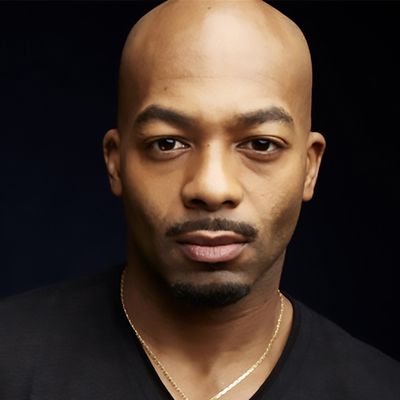
Grammy, Emmy, and Tony Award® nominee Brandon Victor Dixon talks about his iconic roles in shows like "Hamilton" and "Jesus Christ Superstar LIVE", what's on his Spotify playlist, and his advocacy work with the WeAre Foundation. Director of Marketing Nella Vera hosts... Read More
From the show: The 54 Below Podcast
Guests
Featured Shows
About
Grammy, Emmy, and Tony Award® nominee Brandon Victor Dixon talks about his iconic roles in shows like "Hamilton" and "Jesus Christ Superstar LIVE", what's on his Spotify playlist, and his advocacy work with the WeAre Foundation. Director of Marketing Nella Vera hosts.
For more info about Brandon Victor Dixon's upcoming show at 54 Below, visit 54Below.org/BrandonVictorDixon
The 54 Below Podcast is hosted by Nella Vera and Macon Prickett, and produced by Michael Allan Galvez, with support from the 54 Below marketing staff.
Original artwork design by Philip Romano.
Follow Nella on Twitter and Instagram at @spinstripes
Transcript
This transcript was automatically generated and might contain errors.
[0:00] Nella Vera: Good evening, everyone. Welcome to The Fabulous 54 Below. Before we get started this evening, just a polite reminder, please take this moment to silence your cell phones. And also, there is no flash photography, please. Welcome to The 54 Below Podcast. I'm Nella Vera, the club's Director of Marketing. Our guest today is Grammy, Emmy, and Tony nominee, Brandon Victor Dixon. He is perhaps best known to audiences for his Emmy-nominated turn opposite John Legend as Judas in NBC's Jesus Christ Superstar, and for his many leading roles on Broadway, including Hamilton, Motown the Musical, and The Color Purple, for which he was nominated for a Tony Award. Brandon Victor Dixon, welcome to our podcast.
[0:46] Brandon Victor Dixon: Thank you for having me. Happy to be here.
[0:51] Nella Vera: We are so excited to welcome you to 54 Below. I think this is your first solo show with us, right?
[0:55] Brandon Victor Dixon: This is my first solo show with you all.
[0:58] Nella Vera: Oh, amazing. I know many of us have been begging Jennifer Tepper to bring you to the club for so long.
[1:03] Brandon Victor Dixon: And she has not been able to work, so I'm glad to be able to make it happen.
[1:05] Nella Vera: It's super exciting to have you. So your show is titled Soul of Broadway, and it promises an intimate evening of music, blending Broadway hits with soul. Can you share what inspired this unique combination and the creative process behind it?
[1:26] Brandon Victor Dixon: Well, essentially, you know, I grew up in school performing traditional musical theater, you know, Music Man, The Sound of Music, Oklahoma. But, you know, I've come up professionally during an era where broader genres of popular music have had a deeper impact on Broadway writers and audiences alike. And as a result, I have found that over the course of my career, I have done Broadway shows that have incorporated or been entirely based upon the lives or catalogs of, you know, some of our most popular, famous popular musicians. And I have found that my career has just intersected with musicians who happen to be soul artists. You know, and soul music is a genre of music which requires a unique method of emotional storytelling, which is at its heart what Broadway and theater are all about.
And so I see the intersections there. And so my show is about kind of weaving performances from shows that I'm known for that are Broadway shows incorporated with performances from the music of artists whom I've either performed as or whose music has been incorporated in shows that we are familiar with.
[2:49] Nella Vera: Ah, that sounds fantastic. You mentioned that you grew up doing musical theater. How did you find your way into performing as a career?
[3:00] Brandon Victor Dixon: Really, because I grew up with the opportunity to engage in kind of my arts education. You know, I grew up in an area and in a place where they understood the crucial value of arts education. So I had a music class every day. We performed three musicals a year. This is in my elementary school, kind of through junior high. And I had a wonderful mentor named Mrs. Worth, and she taught me piano. And, you know, she really started to choose shows as I matured, you know, to kind of push me as a young artist. She's like, maybe we can do this play. Do you think you can memorize this amount of lines? Why don't we try that? You know, so she did a lot of that. And then as I moved into high school, I grew up in the D.C. area to a very, you know, arts enriched area. I managed to find other mentors who pointed me in the direction of opportunities to continue to explore my interests.
[4:15] Brandon Victor Dixon: Exactly. Yeah, totally. So it's a wonderful thing when, you know, it's encouraged in communities and in schools. Looking back at your remarkable career, you've had the opportunity to take on so many diverse and iconic roles, both on and off Broadway. Is there can you share or is there a pivotal moment or role that profoundly influenced your artistic journey?
[4:28] Nella Vera: How wonderful. It's so important. I know I did not have high school with a lot of arts. And, you know, when I I so regret never learning to play an instrument. I wish I'd had that. The real shame is the lack of regard for the arts for our children.
[4:42] Brandon Victor Dixon: You know, I've had a number of pivotal roles that have impacted my artistic journey, but I would say, you know, probably my first professional role as Simba in The Lion King. First, it was the first one I booked, the first one I did. But as Simba in The Lion King, you know, I was actually recounting to one of the young artists in a show I'm currently working on right now at The Public downtown called Hell's Kitchen. And I was recounting to her, you know, how it was for me as a young 21-year-old having to star in a large production and the challenge of that. And I told her to this day, it's the most challenging professional experience of my life. But it is also one of my most triumphant and the one that taught me a great many lessons about how to endure and what belief in oneself requires and, you know, the precipice of the loss of faith and things like that. So I think to date, it's still the experience that has shaped my journey and who I am and how I am in this professional life that I've been.
[6:07] Nella Vera: How exciting that your first, you know, the first role you booked was Simba. It's like huge. And you made your Broadway debut, was it in The Color Purple as well? And do you remember the day that you got the call? You know that you had the part? How was it? Was that an audition process? Or was that? How did that work?
[6:18] Brandon Victor Dixon: I do. The day I got the call for The Color Purple? Yeah, I do. I was I was in New York City, living in my apartment on 81st between second and third. And I was in the middle of a very challenging period with my relationship at the time. And I had auditioned for the show about a week prior. And so I just got the call. And the call was saying, you know, the call was congratulations, you booked the part. But it also meant that I was moving to Atlanta for four months. I knew that if I moved to Atlanta right now, my relationship was over. I was elated and devastated. Oh, my gosh. I was really I was like, really upset and anxious. And she was like, just, you know, meditate and go for a run. And it'll calm down. It'll calm everything down. So I do.
[7:28] Nella Vera: Well, so, you know, that production was so epic. What was it like to be part of it? I mean, first of all, the amazing LaChanze, which she was incredible. And then Felicia Fields and Sophia and then Oprah as the producer.
[7:41] Brandon Victor Dixon: It was a really wonderful experience. I mean, top to bottom, because, you know, Oprah wasn't with us in the beginning. But even just getting to meet Scott Sanders, our producer, and then our writers, Allie Willis, Steven Brick, and Brenda Russell, you know, legendary songwriters and people who just had a lot to offer, not just artistically, but just as people, you know, mentors and storytellers in the business. And we became very close friends. And that whole cast became a real family for us. So it was a real blessing. And, you know, I got my first Tony nomination from that show, which was a dream come true.
[8:23] Nella Vera: And you also I remember reading that a bunch of the original cast members, also some of the tour as well, which doesn't happen as often. You know, usually it's people don't do the tour when they've done Broadway.
[8:36] Brandon Victor Dixon: Yeah, it always varies. But definitely some of our originals, Felicia went on tour for a while and I joined the tour for a couple of weeks as well. So, yeah, you know, we all kept remaining a part of the family.
[8:55] Nella Vera: Yeah, I remember reading about how this was a tour that exceeded all expectations on tour, which is, you know, pretty significant. And I know I remember the press around the press opening in Chicago. And I think it was because it was Oprah's hometown also that it was a big deal. Did that opening feel, you know, as big as Broadway?
[9:20] Brandon Victor Dixon: It felt big in its own right. I was I was there for the Chicago opening. It did not feel quite as big as Broadway. You know, we're New York. We're New York. But it definitely did. It felt very, very big. Absolutely. And the show was a huge hit there.
[9:35] Nella Vera: Yeah. Yeah, I was, you know, to hear that the tour had done, you know, as more kind of blown through the expectations was really great because it just showed that there was a real appetite for the show out in the country. So, you know, kind of set a path for other shows like it to be able to tour successfully.
[9:57] Brandon Victor Dixon: You took over the role of Aaron Burr from Leslie Odom, Jr., kind of at the height of the Hamilton frenzy. So what was it like to go into a show that's so iconic and kind of had transcended theater at the time to become a cultural icon?
[10:06] Brandon Victor Dixon: It was it was a lot of fun. You know, I had a really great time. It was an opportunity that I didn't expect to come. You know, it's not something that I thought about doing. And so when I got the call, I and I started to really kind of think about it and the prospect of doing it. It really began to excite me. And I found that the material really gave you a fun playground in which to perform. And I found that that is also, you know, kind of one of my favorite professional experiences, primarily because of the people in the building, just a wonderful cast and crew over there. And so I had I had a wonderful year with that show. And it was.
[11:06] Brandon Victor Dixon: I like to originate roles, and so that's one of the reasons I didn't even think about it. But something that the producer mentioned to me when he called, he's like, because I get to remember. It's like, yes, this show has happened already, but most people haven't seen it yet. And I was like, yeah, that's true. So it was really fun to be able to introduce the show to people who were so excited about the prospect of seeing. And what kind of, you know, when you went in, as you said, because you mostly do originate these iconic parts, and you were taking over a role. Did you have a lot of freedom to kind of make it your own? Or how did you approach, you know, coming into a role that an actor had already played?
I did have a lot of freedom to, you know, the creators were setting the tour at the time. So, you know, in fact, so they weren't even in town. So they couldn't give me notes. But I, you know, it's one of those things that is, that is a thing that I thought I was like, you know, I was like, how do I make it different? Or how do I? But then I realized I remember that that's not the point. But what I found is that, you know, once I started to learn the material, my own creative instincts began to kind of take on a life of their own. So like, I began to kind of find my own way through the show. And then I just, I just stole all of the things from Leslie that I really love. Yeah, it's amazing, you know, when you have, for those of us who are lucky enough to see various actors in the roles, and how you can make it your own and still be true to the material.
And, you know, was, you know, your bar was different, but also amazing. And, you know, very direct and very straightforward. You know, kind of interpretation of the role. But yeah, I think Hamilton is one of those shows where like, the companies kept getting better, you know, it wasn't, usually people are disappointed if they don't get to see the first company. And with this show, the second company was wildly, insanely amazing. And people just, you know, we everybody wanted to see it again. You know, especially when it was announced that you were taking over as VR. But it was one of those shows. And you know, I definitely give credit to the creatives for casting such amazing people and, and such care with the property to make sure that the second cast was as good if not better than the first cast, you know, you do a wonderful job.
And Bernie tells the office does a wonderful job as well. And it's also a testament to the material when you have good material. And, you know, it does allow for other other artists to come in and still keep it alive. Yeah.
[14:05] Nella Vera: How fun to be in Hamilton. So you've always had a big theater following. But you gained an entirely new level of fandom fans through the live televised production of Jesus Christ Superstar, which also starred John Legend and Sarah Bareilles. And I think it was the first time that you know, of these recent televised musicals, that it actually worked really well and was universally praised by both critics and audiences to what you attribute the success of that.
[14:36] Brandon Victor Dixon: I think it definitely hit hit was a high high note for this, the hybridized productions of television musicals. And I think I mean, I would attribute that probably to the unique universal nature of that particular show, Jesus Christ Superstar, you know, it really is a kind of a global property, and certainly a global story. Whether it's your story, or it's not your story, it remains a global story. And I think also, because of the way the show is written, it allows a lot of people to come into it and the way that they designed the show, it was designed, really, as a live concert, you know, so you weren't sometimes when you were creating the hybrid, live television musicals, you find yourself trying to preserve as much theater as possible.
And without losing too much of it while also preserving as much TV as possible without losing too much, you know, and to find the unique balance. And because of this concept of it being a live concert, it fit into a format that television and theater audiences are already attuned to, and that the television format is used to capturing anyway. Yeah, and we just had a wonderful production team that helped bring all that to life. And, and Bernie Telsey, again, casting. They love you there. Great supporters of me since when I first came to the city when I was auditioning for things when I was in college here. Yeah. So that was a really fun, you know, show to be part of. And the cast, you know, incredible John Legend, Sarah Bareilles, I mean, Norm Lewis, you know, just everywhere you look at the acting and the performers were just top notch. And the audience to seem to be having a crazy good time. Those of us watching on TV were so jealous of the people there. Was that what was the atmosphere like when they were taping?
[16:47] Brandon Victor Dixon: It was really fantastic. The audiences that they brought in there really made the experience. And like I said, it felt like a live concert performance. And so and because it was such a unique event, everybody was really keyed up for it. So it really, it really felt fantastic. It was it was it was like being in a rock concert. So you were also in or to go back to your career, when you did the Scottsboro Boys, off Broadway, and then you did it in London as well. One of my favorite shows ever, and I did actually see it in London as well, because I just loved it so much here. How? How do you think that the audiences in London, you know, was there any difference in your opinion to how they reacted to the material versus how they reacted here?
[17:40] Brandon Victor Dixon: There was in the London audience was less reactionary to just the subject matter, you know, that there, they were far more open to just receiving it as a piece of theater receiving the storytelling. And that's, you know, that's part of the kind of the unique cultural elements of the unique cultural psychology of the British people, the UK, you know, they, they do not see their race based colonialism and imperialism as front forward as the United States audience. So there was an immediate. And the show was very raw to be that way. So there were very immediate reactions in the United States before people even saw the show. And our judgments based on that, whereas in the UK, they really just received it as a piece of theater.
But and the other thing is that when you would discuss the nature of the injustice that happened in the show, and some of the British press, I remember having interviews where they would express, you know, really, they were appalled at how could one imagine and I would I would I would draw the parallels between, you know, the things that Britain has done and also just some of the lack of racial progress that Britain is having at that our own time and media and those things were cut out of most of my interviews. You know, they just think they have a there is a there is a they look away from it far more than than we do here. But because of that, they were able to receive the piece in a with much more open arms.
[19:27] Nella Vera: That's so interesting. I mean, I know, you know, the material is so it is challenging in, you know, for even for the audience because of, you know, the emotion and the thoughts that come into your head as you're watching this story. I mean, how do you as a performer deal with material like that? I know you've done that you've done, you know, ragtime is does that take a toll on you? Are you able to leave it when you leave the theater? You know, how do you handle being in shows that are so weighty, so challenging?
[19:57] Brandon Victor Dixon: You know, with material like that, it can take a toll on you, you know, but just being a channel for the emotional process. But I think what you do is you, you, you understand at the heart, what the goal of the show is the message, the goal of the performance, and that is where you tie yourself to and pursue it in that manner.
[20:25] Nella Vera: Speaking of ragtime, you were part of the recent production of ragtime at Ellis Island. How was it challenging to, to have a site specific version of this epic show?
[20:41] Brandon Victor Dixon: It was certainly challenging for the producers and the director and the sound design team. The acoustics at Ellis Island are not uniquely suited to live performance, you know, things sounds bouncing around everywhere. Yeah. But you know, ragtime was on my bucket list of shows. Cole House was on my bucket list of roles to do. And I'm really happy that I got to perform the role in such a unique setting for such a unique production. You know, applause to Sammy Cannell for putting that whole thing together. Yeah, that was that was really lovely.
[21:20] Nella Vera: Yeah. I mean, it's a little bit ironic, right? Because ragtime, it's like half the characters, yes, could have come through Ellis Island. But the other half really didn't have a choice or did not come to Ellis Island. So it's a little bit, you know, it's a wonderful backdrop for the show, but also slightly ironic and, you know, kind of strange.
[21:42] Brandon Victor Dixon: Well, I mean, I think it's I think it is appropriately representative of the themes of the show, you know, because the show is about those who are welcome and those who are not. Yeah. Those who those who can come and those who can't those who can come and who could stay and those who are not supposed to, you know, is about that. And so, yes, Ellis Island is Ellis Island is a place where people were allowed to come. But you are also you were labeled when you came and so where you stayed has had a designation.
[22:11] Brandon Victor Dixon: You can find me on my website at www.bradvictordixon.com.
[26:42] Brandon Victor Dixon: I do think that that experience, that role stands out uniquely for me as well. Yeah, and what I think most of us love about it is that it was captured on film, and people can see it, and generations of people can see it. We always just talk about shows, and they don't get captured, and younger people hear us going on and on about a show that we saw 10 years ago. With Jesus Christ Superstar, it was captured, and that's really meaningful, and people can enjoy it. It stands as such a great production that you can go back and see it, and it's representative of the show, and there's an amazing cast. Bringing you brand new fans every time a new group sees the show. Your career has been marked by embracing different genres and styles, clearly, from Broadway to television to concerts. How do you navigate these diverse artistic spaces, and what do you enjoy the most about the creative freedom that it brings that you can go across all these different genres?
[27:52] Brandon Victor Dixon: I navigate them through trial and error, and what I enjoy about them is the freedom once I break through. I spend a lot of time in a small room singing bad notes so that when I come out, I can sing good ones. I think that either doing different shows or doing different workshops and being pushed to seek different ways to express my voice, to fit my voice and my body into other personas and other styles and genres, I think has just been really educational for me and really valuable in helping me to discover what I am capable of. It does allow me to then create what I believe are unique concert experiences because I am able to craft evenings that contain a variety of styles of music. That can make for a thrilling evening. Come on out, December 4th.
[29:01] Nella Vera: Is there a genre of music that's your favorite? What's on your Spotify playlist?
[29:07] Brandon Victor Dixon: Which Spotify playlist? My main of the things I just download, it's absurdly eclectic. I suppose it runs seasonally, my moods. My favorite things to sing, judging by the process I go through any time I'm putting together a set list, I'm like, I need more of these. Why are all of the soulful mid-tempo ballads are clearly what I love to sing? That's the objective answer to this question. It's clearly what I love to sing. I have to seek out more up-tempo songs. It also depends on what kind of band or orchestra I have at my disposal. It's so funny. We've seen a lot of soulful, introspective songs lately at the club. Santino Fontana had a show and he kept joking about how many ballads are in the show.
Norbert Leo Butz, it's very folksy, soulful. Some of it is a response to the pandemic. We're singing songs that heal us a little bit. I don't think I can blame current events. This is just a track record long before pre-pandemic. I think the venue lends itself to introspection because it is the intimacy of the venue. But again, I can't place what's going on over here. That responsibility is not on you all. I'm coming in with this.
[31:06] Nella Vera: It sounds wonderful. We're very excited for your show. What are you most looking forward to with a cabaret show?
[31:13] Brandon Victor Dixon: I think at the heart of what I do most effectively and the heart of what I really like is sharing. Communicating something with the audience. A question or a search for an answer. I like the idea of being able to share these songs and to share the stories related to them. Like I said, the songs I'm sharing are either from musical theater narratives or they are from artists whose songs create narratives. Sharing honestly and openly with a group of people in this venue in this way is what I'm really looking forward to. I have been able to experience the venue before but never in this context and so I'm looking forward to my turn.
[32:13] Nella Vera: Fantastic. We're looking forward to it after seeing you embody so many amazing characters to see just Brandon on the stage and sharing your soul with us. It's been such a pleasure to have you on this podcast. Thanks so much for taking the time to join us today.
[32:32] Brandon Victor Dixon: Thank you for having me. Looking forward to seeing you.
[32:35] Nella Vera: Great to see you in person at the club. As a reminder to everyone listening, Brandon's show is December 4 at 7 and 9:30 p.m. Tickets and information at 54below.org and I will say do not wait on it. Tickets are selling out very quickly. Be sure to jump on those tickets if you want to come and join us that night. Again, thank you so much Brandon.
[32:57] Brandon Victor Dixon: Thank you. It's been a pleasure.
[33:06] Nella Vera: Subscribe and rate us on Apple Podcasts or your favorite podcast app. To find out more about our upcoming shows, visit us at 54below.org.
© Broadway Podcast Network, All Rights Reserved