

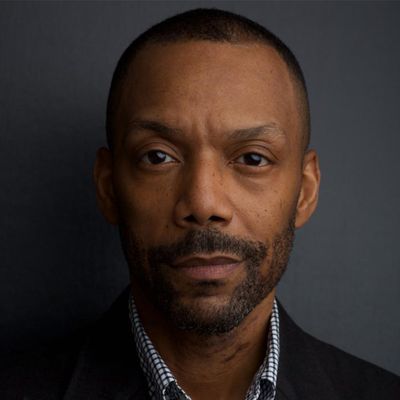
This week, Gennean Scott welcomes T. Oliver Reid. Having spent the last 20 years working on Broadway, T. Oliver shares stories from his journey, starting as early as when he could walk and talk to his headline-making turn as a Fate in Broadway’s Hadestown... Read More
From the show: The Black Business of Broadway
Guests
Featured Artists
Featured Shows



About
This week, Gennean Scott welcomes T. Oliver Reid. Having spent the last 20 years working on Broadway, T. Oliver shares stories from his journey, starting as early as when he could walk and talk to his headline-making turn as a Fate in Broadway’s Hadestown. Additionally, T. Oliver talks about the impetus of co-founding Black Theatre Coalition, what it’s like being a Fellow, and how to get involved.
Transcript
This transcript was automatically generated and might contain errors.
[0:00] T. Oliver Reid: I'm not going to fall back on doing anything except the work that I want to do now. Luckily for me, that means that work is in a lot of different areas, but it is you have you have to believe the universe is is working with you.
[0:17] Gennean Scott: Welcome to the Black Business of Broadway, a podcast brought to you by the Broadway League and Black to Broadway. Here we highlight the stories, how-tos, and successes of the black professionals and legends of Broadway. I am your host, Gennean Scott.
[0:41] Gennean Scott: Today's guest is Broadway veteran and advocate T. Oliver Reid. T. Oliver has spent the past 20 years working on Broadway shows such as Hadestown, Once on This Island, Sister Act, Mary Poppins, Thoroughly Modern Millie, and Kiss Me, Kate, to just name a few. He's produced and directed concerts for 54 Below and continues to work in film and television. T is also a faculty instructor at NYU and Columbia University, along with other schools and institutions. He sits on the board of visitors for the University of North Carolina School of the Arts and is the co-founder of the Black Theatre Coalition. T. Oliver, what can't you do?
[1:25] T. Oliver Reid: I'm serious. You dance, you sing, you direct, you produce, you advocate, what else? I come from a background and we I give all honor to my grandmother who's no longer with us, but also all blame to her. And when I was, I think I was probably eight or nine years old, and it was one day we were sitting in her car, and I remember her saying, You have to pay attention to everything. And from that point on, I really did. Like I got in trouble some days because in college, there's one. I remember we I got to go sing at the governor's mansion in North Carolina with a couple other singers from the University of North Carolina School of the Arts, and I remember walking into one of these main rooms, and the person who was, I guess, probably their PR person.
I remember looking at her and going, said, There's Lynn over there, and you got three candles out over there, and that light bulb's out over there. And because not thinking anything of it except I know y'all want to make sure this room looks perfect for whatever is about to happen. These things aren't ready. But I so I come by that naturally with the I need to do this and I need to be able to pay attention to what's going on in all these other areas. So, you know, as early as my first Broadway show, it wasn't just about being on the stage, it was paying attention to what the director was doing, what the choreographer was doing, what they were saying to the lighting designer. So I had a little bit of knowledge in a lot of different areas. But you could you can blame Mildred Jackson Sadler for that. Thank you very much.
[2:49] Gennean Scott: Okay, Miss Sadler?
[2:53] T. Oliver Reid: Yes, Irma Sadler. That's it. That's the one. So you are originally from North Carolina, as you mentioned, and you've been performing since you could walk and talk. That's what it says in your bio. Um, so it's safe to assume that you had your family's support. So, how did you get to where you're at now? Because we know many black folks, the arts just aren't seen as a viable career.
[3:19] T. Oliver Reid: Yeah. Um the means of support, you know, and we get it because of the history. Um and our each generation wanted us to do better than the next generation, and so they just don't see this. How did you get here and what was that support system like, especially in an industry where we're traditionally shut out?
[3:39] T. Oliver Reid: Yeah, I mean, I wish that I could tell you that there was a very there was a straight trajectory for me. Uh, but I too, I looked around in those early years and I saw that things were happening for a lot of other people and I had to keep reminding myself that that's not your journey. So that when I saw someone who went that when they were first getting their Broadway show or whatever these things were, they were getting their first, you know, principal on Broadway, it's like that's not your journey, and you have to remember that. It's like I had the support of family early on. I mean, my entire family is extremely musical. I come from a family of educators, and for some reason the idea of being going into music, going into being a singer sort of full time and using and having that as a profession and as a career, didn't seem odd to anyone.
And there was never an obstacle other than for myself. My I was the person putting the obstacles in the way. I remember in high school thinking I wanted I loved architecture, I still do, and I was like, I want to go into architecture. And but I also knew it was like singing would always be a part of my life. It's it's not one of those things that oh I don't want to do it professionally, so I'm never gonna sing again. It's like if that's the road I'm going down, then great. But if that's not the road or if that's not my journey, then I'll still sing in church, I'll still sing here, I'll still do any of these things. So it was always it would always be a part of my life no matter what. But it was there were a couple of lucky things that just happened over and over.
One was my senior year in college, the director of our opera that year, Victoria Bussard, who runs the Baldwin Wallace University Theater program, she came in. She was also directing this second national tour of Once on This Island was going out, and she asked me if I would audition for it. So three days after graduating from college, I was working professionally on this second national tour bus and truck. Wow. Let me tell you of Once on This Island. And for you know, a couple years of doing some tours and things before I moved to New York and started auditioning, and the universe kept bringing people into me who were who were who were luckily for me and happily they were happily giving me advice and telling me exactly what I needed to do.
And like some of those are one of one of my dear friends still, Paula Leggett Chase, who I met early on, but right after I joined Equity, and said to me, You need to take this job, not that job. This job is going to help you meet these people, so that's what that's the direction you need to go. And those moments continue to happen. But I think it was the vocal and non-vocal support of my family that allowed me to say, I can do this, and I can move to New York, and I and there's going to be an opportunity for me. Now, don't get me wrong, there were there were days early on that it was, are you going to get that 99 cent chicken nugget at Wendy's? Or are you going to take the train today because those early days were bleak?
But it was soon after that I realized, you know, it's like there's so much work in this country and in this city that the thing I I was like, I'm not going to fall back on doing anything except the work that I want to do now. Luckily for me, that means that work is in a lot of different areas, but it is you have you have to you have to believe the universe is is working with you.
[6:59] T. Oliver Reid: And I stand by what Andre De Shields says all the time is the universe is conspiring with you. And you have to repeat that to yourself and remind yourself of that, because otherwise, all these other things will get in the way until you know and tell you why it can't happen and why it shouldn't happen. But if you just listen to the universe, and for me, I still call that God. So for me, it's like it is, but however you look at it, however, you look at what that higher power is, there is something that is always leading you in the direction that you need to go. And sometimes it's getting rid of all that other noise to say, Oh yeah, this is what I said I wanted to do. I said it a year and a half ago, and the universe has been waiting for me to actually get back to that place so that we can step forward together.
[7:40] Gennean Scott: Oh my god. Okay. This is totally off script, but I just did an interview earlier today. And this is like the theme for today. And I feel like there is somewhere, there's a message out there for me. Somewhere. Something that I must need to hear. Because you know it's like it is that thing. Sometimes it is it is God of the universe tapping you on that shoulder saying, uh, excuse me, ma'am. And sometimes that tap becomes a little shove of the back, and then sometimes it is, as my grandmother would tell you, it is a smack on the back of the head because you weren't listening, and the universe is trying to get you to where you want to go.
[8:17] T. Oliver Reid: Yes.
[8:18] Gennean Scott: Oh, yes. Okay. All right, we're not gonna have a praise question. Let me get my tambourine. Where's my tambourine?
[8:24] T. Oliver Reid: Oh, what is another one? Well, you mentioned Andre De Shields, who is uh who is an oh my gosh, an icon, and um every time, every time I see him, I am just in awe. Um but you recently made headlines um by going on as a Fate, uh which you lovingly call Auntie Fate. Yes. Can you talk to me about the importance of this moment? Because soon after Tomas went on as the first non-binary Fate.
[9:02] T. Oliver Reid: Yes. It's so interesting because in the midst of it, it seemed to me it's like it is the job that I had to do. So that's what I do. That's what I do day in, day out. It's like I go and do my job. But it was the and I'll go I'll circle back a little bit. Like when we were in rehearsals initially, because I was dance captain of the show, it was always this funny thing because the dance captain knows every track. Oh, at some point you may have to go on for a Fate at a Fate. And at that point, we called my Fate side pony. Side pony may have to go on, and we made fun of that always. It was never a big deal. Uh, but so I know all the choreography. I know most of the almost everyone's music from the show just because it's in my head.
Uh, and that Tuesday before, this all happened on Wednesday. The Tuesday before we knew there were gonna be we're gonna be down to only four workers on. So we were going through, we knew exactly what the show was gonna be, what we were cutting, what we were changing, etc. etc. That Wednesday morning I got up, I was like, I'm gonna go to the gym and just clear my head. Got to the gym, got a call from stage manager. Okay, we're down to three workers. So everything that we had done and was in my head is like all that has to change. So we got to the theater, went through the entire show of all of those changes, all the things we're gonna have to do. And then one of the people who was on for a Fate that afternoon, they escorted them out of the building, me that they had just tested positive.
So as they were going out of the building, we all looked around and I looked, I remember looking at stage management and saying, Why don't we because they were canceling the matinee? I was like, so why don't we use this time to go over some Fate music? So we did that. Our wardrobe designer ran down to Macy's to find some chiffon gowns that maybe they could put put me in. And the then our makeup designer said, We should go get some makeup now.
[10:53] T. Oliver Reid: I was like, Oh yeah, we should. And we walked over to Alcone, got makeup, came back. I was like, Do I have to shave? And they're like, no. So beat my face, got the costume on, got the makeup on, ready to walk on stage. And it wasn't until I stepped on stage and I looked out and I saw a few young people and their mouths were like jaws like hanging to their laps. And I realized this is the first time that some of them realize that there is a place for them on Broadway because they are seeing themselves in a way that they had not before. So it wasn't until then that it really hit me. And then having Tomas be able to go on and share their story as a non-binary human being and live in that space as well.
It's like that we are we are we are still we're still in the business of showing people that things are possible, that what we thought was reality doesn't have to be reality. Reality can be whatever we want it to be, and these young people who are non-binary or don't identify as anything, but realize that there is a possibility for them if they can do it, if they have the talent, if they can sing it, if they can dance, whatever all these things are, it's like there's possibility for people that just didn't realize that or think or hope that they could ever be on a Broadway show. I think of, oh gosh, I'm forgetting I forget everybody's names now. Allie, who was in Oklahoma, who is wheelchair bound, and winning Allie Soaker and winning a Tony Award, being in a Broadway show, a musical in a wheelchair is like she was able to show so many people that that is possible, which means that they have a possibility as well. So I think that what I was able to do and Tomas was able to do really amplified that and showing a new group of performers, of actors, of singers, of musicians that there is a possibility for them.
[12:51] Gennean Scott: Speaking of possibilities, pre-pandemic, post-pandemic. Yes. You know, can you talk about the changes that you see Broadway undergoing, especially as the co-founder of the Black Theatre Coalition?
[13:07] T. Oliver Reid: Yeah, it's, I have to show you like again, it's like when Warren Adams, my co-founder and I started having conversations, and then when we looped Reggie Fan Lee and it was about seeing about the change that we knew was possible. We didn't, I don't think we ever realized that there was as much work that needed to be done and needed to be done ASAP. And this is not a, oh, we can do just a little bit and then we'll move on. It's like as we started, there were so many things like, oh, you need to do this and you need to do this. It feels like there are a lot of people who were ready to do the work that just needed a push or needed support. And I think that in the midst of the pandemic and George Floyd's murder and everything else, it was a moment for so many who are in positions of power working in the American theater.
So not only on Broadway, but all these regional theaters, et cetera, et cetera. They needed a pusher. They needed to know that there was support. So we look at, you know, Broadway Advocacy Coalition, Black Theatre United, Black Theatre Coalition, all these organizations who were able to bolster and say, We want you to do the work, and we are here to support you and lead you and be on this journey with you. It allowed a lot of people to really step forward. I mean, and the hard part for us was people wanted to step forward where people had been out of work for, you know, over a year, and these offices had no money coming in. So it's like how do we not only support them, I wouldn't say spiritually, but also physically, but also help them find funding so that we could make sure that there were fellows and apprentices that were working on these shows and were being placed in positions to build relationships.
Because you know, this business is built on relationships and built on good relationships all day. So we want to make sure as many people as possible were getting those opportunities. And you know, over this past year, 40 plus apprentices and fellows working on shows and working in offices, the change has begun. It's, it is, it is there's much more to do, and much more to do so that our Asian brothers and sisters and Latin brothers and sisters are also a part of this journey. But yeah, it is really, it's heartening. It is, it's so impressive for me to see the amount of change that's happened. Again, there's still a lot, there's still a lot of room for improvement, and I think we all know that, and whether people are able to take, you know, these leaps and bounds and making change, or they're taking baby steps, or they're in a holding position trying to figure out where they're gonna go or what they're gonna do. For me, the goal is to be there and be ready for them.
[15:58] Gennean Scott: Exactly. Can you talk about the difference between the apprenticeship fellowship and an internship? Because I think a lot of people get confused. And you're not placing interns, you're placing fellows, people who are—I'm gonna let you talk.
[16:15] T. Oliver Reid: Yeah, no, and no, it's okay. And part of that, Janice, is because we have stricken the word intern from our vocabulary, mostly because the internships that we have known have normally gone to fairly affluent white girls whose parents can't afford for them to work for a summer or a year away from home and pay their rent and still have them be able to go out to bars and have drinks and have a great time and do all these things. So many people don't have that type of financial support or any type of support to be able to do something like that. So we really are focusing on the idea and the ideal of having fellowships and apprenticeships in as many places as possible. The fellowships for us are a longer term.
Our initial goal was for them to be 12 months so that people could really immerse themselves in whichever area of the business they wanted to be in. So whether that's being a company manager or set design or lighting design, costume design, musical director, etc. So that you have 12 months of financial support so that you're not working two or three additional jobs, but you can really eat, sleep, breathe, and live musical theater. This business, again, like we just said about relationships, is built on being able to, you know, at six o'clock when you're walking down the street and people going to their theater to know who those people are, maybe be able to introduce yourselves. Also to be able to go to those shows at night and see what's going on in front of house, backstage, et cetera.
But if you are only doing this nine to five, and then you have to go to a secondary or a tertiary job because that's how you are able to survive, then you're missing out on the making of theater. So for us, you know, so most of them are 12 months, except for the general management fellowships, which are 24 months because with our general management partners, the seven general management offices that we work with, it was about making sure that over those two years those fellows actually leave and they have the goods to actually go to work. And that's the other thing for us. We said to many of our partners, like we don't want this to be a they're getting coffee and sitting in a corner. Now, if everybody in your office gets coffee at some point, absolutely fine.
But this is not about someone being in what would normally be that intern and sitting and getting coffee and hopefully getting information because they've been listening. Let's get them working, let's get them in and you're giving them information and making sure that at the end of these fellowships they know exactly what's going on. The apprenticeships are all a short amount of time depending on our, again, initial goals were as shows were reopening or new shows were coming in and they had their full teams already, to make sure that there were people of color who are part of those teams. And so whether it's being a part of a show from the end of rehearsals through opening night, some lasting longer, the first of those was Company.
Now we've done it with upwards of 12 to 15 shows. We have people who will be on Bad Cinderella, people who are on K-Pop, Leopoldstadt, and so on and so on. But those are just a shorter amount of time, but still being able to work with the company managers, general managers, being able to work with the creative teams in their process of getting these shows open. And you're changing lives because these individuals, many of whom I've had an opportunity to meet, are getting jobs. They are getting jobs. We had our staff meeting this morning and literally was talking about there are many fellows who are doing this, but one in particular who it's just like job after job after job, and it's because, and she says all she teaches text me all the time is like I cannot thank you enough for this.
I said to her the other day, it's like ma'am, you did the work. We got you in that first door, but you showed up and showed out. You showed them that you had all of the goods to do exactly what you were doing. They just would have never seen her and known her name because she was not already in their circle or in their sphere. And that again for us is the initial goal. It's like to open those doors to make sure there are room at tables for people who had not historically been at those tables. And there are several who are, you know, get gold stars for the work that they have done and how they have taken this opportunity and really blossomed into who we knew they could be.
[20:42] Gennean Scott: Exactly. You're creating this is about generational wealth.
[20:46] T. Oliver Reid: Absolutely of a community.
[20:48] Gennean Scott: Yeah. And this, this is, I love, I love your program. I love this program, I love the initiative, I love the coalition. I've made no secret about that.
[21:01] T. Oliver Reid: Thank you. We appreciate that. Seriously, I mean, I think about the generational wealth that you're creating within a community. I think about how you are showing not just other folks that we belong in those spaces. We just needed an opportunity, but you're showing us that we belong in those spaces. And all we needed was an opportunity.
[21:23] T. Oliver Reid: Well, and, and one, you know, again, it's like, and I know you know this, it is that thing of being able to see someone in a position and say, oh, this person looks like me. Maybe I can do that too. And if we, when we walk into these theaters, these which have been historically white spaces, and we don't see anyone who looks like us when we enter the door, we don't think that it's a place that is safe or welcoming of us, even though we have given the money for our ticket.
[21:52] T. Oliver Reid: If we don't see people around those theaters or people coming to us and saying, "There's a if you you don't sing actor dance, great, but do you have interest in music?" Because there are plenty of other places that you can find careers in music. If you have interest in other in other places of you do this and that, or or do you did you think because you're going to law school that there is not entertainment law, so you can't actually combine those two things. There are all these, it's just about the offering opportunities, offering choices up to these young people, whether they're between nine and twelve, whether they're graduating from high school, whether they're in the middle of college programs and trying to figure out how to combine a love for something that they had with what they think they need to do because that's what our families have told us is the way to make money and what we're finding more and more in this younger generation is like it's about being able to survive and be comfortable, but it's also about finding that thing that you're going to love to do for the rest of your life or for the next five years or ten years and not be in the rat race that our parents and grandparents thought was what needed to be the norm.
[23:00] T. Oliver Reid: So how do you balance working within existing structures and calling out practices that need to be changed? Uh it's my thing is and it's something that I always do my best to live by. And I do my best also not to use the word try, because anytime somebody tells me they're going to try to do something, that just means they're not going to do it. They just don't want to tell you that. So I do my best to lead with kindness. And again, it's a thing's like, if I would not appreciate someone speaking to me in a certain way, then I'm not going to speak to someone else in that way. And I'm going to ask people who are around me to do the same thing. It's like, how do you lead with kindness? How do you call someone?
How do you call someone out or call someone in and say, "I'm noticing that these are these are habitual things for you, or I'm noticing that this is what is going on. How can we fix this? How do we fix this?" And this is not again not a point of a finger at someone, but how do I have a conversation with someone and say, "This this is something that we need to address? This is something that we need to see if we can fix this together, how how can I help you with that, or how can I support you, whatever that thing is." But if it's just throwing, if it's throwing smoke bombs, if it's pointing fingers, then everybody puts their guards up. And no matter how much you want to work or how much that person needs support or how much they want to do the right thing, when you start pointing fingers and calling people out, guess what?
Everybody does this, think they cross those, they cross those arms and no work gets done. So for me, it's like, how do I lead with kindness? And how do I continue to do that so that we can make the change that we want to make? Because at the end of the day, it ain't about me. I am a conduit for what needs to happen for what God, the universe, put into my brain into my mind, and then the universe brought the right people around so that we could do some work. But it's at the end of the day, it's not about me.
[25:09] Gennean Scott: Yeah, absolutely. Well, my final question, speaking of the next generation, speaks to the next generation. Um actually, you know what? Before we do that, I won I would like for you to give um to give your to give the website to give some information for if anybody wants to either apply or wants to help to support uh the coalition. Could you give that information?
[25:33] T. Oliver Reid: Absolutely. Uh if you would like to just get some information on Black Theater Coalition, you can go to BlackTheatercoalition.org, and that's T H E A T R E. That good old that good old English spelling. Yes, BlackTheatercoalition.org. Uh that has all the information that has information on our fellowships and our apprenticeships. Also, if people just want to donate a little money, you can also donate there. And for those who want to be a part, whether it's a fellowship or apprenticeship, there's information on those as well on the website. So that you can leave your information in the database. You can also go ahead and apply, leaving your resume, etc. Uh because these are open ended. So that the apprenticeships are happening as the Broadway season does.
So there are many that happen this fall. There are many more that will happen in the spring. Um yeah, and just uh you can go to Instagram, Black Theatre Coalition, as well as even though I don't want to say it Twitter, because who knows how long Twitter's gonna be around because you know she's having a minute. A long minute. She's having a long minute. She's going she's going through some stuff, but we listen, we go, we go we go, we go stay there with her for a minute longer until she goes until she goes off the deep end. But yeah, so you can you can follow us at on Facebook, on Instagram, on Twitter, at Black Theater Coalition. Uh and and honestly, you know, whether whether it's financial or just that good spiritual support, uh, we appreciate it because this this again is a this is a this is a journey that we are all on together, and for us it's we started, you know, in the Broadway box, but it's also about how do we change regional theater, how do we change college programs so that young black people who are going into the programs see themselves and young black people who are thinking about going into these programs are supported, and how then also do we with a lot that the Broadway League is doing as well as like when when we're looking at these kids nine to twelve, etc. It's like how do we once they have that spark of interest in the theater, how do we hold their hands and make sure that they keep it?
And how do we show them all of the directions that they can go in the American theater? You know, and that's whether they want to come to New York or they want to stay in their hometowns, because we both know a lot of people love being where they are. I talk to friends all the time about a friend of the friend who's in tech and he's working for a company, and they were always trying to get they were trying to get interns to come and they were going to you know historically black colleges and universities to get them, and many of them was like trying to get them to go to San Francisco for the summer. It's like some of these kids had never been on a plane. Some of these people had never been out of some of these these states.
So the idea of them going that far away from family, they have to have that support system to understand. It's like we got you. We're we're we're taking you here for this amount of time, but we are we're gonna support you. We're not we're not leaving you at the bus station. We're not leaving you in the airport. We're gonna support you. So for us, it is that thing is like if there are people who aren't ready to come to York, how how do we support them where they are? And for those who are ready to come to New York, truly, how do we support them as they begin to find their way in this business and to find their careers? And I love, and that's one of the things that I really love about um what you all have established is that it is it is a network, and you teach and you help to um facilitate that network within the industry, but it's also a network within each other, and that they support and edify one another, and it goes against the trope, the racial trope that we're crabs in a barrel because Absolutely it is not that way at all. It is all about the edification of one another and helping the other person to succeed and to be the best them that they can.
[29:24] T. Oliver Reid: And Jimmy, I gotta choose like, and it may be and there may have been a time that it was more crabs in that teeny tiny barrel, but I gotta tell you there when there was a group of us uh when I was doing lots of oddistic in those early years that uh that it was like you you you someone casting would bring in you know 12, 15 black men, and we'd all look around, we're like, somebody's getting a job today. Because this is this isn't us and this is not, but but the great thing was that one was getting a job because it wasn't us coming into a room with a bunch of other people, and we know, oh, y'all just brought us in to see us. You were hiring those six blonde boys, those six dark haired boys, that one redhead, you were hiring them.
This was a these were the days was like they were just bringing in men of color. We're like, great, a man of color is getting a job today, and we are all okay with that because we are all going to turn it out. So whoever turned it out the most today is getting that job, but we sub we were happy for whoever that was. We want to we want BTC wants the whole of the American theater industry to understand like we're happy for everyone who's getting that opportunity. We know that there are more opportunities out there, we know that there are more chances. So we want to make sure that we are we are opening as many doors as we can. We are we are sticking our feet in those doors, we are holding them open for whoever needs and is ready to walk through them.
[30:45] Gennean Scott: Yes, absolutely. Uh so now for the final question. What is one piece of advice you'd like to share with the black future leaders of Broadway?
[30:59] T. Oliver Reid: Stop waiting for someone else to do what is already in your heart. And that is the thing, that has been the thing for me. It's like I I've for many years, like, whether it's coming up with ideas or something else, is like, why are you waiting for someone else to do what God, the universe has already put on you? It's that just means it's time for you to step forward with that idea. And because you step forward, guess what's gonna happen? People will people will come to you because you have taken that first step. So I think it I think it is it so it's twofold. When you have the idea where you have something that you know needs to be done, go ahead and do it and trust that the universe will be there with you as well.
[31:38] Gennean Scott: Absolutely. Let's give make away. I'm with you.
[31:41] T. Oliver Reid: Yes, yes. Love it. I love it.
[31:43] Gennean Scott: Well, thank you. Thank you so much. It has been a pleasure. It's so good. It's so it's it's I don't get to see your your beautiful smiling face enough. We have to change that in the new year.
[31:54] T. Oliver Reid: Yes, we do.
[31:55] Gennean Scott: Yes. I will see you next week, though. I will see you at your event. So I am I am looking forward to that. And I hope you, I hope you I hope you're feeling well.
[32:04] T. Oliver Reid: Thank you.
[32:06] Gennean Scott: I want to thank our guests and you, our listeners. You could have been doing anything else, but you chose to spend your time with me, and I am grateful. Be sure to subscribe at bpn.fm slash bvb so you'll never miss an episode. While you're at it, tell a friend. I'm your host, Gennean Scott, and we at the Broadway League hope you enjoyed this episode of the Black Business of Broadway.
© Broadway Podcast Network, All Rights Reserved