

Age is just a number, right? Maybe not when it comes to the entertainment industry. Playwright Sarah Tuft (MARVEL-OUS MONICA; IN WHICH MONICA LEWINSKY IS A SUPERHERO HELL-BENT ON REVENGE, 110 Stories) and actor Caroline Aaron (The Marvelous Mrs... Read More
From the show: The Dramatists Guild Presents: TALKBACK, sponsored by the Dramatists Guild Foundation
Guests
About
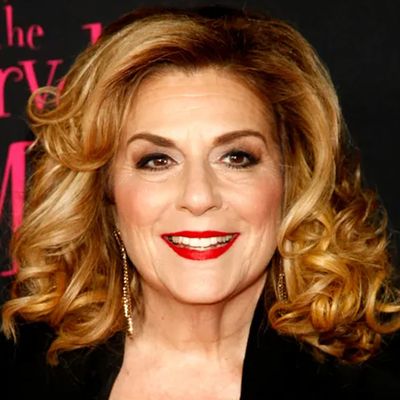
Age is just a number, right? Maybe not when it comes to the entertainment industry. Playwright Sarah Tuft (MARVEL-OUS MONICA; IN WHICH MONICA LEWINSKY IS A SUPERHERO HELL-BENT ON REVENGE, 110 Stories) and actor Caroline Aaron (The Marvelous Mrs. Maisel, Edward Scissorhands) tell personal stories about their careers and how age has played a factor. Sarah tells Christine how she refused to accept the status quo and is on the executive committee at Honor Roll-an action and advocacy group of women+playwrights over 40.
To learn more about Caroline Aaron visit: https://www.dramatistsguild.com/members/carolineaaron
To learn more about Sarah Tuft visit www.sarahtuft.com and follow her on Twitter @sarah_tuft
To learn more about Honor Roll visit: https://www.dramatistsguild.com/thedramatist/honor-roll-we-got
and follow them on Twitter @HonorRollWrites
This episode features Sarah Tuft and Caroline Aaron. The Dramatist Guild Presents: Talkback is a production of The Dramatists Guild of America . This episode was produced by Sarah Storm, Amy VonMacek and Christine Toy Johnson. Robare Pruyn mixed our show. Our theme music was composed by Andrea Daly. Special thanks to Tina Fallon, Tari Stratton, and the Diversity, Equity and Inclusion Committee at the Dramatists Guild.
Transcript
This transcript was automatically generated and might contain errors.
[0:01] Christine Toy Johnson: Welcome back to Talk Back, the dramatist skills conversation about the theater world we see and the one we want to see.
[0:08] Christine Toy Johnson: I'm your host, Christine Toy Johnson.
[0:11] Christine Toy Johnson: In the arts, labels and stereotyping often feel like business as usual. This is true when it comes to assumptions based on age as well.
[0:20] Christine Toy Johnson: Women, especially, are assumed to have some sort of expiration date. As though at a predetermined year or time, we simply cease to be interesting or viable or worth telling stories for or about.
[0:34] Christine Toy Johnson: But age also begets experience. And with experience comes many, many rewards. Some of our most exciting accomplishments occur after years of effort and hard work.
[0:46] Christine Toy Johnson: My guests for today's episode are Caroline Aaron and Sarah Tuft, two women who are fighting ageism and the assumptions that come with it head on. Here's our talk.
[0:54] Christine Toy Johnson: Welcome, Sarah and Caroline. Will you please introduce yourselves to our listeners? Sarah.
[1:01] Sarah Tuft: Hi, I'm Sarah Tuft and a playwright and a member of the executive committee of Honor Roll, which is an action and advocacy group for women plus playwrights over 40.
[1:12] Christine Toy Johnson: Caroline.
[1:14] Caroline Aaron: I am Caroline Aaron. I'm an actress and writer, and I am delighted to be here today.
[1:20] Christine Toy Johnson: Thank you so much for being here. Sarah, I want to start with you. You have a long and accomplished career as a storyteller using many different mediums. I wondered if you could tell us when you started writing.
[1:34] Sarah Tuft: So I came into playwriting as an artist who was responding to 9/11 and shortly thereafter began looking at theater and never turned back. There was just a perfect fit there. It took me a long time to sort of self-educate around a survival job in television, but eventually found my voice and just really feel passionate about theater, having started always as a storyteller.
[2:01] Christine Toy Johnson: Thank you. Caroline, you've been having an incredible career as an actor for many years. And among many things that I love about your work, of course, I love The Marvelous Mrs. Maisel. Can you tell us how you got started as an actor first?
[2:18] Caroline Aaron: Oh, sure. Well, I started at summer camp because we had a choice between going on mountain climbing trips or being in a play, so that was a duh. I didn't want to climb up a mountain, so I picked another mountain to climb, which was the mountain of acting, and I just loved it. And when I thought back about it, you know, I was really young, but it was an all-girls camp. So we got to do all the best parts because we were playing the boys and the girls. So I loved that, I have to say, and I didn't get that splash of cold water in my face until I made it my profession.
[2:55] Caroline Aaron: Before I graduated from college, I auditioned for and was included in an experimental theater that was set up in Washington, DC by Lee Strasberg, Peter Brook, and Jerzy Grotowski. It was a very celebrated time in the early 80s, where experimental theater was really very exciting, and I did that for a number of years, but I really missed, you know, applause, the roar of the grease paint, the smell of the crowd. So I moved to New York City and started my career there, getting backstage, going to auditions, and eventually was cast by an English director in an off-Broadway production. I was non-equity, so I was not allowed to be cast, but because he was from England and he didn't know our rules, he insisted on me, which was wonderful. And the play opened at the Harold Clurman Theater on Theater Row. Harold Clurman was still alive, and it was the inaugural production that named the theater after him. So that was the beginning of my acting career in New York.
[4:02] Christine Toy Johnson: That's fantastic. And what now I understand that you have been writing. What inspired you to start writing?
[4:07] Caroline Aaron: I was approached by a producer who was doing a spoken word evening. They were looking for writer performers. And the prompt, so to speak, was called Afterbirth. And it was about how your life changed once you became a parent. You wrote an essay, you read it out loud. It's sort of a cabaret bar setting, and the thing blew up. It became a book called Afterbirth. Several of my essays were included in it. It was very exciting. So then I wanted, like Sarah, I needed to self-educate. Even at that time, I thought, am I too old to start over or start anew? And I wanted to be an example of there is no such thing. I don't think art has any age. I think all we do is limit ourselves. So I started taking classes.
There were not very many playwriting classes in Los Angeles, so I took screenwriting classes, TV writing classes, and I just started writing. And a producer who knew me in Los Angeles came to me with a book and said that she wanted to make this book into an evening. I read this book. It was a collection of essays by women about bad boyfriend experiences. And I read it and read it and read it, and I thought this is such a great opportunity for me. She had seen my essays that I had done for Afterbirth and was very interested in me writing this and configuring it. But I just could not wrap my mind around it because one essay after another represented women as being dumb, naive, victims. And I just did not speak to me.
But I pitched her another idea for a play, which she accepted called Such a Pretty Face, which was a collection of anecdotes, essays, and scenes on the landscape of women and chasing beauty. And that play was my very first play, and it's been optioned many times and performed a couple of times, had a couple of productions. And after that, I was like Sarah. I went, oh my god, I'm home. It's like somebody gave me the key to the front door. So I have been taking classes and writing ever since. And had found, you know, one of the big obstacles of entering at this point in life is very difficult.
[6:28] Christine Toy Johnson: Well, that's a great segue to Sarah. I want you to please tell us about Honor Roll and what the impetus was to start the group and what you've been doing.
[6:44] Sarah Tuft: Thanks, Christine. And I loved hearing about your journey, Caroline. As someone who greatly appreciates your portrayal as Shirley, it's so fascinating to hear this sort of organic way you found your voice. Honor Roll began prior to my joining by a post that someone did on Facebook saying, I love all these young women getting opportunities, and it's fantastic, and what a welcome change this is. But what about the generation that was overlooked or kept out when we were coming up when we were young enough, and now we're older and being overlooked because of ageism? That single post got just an incredible response on Facebook. Hundreds and hundreds of likes and comments, and someone said, Let's get together and have a meeting.
And the first meeting was in Teresa Rebeck's home. We have 920 members now. I'm closing in on a thousand because membership's going up very fast. And it's a very diverse group because it's a very intersectional issue. If you were held back by sexism, you were also held back by racism. If you're a person of color, you were also held back by ableism. And then all of a sudden there's ageism. And believe me, when you're getting older, it does seem like all of a sudden, as you're facing all these obstacles. So about a year after that original meeting at Teresa's house, there was another one at Susan Miller's, and out of that we started meeting at the Dramatists Guild and the executive committee formed just because we were the most active, and that would be Cynthia Cooper, Cheryl Davis, Yvette Hellinger, Olga Humphrey, Jackie Rheingold, Lucy Wang, and myself, this sort of intersectional bias and being kind of the generation caught in between things.
But all of this has made me so aware, and it's an interesting time to have this awareness. Theater's rigidity and theater, like every other industry, the way in which theater mimics the larger picture of a society that is a patriarch, you know, it's based on imperialistic values. So the haves get more and the have-nots get less. And in our larger society, that's an economic issue. In playwright, it's an opportunity issue. So there are things larger than just ageism, I think. I'm so thrilled and excited that out of this miserable pandemic, we have this call for equity that's finally being heard, especially for BIPOC playwrights and theater people in general, especially at the highest levels of leadership.
I would just love it if we also look at the larger picture of how opportunity is provided to those who already have a list of credits, who already have a name, how playwrights are commissioned or playwrights are programmed. Is it possible to just have a more welcoming, more inclusive set of standards that's based on the actual work? So it's just all these questions I'm wondering. I'm just I think like everyone else, yearning for equity, and I have ideas about how that can happen. So Honor Roll is definitely about combating ageism, recognizing its intersectionality, and moving forward, trying to open up opportunities for everyone at every level of talent.
[10:15] Christine Toy Johnson: I think it's very interesting that you're saying that, Sarah, because I feel like one play that I wrote once I came back to New York, that I developed at the New Group, and I submitted it, you know, as you do when you're kind of a beginner. It's a very strange experience to be an old beginner, but that's what I am. And I submit it to a lot of programs and the Women's Project in New York as an example. All of the people that I was submitting to were certainly under 40 who were the deciders or the leaders of these institutions, and they all had great talk on their websites about inclusivity, diversity, wanting a range of voices, and I looked back at their history of when they were selecting new plays, and none of them had selected plays by people who were over 40.
And age is not considered a form of diversity. I must say that trying to enter the playwriting realm over 50 has been discouraging and really difficult. And so I think that this is a, you know, the last conquerable territory. I think that in general, yes, we live in a patriarchal society, but certainly in this country, we throw away people after a certain age. I feel like if you are of a certain age, people are not interested in your stories. I think also what we have to keep working towards is chipping away at certain assumptions that we run up against all the time, like you've been both been talking about that what is an emerging writer? What is an emerging artist? Does it have to be attached to a numerical age? And this is something that I think Honor Roll is certainly addressing. And we just have to keep bringing it up and into the forefront of conversations.
[12:26] Christine Toy Johnson: A couple of years ago, I was having a conversation with an artistic director at a very well-respected regional theater, and we were talking about how they find their writers to include in new works programs. And he said to me, if you're over 25 and we don't know you, you're probably not good.
[12:43] Caroline Aaron: That's right.
[12:55] Christine Toy Johnson: And that blew me away because even though I'm sure that assumption is pretty widely held, it was a big slap in the face to me because I also did not start writing till much later in my life. Sarah, I'm interested to know what kind of impact you've seen already in the because Honor Roll, how old is Honor Roll?
[13:20] Sarah Tuft: I think at this point, maybe two years. I got involved a year ago. I just before I move on, I'd love to talk about Honor Roll, but I just feel at the top of the episode, Christine, you mentioned that particularly for women, there's a larger issue as we age. And I think there's an archetypal disdain for older women. I think it's just been in our culture forever. I often think about the witch. If you think about all the characteristics of a witch, these are all things that physiologically happen as we age, the warts, the nose gets more hooked, the gray frazzled hair, you know, hair texture changes, the stoop, and yet this is this terrifying creature, the witch, you know, evil. Why? And yes, ageism also affects men and any gender, really.
But I think for women, there's a larger bias that's got deep roots. I would love to talk about some of the opportunities that have been created. Just very quickly, we've had panels with TV writers who we started out as playwrights, we've had panels with directors and ads speaking with us.
[14:25] Sarah Tuft: We had four of those. We've had two publishing deals, one through Applause Books of 10-minute plays and monologues. The new one that just came up is through Next Stage Press. Um, the Playing on Air podcast is looking at our work, and um it just sort of goes on and on, and this is all self-initiated, that's kind of the most important part. Oh, we have a Say Their Names, eight minutes and 46 second plays. Um, they're by our um BIPOC women, honorable playwrights, and uh there's a reading, and they are each picking a name of a woman who's been murdered at the hands of police and writing a play. The one that I have been interested in from the beginning is to create a fellowship very specifically for women plus playwrights over 40.
And I um came to that because of my own experience. I mentioned earlier that it took me a long time to find my voice because I was working around a very demanding full-time job. And with that awareness, I became very aware of the many, many, many, many reasons why a woman plus playwright over 40 can still be emerging. First of all, as the pandemic has reminded us, childcare often falls to the woman, no matter what is said, no matter what is hoped for in a marriage, in a partnership, the woman ends up, even if it's just because the kids are gonna say, Mommy. Um, so that's an issue. Elder care often falls to women as the daughter is usually taking care of the mother, and the son's off doing whatever he wants.
That's just the thing. Um, and then you also just have the fact that we're paid less. So there's no doubt about that. So a woman plus artist is going to do three part-time survival jobs compared to the one. And the final piece is that women are discouraged, especially this generation. Our stories are not being told particularly about what the experience is of being 40, 50, 60, um, being past child rearing and moving on into something else. I never see a woman in her 50s and 60s as the center of a story in new plays very often.
[16:30] Caroline Aaron: That's so true. I think it's just a loss. You not only have to break through being female, then you have to break through not being a young female, because if being female has any currency, it is certainly in being young. And after that, its currency starts to dwindle, dwindle, dwindle, dwindle, dwindle. And it's very important, you know, that if you don't see yourself being represented anywhere, whether it's in paintings or music or plays or government, then you start to internalize your insignificance and invisibility. And that's what we have to we have to break through that. I I also just want to back up a little bit and and affirm that I truly believe, because I think that all three of us are probably doing this, women are writing characters over 40. They are just not being as produced. And I think that really speaks to whose stories get to be told and through whose lenses.
[17:33] Sarah Tuft: I I actually was gonna jump in on that one too, because I happen to know that in Honor Roll, there are um there's a vast wealth of plays written for women over 40, over 60, elderly women. It's it's it is anytime somebody puts up a call and says, I'm looking for plays, there's a big jump saying, I have I have and uh recently Heather Holinski from the Jewish Play Project, and I hope I've pronounced her name right and the project name correctly, but she posted saying we're looking for more women over 40 on our stages. So we're looking for readers, if anyone has time to read a few plays in Honor Roll, and also we're looking for work. So I think there's some growing awareness. I still have not recovered from Hillary.
I've written a play about her that I quite love. And um, you know, when the rumors were flying, would Hillary throw her hat in the ring? But you know, she was already pushing the envelope this past time, and you just knew that there would that to overcome being female and in your 70s was way, way too big a jump for her to make. And I do believe that as artists, you know, we are the witnesses and the recorders of the times that we live in. And it would be very unfortunate if the stories of important women were just invisible.
[18:56] Caroline Aaron: That's so interesting. I think it's you know, when history goes back and looks at us, um, will there be any presence of um women of a certain age, no matter what their ethnicity is, and how how much will women be represented to tell the stories of what was it like to be alive today? Right. So we have to write ourselves into the narrative, right?
[19:18] Sarah Tuft: Totally. Yes. That's so important. Yes. So I wanted to uh go back to asking you both um what advice you might have for people who are contemplating starting writing, even if it's if they're past whatever age. I I always tell anyone who has the slightest impulse to start writing that to just go for it because they literally have nothing to lose and everything to gain. And I I wondered if you have any words of advice for those people.
[19:49] Caroline Aaron: I really feel like one of the greatest parts of theater is it's often very hard to tell where one artist ends and another begins. That the writer, that the actor, that the producer, that the designers, that when it's really working, it is a glorious collaboration. And I think that you need to grab your friends, you need to self-produce, you need to do readings. And it's a very it's it's such a discouraging thing after I wrote my first play, and then I found out I not only have to write it, but I have to get it out there. I may have to produce it, I may have to find the people who are interested in being a part of this with me. I thought, oh, I've written the play, phew. Now I can hand it off.
There is no handing off your creativity. You are in charge of it all. And right now, technology has given us all tremendous opportunities for a distribution system that you know is very far and wide. When I was coming along, an actor was an actor, a writer was a writer, a director was a director. And when I teach and I tell all young actors, be good at all of it. Be good at every single thing. And I would say it's very exciting and challenging. And also just wrap your mind around the fact that you know you're not gonna be able to necessarily hand off your voice to someone else. You're going to have to be your own advocate.
[21:20] Sarah Tuft: Great advice. How about you, Sarah?
[21:23] Sarah Tuft: I completely agree with Caroline. I I didn't even sort of look at it that way. Um, but I I definitely think you have to follow your own journey. Don't compare yourself to other writers. And I would also advise to um understand the industry. I think I I spent a lot of time just writing and not really knowing it, um, understanding anything, even about submission opportunities. Unfortunately, now there are so many Facebook groups and Twitter feeds and all different ways you can figure out you know what it is and where you can send those those plays. And maybe, you know, you're just starting out the 10-minute play has always been a great way to build community and have your voice be tested because it is collaborative.
It is just the blueprint until you're in a collaborative process with a dramaturg and a director and cast. And I think for for almost all of us, I would assume it it that is the real joy is in bringing bringing up this baby together, you know, finding its best shape with the insights and wisdom and talent and craft of your fellow theater artists. So you sort of want to find community. It it's definitely not a solo, a solo game, and even in these days of pandemic, um, it's on Zoom. So it's a great way to kind of find some people to put together and put up a Zoom, as they used to say, put up a show on the barn. But um, there's there's limitations now, and there's also new opportunities, especially if you're just finding your voice. And I think mostly trust your voice, right?
[22:52] Caroline Aaron: Yes, theater can be whatever comes from your heart. Um, yes, absolutely. I'd like to plug the in answer to that, I just want to plug the Dramatists Guild for a second, which is I took two writing classes through the Dramatists Guild. I always want to be in a class and I always want to be learning. Accountability is very valuable to me. I don't know if that's true of everybody else, but I need other people, you know, to be a part of this process. And the classes were inspired and fantastic. So I encourage everybody, in the spirit of what Sarah was talking about, is start with the classroom as the beginning of your community. You will find your people.
[23:36] Sarah Tuft: Absolutely. The Dramatist Guild Institute is one of the crowning glories of the guild. And thank you for mentioning it. So as we wrap up, I just want to ask you both what you're inspired to write about right now, or what is inspiring you in the world.
[23:53] Caroline Aaron: Well, I would say for me, what is inspiring me in the world is to make sure that during this time of social um correction, that we don't throw out the baby with the bathwater. I'm very interested in due process. I'm interested in taking people one at a time. And I'm very worried that as we create a future, we don't take opportunities that exist in exploring our past. I wanted to mention, Caroline, that I saw some interview with you where you said we have to make friends with uncertainty because that's what was happening. And I I think that's a challenge for everyone. There's some grief going on right now about so many things that are going to be different for some unknown amount of time. And I would love to like you see us retain what's been working.
And I'm also looking forward to questioning some of the paradigms we have in place. For instance, we love these anonymous submissions, and I really believe in them. But it's become apparent that readers will Google the title and know exactly who they're recommending. And most people are afraid to step on a limb. It's just human nature. And that that's another way that the people who have are getting more, and the people who have not are getting less. And I think we need to just rethink. I mean, the income inequity in our larger society is just obscene. Let's not imitate that with opportunity in our world. And as far as what I'm working on, you know, I've been very interested in the power relationship between gender, sex, power, and how that, how women are often um are often sort of the ones who the truck runs over.
And that has been the focus of a couple of my past plays, but more recently I've been looking at larger systemic inequities in my work. And also trying to remember that as passionate as I am about issues, these are human stories. So I've kept my eye on being less issue-oriented and more what are those little moments between human beings where you know you've seen that and felt that, but you never see that except for on stage. It's the truth of human behavior, I think is sort of the writing that I'm interested in and the focus of my more recent work.
[26:15] Christine Toy Johnson: Thank you so much. Thank you both for for joining me today. It's been so great to hear your perspectives and insight. Looking forward to seeing you, Caroline, and Honor Roll.
[26:26] Caroline Aaron: Yes. Sharing our opportunities and getting to know your voice, your beautiful voice.
[26:31] Sarah Tuft: Yes, yes, yes, yes, sir. I'm so glad to know of you and of this organization, which I knew nothing about. I already feel less alone.
[26:43] Christine Toy Johnson: Next week, we'll be discussing alternative access, looking outside traditional theater structures to find or create space.
[26:55] Christine Toy Johnson: Talkback is a production of the Dramatists Guild of America. It was produced by Sarah Storm, Amy Von Mesek, and myself.
© Broadway Podcast Network, All Rights Reserved