

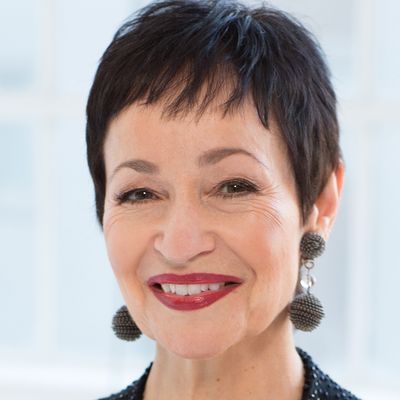
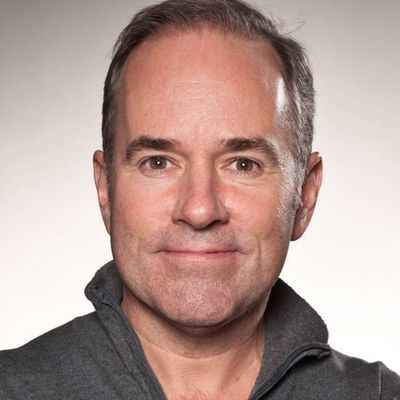
Talkback host Christine Toy Johnson interviews Lynn Ahrens and Stephen Flaherty, a dynamic musical theatre songwriting duo who have been collaborating together for almost forty years. Even at the height of the pandemic, their writing never stopped... Read More
From the show: The Dramatists Guild Presents: TALKBACK, sponsored by the Dramatists Guild Foundation
Guests
Featured Shows

About
Talkback host Christine Toy Johnson interviews Lynn Ahrens and Stephen Flaherty, a dynamic musical theatre songwriting duo who have been collaborating together for almost forty years. Even at the height of the pandemic, their writing never stopped. Listen to this episode to learn about what it means to view collaboration as teamwork, how they approached the writing process for their current musical, Knoxville, and what inspired them to launch The Dramatists Guild Fellows Program, a mentorship initiative for playwrights, composers, lyricists, and librettists, that has nurtured a vibrant generation of diverse writers.
This episode was produced by Amy VonMacek and Christine Toy Johnson, with postproduction by John Marshall Media. The music is composed by Andrea Daly. Talkback is a production of the Dramatists Guild of America and is distributed by The Broadway Podcast Network. Join the conversation online, using hashtag #dgtalkback.
Transcript
This transcript was automatically generated and might contain errors.
[0:00] Christine Toy Johnson: Welcome to the fourth season of the Dramatists Guild presents Talk Back.
[0:05] Christine Toy Johnson: I'm your host, Christine Toy Johnson.
[0:08] Christine Toy Johnson: We've shifted our focus this year to talk about craft and inspiration.
[0:12] Christine Toy Johnson: Our guests this season are my colleagues and friends from the Council of the Dramatists Guild of America.
[0:18] Christine Toy Johnson: Our guests will give us a unique look into how they write, what makes a good story, and what drives them to keep working on the DG Council.
[0:26] Christine Toy Johnson: Stay with us.
[0:30] Christine Toy Johnson: Welcome back to Talk Back. I chat with the iconic collaborators Lynn Ahrens and Stephen Flaherty.
[0:37] Christine Toy Johnson: They have been writing partners for almost 40 years. And in my conversation, we'll hear about the early days of when they first met, about their process for their most recent collaboration, Knoxville, and many of their experiences in between.
[0:52] Christine Toy Johnson: Thank you so much for joining us today. I'm so excited to talk to you. Will you please start us off by introducing yourselves to our listeners?
[1:01] Lynn Ahrens: Hi, I'm Lynn Ahrens. I'm a lyricist, a book writer. Yeah, that's me.
[1:10] Stephen Flaherty: And I'm Stephen Flaherty, and I am a composer, and I write primarily for the theater and primarily with Lynn.
[1:18] Christine Toy Johnson: Thank you so much. Your legendary, lengthy collaboration and all of the amazing work you've done has been such an inspiration to so many people on so many levels. I want to start with talking about how you met. You met at the Lehman Engel BMI Musical Theater Writers Workshop in 1983. And for those who don't know what that is, it's a highly competitive two-year program in which composers and lyricists who've never worked together previously are paired with one another to expand their songwriting craft.
[1:50] Christine Toy Johnson: And when I went through the program about 10 years ago, the legendary pairing of Lynn and Steve was one of the beacons of what was possible to all of us. And so I want to thank you for that. And also I want to ask you what assignment brought you together first at BMI.
[2:07] Lynn Ahrens: Stephen, can I tell our little tale of getting together?
[2:11] Stephen Flaherty: Oh, do.
[2:11] Lynn Ahrens: Okay. Absolutely. I shall. We were, we both started in the workshop in '82. And for that whole first year, I Stephen never said hello. I never said hello. He was on the other side of the room writing his own music and lyrics. And I was working with a lot of different composers trying to find a good collaborator. We had nothing to do with each other, and he was very shy and withdrawn, and just came up and presented these beautiful songs and had written the lyrics and they were wonderful.
[2:40] Lynn Ahrens: At the very end of the year, there was one last assignment to do, and Stephen Flaherty went running by up the street, never looking left or right, went running past, and he stopped about, I don't know, 300 feet away and yelled over his shoulder, "Hey Lynn, want to write the last assignment?" And I was so shocked that he had spoken to me that I was wordless for a minute, but I yelled back, "Sure." And that's what we did.
[3:07] Lynn Ahrens: So the assignment was two people stand in different places singing the same song, basically. And I think we wrote something for two people who had placed personal ads in the Village Voice, which is just how long ago this was, you know, when people put personals in the Village Voice. So that was how we met and how we started writing.
[3:31] Lynn Ahrens: I know it's like a real New York story. It's how everything could have changed in a minute had I not turned around, I know. But honestly, I had come to New York City and I had only been there like probably less than six months, and I had come from the Midwest, and I was writing my own music, book, and lyrics. I had never collaborated before. So I didn't fully even understand what that was. But I just thought I should try this thing. And who would have thought that your first blind date would be your partner for life? But that's literally what happened.
[4:07] Stephen Flaherty: I had admired Lynn's work throughout the course of the year, and she was so economical with her writing and with her thoughts. And she could say something perfectly with the right five syllables where it would take me probably 23. I just had a gut feeling, and I'm glad that I did turn around and yell, which was a big deal for me at the time. I think we had totally different ways of writing at the beginning, and it took us a while to get used to one another's process, but it was so much fun, and I just knew that it was enlivening the work that I was doing, and it brought me to places I wouldn't have gone on my own.
[4:48] Christine Toy Johnson: We all thank you for being inspired to turn around and capture Lynn. The beautiful thing about a good collaboration is that you find a way to meld those styles and come up with something. The alchemy is really special. What is it that do you think that you first felt in your initial collaboration that carried you through to continue to work together all these years?
[5:16] Lynn Ahrens: I had mentioned earlier that in that first year I was working with a lot of different composers, and they were all wonderful, really talented people, and everybody had a different style, and I'm still friendly with a number of them today. But I remember sitting down with Stephen, I think I at in that particular moment I had written a lyric first. And I gave him a piece of paper, and he sat down at a piano and put the paper on the piano, and he looked at it, and then he put his hands on the keys, and he just I started setting it in this most beautiful way where his finger would go on the first syllable and play a note and then the second syllable and the third. And I just suddenly thought I really had this shiver, and I thought, oh, this is it. And I just had this feeling of certainty that here was a composer who got what I did.
[6:10] Lynn Ahrens: And I had, as Stephen said, I had totally admired his work from afar, but I thought, oh, he's this self-contained composer lyricist. He doesn't certainly need me. He's really good. But I think at that moment I thought, ah, my work could be elevated, taken somewhere new that I haven't experienced before. And I think that was the beginning of it, really for me, anyway. I just wanted to keep writing stuff with him and see how it would come out. But as it turned out, we both have a good sense of humor and we had a lot of laughs and still do, and along the way we learned a lot about the process, I think each other's process.
[6:49] Lynn Ahrens: But interestingly, I'll just add that before the workshop I had a whole career as a jingle writer and a children's television writer, Schoolhouse Rock, and all those sorts of things. And so I was a composer and a lyricist, and Stephen was a composer and a lyricist, and so we both get the other side of it, and I think that's helped us as a team as well. Is I can impact on the music and he can impact on the lyrics, and we respect what the other one has to say because we've both done both.
[7:17] Christine Toy Johnson: Did you go on to write together in year two? Was it back then? Was it still that you would in year two you would work on a full-length musical of some sort?
[7:30] Stephen Flaherty: Absolutely. Yeah. We worked together in year two and then year three, and now we're up to year 39. So there you have it. Everything builds upon the other thing. But I think Lynn's point about having done everything, like where I had written lyrics and book as well as music, and she had written music as well as lyrics and book. I think that was so key and so important to our collaboration because in a certain way we became one another's editors. And obviously, I respect her musical thoughts. Not only do I respect them, I rely on them. And we try to keep like a very open line of communication, just going back and forth.
[8:11] Stephen Flaherty: And I think a lot of it is how you say things too. I have seen friends in other collaborations that might not necessarily have worked out, but they could have if they understood how to couch constructive criticism. Everybody's human, everybody has an ego, and everybody's fragile, and we're trying to create the ultimate magic by creating something out of nothing, and it becomes our daily lives. Each day we start with nothing, and hopefully by the end of the day, you have something that didn't exist before. And I think it's a very fragile and a vulnerable place. Lynn has always been supportive, but yet she's challenging, and I like the challenge. I like the dare.
[8:51] Stephen Flaherty: I think it's I she denies this, but it's absolutely true. The very first time we were in a room together, she says, "Okay, make something up." And I realized I had never made something up in front of another human being before. I was a solitary writer. Just the idea of taking something and just throwing it around the room like a ball and in a playful manner that had eluded me until that moment. And I found that I was not only good at it, but that I loved the challenge and I like that way of working. It was really good for me, and it sort of shook things up in a really positive way.
[9:25] Christine Toy Johnson: I think that's such incredible and valuable advice to collaborators to figure out how to talk to one another in a respectful way so that you get the most productive relationship. Is this something that you discussed or did you intrinsically know to do that? How did that come about? Your communication with one another.
[9:49] Lynn Ahrens: I think we are the people we are. We're polite and we're kind. And you don't just tell somebody, "Boy, that's terrible. That's not your best work." You find ways to say things. But I think for me, part of it is that for so many years I worked in what is a very collaborative form, the world of television and jingles where everybody has input and you have to learn to express yourself in a very diplomatic way. But I think just being part of a team, having a collaborator, you can always say, "Gosh, not that, maybe, but what about this?" So you build ideas upon ideas more than "No, that's not it. Try something else." It's a when you put it in a frame it positively because everything, everything is good. Some things maybe don't work, or some things could be better, but everything is good. You start from that point and go from there, I think.
[10:41] Lynn Ahrens: And at a certain point, I think after we're lucky because we've been together for so long that we can cut right to the chase. I don't have to be polite. Yes, he knows, you know, I don't think this is the right note. Let's or whatever we can be a little more blunt than maybe the beginning collaborators. But I think it's just respecting what the other person does, knowing that they have talent, knowing that nothing they do is bad. It's all part and parcel of a process to getting to what is right. And also I think a lot of people don't understand that the art of writing and the art of collaboration, it's really about the process. It's never, I don't think ever about the finished product. I think that's like in a way that's the byproduct of having gone through the process.
[11:29] Stephen Flaherty: So the process, the daily work, that's what's important. I said that to a producer once and they I think were slightly insulted because they felt like then what does the producer do? Meaning like once they had the finished product. But I think for the writer, it's always, always about the process and the daily work of getting it to the final point. And there never is a final point. That's the right, that's the hilarious part of it.
[11:55] Christine Toy Johnson: Yeah. When you first started writing together, were you in the same room with one another or have you had different kinds of situations where you have to be remote or not together?
[12:11] Stephen Flaherty: Well, you know, we've been in the same room together for almost all these years up until 2019 and 2020 when the pandemic hit. We have we used to get together pretty much, I would say four to five days a week. And that I'm best in the morning and Steven's best at night. So we would work in the middle of the day, you know, when he was awake and I was not yet falling asleep, and we'd work from like 11 to 3 or 4, something like that, almost every day for years and years.
[12:40] Stephen Flaherty: And then with the advent of MP3s, with the advent of email, and we were working on fax machines and I would read cassettes and I would read lyrics into his answering machine and write them down. So as technology began to loom and take over and make life a little easier, then we could send stuff back and forth quite easily and not have to get together as much, although that was very productive because there is really nothing like being in the same room and having coffee and eating Chinese food and hashing things out together.
[13:12] Lynn Ahrens: But during the pandemic, we everybody got so adept at Zoom. And so we do some of that, not a whole lot, but some of that. And we just find ways to work and to go forward. I just thought one of the most satisfying adventures we had was this last leg of our show Knoxville, which is our latest production, which we had done at the Oslo Rep in Sarasota, Florida. And here we had been delayed by two years and change. So it's just a little over two years. And then we were back in a hotel room next to the airport, and we were talking about a song and how could we make it better and how could we make it dramatic and give our leading lady more of an arc within the musical number.
[13:58] Lynn Ahrens: And there was something so wonderful about struggling out of town in a hotel room with airplanes flying over your head and trying to create something of beauty. And I just realized, I said, I love this so much, and I have missed this so much, and I just love being here in this lousy hotel room with you creating something of beauty. I just love it.
[14:19] Stephen Flaherty: What a great metaphor, right?
[14:22] Lynn Ahrens: Yeah, totally. With the dogs barking downstairs and everything else.
[14:26] Stephen Flaherty: It was really wonderful.
[14:28] Lynn Ahrens: It was. It felt like we were back in the biz.
[14:30] Stephen Flaherty: I know. It was wonderful. And it was just wonderful to just feel that your blood pumping and the ideas pumping. And we're with this rented electric piano in that room. And the rewrite when we were ready to go into production two years ago.
[14:44] Lynn Ahrens: And I'm lucky that we had that time because you'd be surprised how many new ideas come to you when you're just hanging out for two years.
[14:54] Christine Toy Johnson: Yeah, I'd love to know more about Knoxville. How did you come up with the idea to work on this project and what compelled you to write about it?
[15:03] Lynn Ahrens: Oh, there are two words, Frank Galotti. Frank Galotti was the director of Ragtime. And of course, we had the most sublime collaboration with this man. Yes, he's not only brilliant, but he's a poet. He’s a shining, glorious, joyful human being. He is so thoughtful and so deep. And he came to us with this idea. He had gotten him somehow, he got the idea to adapt Death in the Family by James H. G., which was a Pulitzer Prize-winning novel. He got the idea to adapt it for the stage and kind of use it and a play adaptation that had been done from it called All the Way Home. And he wanted to somehow streamline it, make it more producible, make it a little more contemporary. And he sent it to us and he said, "Is there, do you think there's music in it?" in the most humble way.
And I remember reading it and not knowing if there was music in it. We were very, we just wanted to work with Frank so much, but we really couldn't quite see how songs would fit into what he had written until we read the actual novel. And the novel is so poetic and so lyrical and filled with gorgeous language and imagery. And it occurred to me that I suddenly understood how songs could be used in a very new way in this musical. They weren't going to be traditional book songs, they weren't going to be the I Am song and the I Want song and all of those standard form song forms. I thought maybe we could write songs that illuminated the character's inner life. And in moments of looking out of a window or thinking about a husband or things that would dramatize a kind of a half-waking, half-sleeping dreamscape of lots of people in a particular night when a car crash happens and things like that.
It just began to feel more modern and surreal all of a sudden, and we saw a musical way into it. And that's how we got involved in it. Frank is a director in residence at the Oslo Repertory Theater, and they wanted to do it, but they didn't think that where he had brought it to was quite enough. And then we were brought on and presented songs and wrote songs, and suddenly everybody was on board and full steam ahead. It was just a wonderful, just amazing once-in-a-lifetime experience. The whole thing, it was just perfect with a pandemic thrown in among us. It was perfect. Also, I don't want to say the benefit of the pandemic, but it's about an American family, and it looks very closely at this group of people who are part of a larger community.
And the fact that everybody got to live with one another for an extra two years and got to really know one another, that really enriched the project. And I got to know their voices, and I began to write for this specific voice for that specific actor. And just being able to spend the time with one another and to also have the time made a really big difference.
[18:14] Stephen Flaherty: And like Lynn said, working with Frank, it's just so inspiring. And even whenever I would get stuck or have doubts, he would come up with a sentence or two or an idea or an image that would always get me rolling again. And it was a very seamless and very happy collaboration. And once we had discovered how the music would function in the show, then the writing was incredibly fast. It took us a while to figure out how it would function, but once we did, it just was pouring out, which was terrific.
[18:48] Christine Toy Johnson: I can't wait to hear it. I know this is an evergreen question for composers and lyricists, but specifically for Knoxville, what came first, the music or the lyrics?
[18:59] Stephen Flaherty: Everything all at once.
[19:01] Lynn Ahrens: Really? Oddly, some of it is music first, some of it is lyrics first, some of it is both together in the same room. We don't have any formula for writing songs. It's who has the inspiration first or who has an idea. There was one example, there was a passage in the novel that I found, and I was so taken with it. And it's just a moment when a man is getting dressed in the middle of the night to go and to drive to see his father, who may be dying. And it's three o'clock in the morning, he's putting on his shoes, he's putting on his pants, and he's looking out the dark window at what's out there, and it's the most glorious passage. And I said to Stephen, this is a song. This I know this is a song moment, not necessarily for him, but for men who have ever had that feeling of being torn between the warm bed and staying home and going out into the dangerous night.
There's something about that. And Stephen went away and wrote a piece of music that I set in five seconds. It was so evocative. And so things come like that. There's an idea, and then there's a piece of music, and then there's a lyric, or sometimes there will be two lines of lyric and music will flow from that. I think in the case of our collaboration, anyway, that's how it has always worked. But everybody is different. Everyone finds their way into it. I love having music first. I actually for Knoxville, there was a lot of music first, which was surprising because I, for the longest time, couldn't quite understand how it would function. But the song that Lynn just described, which is titled Outside Your Window, that was a breakthrough moment, not only for me as the composer of the show, but for the show itself, because it really became clear how we could let music function.
Because in our previous shows, we had a lot of narrative that was carried through longer sequences in all of our shows, really. And this was the first show where the music would not do that, it would function in a different way.
[21:02] Stephen Flaherty: Oh, and then the other thing that was very helpful was one day Frank suggested having James A. G., who is the author of the novel, be a character in the show. So once he stepped into our version of the show, it became very fluid. And the way you deal with memories, they're never linear, and you can jump time and space, and all of a sudden James A. G. was singing a duet with his six-year-old self. And there were many cool ways that we could use music once James A. G. stepped into our show.
[21:36] Lynn Ahrens: That's beautiful. What is coming up next for Knoxville?
[21:41] Stephen Flaherty: We're waiting to see. It's been a little interesting because this is almost the first show that has been commissioned out of town. And we had our wonderful producers at the Oslo Rep, they commissioned us. The show was supported by the Roy Cochram Foundation, and so we had no commercial producers, we had nobody saying, "Yeah, we're gonna get this baby to New York." There was none of that pressure, it was this pure beautiful experience of a bunch of kids doing theater because they loved it so much and because they wanted to, as opposed to because they had to, or because they had a goal. So where we are now is the show has opened, we got rave reviews, we have recorded the album and it'll come out in the fall, and we have a four-camera video, and so those will be sent out to producers to see if the next step might be regional, it might be New York.
We have absolutely no idea. But the very cool thing is that the word seems to have gotten out that it was good. And I think that's what happens sometimes. People, somebody, I was at a benefit the other night, I was telling Stephen, and a lovely gentleman came up to me right in the middle of Bryant Park after the benefit, and he said, "Are you Lynn Ahrens?" And I said, "Yes," and he said, "Oh, I've heard such wonderful things about Knoxville, and I just so hope I get to see it." And he went on and on. And we've had now interest from regionals, we've had interest from commercial producers, none of whom have seen it, but all of whom have heard about it. So the show seems to be doing its own press.
It's speaking to the world, and that's it. Graziella Danielle, who is my idol in life, always used to say, "If it is good, it will find a home." And I believe that. I think if it's good, it'll find a home. And I think this show's really good.
[23:27] Lynn Ahrens: So I love that. How else have you found your inspiration to start a new project?
[23:37] Stephen Flaherty: Because we get bored so easily.
[23:40] Lynn Ahrens: Yeah.
[23:40] Stephen Flaherty: You're thinking, boy, I have all of these hours. How can they fill them up?
[23:45] Lynn Ahrens: I can clean the house.
[23:46] Stephen Flaherty: You know.
[23:47] Lynn Ahrens: Oh, I never say that.
[23:49] Stephen Flaherty: I do.
[23:49] Lynn Ahrens: I say it too much. I could clean the house. I could, you know, hmm, some things need painting or whatever. But the truth is that's what we do to live is to write. It's the writer's life. It really is the same thing as having just something you're obsessed and in love with that you just can't not do. And when you're not doing it, you're not as happy as when you are doing it, no matter where you are, even if you're on vacation in France with the man of your dreams, you'd like to be writing, you know. And but so what where do you find where have you found the ideas for new projects? What compels you about a subject to think, "Oh, I'm going to spend the next years and years writing this?" What is it? What is it at the core of something that strikes you and compels you to work on it?
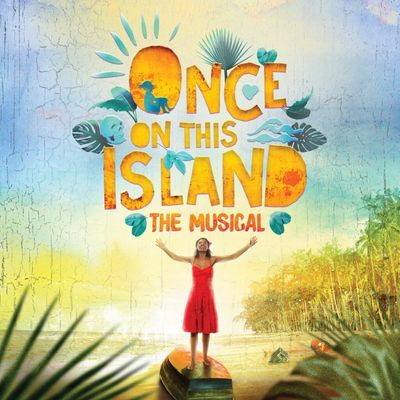
[24:37] Lynn Ahrens: There are always, for me anyway, it's two things. It's an incredible character, the central character, who has to be passionate and just larger than life in some way, whether they're incredibly ambitious or incredibly driven or incredibly hurt or whatever it is, something really with high emotion, a story that you want to hear. And also, if I find a novel, let's say, and I think it might make a good adaptation, it's usually because I'm very taken with the language in it. And I think it could be beautiful, set to music. Like in Once on This Island, I found a little book in the New York Public Library that was, or no, that actually that was Lucky Stiff. I found the book to Once on This Island at the old Barnes and Noble that used to have a used book area.
And I pulled this little tiny novel out of the bookshelf and had a little pick tattered paper cover on it. And I read the first page, and it said, "There is an island where rivers run deep, where the sea sparkling in the sun earns it the name Jewel of the Antilles." And I went, "Oh, it's a musical." And I ran home, read it, and I zoomed over to Stephen's in a cab. The right material just and the right characters and the right story grab you by the throat. And it's not all necessarily complete. It's not all necessarily easy and right there, but there's something about it that just makes you say, "I must write this. I have to do it." That was one. There have been so many little dancer, our show Little Dancer, which is hovering over Broadway at the moment.
I was at a museum and I saw Degas' sculpture of the little dancer, very beloved, famous sculpture, and there was a little plaque, and it talked about her and the world of the Paris Opera Ballet and the fact that no one knows whatever happened to this young girl who danced for the great artist Edgar Degas. And I just thought, "Whoa, there's a story here." And I began to research that girl, and I found a lot about her and a lot about the world and a lot about the artist, and somehow it woven itself into this very beautiful, dramatic romantic story. And again, it started with a world with language, with character. So I guess that's a long-winded answer for your small question.
[27:00] Stephen Flaherty: Yeah. Lynn, do you have anything to you want to add to that?
[27:03] Stephen Flaherty: Yeah, I said to Lynn, and she was surprised that this was after we came out of hibernation after these two years apart. And I said, "I learned something about myself," and I said, "What I love to do is to respond." So I respond to paintings, I respond to the visual arts, to photographs, to text. But if you said just write a symphony, just music for music's sake, I think I would actually find that very difficult to do. I have to have some element of story. I think everything I do has story to it. I think a lot of people thought that Once on This Island came because it has such a strong musical signature to it. I think a lot of people thought, "Oh, that had to have come from the musical world first," when in fact it came from Lynn's random finding of a novel by Rosa Ghee in the bookstore that then opened this world to me.
So I don't know that I would have even thought that using world music and Afro-Caribbean, South American, and creating this stew, this gumbo that was Once on This Island. I don't know that I would have come up with that idea on my own. And that again, that's another thing that's wonderful about collaboration because Lynn was in love with the story. And bit by bit I realized what musically you could do with that particular story. And the same thing with Little Dancer, it's creating a very lush Parisian world and the world of the ballet, which was something I was very interested in exploring because I had never written a lot of dance music or something that was so dance-centric before. And the fact that we knew from day one that the 11 o'clock number would be a ballet, that was very exciting because it was something completely different.
And Lynn knows this, but I like to really flex new muscles with each thing that we do. And I try to create musical worlds that I've not done before. And I think that's part of the challenge of what it is that we do. You want to have something that is from you, but yet it shows different aspects of you. And if I would look for a common thread in the things that we do, I would see that there's always a humanistic aspect to it. And it's always about community and the individual and how they function within that community.
[29:29] Lynn Ahrens: And that's how I hear choruses whenever I hear a group of people singing or an orchestra playing a piece of music. It's all of these individuals that are combining to create this larger thing.
[29:42] Christine Toy Johnson: Yeah, I like to shake it up. I want to shift our conversation a little bit to what you're talking about, actually, about community, because the two of you have spent so much of your time not only mentoring young writers, but also serving on the council of the Dramatists Guild and serving to advocate for the rights of writers. And first of all, I want to thank you for that for your service. And I also want to ask you what inspired you to start to do that. I know that you are both co-founders of the Dramatists Guild Foundation's Fellows Program with Janet and If this. And that you've been members of the council since the mid to late 90s, each one of you. So I wonder if you could speak about that, how you became inspired to start the fellows program, how you got inspired to run for the council.
[30:36] Lynn Ahrens: Yeah, that's a funny thing. As far as council, I have to confess the reason that I agreed to run for council was because Alfred Ure said you have to run for council. And so I said, Oh, okay. I didn't know. So I did, and I was elected somehow, and I got on to council and was gobsmacked to see that there were Compton and Green, and there was Julie Stein, and there was Stephen Sondheim and Peter Stone and Robert Anderson. We're all sitting at this table, this long table, and I didn't say anything for two years. I was so taken aback and intimidated by that group of people. And little by little I began to realize that I could say a few things, and I had a few opinions about things, and it was all very interesting and all very new to me.
I wish I could say that I ran because I had a mission. I didn't. I ran because Alfred Ure told me I should. But once I got on there, I think I did begin to get a mission, sort of. And for me, it was in gratitude for the mentoring that we had received early on. When we first started writing together, there was a program at the Dramatists Guild, I think it was called the Dramatic Guild Musical Theater Program. I think that's what it was called. Sondheim had begun it. And we presented a number of projects there, and you would present 20 minutes of your work. You'd bring a singer or two in and present 20 minutes, and then you'd talk through a synopsis of the rest of the show. And this illustrious panel, ever-changing panel, would comment on your work.
And in would walk Sheldon Harnick and Peter Stone and Sondheim and Cryer Cry and Ford, can't John Cander, all these incredible theater people would come out of this inner sanctum with glasses of gin in their hands and sit down and listen to it. And they would listen to you present your work and then they would critique you. And it was so incredibly helpful. And some of the things they said resonate for me to this day. And that program petered out. I think that people just it just for some reason didn't have the time or whatever, it wasn't pursued. And we thought, what about starting a new program that could was different but the same, where people could come and have a fellowship of writers, musical theater writers and playwrights, and exchange ideas, present work, be critiqued, have master classes, be able to intern, be able to observe.
And so we put this whole thing together. I will give Janet Nypress, and it was Arthur Kopit at the beginning too. I give them big shout-outs because they were so lovely, and Janet for a number of years ran the program. She did the playwright side, we did the musical theater side, and we'd meet twice a month, and the playwrights would have their night, and the musical theater folks would have their night, but they would all be in the room together, and it just seemed like a way of giving back for what we had received, all of those years of attention and mentorship, and people would write you a letter of recommendation when you hadn't asked them to. You find out that they did it behind your back.
It was so incredible. And we're trying, I guess, to say thank you. And also to just honor the form and help it move forward. There's so many talented people who came out of that program. You know, it may have helped them in some way to achieve what they've achieved. I'm thinking of, I won't even drop any names. There's so many people as Jackson. Hello. Oh, yeah, he's one. He's had a little like success lately. But there's so many others, Rajiv Joseph, and I could go on and on. It's so fulfilling to us to, and we still go. We don't run it on the day-to-day basis that we used to, but we definitely go and do master classes. We've had interns come on our shows. We had two lovely fellows join us in Boston for the Boston out-of-town debacle that was Suessical, and they got to see it all. I'm sure they'll never forget what they saw. And so it's just been very rewarding and I think fitting that we give back in that way.
[34:41] Stephen Flaherty: Yes. I also for me think of those early years, whenever I just arrived in New York. And like Lynn said, to get that sort of feedback from these masters, it was terrific. But also I was thinking about the kinds of things that I that didn't exist whenever I arrived in New York, and just the idea of like a mentorship. And that's something that is a big part of the fellows program because I can't say that in the early years that I had one like one-on-one mentor and also the idea that you could ghost another writer in production so which we've done on many of our shows where we've had a fellow be an observer and just see how is a show really done. It's something that you cannot learn in a textbook and it's something that you can't learn from a reading or a workshop.
You have to be in production you have to see how things change how things are resolved how the show moves forward. So that was something and also we didn't really have a clubhouse. We were honored when Carol Hall her foundation made a big donation to create what the Dramatists Guild Foundation calls the music hall which is basically a writer's room and Lynn and I donated the piano because I remember on those early years that we would have to go to these horrible hour rent of rooms that were between like the porn theater and the Howard Johnsons on 46th Street. And it was just it was just not very inspiring. And just to have this room free of charge where you could just let your mind run freely and use as a meeting place for other writers or singers, actors and all of those things really came together.
We try to get guests people to come in and talk about their experience in the theater. So it's very particular and it's never been the same program from year to year. And I think that's one of the really great things. And also it's the only program that I know of in New York City where they get musical writers and playwrights and they put them in the room together. Lynn and I, when we were starting out the with the Dramatists Guild program, that was for musical theater. So we never got to hang with playwrights and see how do they craft a scene and how do they work up to the big monologue? And by putting the playwrights and the musical people in the same room together, I think it's a wonderful way to learn from one another.
And also I think it's also secretly a way to potentially cultivate new writers of books for musicals because if the playwrights are intrigued by what they hear, they're maybe more likely to try a book.
[37:23] Lynn Ahrens: So that's yes, that's great. And so I wondered if Lynn was the one that influenced you to run for election, or how did that come about?
[37:38] Stephen Flaherty: I don't know, I don't know that Lynn did. I was obviously aware of the council and the Dramatists Guild from my very early college years. And I think the thing that motivated me to want to be part of the council was to be working more for the benefit of all of the writers, to wrestle with things like copyright and music issues and these things that I thought were very important and that I could contribute something to. It's a sort of a wide variety of experiences that I could draw upon. And I just felt like being of service to my fellow writers. So that's really why I wanted to be part of the council.
[38:31] Christine Toy Johnson: Thank you. Thank you for all that you both do for all writers. We're all grateful beyond measure. Is there anything else that I haven't asked you about that you have a burning desire to share with us?
[38:47] Lynn Ahrens: Huh. The only thing that I would I'll just touch lightly on are book writers because we have had the pleasure of working with a few illustrious ones. And Terrence McNally, who I miss so much every day, really so brilliant and craggy and annoying and wonderful. He's just such a wonderful creator and collaborator and friend. When you have the chance to work and Tom Meehan, who was such an incredible gentleman and knew the craft backwards and forwards, he knew how to edit, he knew how to land a joke, he knew how to cut a joke when the joke was the second joke and got a lesser laugh than the first joke. Master of the craft and a total just gent in all ways. I've written a lot of books myself for our shows, and I don't think anybody thinks of me as a book writer, but I am, and I've written probably six or seven books for our musicals, and it is the craft of book writing that is so important to the songwriting and the songwriters.
And so I just mentioned that because we're songwriters. Yes, I'm a book writer. Yes, I wrote Once on This Island and Suessical and The Glorious Ones and etc. etc. But to learn the craft, I think you have to work with a great book writer at least once, somebody who really knows how to structure the whole show. It's like the skeleton of the show, Peter Stone always used to say, and everything hangs on those strong bones. And so I just mentioned that because I always think of Terrence when I think of anything to do with the guild. I always think he's so involved with it for so many years and did so much for it. And when the course of that wrote musicals as well as plays, which is pretty incredible.
Just working with Terrence on those three shows. It was such a master class in writing musical drama. It was such a pleasure. He's such a man of the theater. He's also incredibly generous, and he would come up with moments that would allow the score and the music to take a stage front and center. I remember when we were working on Ragtime, he came up with the idea that in the Harlem Club that he wanted a big dance number that would involve Coalhouse and that would in some way forward the plot. And just the fact by him stepping back and saying this is where the music can really shine. And it doesn't have as much to do, you know, about the book as about the music. And I think that the audience really needs this kind of energy at this moment.
It was incredibly generous. But then, of course, we the more we talked about it, we also did find the way that it could move the Coalhouse story forward. But he was very inspiring, and also he was very sensitive, I think, to just to his co-workers and his collaborators, sometimes particularly frustrated. He would just let me vent, and he wouldn't offer any solutions or other than just to hear me. And sometimes I think when you're working in the theater and you're having a difficult day, I think just being heard is enough. But I think he knew that. And he was just inspiring and playful, and I miss him every day as well. We just adored him. Just before the pandemic, when we lost Terrence, but just before that, we the three of us put together a new Ragtime concert version, which is really most of the big songs, the important songs and the storytelling songs all put together.
But he wrote new connective bits so that it can be done just by actors at microphones and concert. And it's it was just done up in Calgary with the Calgary Orchestra and apparently sold out for three performances. Huge house. And next year it's going to be done by the Boston Pops and Cincinnati Orchestra. We're very excited about that. Terrence is smiling, even as we speak. He always wanted that. So he managed to create those interstitial moments before. And great news. That is wonderful news for all of us that we can have that to look forward to.
[42:52] Christine Toy Johnson: Yeah. I'm going to wrap us up. Thank you so much for joining me today. I just always learned so much from both of you. I'm so appreciative of your time and generosity and everything you do. So thank you.
[42:55] Lynn Ahrens: Thank you.
[43:08] Stephen Flaherty: You're so amazing. You're a wonderful interviewer, wonderful actor, wonderful singer. You do it all, and you're beautiful. And you're great just to be in the room with.
[43:18] Lynn Ahrens: A virtual room. It's great.
[43:21] Stephen Flaherty: Council member as well, I will add.
[43:23] Lynn Ahrens: So just so wonderful.
[43:25] Christine Toy Johnson: Thank you.
[43:28] Christine Toy Johnson: I want to thank Lynn and Steve today. To hear all our episodes, you can find us on the Broadway Podcast Network or Apple Podcasts. Please be sure to rate us and leave a review. This episode was produced by Amy Von Masick and me, Christine Toy Johnson. Music was composed by Andrea Daly. Learn more about our guests from all our episodes by visiting www.dramatistsguild.com. Talkback is a production of the Dramatists Guild of America, and it's distributed by the Broadway Podcast Network. Join the conversation online by using hashtag #DGTalkBack. As always, to be continued.
© Broadway Podcast Network, All Rights Reserved