

In this episode, Christine interviews longtime friends and colleagues, Lisa Kron and John Weidman. Both John and Lisa have served as officers on the Dramatists Guild Council; under their purview, the Guild grew to become a national organization that seeks to serve writers of all backgrounds... Read More
From the show: The Dramatists Guild Presents: TALKBACK, sponsored by the Dramatists Guild Foundation
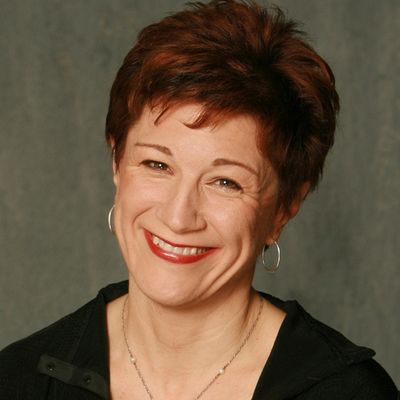
Guests
Featured Shows
About
In this episode, Christine interviews longtime friends and colleagues, Lisa Kron and John Weidman. Both John and Lisa have served as officers on the Dramatists Guild Council; under their purview, the Guild grew to become a national organization that seeks to serve writers of all backgrounds. They discuss the labor relations and gender equity issues that fueled their respective desires to help lead the Guild and talk about what it means to them to advocate on behalf of their community of writers. In addition, John reveals what inspired him to write the musical Pacific Overtures with Stephen Sondheim and Lisa shares her approach to adapting and theatricalizing the musical Fun Home.
This episode was produced by Amy VonMacek and Christine Toy Johnson, with postproduction by John Marshall Media. The music is composed by Andrea Daly. Talkback is a production of the Dramatists Guild of America and is distributed by The Broadway Podcast Network. Join the conversation online, using hashtag #dgtalkback.
Transcript
This transcript was automatically generated and might contain errors.
[0:00] Christine Toy Johnson: Welcome to the fourth season of the Dramatist Guild Presents Talk Back.
[0:05] Christine Toy Johnson: I'm your host, Christine Toy Johnson.
[0:08] Christine Toy Johnson: We've shifted our focus this year to talk about craft and inspiration.
[0:12] Christine Toy Johnson: Our guests this season are my colleagues and friends from the Council of the Dramatists Guild of America.
[0:18] Christine Toy Johnson: Our guests will give us a unique look into how they write, what makes a good story, and what drives them to keep working on the DG Council.
[0:26] Christine Toy Johnson: Stay with us.
[0:28] Christine Toy Johnson: Welcome back to Talk Back.
[0:30] Christine Toy Johnson: Lisa Kron and John Weidman and I have a long history that starts at the top of the stairs at Stephen Sondheim's house.
[0:38] Christine Toy Johnson: You'll hear that story and more as I sit down with my longtime friends and colleagues, Lisa and John.
[0:44] Christine Toy Johnson: John talks about the origin of what inspired him to write Pacific Overtures.
[0:48] Christine Toy Johnson: And Lisa takes us through how she learned how to connect with her audience to become the writer she is today.
[0:55] Christine Toy Johnson: Thank you so much for joining me today. Will you please introduce yourselves to our listeners?
[1:00] John Weidman: I'm John Weidman.
[1:02] Lisa Kron: And I'm sitting next to Lisa Kron.
[1:04] Christine Toy Johnson: Okay.
[1:06] Christine Toy Johnson: So we have Lisa slash John and John slash Lisa.
[1:12] Christine Toy Johnson: Thank you so much. Not only are we really good friends, but I just draw so much inspiration from both of you.
[1:19] Christine Toy Johnson: And like all guests this season we're having with us, we all serve alongside each other on the Dramatists Guild Council.
[1:26] Christine Toy Johnson: I wanted to give a little background that John has served on the council since 1993 and was president from 1999 to 2009.
[1:35] Christine Toy Johnson: Thank you for your service.
[1:37] Christine Toy Johnson: And Lisa was first elected to the council in 2010.
[1:41] Christine Toy Johnson: And then you served as vice president until 2021.
[1:46] Christine Toy Johnson: I think it's worth saying that the boundaries between these various offices are relatively fluid.
[2:02] John Weidman: Yes, I find that to be true, as I'm now in my second year as quote unquote treasurer of the field.
[2:08] Christine Toy Johnson: Yes, we're a team, that's for sure.
[2:11] Christine Toy Johnson: But what we haven't really talked about publicly, and John reminded me of this a couple of months ago, that we the three of us actually have an earlier connection.
[2:21] Christine Toy Johnson: I'm about to take us back to 1989, and we were all at a party at Stephen Sondheim's house for the closing night of the off-Broadway revival of Pacific Overtures, which of course John wrote the book for.
[2:35] Christine Toy Johnson: And I was in the cast, and Lisa was there.
[2:39] Lisa Kron: Well, I was there for just much less fancy reasons than either of you.
[2:43] Lisa Kron: I had, I think, moved to New York around that time.
[2:48] Lisa Kron: And my roommate, who is a friend of mine from college, ran Follow Spot on the show, and she got me work as a sort of fill-in usher in the house staff.
[2:59] Lisa Kron: And so I saw the show again and again, and it was really an incredible, like I can feel it in my body, the experience of sitting on those steps and watching the show again and again.
[3:08] Lisa Kron: It was really a beautiful production of a beautiful show.
[3:11] Lisa Kron: And then I tagged along to the party.
[3:14] Christine Toy Johnson: So we have to explain that Steve's townhouse is several stories.
[3:20] Christine Toy Johnson: There's a large flight of stairs between the second floor and the ground floor where most of the party was going on.
[3:27] Christine Toy Johnson: We were allowed to go into the piano room, and I was just positively giddy that we were there with the piano where he wrote this song and the pencil where he must have written that song.
[3:40] Lisa Kron: And I was coming from the second floor, the first floor, and took a very large fall.
[3:46] Lisa Kron: It felt like I actually still remember this quite clearly, that it felt like I was flying through the air, and I landed on the floor, and there are Stephen Sondheim and John Weidman standing over me, trying to come to my assistance.
[4:02] John Weidman: And Steve says, Do you need anything? A drink, a pair of flats, and John, a lawyer.
[4:11] Christine Toy Johnson: And for those of you that don't know, John has a law background, and so it was quite the comeback.
[4:18] John Weidman: I would have taken the case right there on the spot.
[4:22] John Weidman: The part of the story that mystifies me is what Steve and I were doing posed at the bottom of the stairs, like we were waiting for somebody to come tumbling down, we'd work these lines out, and we were ready to deliver them.
[4:33] John Weidman: And thank you for giving us that opportunity.
[4:35] Lisa Kron: It is so funny.
[4:36] Lisa Kron: Christine, you and I had known each other for a number of years when somehow we discovered that we had randomly actually both been at this party, and I had two really strong memories.
[4:48] Lisa Kron: And one was being in that piano room.
[4:51] Lisa Kron: The other one I said, this lady fell down the stairs.
[4:53] Lisa Kron: I was standing at the top of the stairs, and this lady fell down the stairs, and you said that was me.
[4:58] Lisa Kron: And I was like, that's incredible.
[4:59] John Weidman: And then there was a beat, and then I was like, I didn't push you.
[5:04] John Weidman: I think it's really incredible that I was at the top of the stairs and you were at the bottom.
[5:09] Lisa Kron: Yeah, and Christine fell down the middle.
[5:11] John Weidman: See, I don't know what is gonna happen in this conversation.
[5:13] John Weidman: It was destiny.
[5:15] Christine Toy Johnson: We were destined to be friends.
[5:16] Christine Toy Johnson: So, John, Pacific Overtures was your first collaboration with Stephen Sondheim, right?
[5:21] Christine Toy Johnson: I wanted to ask you, because we're talking all about inspiration and craft in this season of Talk Back.
[5:27] Christine Toy Johnson: How did that come about?
[5:31] John Weidman: I backed into my career in the theater, and Pacific Overtures was the vehicle that I backed up in order to wind up where I am today.
[5:37] John Weidman: I had never, as a kid, really had an ambition to be a writer.
[5:41] John Weidman: I had always assumed that I would go into some kind of public policy position in the foreign service, maybe into politics.
[5:47] John Weidman: But I arrived in college in 1964, and I'd come from a very good high school in New York City, and I was going to major in modern European history.
[5:54] John Weidman: But it was a departmental obligation that you take a course outside that field.
[5:59] John Weidman: And I took the survey course in East Asian history.
[6:02] John Weidman: This is at Harvard, which had one of the best departments in the country in East Asian history.
[6:06] John Weidman: And you know, I went to the first lecture, and it's like my head blew up.
[6:11] John Weidman: It's like Asia did not exist as an idea to be examined or explored in my high school history department at all.
[6:21] John Weidman: And so suddenly I discovered that I was listening to I was information was being delivered to me, all of which was entirely new.
[6:27] John Weidman: And it was thrilling.
[6:34] John Weidman: And so I majored in East Asian history, particularly interested in modern Japanese history in college, but with the idea that probably I would, as I said, go into some kind of public policy thing.
[6:45] John Weidman: I had an internship at the State Department one year when I was in college, because I thought that might be a route to mining my interest in Japan.
[6:54] John Weidman: It didn't seem like it was a good idea.
[6:56] John Weidman: Graduated from college, dealt with war in Vietnam, and dealing with it meant finding out a way not to be drafted.
[7:03] John Weidman: And then I wanted back in law school.
[7:05] John Weidman: I'm putting one foot in front of the other, making my way through my life, wondering what was going to happen next, but not being driven by any particular ambition.
[7:12] John Weidman: And I discovered pretty quickly that even though I really liked law school, I didn't want to be a lawyer.
[7:17] John Weidman: So I thought, what can I do while I'm here?
[7:19] John Weidman: I loved taking myself to the theater.
[7:22] John Weidman: And my dad was an established and celebrated novelist, but he had worked in the theater for five or six years, then given it up.
[7:29] John Weidman: So I there was a family connection to the theater as well.
[7:32] John Weidman: And I thought, and the way you do when you don't know you don't know what you're doing, I thought, I'm gonna write a play.
[7:38] John Weidman: Why not?
[7:39] John Weidman: I can do that sitting in the law school library.
[7:41] John Weidman: And I did feel as if I had this body of knowledge that that white upper middle classish guys like me knew nothing about, which was the history of this other half of the world, which I really had spent four years studying.
[7:54] John Weidman: And so I sat down and I wrote a play about Perry's expedition to Japan in 1853 and what the consequence was.
[8:02] John Weidman: Japan had been close to intercourse with the rest of the world for 250 years.
[8:06] John Weidman: It was this extraordinary event, which had an immediate significant consequence, which had then rolled forward.
[8:12] John Weidman: And I thought I'm gonna write about that.
[8:15] John Weidman: And so I started, and while I was starting, I was able to get in touch with Hal Prince, who had produced one of the shows that my dad had worked on.
[8:24] John Weidman: I didn't know if he would remember me.
[8:26] John Weidman: I met him when I was a kid.
[8:27] John Weidman: I listened to your pipeline show up with Georgia and Lloyd.
[8:31] John Weidman: This gave me access to one great big end of the pipeline if I could make it work.
[8:36] John Weidman: And so I wrote Hal a letter, and he said, I do remember you.
[8:40] John Weidman: He said, I think the idea for the play is interesting.
[8:41] John Weidman: Why don't you come in and talk to me about it?
[8:43] John Weidman: And so I went and went immediately to New York.
[8:47] John Weidman: We had a meeting.
[8:48] John Weidman: Hal, I could tell, or was clear, that he was intrigued by the material.
[8:52] John Weidman: And so I went away, you know, I went back to New Haven.
[8:54] John Weidman: I sat around and I wrote the play, and I sent it to Hal, and he liked it, and we had a reading, and he was going to produce it as a straight play, then changed his mind and said he thought it should be a musical, and I thought that was the end of it.
[9:08] John Weidman: What he was really saying is I'm not going to produce your play.
[9:11] John Weidman: He took it to Steve.
[9:12] John Weidman: Steve was mildly interested, but thought it should be a play with music.
[9:16] John Weidman: But Hal was if nothing if not persuasive.
[9:19] John Weidman: And eventually the three of us were starting this musical.
[9:23] John Weidman: And I have to say, you have to understand, I had really never written anything for the theater before, and I had been a huge fan of Hal and Steve's through company, through Folly's, through night music, and instantly crossed the line from being a fan of theirs to being their colleague.
[9:38] John Weidman: And that was both exhilarating and also terrifying.
[9:42] John Weidman: And now here I am.
[9:44] Christine Toy Johnson: Wow.
[9:45] Christine Toy Johnson: And did you have to try to figure out how to collaborate with one another?
[9:50] John Weidman: This is my experience.
[9:53] John Weidman: But my experience has been that different collaborations work in different ways on different projects.
[9:58] John Weidman: For example, you know, when Steve and I wrote Assassins, basically we went into a room, we wrote the show, we never talked to anybody else about what we were doing until we actually were finished.
[10:07] John Weidman: Then we started showing it to people.
[10:09] John Weidman: With Pacific Overtures, I was already working with Hal first on the straight play, and then Steve was added to that mix.
[10:16] John Weidman: And Hal, those musicals, Folly's company, those musicals were all referred to in those days as Prince Sondheim musicals.
[10:23] John Weidman: They all are different book writers, but the fundamental artistic collaboration was between those two guys, who were also huge friends.
[10:30] John Weidman: And so I was being added to that, but I had already spent months getting over the fact that I was in a room with Hal Prince.
[10:39] John Weidman: So now I was in a room with Hal Prince and Steve Sondheim, and it just seemed like an extension of who's going to come in next.
[10:45] John Weidman: Samuel Beckett, Eugene O'Neill.
[10:47] John Weidman: I mean anything seemed possible.
[10:53] Christine Toy Johnson: So Lisa, you've had quite a journey from being not only a Tony Award-winning playwright and lyricist, but also a Tony-nominated actor for being in your play Well.
[11:05] Christine Toy Johnson: And I wanted to talk to you a little bit about how you were writing for yourself as an actor that preceded, of course, Fun Home and your current collaborations.
[11:18] Christine Toy Johnson: How did you decide that you wanted to write for yourself?
[11:22] Lisa Kron: I don't think I ever decided anything.
[11:25] Lisa Kron: I think I was just, you know, unlike John, I didn't see theater when I was a kid.
[11:33] Lisa Kron: I didn't see a professional show until I was a teenager.
[11:40] Lisa Kron: And but I think that ultimately theater is a vocation and it comes and it gets you.
[11:46] Lisa Kron: And that's sort of what happened to me.
[11:48] Lisa Kron: I was a ham and I was always bossing people around and making them do shows, like in my little synagogue in Lansing, Michigan, we would do these Purim plays that were improvised.
[12:02] Lisa Kron: My parents were both very funny and captivating storytellers, and my family to this day just loves a good anecdote, and they like to tell the same anecdotes over and over again.
[12:12] Lisa Kron: And I think also I think my experience in the world was that was of sort of public invisibility.
[12:26] Lisa Kron: That I wasn't a girly girl particularly.
[12:29] Lisa Kron: I was also extremely shy.
[12:31] Lisa Kron: I didn't register in many spaces.
[12:34] Lisa Kron: And I didn't like it.
[12:36] Lisa Kron: And then it was, you know, the late 60s, early 70s.
[12:40] Lisa Kron: And in those years, my internal goal was to be the girl who, when people talked about me, they would say, She is the funniest girl I've ever met.
[12:50] Lisa Kron: And then it became really clear to me that there was this distinction for a girl between being funny and being obnoxious, and it was a very fine line.
[12:57] Lisa Kron: So I just made a sort of trial and error study in my life of how to negotiate that line and be that person.
[13:07] John Weidman: How did you negotiate the shyness that you experienced and get past that to want to become the funniest person anybody ever met?
[13:16] Lisa Kron: I mean, I don't know what to say about that. It was really extreme. I mean, if when I came to New York and I would go into temp jobs, I couldn't make myself audible. I would get in these. So I don't know, it would be very situational and I don't know. Having seen well, it's the journey from the person that Lisa's describing to the person on stage in Well is, you know, I'd like to, if my therapist was here, I'd have him come in the room and see if he could participate in this conversation. Because that's fascinating.
[13:43] John Weidman: Yeah, I don't know why that was. I was scared I was scared of a lot of things as a kid. And I was very seen in my family. You know, I absolutely was given the tools to deal with the sort of fearful nature that I came with, I would say is the short version of that.
[13:59] Lisa Kron: How do you go from your fearful nature and navigating wanting to be seen, but also being shy, and then putting yourself really front and center, literally, telling your own stories? How did you do that?
[14:17] Lisa Kron: Even to this day, like I'm not a planner. I'm not someone who really plans three steps down the road, not to mention a larger arc of my life. And that I think is combined with the fact that what happened to me in my life was absolutely not a possible path when I started out, or even, you know, I had this experience where these doors of opportunity for me as a lesbian who was open and incorporating that into what I did on stage, those doors literally opened right before I was at a place to step through them. Like the people who were my mentors who I saw who changed my life in the East Village, Peggy Shaw, Lois Weaver, Deb Margolin, Holly Hughes, those people whose, you know, that work is genius. If they had been working five years later than they were, they would have been brought on to different stages, but those doors just were not open.
[15:21] Lisa Kron: I went to a small Midwestern college and I was in the theater department, and I was cast as a prison warden in Marsha Norman's Getting Out in my freshman year, and as a Salvation Army sergeant or whatever. And then after that, I couldn't get cast in anything. But I was told explicitly that I didn't convey any sexuality on stage, that I was a character actress, which is I like to say is I realized at some point was a code word for lesbian, that if I could hang on until I was 40, I might get roles as playing somebody's mother. These were things I was explicitly told. And at that time, graduate programs took ten men to five women. Of those women, there was one character woman who would be in that cohort.
[16:09] Lisa Kron: The final year of my time at Kalamazoo College, this woman named Lowry Marshall, who ended up running the acting program at Brown, but her first teaching job was at Kalamazoo College, and she had this incredible ability to look at people and say, "You, I can see it. I can see that you have a path, and of course you can have a career." And long story short, I ended up right out of college touring with this national acting company that was called the Anticompany, and toured for a year. It was an amazing experience. But one of the things that happened to me there was that we did Christopher Durang's History of the American Film, and I got cast in the Susie Kurtz part, which is an amazing part. I could audition incredibly well.
Like I just something would happen to me when you put me on a stage and the light hit me, and I was just like, I would just go. And so I would get these opportunities, but then it became really clear in that company that I had no skills to follow through to recreate that performance night after night.
[17:12] Lisa Kron: And there was another actor in that company, Julie Fischell, who's an amazing actor, and she had actual craft. And I remember when we started rehearsing, I was like in the pocket, and she was really searching for how to play her role. And as the tour went on, I got less and less laughs. I was just grinding myself to dust. I remember Michael Kahn saying to me, because he was the director, I remember him saying, "Just leave yourself alone. Just leave yourself alone." I was like, okay, but I don't even know what that means. And I remember watching Julie get better and better and better. And I thought, I don't know what she's doing. But whatever it is, that's what I would have to learn how to act.
[17:58] Lisa Kron: So I never went back to school. I never went to grad school. I auditioned for graduate schools. They all rejected me. The guy from Brandeis said, "You're painful to listen to. If you don't get help for your voice, you will lose it." Thank you very much. But then after that tour, I moved to New York. I didn't know what I was gonna do. And again, super long story short, I ended up in the East Village with a home at the Wow Cafe, which was this lesbian theater collective. There were all these little stages. And I started just telling personal anecdotes and singing little songs, and little by little, through trial and error, teach myself to do things I didn't know how to do. And once I figured that out, then I was like, now how can I, how do I not be funny on stage and do something interesting?
And that was a whole other journey. And then it was about now I know how to tell funny stories on stage that have some depth to them, but there's something missing. I figured out on stage what dramatic action was and how to make that happen and what it would do for me. And then what would happen if I put other people on stage? And then it was like I like throw a stone out into the middle of a pond, and then I just dog paddle and dog paddle and dog paddle until I could get there.
[19:07] John Weidman: I this may be a false equivalence, but I didn't listen to you. After when we were done with Pacific Overtures, the question was, okay, what am I gonna do next? And it could have been I wrote a Broadway show, but now I'm gonna do this or do that. And I, you know, having decided to stay in the theater and to really pursue a career in the theater, I realized I really need to teach myself what I don't know. And I know interesting about the school. I've been felt like the law school, I think that's enough of that. But I made a very deliberate attempt, six successful, I think, to not just to continue going to the theater, but to particularly look at musicals, to pull them apart, to look at the way they were constructed, to look at the way the ones that I liked, the way they were structured and how different elements paid off at different times, and to see if I could figure out if I could x-ray the work that I admired and see what those x-rays would reveal. And that was an intriguing and satisfying process.
[20:26] John Weidman: What element of the story really captures you?
[20:31] John Weidman: I would say this is a not a helpful answer, but I would say it changes and is different from project to project. With a show like Assassins, I want to write a musical about the Paris Peace Conference of 1919. And he thought that was interesting, but maybe not. It felt more like a movie, and he just said, "What do you think about this? Assassins." And then there's a story about what was behind that word. We spent time just following that word and that idea to see where it would take us until I discovered that what I really wanted to write about was the Kennedy assassination and my entirely unresolved feelings of loss that resulted from this blow I sustained as a kid, which had never made sense to me. And sometimes it will be more about the collaborator than about the content. What you want is it to be about both things. Because if it's not, you're not probably going to get where you want to go.
[21:36] Lisa Kron: Yeah, I mean it's interesting that you describe it like that. The thing that's truly astonishing about Assassins is it is a theatrical experience. And not even like a pageant. There is a character at the center who is yearning for something, who's after something. You don't know it for a long time, but that organizing principle is there. The drive is not an intellectual drive. And that is really hard to do. It's rare to take those kind of event-based history-based or politically based topics and give them that human theatrical questing engine.
[22:22] Lisa Kron: A lot of the shows I've worked on have had very different forms, but I do find that even because I was using them as an example, Contact and Assassins could not be more different. But I experienced them in a very emotional and personal way. I always found the end of Contact enormously uplifting in what felt like a completely authentic emotional way. And I've seen Assassins, I don't know how many times, but when you get the moment where Kennedy is killed, it makes me cry. And that there I have some deep emotional life which manages to work its way up into my work when the work is successful.
[22:58] John Weidman: Mm-hmm.
[22:59] Lisa Kron: It's so interesting, too, that you talk about that moment where Kennedy is assassinated as a seminal point in your life, and to be able to write the character that did the assassination. Can you talk about that a little bit? I'm really fascinated by that.
[23:17] John Weidman: Steve and I talked forever about the show before either one of us wrote it any wrote anything. And by the time it became embarrassing that we were still talking and not writing, because it's like talking is easier than writing, so it's okay. But we really, in terms of what the structure of the piece would be, in terms of what the content of the piece, what it was going to deliver, what we wanted the audience to take away, we were on the same page. And it meant that we could each go off and do our own part. And one of the things that pleases me most about the piece is that it feels like it all flowed from the same pen. Feels like it has one author, which is something. But the actual writing of it, to your point, it wrote quite quickly.
There were a lot of discoveries we made while we were writing it, but they were driven by deep emotional muscle inside all of it, which we both knew eventually where the show was going to land. And I did figure out for myself a lot of what I had not figured out in 1963, or subsequently, about what I thought that event meant emotionally as well as intellectually.
[24:27] Lisa Kron: Because that's why the piece grabs us so much in the audience, because of the emotional core.
[24:32] John Weidman: Yes.
[24:34] Lisa Kron: Do you want to talk about any specific piece of yours about the process and ways that you've been working?
[24:41] Lisa Kron: Yeah. I was a performer first, and I think for a long time, the thing that I was obsessed with was the because I was talking to an audience in a first person, first telling anecdotes and then turning that into shows, early sort of compilations of stories and things like my play 101 Humiliating Stories. There was one called All My Hopes and Dreams. You know, there were a number of them that I did like at PS122. And then with 101 Humiliating Stories, that one was the first time I felt like that was a play in which something happened to me as opposed to me describing something that happened in the past. Something transpired in the course of it. I think the thing I was just obsessed with figuring out how a performer coalesces the attention of an audience and channels it in the way they want to channel it.
[25:45] Lisa Kron: The difference between a performer standing on stage, bringing an audience through a show, and a person in a room talking with other people. Because it had become pretty clear to me that you had to gather the attention of the audience and you had to move it through your body and give it back to them. That you weren't a flat thing that they were observing. And that learning that, learning the chops of that, something you can only learn by doing it. And then these other questions about what makes people engage in the theater? What makes people pay attention? I'd gone from this touring company to the Wow Cafe, which was this lesbian theater collective where there were a bunch of this crazy world where people were making theater who didn't know the rules, quote unquote, of the theater.
And so they did all these things you weren't supposed to be able to do. But what I would see over and over again was this crazy thing, which was when people did the thing that you weren't supposed to do on stage, like for instance, leaving the stage to answer the payphone in the back when it rang while you were performing in a scene, for instance, that it was arresting. And so there was this other thing that I became really interested in, which is what is the dynamic of the theater? What are the what is the agreement that even people who don't know anything about the theater understand when they walk in? Why is it that the thing that everybody remembers the moment where they saw somebody go up in their lines or they saw a piece of scenery fall down?
There is nothing there. There is nothing there except this imaginative construct that we all agree we're going to participate in. And the vulnerability of that falling apart is so unbearable. It's so unthinkable. And so if you can traverse across that line a little bit, you can make people feel what the theater is doing. The greatest example of this is the stage manager's monologue in Our Town. That's what he does. It's why it's one of the greatest pieces of writing. He moves back and forth and back and forth and back and forth so many times between being inside and outside of the theatrical conceit. If you look at it on paper, if you watch somebody perform it, you're just like, what's that?
You're pulled in. So that was I was just really interested in that. And so all of those early plays have this theatrical conceit of moving back and forth between somebody on stage talking and that dropping and this being in a room with other people.
[28:28] Christine Toy Johnson: Can I ask, building on that about Fun Home? Because I saw Fun Home downtown at the public and I loved it. And what I did the next day was to immediately order a copy of the graphic novel, because I really wanted to know what you left out, what you I just from just from a professional point of view, all adaptations are their own thing. And I and the piece on stage, without knowing where it came from, was so successful, I just wanted to know. And I would love to hear you talk for a minute about that process, about starting with the graphic novel and how you made whatever decisions you and Shanid made about where it wound up.
[29:07] Lisa Kron: Yeah. It was an incredibly unrelentingly difficult process, not in terms of the collaboration, which was one of the greatest experiences of my life, but in terms of the unrelentingness of that material. If you read the graphic novel, which for anybody who hasn't, I highly recommend it because it's a masterpiece, it feels like you're being pulled into a straightforward narrative in which things are unfolding progressively. But in fact, what actually is happening is she is re-narrativizing the received mythology of her childhood. I knew that I understood that and that most people wouldn't understand it, and I understood it because I could see that she was obsessed as I am with the difference between what happened and our narrative about what happened.
And she was parsing those differences. And I knew that I had figured out how to theatricalize that experience. So I felt like I knew how it would be, but it was very difficult. Through much of the process, people told us that we should cut adult Allison because it took a very long time to make that character work, partly because in fact she doesn't need to say that much. It's her watching that is the action. And so we could really only understand it by putting it on its feet and seeing those time periods next to each other.
[30:38] Christine Toy Johnson: What I'm hearing is that your ability to deliver that sort of brilliantly was really grew out of the earlier work that you had done in the theater.
[30:47] Lisa Kron: Yeah. Yeah. Working with your own story. Yeah, in the book there, it feels like there are the there's just there's no scenes, there is no character, theatrical characters, there's no all of that had to be really constructed out of whole cloth. And the goal was to make it feel like the experience of the book. The three things that the adult Allison does is she thinks, she draws, and she remembers. And you cannot see any of those things on stage. So it was like, what do we put on the stage? What do we have somebody do? How do we, what are the modes of theatrical expression that will allow us to communicate those things? And of course, musicals, which are not naturalistic in any way, allow you to be inside someone's head and also to have them sing things that they themselves, they're not consciously aware of.
And this is about a family that is emotionally removed. And I think all musicals are driven by yearning, and this family yearns for connection. The music can express the connection while the characters are saying these things that are inside of their overintellectualized consciousnesses, and that tension, I think is what you know works really well for that musical.
[32:00] Christine Toy Johnson: I wanted to segue our conversation a little bit to talk about your service to the Dramatists Guild and what inspired you to serve. John, do you want to start?
[32:11] John Weidman: Yeah, I'll go first. I got a phone call from Lynn Ahrens, who was on the nominating committee, and she said, We're talking about who to run for council. Do you want to run? I said, Yeah, why not? That sounds great. It seemed like we'd be a terrific club to belong to. I didn't think I would win. I did. And I remember walking into the room to the first meeting and really thinking, somebody's gonna turn me around and frog march me out of here. Edward Albert came across the room to greet me, and it might as well have been Aristophanes in a toga. It was crazy. And but I sat around and shut up for a while to get the lay of the land. And it was the mid-90s, and then into the aughts were a period of time when the guild really was confronted by the kind of stuff that I was most interested in, which were real labor relations issues.
There was still a very aggressive, active part of the producing community that wanted to see the guild put outside the Senate judiciary hearing room going in, getting ready to go into testify. Jerry Schoenfeld, who ran the Schubert organization at the time, came up to us and said, Steve, I have not come here to praise the Dramatists Guild, I've come to bury it. And that would now that things have calmed down and quieted down, but at the time it was an existential threat, the way management is an existential threat to unions everywhere. And so I was very engaged with that. And also with what also seemed like a kind of an existential labor relations threat from a very active group of directors working through their union who were trying very skillfully to establish the idea that directors, when they finished their work had created intellectual property which belonged to them, that a director's work could be copyrighted.
And the consequence of that for playwrights would have been disastrous. And the consequence for the theater generally, it seemed to me would have been disastrous. And so I was really preoccupied with those two issues, and they were real, they were fights. But also presumed that my experience to a large extent with the professional theater was that it wasn't a place where I, in many ways, was welcomed or existed. Yeah, it did it felt like a straight primarily male world. And so I was very taken aback by what at though at that point had become central concerns of the Dramatists Guild, which had to do with equity. And thanks to the work of the Lilies, the vision of Julia Jordan, and then all of the things that have come since there, which you've been a major part, Christine, those things have actually moved the needle in ways that you know, decades of effort before then were unable to do. These people really hit on effective responses and actions that have made a difference. And so that has been the work that I've been most proud to be aligned with.
[36:18] Lisa Kron: Yeah, and I would just add to that, I feel as though when I was first elected to council, it still was largely a white male organization, very New York centric, Broadway-centric, and that things had begun to move away from that, but that took some time. Then there was an explosion in which it really moved across the country and became a national organization. But the kind of labor relations issues that I described were essential to what was going on then, but it has been enormously satisfying to see the organization create the space, very deliberately create the space in order to address the kinds of issues that Lisa is talking about. It's been wonderful to see the organization evolve and make space for what are now essential issues.
[36:58] John Weidman: Yeah. I think the thing that's shifted in my time and continues to shift is when we say we at the Dramatists Guild, that we has sees itself as more fully representative of what it should be representative of. And I think that is the basis of the equity work and has been and continues to be the central, some of the central work in my time.
[37:27] Christine Toy Johnson: Thank you so much. I think that's a perfect place to end this conversation just for today. It's my honor to serve alongside the two of you. You have both been incredible drivers of change and advocated for playwrights for so many years and for so many reasons, and we're very grateful to you for that. And thank you for joining us today. My deepest thanks to Lisa and John. To hear all our episodes, you can find us on the Broadway Podcast Network or Apple Podcasts. Please be sure to rate us and leave a review. Learn more about our guests from all our episodes by visiting www.dramatistsguild.com. This episode was produced by Amy Von Masick and me, Christine Toy Johnson. Music was composed by Andrea Daly.
Special thanks to Recess Studios in Costa Mesa, California. Talkback is a production of the Dramatists Guild of America, and it's distributed by the Broadway Podcast Network. Join the conversation online by using hashtag DG TalkBack. As always, to be continued.
© Broadway Podcast Network, All Rights Reserved