

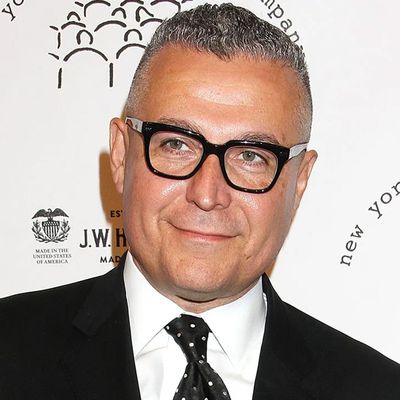
Rick Miramontez began his career, direct from college, as the press director of the Center Theatre Group / Ahmanson Theatre where he organized the campaigns for more than 25 major productions, including the RSC’s The Life and Adventures of Nicholas Nickleby and world premieres of Neil Simon’s Brighton Beach Memoirs and Biloxi Blues, and James Kirkwood’s infamous Legends!.. Read More
From the show: The Producer's Perspective Podcast with Ken Davenport
Guests
Featured Shows
About
Rick Miramontez began his career, direct from college, as the press director of the Center Theatre Group / Ahmanson Theatre where he organized the campaigns for more than 25 major productions, including the RSC’s The Life and Adventures of Nicholas Nickleby and world premieres of Neil Simon’s Brighton Beach Memoirs and Biloxi Blues, and James Kirkwood’s infamous Legends! (starring Mary Martin and Carol Channing, and documented in Kirkwood’s hilarious book, Diary of a Mad Playwright). He was the press director for the 1987 and 1990 Los Angeles Festival (the latter under the direction of Peter Sellars), seminal events in the American cultural world, where he presented Cirque du Soleil to the U.S. media, as well as Peter Brook’s epic The Mahabharata.
On my very first episode, I chat with superpower press representative Rick Miramontez, co-founder and President of O&M, one of the leading publicity companies on The Great White Way. Kinky Boots, It’s Only A Play, A Gentleman’s Guide to Love and Murder, Beautiful . . . and that show that never got any press at all . . . Spider-Man . . . are just a few of Rick’s clients.
We discuss press relations on Broadway and much more!
Keep up with me: @KenDavenportBway
Transcript
This transcript was automatically generated and might contain errors.
[0:09] Ken Davenport: Hello, this is Ken Davenport. Welcome to the Producer's Perspective Podcast.
[0:18] Ken Davenport: Every single day on my blog, theproducersperspective.com, you get to hear my perspective about Broadway. But here on the podcast, I sit down with an industry pro to get their perspective on our very unique and interesting industry. And this week I'm talking to someone who is actually used to arranging interviews, not giving them. I'm sitting across a wooden table right now from one of Broadway's biggest and best spin masters. Yes, I'm talking about none other than Broadway's powerhouse press agent Rick Miramontez. Welcome, Rick.
[0:49] Rick Miramontez: Thank you. What an intro.
[0:52] Ken Davenport: Rick is the president of O&M, a public relations shop on Broadway that represents some of the biggest shows in town, including Kinky Boots, which happens to be one of my shows. It's Only A Play, which is also mine, Gentleman's Guide, not mine. I'm mad at Rick for not getting me on that show since it won the Tony. Beautiful, Sideshow, upcoming Finding Neverland, and a whole bunch of other shows from previous seasons, including that little show that no one has ever talked about in the press called Spider-Man. Rick was recently profiled in a massive article in the New York Times. You should Google it. It's a fantastic read, an interesting insight to what makes press on Broadway work. And in addition to being known for the way with the press, he's also got one of the best fashion tastes in the industry. No tie today.
[1:39] Ken Davenport: I'm missing. No tie. So, big welcome to Rick. We'll start off with a very simple one. Rick, you are a press agent on Broadway. In a sentence or two, very quick. What do you think the definition of that role is?
[1:53] Rick Miramontez: The press, a Broadway press agent is the person responsible for creating as much noise that costs the producers net zero dollars in terms of selling tickets, and our partner in crime would be the show's advertising agency. And of course, producers spend a lot of money at the hands of the ad agency buying ads. But we're responsible for creating interest in the show, attention on the airwaves and in the print, etc., etc. All for free, basically. Just except for your fee, which is minuscule compared to what we would pay for a New York Times ad.
[2:35] Ken Davenport: Well, I would totally agree. You know, what you pay for a New York Times ad is defined and it's very expensive, but what we can do for you is literally priceless. You cannot buy it. Now we worked together a very long time ago.
[2:50] Rick Miramontez: Absolutely.
[2:50] Ken Davenport: On the Jekyll and Hyde Tour.
[2:52] Rick Miramontez: A tour of Jekyll and Hyde.
[2:54] Ken Davenport: Right. Yeah. Now that was literally like 15 years ago or something like that. Tell me a little bit about your path to becoming a press agent and how you ended up in this office here today.
[3:06] Rick Miramontez: I grew up in Los Angeles, and I loved Showbiz, but the part of Showbiz I loved was really the theater and performance, never really the movies, which is interesting to me and to people when I explain where I'm from. But I grew up not far from the music center of Los Angeles, which is the Lincoln Center counterpart, and a wonderful performance space. And at the time there were two producers there who did spectacular work, genre-defining work at the Mark Taper Forum, Gordon Davidson and Robert Fryer, who was a legendary Broadway producer who brought in big stars and traditional plays. And then across the plaza at the Dorothy Chandler Pavilion, the legendary producers Fryer and Martin presided over the LA Civic Light Opera.
So, as a student in high school and later in college, you know, back in those days, $3 would buy you a student ticket to see amazing, amazing work, and I was hooked. And while I was never an actor or a performer necessarily, I wanted to be a part of the theater, and I read a copy of New York magazine because that was my true life's ambition to live in New York. And there was a cover story about Stephen Schwartz's upcoming Broadway musical Working and people working on Working, and they were behind-the-scenes profiles, and there was a profile about the press agent of Working, and I thought, wow, so interesting because I saw what eventually turned out to be true. This is the person who's involved in every little bit, you know, a 360 view of the entire Broadway scene.
They're in contact with the actors and the creatives and the producers and the ad people and the audience and the ushers and the media. So I knew that's what I wanted to do, and I was a journalism major in college, and shortly around that time I just started interning around in Los Angeles had this funky theater scene called Equity Waiver, 99 seats or less. Theater's sprouting everywhere. Very vibrant and interesting theater scene. And I just became very useful there to the producers of these small shows, and then I became an intern at the music center, and then, you know, one of those lucky breaks happened where the guy who was then the PR man of Robert Fryer Center Theatre Group Ahmanson was going on to bigger things within the organization.
He thought very highly of me, and he introduced me to Mr. Fryer, and literally two weeks before I graduated from college, they just basically gave me the whole department. It was like it was one of those, I don't want to do it, give it to the kid, he'll do it. And you know, that was an amazing break. I remember my first day on the job, my first paying job in the theater. I was sitting in a rehearsal room listening to Lillian Hellman answer questions of the cast of Another Part of the Forest. So it was spectacular. And Mr. Fryer, you know, may he rest in peace, and what a troublemaker he was and a great tastemaker, said, you know, kid, you gotta pay attention to what you're doing right now and really serve these people that you're working with because they will take care of you for the rest of your life. And that's really proven to be true, particularly moving to New York, etc.
[6:36] Ken Davenport: That's fantastic advice about taking care of those people. As a producer, I have to think of the same thing how to request care of the artists, the actors, and the audience, of course.
[6:46] Rick Miramontez: Indeed.
[6:46] Ken Davenport: What do you think is there a secret to a show getting great press these days? Are there certain ingredients for a show that gets the attention of the press and the audience?
[6:58] Rick Miramontez: I think it's two things. The obvious answer, and let's, you know, that's the elephant in the room. If you have a big star in a production, you know, the phone will ring, and you basically answer the phone, and you're a glorified secretary, and you're just sort of setting up appointments and interviews and TV appearances, etc. It's not the most interesting kind of work for me, but one is very grateful when it happens. You know, it's so hard, usually I welcome that challenge, quote unquote. But I think the real thing that creates a winning moment for a show is the theme, what it is about, how an audience relates to it, and the moment in time in which it's being presented. You know, there are moments in our world when people need comedies.
It's Only A Play, you know, it's sort of like lightning in a bottle, but I saw that it might be because that show is really interesting. It is a very, very funny show that can about the theater that will appeal to a lot of people, and the cast features the, you know, sort of like the Olivier of Comedy, a Broadway of Art moment, Nathan Lane, but also Nathan paired with the spectacular Matthew Broderick, which is a duo that will go down in legend in any industry, and then a cast that is full of, you know, other star names. So it's a show about the theater, a comedy about the theater that just seems so glamorous to the world at large. And so I knew it would be a huge hit, but I think it wouldn't be as big a hit if in 2014 we didn't need to have to have to laugh so much.
And, you know, I've always admired Nathan, but it is an amazing thing to stand at the back of that house and watch him open that play and perform that scene with the new kid, Mike Ascot, who's wonderful, and to just see how he pleases an audience and how he controls the audience and how artful he really is. It's extraordinary.
[9:19] Ken Davenport: If you could choose only one of these three things for a show, a Tony Award, a glowing review from Ben Brantley, the best review he's ever given, or a star, big Hollywood star. Which of those three would you choose?
[9:37] Rick Miramontez: Oh, you only get one. God comes down and says, Rick, on your next show, you get one of these three things. Which one would you choose?
[9:43] Rick Miramontez: I'm gonna pick the one that will surprise me, a Tony Award. I will tell you, the star thing is, and even if it's a big star, it only works to me, and it's only foolproof if it is the right star at the right time. And I've seen, and we won't name names, but I've seen it not work as well. The Tony Award, and this, and I only bring that up because we represent A Gentleman's Guide to Love and Murder.
[10:11] Ken Davenport: And a gentleman's guide is what you would classify probably in Broadway terms as a hard sell.
[10:18] Rick Miramontez: Oh, oh, you know, it's a very artful piece that does not have the full throttle populist appeal that other shows might, although it is side-splittingly funny and very appealing. Um, but it is a hard sell. I gotta tell you, I have never seen what a Tony Award does for a show like I did for that. And you know, I've talked to people about that, and we just sort of came to the consensus that nowadays the imprimatur of a Tony for Best Musical or Best Play is truly more than ever the good housekeeping seal of approval, and it's a shortcut to, you know, marketing shorthand. Uh, somebody comes into town, um, people go to the theater now in a more limited way than they used to. Obviously, that has to do with the cost of tickets, and they need to see the show instead of, uh, in a moment in time when they might have gone to four or five shows a year.
[11:27] Ken Davenport: That sounds good.
[11:28] Rick Miramontez: It's not as casual a decision, and the Tony Award nowadays, as I'm discovering with the winner of last year, means more than it ever has, and it kind of means everything because as much as I love that show, I could see it got a massively rave, a great rave review from the New York Times. Um, but that didn't do the whole, the whole thing for it. It was really when the Tony Award was given to them over other deserving shows, and almost weeks preceding that when it got the most nominations. There was really no looking back for those guys.
[12:08] Ken Davenport: Yeah, I graphed that out on the blog and saw a significant upswing when those nominations came out.
[12:14] Rick Miramontez: It was if they had heard all the good buzz. It was great word of mouth about that show on the street, and all of a sudden there was a stamp of approval when it appeared in the press that Jeffrey's guide led the way.
[12:25] Ken Davenport: Here, here. So, uh, you got that rave in the time from Gentleman's Guide, and I've seen other shows get raves, and Sideshow is one that's getting one now, and just got one. Do reviews matter now as much as they used to? How has that changed?
[12:37] Rick Miramontez: We all still want it. We want that New York Times review. Do they make or break shows like they used to? You know, I don't think it matters, and I was just speaking to a very important producer about a show that is opening off Broadway, and she said to me, and of course I presented all the entire upside. I think this show that we're working on is going to be fantastic, etc. And she said, but you know, if we don't have the Times, we have nothing. And it's never, it hasn't in recent moments been explained to me in such stark terms. So there is this idea that it is make or break with a New York Times rave. I don't think the New York Times can make or break a show anymore. I think it can be helpful. I think for all kinds of reasons, mostly opaque, not at the box office, it could be really helpful, but I wouldn't say it's the most important ingredient in the selling of a show.
[13:40] Ken Davenport: You just made a lot of producers that are listening feel a lot better about if they don't get that review.
[13:47] Rick Miramontez: No, and I certainly agree, we've seen a lot of shows that have not gotten the reviews that they would have dreamed about that have gone on to massive, massive success. Um, which is good. So do you see we'll extend that a little bit to the customer reviews a bit? Do you find those matter? Are you hearing more about audiences or producers even talking about, oh, what about this customer comments on the New York Times website or Yelp reviews or bloggers reviews? Are you hearing that? Do you think that's important?
[14:19] Ken Davenport: I think it is important because it's really a reflection of the most important selling tool, the most important ingredient in the marketing of a show, word of mouth. And it's an extension of that. It's a little like the wild west right now. So, you know, who's to know how much it means, and is there a portal to, you know, funnel those opinions as excitingly and powerfully as there might be? I don't know about that, but word of mouth is the whole ball game, is the entire tamale, it's the meal. And those comments are a reflection of that.
[15:00] Rick Miramontez: And if you had, what if this happened to me, which is why I bring it up? So, uh, you are working on a show, you are out of money advertising dollars. Nothing. That's it. You've run six months, and but everyone believes there's still something there that people are enjoying. What would you tell the producer to do? Like, what is something they can do that doesn't cost a hundred thousand dollars like putting a full page out in the New York Times, the reviews have gone away at that point. Where would you tell the producer? How would you generate some interest in the show with zero bucks?
[15:33] Rick Miramontez: Well, see, that's and that's exactly where we get the call. Uh, it's what, and there is a project that I'm quietly keeping my eye on that's sort of in a similar situation, and the producer of that articulated the potential end game or the what he referred to as the Hail Mary Pass. You know, you're at the 10-yard line, you can see a clearing, and you get one last pass off, and maybe they'll catch it in the end zone the other side of the field. And I think it's really just making that clearing happen. Um, I would probably, and I don't have a specific, I would probably, because we are talking about Hail Mary pastime. If the audience doesn't love it, you're basically dead. The audience, you know, or if the show is just not good.
But really, it's the audience who makes that determination. Um, you've got to try and keep it on it as much as long as you can, uh, and it's sort of playing the clock out. And I would suggest I would come up with three or four outrageous publicity stunts that cost nothing that might generate attention that the producer can afford, which is they don't have to pay for it, they're just paying our fee.
[16:50] Ken Davenport: And you've worked with a lot of producers over the years.
[16:52] Rick Miramontez: Yeah.
[16:53] Ken Davenport: I won't ask you to tell me who your favorites are or your least favorites are, but can you tell me unless you want to. Can you tell me some of the characteristics that you think the best producers that you've worked with have? Like what does it take to have to be a great producer in today's market?
[17:11] Rick Miramontez: A great producer to me has to possess two. There are two attributes that I look to look to. One, and this is a basic, good taste. Somebody with good taste, somebody of quality, you know, and by good taste, I mean they are passionate about the theater, they are passionate about making good shows happen, they are about passionate about Broadway, and they know how to deliver something with class and something that's worth $150 a ticket. Um, and secondly, the really great producers are the ones who are the most collaborative, the ones that you really have a relationship with, meaning they ingratiate themselves to you as much as they want you to do the same for them, and they listen to you and they take your opinion to heart.
And there's one producer, and I won't name him because I'm not named, I'm not gonna name any of them, but he really we work so well together because he really trusts me. We get each other, and that's such an important ingredient because we can get so much work done in shorthand. And he said, you know, even when you are trying to manipulate me and you're spinning me, I trust that you're doing it for a reason. You're trying to get me to do something that otherwise wouldn't happen, and I will go with it. And I think that, you know, generousness of spirit and trust and ability to see another POV and to pay attention to a professional is really winning.
[18:58] Ken Davenport: I obviously have a great relationship if he's calling you out on spinning him. Right? He can recognize it and call you out. Uh, that's great. Uh, now you've, uh, how do you, you know, the thing about our interesting that I always find interesting is that you we there's only three ad agencies in town that all the shows. You know, Microsoft and Apple would never share the same ad agency, right? But on Broadway, we don't have enough business to have 27 ad agencies or 27 press reps. So you're often faced with a difficult decision and position sometimes with representing shows that are competing or in the same season. Last year was a perfect example of that. And Beautiful, both of which came out to be monster hits.
[19:45] Rick Miramontez: Yeah. One winning the Tony, one not, but both, you know, entering the million dollar clone. How do you deal with conflicts like that? And what do you tell producers who are unsure about, hey, you're having a meeting right after this one with the show that's trying to steal the Tony away from us?
[20:02] Rick Miramontez: Yeah, you know, it's funny. That the adventure of last year where we were literally involved with all four best musical nominees, uh, it was really interesting because it taught me two things, and not that not that I don't behave that way anyway, but there were two factors at play that were required because of the unique unique circumstance.
[20:29] Rick Miramontez: Number one, campaign on your positives. Do not try and tear down the competition. Much better. We've all been involved in campaigns where the converse was the case. Much better approach, much more powerful approach. Um, and number two, what this is all about really uh it's much, it's a much bigger assignment than any one show. It's about making the Broadway experience more exciting. And you know, not that I am not fiercely competitive and just focus on single-mindedly on any one given show, but I think the Broadway assignment, the idea that theater going, that seeing any one of these 50 shows that are on at any given time is the ultimate uh good that I could provide my industry. Um, that became very apparent then.
And so it was uh it was it it almost made the one show competing against another, you know, puny. You know, then you're just dealing with personalities and managing personalities, and it felt very high school in OA, which I love. And I always I do tell nervous nominees, don't sweat it. This is like running for class president in high school.
[21:54] Ken Davenport: I love that analogy. Okay, let's talk about the big superhero in our in the room for uh for a second, which is there in my lifetime, certainly, and perhaps in Broadway history, no show has generated the amount of press that Spider-Man generated. For a while, at every event I spoke at, or everyone asked me about Spider-Man. I had friends calling me from Oklahoma that I went to high school with saying, Ken, what do you hear about this Spider-Man musical? I hadn't spoken to them in 20 years. Um it probably again from the outset had to be one of the most challenging public relations shows to work on. Yet I will give you the compliment of from the outside looking at you and how you handled it, it didn't seem hard from what you were presenting and putting out in the press.
So tell me now that we're years beyond it. What was it like for you? Was it hard? Were you tearing your hair out? Were you conflicted? Did you want to quit? Did you want to work harder? How was it to work on that show?
[22:53] Rick Miramontez: You know, it's funny, it's it really taught me some basic principles or solidified some basic principles that I will always live with. One protecting the artists and sticking up for the artists because the tougher it got, I just dug in my heels because I was sticking up for the people making the show and particularly the people on stage. They were the true heroes. They were rehearsing at one point a new show in the day, and then doing that show at night. There was, you know, just the there were these awful things being said about the show, and they had to go and do the show that night and defend the thing while they were actually performing in a complicated show. There were some very serious dramatic moments that tested their mettle.
And I just felt like the guy who wanted to stick up for them. You know, not just sell the show, but it felt like an even bigger mission. And it was such a great story, and I wanted to, and I really believed it, although there are others who, you know, and it's interesting. Uh I hear from others about my participation in this, you know, and I'm I'm viewed upon as sort of a Johnny Cochran figure, somebody who was really great in behalf of his client, but like on the wrong side of the story. Uh, I never saw it that way. I always thought it was great for Broadway for all of this chatter to happen. And I gotta tell you, the one thing I learned from Spider-Man, you know, which is a very practical and powerful PR lesson, is you know, you have to take, or you should take the most negative aspect of what your project is and turn that into your shiniest object.
And uh it was a very good assignment, forced to do it on that one, but I really learned some skills that I didn't have to that point. And secondly, you know, the opportunity to just have a focus on a Broadway show like that was so rare that that was the great thing. You know, the spinning of it was just a joyous opportunity, like being the kid in the candy store. And I saw the results of that. Because people around the world, and you're absolutely right, I have been in parts of the world where I cannot imagine anybody would even have a Broadway and it's cut their consciousness, and people wanted to know all about Spider-Man, what was going on with Spider-Man, the engagement was amazing. But what happened with, and I'd like to take some of the credit by the sense of humor with which we handled it.
Um people heard so much about the show, and they wanted to come see the show, and I could feel it in the audience. When they were in the house and the curtain was going up, they were kind of rooting for the show. And I think they saw a better show than might have been on that stage. So it was a it was really a very fun example of how what we do has a direct effect on the show. But I uh but really personally, it was really just about being a part of that team with those artists. Uh and I so many of them. Reeve, I get so joked up. Reeve uh uh Carney, um, you know, when he showed up, like this little indie rocker golden boy, whatever, beautiful guy. When we started the show, I, you know, frankly, I he amazing voice, amazing presence.
He couldn't sell it to the 10th row. And by the time he left that show, that dude could play the garden and sell you what he was singing, back row included. Yeah, just amazing. And, you know, of course, Mr. Tierney who had the fall, Patrick Page, who's such a great leader. Um it was the experience of a lifetime.
[27:10] Ken Davenport: And does all press is all press good press? You know, that show sold a tremendous amount of tickets early on. Do you believe in that old cliche?
[27:21] Rick Miramontez: I believe in it because you know, there were some really dirty uh um, you know, snowballs thrown at us, and um, or some very, very funny curveballs thrown at us, and we just handled each and every one of them, I think. Uh yeah, I I I think it, you know, there probably isn't, and certainly in politics and other uh uh industries, that is, I'm sure not the case, but if you're talking about Spider-Man, that adage is absolutely true.
[27:57] Ken Davenport: One last question. If you know, we live in a very dysfunctional industry, we all love it desperately. What I love about you is that it comes out in every word that you say. I can tell how passionate you are about this now that I know more about your backstory about where you started, it's not too often we get someone, we steal someone away from LA in Hollywood. And all of Broadway is thankful for that. But there are things obviously that make what we do every single day challenging. Some people may say it's unions, some people may say it's ticketing companies. If you could change one thing about Broadway, you were given one wish. You could add 10 more theaters, you could have no unions, you could do it. What one thing would you do that you think could make Broadway a better place?
[28:50] Rick Miramontez: I am going to be very practical and say, I point the finger at the media and the new media and the print media coverage for Broadway and the way they treat Broadway, and it's a very obvious comment. Broadway matters less because we are covering it less. Um if we could do one thing, I would bring us back to 1965 when a Broadway show is in the national consciousness, and the president of the United States would come and see a Broadway show because he was in New York, etc. etc. I think that would do a lot for the Statue of Broadway. But the reason why I would do that is because it's true, it is important. I think it makes our uh media less important because they don't cover us, it doesn't make us less important. So that's that's one thing. If I if I ruled the world, I would start with the networks and go from there.
[29:57] Ken Davenport: That's a great answer. All right, we're gonna let Rick get back to creating buzz for all those shows so he doesn't have angry producers uh burning up his phone lines. Thank you so much for sitting down with me.
[30:07] Rick Miramontez: My pleasure.
[30:08] Ken Davenport: And thanks to all of you for tuning in. We'll see you next time on the Producer's Perspective podcast.
© Broadway Podcast Network, All Rights Reserved