

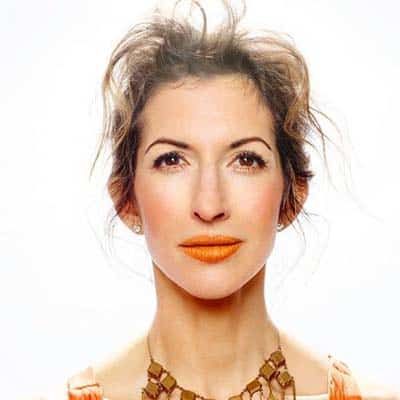
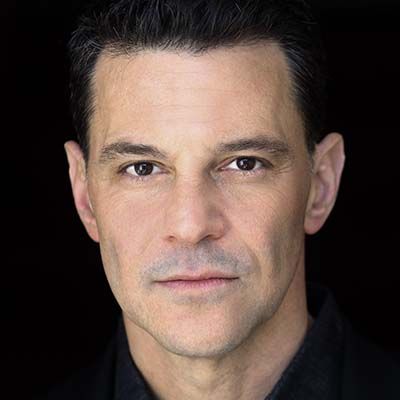
Alysia Reiner and David Alan Basche are a power couple of TV, film and theater. Alysia may be best known for playing Natalie “Fig” Figueroa, a warden on Orange is the New Black, and has a plethora of additional credits including Better Things, The Deuce, Masters of Sex, How to Get Away with Murder, 30 Rock and the upcoming production of Mrs... Read More
From the show: The Theatre Podcast with Alan Seales
Guests
About
Alysia Reiner and David Alan Basche are a power couple of TV, film and theater. Alysia may be best known for playing Natalie “Fig” Figueroa, a warden on Orange is the New Black, and has a plethora of additional credits including Better Things, The Deuce, Masters of Sex, How to Get Away with Murder, 30 Rock and the upcoming production of Mrs. Marvel. David may be best known for his five seasons starring in the TV Land original series The Exes, and for his portrayal of Todd Beamer in the film United 93. His own string of credits includes Royal Pains, Blind Spot, Frasier, 30 Rock and Lipstick Jungle. Alysia and David are co-producers, co-creators, and co stars, who can now be heard in the podcast original Around The Sun.
As collaborators, Alysia and David share how they decide which projects to work on together behind the camera, as well as their experiences working together on camera. They dive into the realities of living with a fellow actor and artist, including how they balance their careers, handle jealousy or envy, and how they curb self-doubt. And as actors who have to engage in intimate scenes with others, Alysia and David also share their philosophies on the importance of trust as a couple, and thoughts on the dichotomy of being actors whose job it is to “get caught up in what’s not real” for a role, but also acknowledging that it’s a lie.
In this episode, we talk about:
- Meeting during a summer stock production of Twelfth Night
- Love for voiceover work
- Self-taping auditions for each other
- The process of letting your character go at the end of the day
- Working on Around the Sun
Connect with Alysia and David:
- Listen to Around the Sun (episode 105 here)
- IG: @alysiareiner && @davidalanbasche
- Web: socialenterprisegiftguide.com
Connect with The Theatre Podcast:
- Support us on Patreon: Patreon.com/TheTheatrePodcast
- Twitter & Instagram: @theatre_podcast
- Facebook.com/OfficialTheatrePodcast
- TheTheatrePodcast.com
- Alan's personal Instagram: @alanseales
- Email me at feedback@thetheatrepodcast.com. I want to know what you think.
Thank you to our friends Jukebox The Ghost for our intro and outro music. You can find them on Instagram, Twitter, and Facebook @jukeboxtheghost or via the web via jukeboxtheghost.com.
Transcript
This transcript was automatically generated and might contain errors.
[0:01] Alan Seales: Welcome back to The Theatre Podcast, intimate personal conversations with the industry's biggest names. I'm your host, Alan Seales, and our guests today are Alysia Reiner and David Alan Basche, a husband and wife team, actors, partners, both on and off the screen. They are a producing power couple, just two amazing people that prove that if you're honest and open and are in the same business, you can still become better people and support each other while you're going through all of the crap together, because this business will chew you up and spit you out. It's nice to have somebody who knows what you're going through. Before we get into the episode, find me online on Instagram and Twitter at Theatre Underscore Podcast.
Leave a rating and a review wherever you're listening now. And everybody, please enjoy this episode with Alysia and David right after this break. Today's two guests are a power couple of TV, film, and theatre. Alysia Reiner may be best known for playing Natalie “Fig” Figueroa, a warden in Orange is the New Black, and has many additional credits, including Masters of Sex, How to Get Away with Murder, 30 Rock, and even the upcoming production of Mrs. Marvel. David Alan Basche is best known for his five seasons starring in the TV Land original series The Exes, but also has his own string of phenomenal credits, including Royal Pains, Blindspot, Frasier, 30 Rock, and Lipstick Jungle. These two guests are partners in life and in business.
They are co-producers, co-creators, especially when it comes to their daughter, and even co-stars, who can now be heard in the podcast original Around the Sun, episode 105. Alysia Reiner, and soon-to-be David Alan Basche, because he is late, welcome to The Theatre Podcast. My dog is here in his stead. You know, I'm an eternal optimist, and in this moment, there is a lot of uncertainty and discomfort. I love to call it the, I like to call COVID or the pandemic, the meditation retreat none of us signed up for, and it really helped us learn stuff about ourselves. But there's also been some spectacular creativity that's come out of it, and this podcast is a great example.
[1:07] David Alan Basche: Well, yeah, Around the Sun. So, there's David. How are you doing, David?
[1:10] David Alan Basche: I agree. Hello. Sorry I'm a few minutes late, but, you know, my wife is much smarter and more entertaining than I am.
[1:15] Alan Seales: Well, your dog was substituting for you.
[1:17] David Alan Basche: Yeah. So, now that you're here, actually, we're going to come back to the meditation. We're going to come back to Around the Sun. I want to quickly acknowledge that even though you two are mostly known now for TV and film, you both have a strong, strong theatrical tie-in, because you met during a Summerstock production of Twelfth Night, right?
[1:30] Alysia Reiner: Yes, we did.
[1:31] David Alan Basche: I love that you did your research.
[1:33] Alysia Reiner: We did.
[1:34] David Alan Basche: We met during Twelfth Night.
[1:36] Alysia Reiner: Scripps said, fall in love, and you don't argue with Shakespeare.
[1:40] Alysia Reiner: Actually, I can show you. Grab the Jason. Jason Chatfield, who some say is one of the new modern—he's a fantastic New Yorker cartoonist. David, for one of our anniversaries recently, had this made, and that's me as Olivia and David as Sebastian.
[1:55] Alan Seales: That is so, so cute. So, then, how long ago was that? How long have you guys been working?
[2:01] David Alan Basche: Forever.
[2:02] Alysia Reiner: Five years.
[2:03] David Alan Basche: Yeah, we're actors. Are you crazy? But I will tell you, I was 20.
[2:09] Alan Seales: Wow.
[2:10] Alysia Reiner: Yeah, don't do the math, please.
[2:12] David Alan Basche: It's more than half my life. I'm over 40. So, there you go.
[2:16] Alysia Reiner: So, listen, when you are 20 and you have a showman—showmances are not uncommon, especially when you are 20. And for it to stick, and for it to last, and then—
[2:25] Alysia Reiner: I know, and I really still like him.
[2:27] David Alan Basche: I know.
[2:28] Alysia Reiner: And we still have sex. I think that's important to say.
[2:32] David Alan Basche: Thank you, honey. That's good.
[2:34] Alysia Reiner: I really believe it's important to keep on having sex. I feel very strongly about that.
[2:39] Alan Seales: Well, I think a lot of people would probably agree with you on that.
[2:42] Alysia Reiner: I also am enjoying you, by the way, Alysia, in The Beautiful Liar.
[2:47] Alysia Reiner: Thank you.
[2:48] Alan Seales: So, that's another podcast.
[2:50] Alysia Reiner: It's been such a delightful season of podcasts. I had so much fun doing that. I had so much fun doing Shana Feinberg's podcast for Audible. It's been—I love voice work. I am a cartoon voice, so I do that, and I do a bunch of commercial voiceover. I'm like the voice of Campbell Soup.
[3:05] Alan Seales: But it's so—
[3:06] Alysia Reiner: Wait, really?
[3:07] Alysia Reiner: Yeah. But it's so, so, so fun doing—I mean, it's radio plays. It's what our grandparents grew up on, and it's so cool using your voice to create everything.
[3:14] Alan Seales: The two of you together are such great—I mean, at least from what I know, you seem like such great collaborators, such great creators. And, David, you missed it in the intro. I said that you are co-producers, co-creators when it comes to your daughter, of course, and co-stars, etc.
[3:29] David Alan Basche: Best production.
[3:30] Alysia Reiner: Oh, man.
[3:31] Alan Seales: Right. Your best production is your daughter, and obviously, that leads to enjoying sex. So, spoiler alert, listeners. Sex can make babies. So, the two of you together, you were in Egg together, right? And I guess—so, when it comes to your both careers, obviously, you're both very passionate about what you're doing independently. You both have very successful careers independently. When does it make sense to come back together and do something like Around the Sun or do something like Egg?
[3:56] Alysia Reiner: That's a different thing together. But in all seriousness, it's a one job at a time, one collaboration at a time kind of thing. When I was working on Equity, which was the first film I produced, I got in the weeds. And I was both in it and producing, as was my partner on that. And I basically begged my husband to come be another producer on it. He was already in it, and I was like, we need you. We desperately need another on-set producer. And he did a spectacular job. And then—
[4:27] David Alan Basche: And that was easy. That was a no-brainer for me. I mean, I had—I kind of thought I had a break. I had just finished a sitcom for five years, and I was like, oh, I get to just coast for a little while. And then my wife was like, no, we're making this movie. There's 20 locations in 26 days, you got to—or whatever it was. But that—you know, I was very glad that we were on that together for lots of different reasons, creative and otherwise.
[4:51] Alysia Reiner: And then with Egg, you know, Egg we did—back to the theater—we did a reading of it as a play.
[4:57] Alan Seales: Really?
[4:58] Alysia Reiner: A decade before we produced it. And ironically, it was right after we had—I guess it was after we sold to Sony Picture Classics. We sold Equity to Sony Picture Classics, and Equity was out there. And I—we bumped into the writer of Egg on a ferry going to Kismet. So it was Kismet. And she said, oh, I just wrote this screenplay of Egg, would you like to read it? And we read it, and we had always loved the script so much. And we said, let's—let's make this. And it was, you know, what I'll also say is, for me as a producer—and I'll let David talk on his own about being a producer—I produce for two main reasons. One is to create more jobs for women, and to sort of change the business. So on that shoot, we had, I think, like, all of our—the heads of every single department was a woman, and most of our crew was women. We were over 75 percent.
[5:54] David Alan Basche: That was really important to me. And the other thing is to tell stories that other people might be afraid to tell, particularly women's stories. And this is about the choice to be a mother, and what does motherhood mean, and what does fatherhood mean, and really getting into the weeds about that. But it's also funny. So I think it's—when you have something that's deep and funny, it's so delicious, and that's why I fell in love with it. Mr. Basche, anything to add?
[6:19] David Alan Basche: What was the question?
[6:21] Alysia Reiner: You know, producing—listen, two actors in the same house is—two creative people in the same house is one thing, right? And lots of advantages. I've often said, you know, if I have a bad audition, and I come home and say to my wife, the casting person looked at her watch when I was 30 seconds in, there's no explanation needed. And Alysia says, oh, that's a good idea. And I'm like, there's no explanation needed. And Alysia says, oh, God, that's terrible. I'm sorry you had to go through that, honey. I'm like, she gets it. If you come home and, you know, you try to explain that to an investment banker or an actuary or—so it's—there's two creative people, immediately there's some positives, right?
And sometimes there's some negatives. And sometimes it's that there's two really strong creative ideas, and the project can't hold both of those ideas. So one person's going to have to let go of their idea this time, and then the next time someone's going to have to let go of their idea.
[7:22] Alysia Reiner: That's such a good point. And it's, you know, it's so interesting. Just today, I was helping David with a self-tape. Like every actor on the planet, we have a self-tape studio at home soon—now. And David also built a gorgeous voiceover studio here. And I was helping him with his audition. And if it's his audition, it's my job to shut the fuck up. You know, if he asks me for direction or help, it's my job to be the reader and to take his direction. And if he says act less, it's my job not to take it personally and to just do what he says and help him. And, you know, on the flip side, there have been times where I have an idea about a character and I want to get it just so. And he's super patient as I, you know, get it just right.
[8:07] David Alan Basche: That's the job of the reader is to say however many times you want to do it, right? And to serve the piece and serve the audition. And, you know, I want, I love when Alysia gets roles and works, and I want her to feel great about every audition. And this morning, you know, she didn't even get the sentence out. She's like, hey, do you want dot dot dot? And I said, nope, thanks. Here we go. Because I had I knew what I wanted to do with it. And honestly, it was for a smaller guest star role. I didn't want to—I didn't want to think too much. Just wanted to do it. Send it over. If I'm the guy for the job, they'll give it to me. If I'm not, they'll give it to somebody else. And I probably wanted to say whatever I wanted to say, because he's auditioning for one of my favorite shows of all time.
And I want to be auditioning for it now. I don't. Well, but for another podcast, we'll tell you the story. But there you got a job that I actually did. But there you go. That's there are sometimes negatives, right? Two actors in the same house, two producers. And sometimes there's some negatives. There's some jealousy. Alysia has achieved in her career in the last five, six years, a level of celebrity that I have never had. And I sometimes get jealous of that. And I try to tell her, like, oh, I'm feeling a little jealous of this right where I want some more attention because it's all about the press or it's all about whatever. So, you know, we and we've both had ups and we've both had downs and we carry each other through those things and we're patient with the first decade of our career.
It felt like to me, though, if I really look at it, it's not the truth. So it's really important to, like, always analyze your own story. But it felt like the first decade of our career, I couldn't get a job or an agent.
[12:21] Alysia Reiner: And our manager to save my life and he was working all the time.
[12:26] David Alan Basche: Right, right. Because The Exes was early.
[12:30] Alysia Reiner: Yeah, it was about a decade ago. And then Orange is the New Black has been was recent.
[12:34] David Alan Basche: Well, for me, Orange actually was not that. Orange started in 2012 and went to 2019.
[12:43] Alysia Reiner: But then I long did The Deuce and I did.
[12:47] David Alan Basche: You have an old, old, old bio, my friend. I did The Deuce and then I also did Better Things for the last five years.
[12:55] Alysia Reiner: And then I just did the first season of Shining Veil with Courteney Cox and Greg Kinnear, which will be in stars in March. Better Things, the final season, comes out February 28th. And then there's been a lot of movies in there, including the two that we produced. So it's been busy.
[13:12] Alan Seales: Right. So now then, are you are the two of you? I think it's actually very cool that, you know, David, you were just saying like that you have told her you were jealous. I think a lot of jealousy grows and gets sort of it goes to a negative place, especially when it comes to coming between couples, if they're after the same thing, when they're not talked about, when they're not communicated, when they're not dealt with. So, I mean, you literally said like, yeah, I was jealous of you. I'm jealous of your celebrity status now. Is that something that is a constant thing? Or have you just been like, oh, it's kind of there, kind of creeps in and then like, you know, we're still us.
[13:50] David Alan Basche: You know, that depends on the day. Right. I mean, we all wake up in the morning and we make up our minds how happy we're going to be. Really. Right. Because we either start talking to ourselves in a nice way and we're full of gratitude, like, wow, I woke up awesome. I get to I get to have a day like it beats the alternative. Right. And then, you know, maybe we have a few things to do that we like to do. And we have people around us that we like to spend time with. And we're we have a happy day. Sometimes we wake up and we didn't sleep well or something hurts. We feel unhealthy. We're not at ease. Right. There's dis-ease and it's harder to have a good day. And we're in our head. We often say, you know, like I say, and Alysia says sometimes and other people, you know, my imagination is a dangerous neighborhood to be in at night.
Right. Like that's don't walk alone in there. You don't want to walk alone in there at night. Sometimes we have those, you know, before we go to bed, I'm staring at the ceiling and it's a little dangerous. I'm starting to beat up on myself.
[14:45] Alysia Reiner: Yeah. For me, it's like my interrupters. For me, it's like it's actually between like two thirty and five thirty a.m. If I wake up, my brain starts lying to me. It just starts lying. I've learned that it's lies, but it'll start to make up problems. And that's just what my brain does. That's what this artist's brain does, because I've done a pretty good job of I'm really watching my brain. And that's what, you know, we meditate. We do all these things to learn, to watch our thoughts and choose our thoughts and question our thoughts. But in that two thirty to five thirty range, I don't have the mental power to like question my thoughts. So I just believe them. And, you know, to your question, you're saying, like, is this is jealousy a constant thing?
I mean, I imagine with some relationships and couples and it is and that's when you really run into trouble, I think. And if especially if it's not voiced and then there's certain expectations and expectations are really just premeditated resentments. Right. So then you get into trouble and then there's contempt. And when there's contempt, I think you're in big trouble. I you know, it really does depend on the day. I mean, today I can tell you, you know, I'm incredibly proud of Alysia. I'm she's got a project she's going off to do in Atlanta for a few weeks and I will miss her. But it means I get to eat a little more junk food with our daughter and that's kind of fun. And I'm so excited about like, well, where is she going to live in Atlanta?
And she gets to fly there and she gets to do these super cool things in this part. And that jealous is not like I wish it were me. That jealous is like, oh, my God, that's like it's not jealous. It's like I get to live vicariously like this is so cool. You get to do stunts and, you know, same with him today, auditioning for my favorite show. Right. And, you know, so it's it depends on where are you at the moment. What's your mindset? You know, and we all get to choose what that mindset is. So we can't always choose that positive thing. Sometimes we we have a bad day or we don't feel well. And then sometimes we take it out on other people.
[16:50] Alysia Reiner: Right. And to quote a favorite another favorite podcast of mine, which is Brené Brown's Dare to Lead, she's been talking recently about her new book, which is Atlas of the Heart, which is all about language. And she actually taught me this week that envy is between two people and jealousy is between three, which is fascinating to me. I did. I never knew that book is all about. Actually, it makes sense if you think about language and the power of language and one of the, you know, I am not Brené, so I hope I hope I'm not butchering her ideas here. But one of the main thesis of the book is the importance of saying the truth in a relationship and saying that thing that you're feeling anyway. So you got to share it.
And once you share it, it's not as big as it feels in your head if you don't share it. And that's, I think, one of the joys of my relationship when David is willing to say to me or I'm willing to say to him, I'm this is how and yes, or I am afraid or I'm overwhelmed, whatever it is of that moment. It keeps us closer. It's interesting to me to to think about like couples who are both in the business and whose job it is sometimes to literally I mean, I'm not I'm not taking the best bit. I'm not taking this back to sex just for the sake of sex, because I could do that all the time. But like this, it's your job to have sometimes literal sex scenes and have physical close encounters with other people.
And sometimes within the same productions, you're watching your partner be intimate with somebody else. And right, right. So this is where I'm going with this, right. And I'm using example of like the first time I was like, uh, was when I watched Pretty Woman on Broadway with Andy Karl making out with Samantha Barks while or Alysia standing next to them on stage, right? And I'm like, oh, that's got to be weird. So but there are again, one of these people that I or these couples that I feel like just have this intense connection and authenticity and realism that I can see coming through in people like yourselves as well, where it's just like, listen, this is how I'm feeling. Let's deal with this. So you said you've done that. Talk me through that.
[19:16] Alysia Reiner: Here's my philosophy. I'm so curious what David's gonna say. Here's my philosophy about sex on stage. We as actors, be it stage or screen, we as actors are the luckiest humans on the planet that we get to do this thing where we get to pretend and fake it. And it's not breaking up a marriage, fully sanctioned, fully sanctioned, right? So we're so lucky. And I get really kind of annoyed with the people who then fall in love with the person that they're making out with and break up their marriage because then it messes it up for the rest of us, right? It's like anyway. So I think if you're married to an actor, you just have to know that and you have to it's it's a trust issue. It's like, okay, I trust that you don't have feelings for this person.
And, you know, P.S. sex scenes in most most of the sex scenes I've had in film or television or theater are not that sexy. Like, it's really ridiculous. It is so technical. I've not felt very sexy doing them. And, you know, because David's experienced it too, he knows that too. So maybe that helps. And, you know, what's interesting, you bring up an interesting point. So people, actors get into a project and they are meant to fall in love with someone on screen, have sex with someone else on screen, and I think a lot of people get tricked and they get fooled because they feel that and then they feel like, well, that's what I want. That's different than what I have at home. So I want that spark.
I want that. But it's a lie. It's fake. It's acting. It's not real. And it's so interesting because if we can acknowledge that, like, well, but that's not real. It's also not real because you don't have to pay taxes together. You don't have to pick up the kid together. You don't have to wipe each other's poop, like all the things.
[21:18] David Alan Basche: Well, wait, that last one was wait, wait, huh? Yeah. We got like 45 or 50 more years before we get there. I'm forward thinking.
[21:27] Alysia Reiner: Well, I just it's very interesting that as artists, you know, sometimes we our job is to be seduced by what's happening. Right. Caught up in the moment and what's happening. But that really speaks to what we're talking about before. I mean, if we're in a place where we get caught up and we don't adjust ourselves to what is and what's real, then we can feel very jealous. We can feel very lonely. We can feel left behind. We can feel that everybody else is working more than I am. Oh, that person has the job that I want that will probably make me happy. Right. Because we're caught up. We're not really adjusting ourselves to what is. And when it's a different day and we're feeling more present, we're able to say, wow, you know, I like I have a great career.
I've had an amazing body of work. I've I've gotten to play fascinating characters, make people in the audience laugh and cry and hate me and usually not love me, usually hate me. But, you know, what a gift that is. And I see that clearly. And I'm I'm not caught up in in what's not real, you know.
[22:37] David Alan Basche: But it's weird when that's your job is to get caught up in what's not is what's not real. It's very, very interesting.
[22:39] Alysia Reiner: Yeah, I think there's a point of separation where I guess you have to keep mind of that. And it's tricky. And it speaks to the talent that you have and other people of this caliber have. Because when you are you have to let go of the of acting, right? There's acting versus being. And you have to be in the moment. You have to be present. And when you're doing all these things and you're in these intimate moments, sometimes literally in some of the most compromising positions to get a camera where it needs to go and whatnot. Like you've you've there's a level of trust and and I guess acceptance that you're having with your your scene partners, your directors, your crew and all of this. And it and by default, by being vulnerable like that, you have to let yourself connect with them.
But then there's a point where you have to separate it. Like, how do you where do you stop and then pull back and say, you know what, I'm still Alysia at the end of the day. I'm still David at the end of the day. We have to go and pick up our kids together.
[23:35] Alysia Reiner: For me. And I'm curious, David's answer about this. I might the first job I got after the summer stock that we did together, like my first job out of school was I did a one woman show about Virginia Woolf at the Edinburgh Festival. And it was spectacular training for me because at the end of each show, she commits suicide. And I had to learn to go deep within this human and then put her on the shelf at the end of the night. And I had to learn that and create tools for myself in a way that I've really never had to use those tools again. I did another play like 10 years later that similarly dealt with mental illness. And those are big tools. But it's fascinating to me having this conversation because it's the same tool set. It's the same tool set that you use when you're having sex with someone on stage. It's different. You are not your character. It's a yes, it's a piece of you.
[24:43] Alysia Reiner: I think it’s really interesting because we both have such different processes, and I think that’s what makes it work. I mean, I’m very much about the emotional journey of the character, and I think David is much more about the technical aspects of the performance.
[25:13] David Alan Basche: Yeah, I think that’s true. I mean, I love the emotional journey too, but I also really enjoy breaking down the script and figuring out the beats and the structure.
[25:33] Alysia Reiner: Right, and I think that’s why we complement each other so well. When we’re working together, we can really help each other find that balance between the emotional and the technical.
[25:53] David Alan Basche: Exactly. And I think it’s also important to have that trust in each other, especially when we’re doing intimate scenes.
[26:13] Alysia Reiner: Absolutely. Trust is key. It allows us to be vulnerable with each other, and that vulnerability translates into our performances.
[26:33] David Alan Basche: And it’s interesting because, as actors, we’re often asked to portray emotions that aren’t necessarily our own. So having that trust makes it easier to dive into those moments.
[26:53] Alysia Reiner: Yes! And I think it’s also about knowing when to let go of the character at the end of the day.
[27:13] David Alan Basche: Right. It’s a process of separating yourself from the role, which can be challenging sometimes, especially if it’s a particularly intense character.
[27:33] Alysia Reiner: For sure. I mean, I’ve had roles that have stuck with me long after the curtain falls.
[27:53] David Alan Basche: Same here. But I think we’ve both learned techniques to help us transition back to ourselves after a performance.
[28:13] Alysia Reiner: Definitely. And I think self-care is a huge part of that.
[28:33] David Alan Basche: Yes! Taking time for ourselves, whether it’s through meditation, exercise, or just spending time together, really helps.
[28:53] Alysia Reiner: And it’s important to communicate about how we’re feeling, especially when we’re both in the thick of it with our careers.
[29:13] David Alan Basche: Communication is key. It helps us navigate any jealousy or envy that might come up, especially when one of us is working more than the other.
[29:33] Alysia Reiner: Exactly. It’s all about supporting each other and celebrating each other’s successes.
[29:53] David Alan Basche: And that’s what makes us a strong team, both personally and professionally.
[30:13] Alysia Reiner: I love that. And I think it’s also about finding projects that resonate with both of us.
[30:33] David Alan Basche: Yes! When we find something that excites us both, it makes the collaboration even more special.
[30:53] Alysia Reiner: And it’s great to have that shared passion. It makes the process so much more enjoyable.
[31:13] David Alan Basche: Absolutely. And I think that’s why we’re so excited about our podcast, Around the Sun.
[31:34] Alysia Reiner: Yes! It’s been such a fun project to work on together, and it really allows us to explore our creative sides in a different way.
[32:02] David Alan Basche: And we get to connect with so many amazing people in the industry, which is a huge bonus.
[32:30] Alysia Reiner: Definitely. It’s been a wonderful experience, and I can’t wait to see where it takes us.
[32:50] David Alan Basche: Me too! And I think it’s a great way to share our journey with others and hopefully inspire them along the way.
[33:11] Alysia Reiner: Exactly. And I think that’s what it’s all about—sharing our stories and connecting with others.
[33:39] David Alan Basche: Yes! And I hope that our listeners can feel that connection as well.
[34:09] Alysia Reiner: I think they do. And it’s been amazing to hear their feedback and see how our conversations resonate with them.
[34:37] David Alan Basche: Absolutely. It’s a beautiful reminder of why we do what we do.
[35:07] Alysia Reiner: Yes! And I’m so grateful to have this opportunity to work together and share our experiences.
[35:35] David Alan Basche: Me too! Here’s to many more projects together.
[36:03] Alysia Reiner: Cheers to that!
[36:33] David Alan Basche: And to all the adventures that lie ahead.
[36:59] Alysia Reiner: Absolutely!
© Broadway Podcast Network, All Rights Reserved