

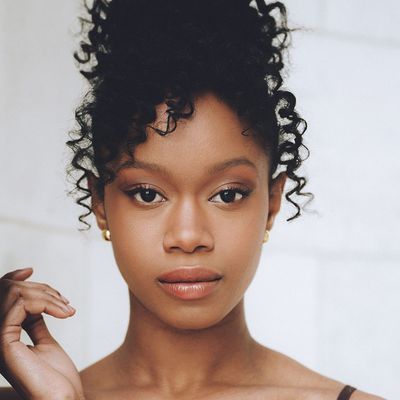
You don't have as much time as you think you do, so you better be prepared. At least that’s how Joy Woods lives her life. She shares how she caught the acting bug, starting as a dancer but eventually fell in love with theatre and acting... Read More
From the show: The Theatre Podcast with Alan Seales
Guests
Featured Shows

About
You don't have as much time as you think you do, so you better be prepared. At least that’s how Joy Woods lives her life. She shares how she caught the acting bug, starting as a dancer but eventually fell in love with theatre and acting. She looks back on her time in “Little Shop of Horrors”, her audition process in “SIX The Musical” and the sisterhood among cast members. She moved around during the pandemic, “broke, alone and free”, realizing that part of her needed that freedom to grow. Now starring as Middle Allie in Broadway’s “The Notebook”, Joy talks about the different aspects of the show, including the depth of its characters, and the unique experience of performing in a production that resonates deeply with audiences while also invoking intense feelings of nostalgia. She reflects on her personal connection to her character, and the things she’s learned about herself in the process.
Joy Woods made her Broadway debut in 2022, taking over the role of Catherine Parr in “Six The Musical”. She was part of the ongoing hit production of the off-broadway production of “Little Shop of Horrors,” returning to play the role of Audrey in 2023 after originating the role of Chiffon in the original 2019 revival cast. Her additional credits include the 2020 production of “Mac & Mabel” at City Center on Chorus!, the viral “Ratatouille: The TikTok Musical”, and a 2023 production of “I Can Get It For You Wholesale” off-Broadway, and a 2023 production of “Dreamgirls,” which took place at Raleigh Memorial Auditorium. She has just opened “The Notebook” on Broadway as Middle Allie.
Connect with Joy:
- Instagram: @joynwoods
- TikTok: @joynwoods
Connect with The Theatre Podcast:
- Support the podcast on Patreon: Patreon.com/TheTheatrePodcast
- YouTube: YouTube.com/TheTheatrePodcast
- Threads, Twitter & Instagram: @theatre_podcast
- TikTok: @thetheatrepodcast
- Facebook.com/OfficialTheatrePodcast
- TheTheatrePodcast.com
- My personal Instagram: @alanseales
Transcript
This transcript was automatically generated and might contain errors.
[0:01] Alan Seales: Welcome, everyone, to one of the busiest seasons on Broadway and an all-new episode of The Theatre Podcast. I'm your host, Alan Seales.
[0:13] Alan Seales: And given the sheer amount of shows opening in March and April, leading up to Tony nominations in May, there are so many amazing people to talk to that are starring in shows right now.
[0:24] Alan Seales: So I decided to release two new episodes a week for the foreseeable future because there's just so much great content to bring you.
[0:31] Alan Seales: Our guest today, Joy Woods, is no exception to this list of amazing people to talk to as she recently just opened The Notebook on Broadway as Middle Alley.
[0:39] Alan Seales: The Notebook being, of course, one of the most anticipated shows of the season and for good reason.
[0:45] Alan Seales: Joy is still relatively fresh out of school from AMDA, where she went, and already has a couple of amazing credits to her name.
[0:54] Alan Seales: She's definitely someone to keep your eye on in this industry because she's still so young and already getting offers, meaning she doesn't have to audition.
[1:02] Alan Seales: And also, in another episode or two, I haven't quite set the release schedule at the time of this recording, I have an episode in the can with her Notebook counterpart, Ryan Vasquez, so that'll be released very soon.
[1:13] Alan Seales: Find me online on all the socials, tag me in your stories, share this podcast with a friend.
[1:18] Alan Seales: And now, everybody, please enjoy this episode with Joy Woods.
[1:22] Alan Seales: Here you go, one, two, three.
[1:25] Alan Seales: Today's guest made her Broadway debut in 2022, taking over the role of survivor Catherine Parr in Six.
[1:37] Alan Seales: She was one of the ongoing, she was part of the ongoing hit production of the off-Broadway production of Little Shop of Horrors, returning to play the role of Audrey in 2023 after originating the role of Siobhan in the original 2019 revival cast.
[1:51] Alan Seales: Additional credits include the 2020 production of Mac and Mabel at City Center Encores! The viral Ratatouille, the musical that happened on TikTok, and a 2023 production of I Can Get It for You Wholesale Off-Broadway, and a 2023 production of Dreamgirls, which took place in my old stomping grounds at Raleigh Memorial Auditorium.
[2:16] Alan Seales: She has now just opened The Notebook on Broadway as Middle Alley.
[2:20] Alan Seales: I'm not crying, you're crying. Joy Woods, welcome to the Theatre Podcast.
[2:24] Joy Woods: Hi, thank you so much for having me.
[2:27] Alan Seales: Let's talk about Raleigh. I love Raleigh.
[2:29] Joy Woods: Let's do it. Me too.
[2:31] Joy Woods: Yeah, I grew up actually in a tiny town west of Winston-Salem. If you know any, just follow I-40 west, and you hit 421 in Winston-Salem, and that's where I grew up.
[2:42] Joy Woods: But I always say I'm from Raleigh because that's where I went to college, and that was my first professional gig with Casey Nicholaw as my director at Raleigh Memorial.
[2:50] Alan Seales: Wow.
[2:52] Joy Woods: So that place has a very strong tie for me.
[2:57] Alan Seales: This was years ago, before Casey was Casey. How did you like it down there?
[3:05] Joy Woods: I really, really loved it. I had always wanted to do Dreamgirls, and I had just come back from being in Chicago doing Notebook, and I did a few weeks covering at Little Shop, and I was just feeling antsy.
[3:20] Joy Woods: I wanted to do something new, and Dreamgirls came into my life, and it was such a good group. And it was springtime, it was getting nice, and I got to drive again, and I had Bojangles for the first time.
[3:34] Joy Woods: It was an excellent, excellent experience that I hold very near and dear.
[3:40] Alan Seales: So the rest of this whole podcast is going to be about our love for Bojangles.
[3:45] Joy Woods: I had it every day. It was bad. It was bad.
[3:48] Alan Seales: Dude, when I go down, I can't stomach it like I used to because I'm 43. But in college, my roommates and I, my suitemates and I, would go eight times a week on average.
[4:01] Alan Seales: There were days when we would go for more than one meal, and we brought out the exact change that we needed. We had it down to a science.
[4:08] Alan Seales: Anyway, North Carolina, Bojangles, so good. Anyway, anyway, we digress.
[4:15] Alan Seales: So where did you grow up? I shared my story. What's your story?
[4:19] Joy Woods: I grew up in Chicago.
[4:20] Alan Seales: Yeah?
[4:21] Joy Woods: So I hadn't been home in so long, so getting to do the Notebook out of town at home was a blessing. My parents got to see the show so many times. The place where we stayed was right across the street from where a family member lived.
[4:35] Joy Woods: So it was truly the stomping grounds. It was really great. I was at home.
[4:41] Alan Seales: How young were you, or I guess how old were you?
[4:43] Joy Woods: Yeah, how young were you? We'll go with that. How young were you when you started really getting into theater performing? Do you remember when the bug bit you?
[4:49] Joy Woods: I started out as a dancer. So I thought that, you know, that was going to be my track wherever dance led me, whether it was in a company or performing in some way was what I wanted to do, dancing.
[5:03] Joy Woods: And then my end of my sophomore year, when I started dancing seriously, I think seventh grade.
[5:13] Alan Seales: Okay.
[5:15] Joy Woods: I dabbled, you know, as much as your parents would pay for you to dabble growing up. But by the time I actually wanted to do it, like going week after week and wanting to get better and everything, that was probably towards the end of middle school.
[5:28] Joy Woods: And halfway through high school, my friend on the dance team took me to go see the musical, which was Adam's Family. And I said, I want to do that. They're singing and dancing. I want to get in on it.
[5:42] Joy Woods: And did.
[5:43] Alan Seales: The singing, like you can sing. You got some pipes.
[5:49] Joy Woods: Thank you. And I would have thought, oh, singing came first, but the dancing came first. That's interesting.
[5:56] Alan Seales: Did you always have a natural singing ability that or did you have to work on that at this time? Like where did when you saw Adam's Family, when you were like, oh, I guess I can sing now. Did you start taking lessons? Did you start? I mean, what was this point where you sort of transitioned?
[6:13] Joy Woods: I have five other siblings. They're all older than me. And the two oldest ones are musicians. And they went to school for music. And my sister's room was on the other side of my wall. And whatever she was listening to, I was listening to. And when I inherited her MP3, I learned the songs that she was listening to and learning how to sing.
[6:35] Joy Woods: And so all the kids on the school bus hated me because I would be singing all the time. But I never thought it would be something that I could do for a living. It was that was dance.
[6:45] Alan Seales: Well, in high school, especially, cliques form social tiers, form groups of talent, talented and not so talented people. Like when you were at this point in high school, then if you're singing on the bus or wherever you're singing, did you know that you were good? Were you like, I'm better than all that person on the bus or whatever?
[7:10] Joy Woods: I think it was more so like I wanted to join in and be in on the fun. But it wasn't really clicking that I was good at it because, I don't know, high school, people are catty. That's the way things go. And whatever shows were picked were definitely based on the amount of people and the kind of people you have that year.
[7:35] Joy Woods: Was I the lead in a few of them? Yes. But that was just basically based off of who was in the program at the time and what they had going on. So I never really thought that it could be something I'd do for a living until the end of my senior year.
[7:50] Alan Seales: Well, the end of your senior year. I mean, that's already past the point when people normally decide, I'm going to school for this and this is what I want to do. I mean, so were you kind of on the fence about all of this getting to that point? What else did you want to do?
[8:04] Joy Woods: Dance.
[8:05] Alan Seales: Oh, so you were definitely like, I'm going to perform. You just didn't know in what sort of capacity?
[8:12] Joy Woods: Yeah, I thought dancing was going to be my ticket into the industry. I knew that I wanted to do theater, but, you know, I still had the idea that that was going to be a far-off dream. And then I was going to be doing my survival jobs and working and making money and figuring out a way to get in.
[8:31] Joy Woods: But I went to a unified audition at the high school theater festival that year and I got into AMDA and they gave me money. And I was like, I'm going to take it to New York and I'll figure the rest out when I get there.
[8:44] Alan Seales: Well, the youngest of five, you said, right?
[8:46] Joy Woods: Six.
[8:47] Alan Seales: Oh, the youngest of six. You have five older siblings. Right.
[8:49] Joy Woods: So youngest of six. Jeez. OK, and how many of them were you said two of them went to school for music?
[8:56] Joy Woods: Well, they're all let me say this since this is being recorded. I want the world to know they're all musicians. They're all very talented, but two of them are writing and releasing.
[9:07] Alan Seales: OK, so where did the music. I want to blow all of their spots up.
[9:10] Joy Woods: Good, good. All right. Where did I mean, obviously, when you have six siblings, all they're into music, there's got to come from somewhere. Where did that hold? Where did where did the family love for music come from?
[9:20] Joy Woods: Church. Mm hmm. Mm hmm.
[9:23] Joy Woods: The choirs, the players singing, playing tambourines, everything. By the time I got old enough to not be in the dance team anymore or to be on the dance team, we had like switched churches and I held resentment towards everyone in the world for it. So I held on to music when I couldn't be dancing.
[9:42] Alan Seales: Well, the resentment, you mean like because your social structure kind of got mixed up?
[9:48] Joy Woods: Because I wanted to be on the dance team. I wanted to be waving the ribbons, doing the dances because my mom choreographed.
[9:56] Alan Seales: There was a church dance team?
[9:57] Joy Woods: Oh my God. Yeah.
[9:59] Alan Seales: Really?
[10:01] Joy Woods: That's a thing. That's a thing. That's a thing.
[10:03] Alan Seales: Church arts is very much a thing and was and my mother was the she's a dancer and she was like the choreographer, the head of the dance team. She was in the choir. She would choreograph all of the dances and in our basement.
[10:15] Joy Woods: And so everybody would be at the house dancing in the basement and I'm supposed to stay upstairs.
[10:22] Alan Seales: How rude. They wouldn't even let me down there.
[10:25] Joy Woods: Yeah, I was mad about it at seven years old.
[10:28] Alan Seales: Not where I came from. I told you, like tiny town, North Carolina, there were no church dance teams that I was ever.
[10:36] Alan Seales: So this is the first I've heard a choir. Yes. Shows, performances. Yes. Dance teams specifically. No way.
[10:46] Joy Woods: That is so cool that you had that opportunity.
[10:49] Joy Woods: And it was literally in your basement, too.
[10:52] Alan Seales: Mm hmm. So then. Well, that's where they would learn it. They would, you know, do it at church, but all the fun happened in rehearsal.
[10:59] Alan Seales: Of course. And were you being the youngest of six then? Like, were there older siblings that were involved, too? And you were just like the youngest one that wasn't allowed down?
[11:04] Joy Woods: My sisters were. Oh, they were. Yeah. Yeah.
[11:13] Joy Woods: To this day. Like, well, now who's on Broadway?
[11:17] Alan Seales: Siblings eat that. I don't know if I'd go as far as to say that, but a little bit.
[11:23] Alan Seales: Well, this has been recorded. So now it's now it's out there forever.
[11:27] Alan Seales: OK, so going to your career, then you go to college, you get you go to AMDA. Like that is a great place to get your feet wet in the industry.
[11:38] Joy Woods: So many connections, so many so much success coming out of AMDA and the musical American Musical Dramatic Academy Academy. For those who don't know about what year was that?
[11:46] Alan Seales: I'm trying to get the career timeline going because you got the Encores. What was that? Twenty twenty. And then you're like doing stuff. Catherine Parr in twenty two, which was after the pandemic.
[12:02] Alan Seales: So it's like you graduated. Seems like you graduated that perfect time to have an industry showdown.
[12:07] Joy Woods: Yeah. I went to AMDA two weeks after I graduated high school.
[12:16] Joy Woods: I started a summer semester. So in summer twenty eighteen, I moved here. And it was a very quick four semester program that was supposed to take two years. But since I did two summers instead, it was a year and a half.
[12:30] Joy Woods: And by the end, like by the two weeks into my last semester, we had a panel night. And that's where I met my agents. And they just happened to call me the next morning and say, hey, we don't know you, but they're auditioning for Little Shop. Would you be interested? And I said, absolutely. I had no money.
[12:48] Joy Woods: So I walked from the dorms and those thirty, forty blocks to Ripley Greer to go audition. I was sweaty. I didn't know what I was doing. And then the world shut down after doing the show for six months.
[13:04] Alan Seales: So Little Shop, the this twenty nineteen revival, that was your first professional gig in New York.
[13:10] Joy Woods: Wow. Wow. Wow. You came out of the gate swinging.
[13:15] Joy Woods: They needed they needed an urchin and I was that perfect.
[13:21] Alan Seales: OK, so you came out. You did that for six months. The industry shuts down. And do you go back home to Chicago at this point? Like are you sticking around in New York trying to trying to make ends meet?
[13:31] Joy Woods: Yeah, I. Well, I hadn't really had a chance to I was moving around.
[13:57] Joy Woods: I needed that freedom because life had started to happen so fast. I turned 21 during the pandemic, I was minding my business, but being equally and safely reckless and unsafely doing all the 21, 20, 22-year-old things. I think I just needed time to grow up a little bit before. I had no idea that life was going to end up like this, but the universe did. So they said, you have your time, you take your moment. I went home maybe once or twice for like a week. But I would rather be broken, alone and free and here than broken and alone and living with my parents in Chicago.
[14:41] Alan Seales: Broke, alone and free. That's there's something right there. So then let's see 22. So the first is the first thing that you did after the pandemic. Was that Six?
[14:50] Joy Woods: I mean, I went back to Little Shop for another six months.
[14:54] Alan Seales: Oh, right, right. That did come first. Right. So you went back as Audrey.
[15:01] Joy Woods: No, I was still playing an urchin. I was still playing the urchin. So wait, okay. I've got my timeline. Let me lay out the timeline for you. Okay. So after the pandemic, I went back to Little Shop for six months. And then I ended up doing Six for four months. And then I did The Notebook in Chicago, came back, covered. I was like having dinner and drinks after Notebook in New York, and I got a call saying there's COVID is running rampant. Can you do the show tonight? I was like, eat this through all the ravioli. I was like, drunk on pasta, and did the show. And I ended up staying for maybe two, three months. And then I left for Dreamgirls, which was three weeks, came back. And then I did Audrey for the summer.
[15:46] Alan Seales: Ooh. Oh, wow. That that's been I mean, shout out to all of the understudies and alternates and standbys.
[15:52] Joy Woods: Yeah, right. That has kept this industry growing, going and especially the Six crew. Speaking of that, there were people like the term universal swing, sort of, I think became officially solidified post-COVID because you have people like understudies and swings from national tours or from regional productions that are literally getting flown across the country, or even from New York to London, whatever the case is. I remember what Desi Oakley had to go save a production of Waitress on the West End or something, right? You've got all this stuff happening all over the place, because COVID is just taking people down left and right. And I mean, just a quick shout out, happy snaps to you, and everyone who can just put down their plate of pasta and run across the town.
[16:44] Joy Woods: I said, it's half hour, you'll see me when you see me, I know how to get dressed. I went on without a wig and without half of my costume. It was a very, very theater moment. It was fun.
[16:56] Alan Seales: Which half? The top half or the bottom?
[17:00] Joy Woods: I think, well, I took my jeans home. They fit me very well. And so I kept them and I said, I'm not gonna go home and grab them. You need me for the show. So we're gonna wear something else. And it was fine. Yeah. Oh, that's fine. I have three pairs of them sitting in that drawer right there from all the times that I've gone to the show and left. So I'm collecting clothes.
[17:23] Alan Seales: All right. And then, through all of this, you're going to Chicago, you're doing The Notebook, I guess, how did you originally or when did you first hear that The Notebook was being adapted into a musical and your first thought?
[17:38] Joy Woods: I think I am I keep saying this, but honestly, I'm 24 now and I need to stop but at the time when I was 22, and it was freshly off of the pandemic. And between those two years, I'd only been working for about a year. And this is gonna sound like a brag, but this is just the way things happened. I found, you know, you know how Six switches out their casts once a year. I was not aware of that. And so I think a few weeks after starting the job, I found out that that was happening. And I started to freak out. I was like, Oh my god, I just got this job. I don't want to lose it. So I run to my agents like I got a we got to figure something out, guys. We gotta I don't know what's going on. But let's start finding something else to do.
And they would say it's funny you asked that. Because we got an offer for you to play Middle Allie in The Notebook. And I was like, first of all, sitting on this offer. We live I think it happened maybe that day or earlier that week. And so it was just all coincidental. But I said, first of all, there's a Notebook musical. Second of all, Allie. Second of all, Middle Allie. What do all of these things mean? I'm an offer. I've never received an offer straight before. How do they know who I am? I just got here. So it was a lot of questions. It was a lot of questions, a lot of wondering, a lot of imposter syndrome. And by the time I heard the music and got to read the script for the first time was actually in rehearsal. So it was all just I was taking a leap. And it paid off really well. I feel very lucky.
[19:14] Joy Woods: There are some adaptations that I'm like, and then you see it. I'm like, yeah. And The Notebook, as soon as I heard, I mean, this is years ago. So as I heard the first single, any of the music, I was like, yes, yes, yes, yes, yes. And then the cast started coming out. And then the reviews from Chicago started coming out. And then you know, you get a little icing on the cake with the rain effect. I'm gonna let's talk about some water. Yeah, cuz Oh my god, like, that when it rains on stage, I mean, you have to wait, you have a creek on stage anyway the whole time, but then it rains on stage. And that gets its own applause, which is great. That's like one of the iconic moments. Hang on, everybody.
We're just gonna take a quick break. All right, now we're back. I mean, when you first started putting all this on its feet, you and Ryan Vasquez, your Middle Noah, like the two of you guys, you know, what does it take to fall in love with somebody eight times a week, and bring yourself into this character of The Notebook, which I want to get into the like the racial differences between the different couples, because that is a very conscious choice made by Shelly Williams and Michael Greif, and the co-directors. So yeah, I guess I'll stop and ask the question here. Let's go with the falling in love, the falling in love with Ryan and tying the three sets of couples together was did you find that hard, easy, like, because you're originating this role. Now you get to originate something for the first time, which is amazing.
[20:55] Joy Woods: It's very, very cool. And I'm still pinching myself about it every day. But I think one thing that totally takes the pressure off is being able to share the role with two people that are, I consider masters of their craft, Mary M. Plunkett and Jordan Tyson. I get to watch them, we spend so much time watching each other in rehearsal. And every night we're watching each other and learning more about who Allie is and watching her fall in love and struggle with her own life choices every night. And I feel very held and honored to be given the opportunity to like educate myself. It feels more like an education than anything. And in terms of falling in love, I think I've fallen in love with everybody as much as I have to fall in love with Ryan every night.
I'm meeting everybody in Chicago for the very first time. We all clicked immediately. And we're all very, very close. We spend nights after rehearsal hanging out and talking about anything, including the show, not including the show, we would watch movies together, we would go out together. And that relationship hasn't really faltered much in the two years that we've all known each other. And I think it's much easier to fall in love with somebody on stage when you're good friends. So you can just have fun and not have to worry about. I don't know what you would worry about. I literally I've gotten so blessed with the best partners of falling in love, including like Jeremy Jordan and Matt Doyle and Little Shop, they're just the best people that you can trust and that you can have fun with. Yeah, I'm grateful.
[22:38] Alan Seales: It's all it's beautiful. And it seems so real and so authentic. And I love, you know, the big moment that of course, everyone wants to see has to see from the movie, which is, you know, Noah picking up Allie in the rain, in that big scene, which could be a little bit of a stretch, but they love it. It is is a side note, side question. I've always wondered, how warm is the water? Is it heated? Or is it cold?
[23:03] Joy Woods: It's heated. It wasn't so we made sure that it was this time around. You know, it starts off cold. And that's, there's got there's mist falling down, you know, water, it's falling from such a high place that once the mist hits you, it's like, but once it starts to pour, it's warm. And it only gets cold once you start to see and the theater is blasting you.
[23:26] Alan Seales: And the creek too. I mean, everyone's like splashing each other in the creek the whole time, right? Like, how often do you have to go backstage and just dry off towel off? Is that the scene? Really? That's it.
[23:38] Joy Woods: It's a well-oiled machine. We got a wig person we got, we got a wardrobe person and like I'm throwing off the wig while I'm taking my clothes off as I'm walking back. She's drying my I'm putting new underwear on putting the mic in the bra and then we clear I put on a jumpsuit somebody puts on the wig while I'm putting on shoes and like getting the lipstick off my face while Ryan's getting lipstick off his face because we just finished smooching. And there's just it's a well-oiled machine. We've gotten very good at quick changing out of the rain.
[24:10] Alan Seales: That's always something that's that's truly impressed me is the tech that goes into something that's seemingly so simple. On the surface, it's just you dump some water from the stage and it lands from the sky and it lands on the stage and blah, blah, blah. But to make sure that you don't short out your whole stage. And to make sure that you know that it's electrically you've got your water and your electricity that don't mix and then you want to make sure that you're not getting the bandwidth and all this other stuff that doesn't need to happen. The automation is going to get all messed up. I'm sure if water gets in there. Like do you I nerd out for a second on this tech stuff? Because I'm a nerd. I mean, did you will you watch it go in? Is there like a pool? How does it? How does the water not go everywhere? It's not supposed to?
[25:56] Joy Woods: Um, well, there are panels of wood on the floor of the stage. And I think the water falls through there.
[26:01] Alan Seales: I would suspect like makeshift.
[26:07] Joy Woods: Um, yeah. And so it's easy for like it not to remain so wet. And there are two curtains of water that falls. So it's, it's a little uniform, honestly, it falls very securely, very safely. And the actual panels of the stage itself are so grippy that we're safe. And nobody's slipping and falling. And yeah, you're like, you know, a few of those.
[26:36] Alan Seales: You don't care. You get to kiss Ryan every night. That's fine.
[26:39] Joy Woods: Yeah, you don't care about friends. I don't care.
[26:45] Alan Seales: All right, so getting getting to put these three couples together. Did you and Shelley and Michael like with the cast? Did you talk about the differences in race between the different couples being inconsistent on purpose? Because I know she talked to me about it. It was a very conscious choice. So I'm wondering, how is a cast? You talked about that. And then also unifying between the three of you who play Allie, how do you unify that to make one character? So we'll start with the racial question for.
[27:16] Joy Woods: Yeah, I think honestly, conversation about race didn't really come up until we heard that negative comments were being made about it. Really? Because it was such a non-thing for us. Like once we established that the time period was different, and that, you know, the law wasn't a player in the situation, it was fine. Of course, three different couples that are going through the same thing can be seen as the same entity, if that makes any sense. You know, this is a very universal conflict, coming back together, choosing somebody, that's something that everybody that wants to be in love or wants to be in a relationship or wants to connect with anybody goes through. And you don't have to look like a specific person.
For the people that think you have to look like a specific person throughout an entire play, theater, where we suspend disbelief, we have, that's why we watch each other on stage, pick up things from each other, that are specifically to Allie, whatever she looks like, whether it's her anxieties and the way that she, the way she displays that, the way that she says things, gestures. I know the Noah's have some ways that they do that as well. Trying to make a thread line of a personality rather than a person, a vessel has been helpful to us to help the people that are confused.
[28:55] Joy Woods: Get distracted by the sheer sobbing, the snotty sobbing, because I have not heard people cry that hard in theater. I can't remember how long. I don't even remember hearing it like that in Chicago. I think people after the reviews came out in Chicago, whether it was critics or just word of mouth from audiences, people are walking into the show now assuming that they're going to be emotionally devastated or receive some sort of catharsis. So they're ready for that. And so they go for it when it's time, which is fine, you know, have the experience that you want to have. But I'll never forget the first time that we experienced that during previews. There was apparently after the end happens, I don't want to spoil it, but if you don't know, there's an ending that makes people cry.
And there was somebody sobbing, sobbing, sobbing, and they let out some sort of yelp. And then they said sorry to the audience, like an audience member. And we come on, literally, and we come on for the last number. And we're walking and we're singing. And it's kind of a stripped down, stripped down musically. So it's mainly voices and not a lot of instruments. So we can hear what's going on out there. And because that person said sorry, a lot of people were laughing. And amongst the laughing and the sniffling, it sounded like weird disembodied horror sounds. And we were all looking at each other like, what is going on? That continues to this day, because there's always somebody that has to apologize for their feelings, not in the theater.
[30:44] Alan Seales: Oh, man. Yeah, it was, I was center section, house right, and about my level, back on the house left. You know, I hear that. And then just the big old giant, like, you know, you can tell that just falling down their face. And I was, I was like, Oh, man, and you know, I'm wiping off my own tears, and somebody else's wiping off just all this snot from their face. Yes, that I didn't hear anyone audibly say sorry, but I felt it. It touches people in a way that, that we just need, we need so much right now. It's, it's finding that sense of belonging with, with your partner, with your friends, with, you know, that, that's why I just love theater in general. Because you can go on this emotional journey with a roomful of strangers.
And, and to your point, don't apologize for your feelings in the theater. Yeah. Like, that's as long as you're not making it about you, which sometimes people do. But you're allowed to react however you want to, as long as you're open. You know, yeah, what's some of the, like, one of the most interesting bits of feedback you've gotten so far, or, or even things you've learned about yourself through this process of creating a role as, as emotionally deep as this?
[32:02] Joy Woods: Hmm. I think one thing I love a lot about Allie is, well, she spends a lot of time in the show stepping on toes and saying the wrong thing. And I really admire that, whether or not it's the right thing or not, she says it anyway. And that's something I struggle with, like, at my age, and at this place in my life, and being in this industry saying how I feel and what I think. So I get to be that every night. And hopefully I pick up some tips along the way on how to be more vocal about what I feel and what I need. Yeah, so any bits of feedback from the audience to do you do you stage door? Is it still a little too soon with COVID?
[32:59] Joy Woods: I'm, I do from time to time, but I think honestly, I'm still working up the stamina to vocally energetically to do the show. So sometimes I'm just a little spent. And so I haven't been staged during as much as I usually do. But I think the weirdest piece of feedback I've gotten, not even weird, just hasn't been really stands out something that stands out. Oh, well, there have been a lot of people who have been who have had parents, family members that have had a similar losing that person, like, with dementia or Alzheimer's or something like that. And they've been very touched and just saying thank you for being a mirror for that so that they could have a bit of catharsis about it. Yeah, but I think the weirdest piece of feedback I've gotten is somebody told me that if the show were any better, it'd be bad.
What does that mean? And they walked away. And they walked away after that. And I was like, well, I'm gonna remember that forever. I don't know what you, what? Yeah, people say weird things when they're feeling and they don't know how to say it. But what on earth I have no idea what you could have meant by that.
[34:30] Alan Seales: You were so good that if you're any better, you wouldn't be as good.
[34:37] Joy Woods: Yeah. Yeah. I spent a lot of time trying to figure it out. And I just gave up. So now it's a funny thing I say. Yeah, don't worry about it. Yeah, that could be the new thing. That's the new stuff that the kids are saying. Yeah. Like, man, you are so good. You're bad. Like what? Okay. Hang on, everybody. We're just gonna take a quick break.
[35:01] Alan Seales: All right, now we're back. I mean, out of everything, this the season right now is so crowded with new musicals. And it's all crazy good stuff. Like, so what is it? I mean, if you have if you have to tell people who are listening now, like they have to make a choice. They need to come see the notebook. What are you going to tell them now? It's going to get them be like come see you come see the show. Come see the rain. Come see the crying and not filled audience. It is so I think I'm to see a slice of life. Come to see a mirror come to see a reason why you're why love exists. Come to experience your teenage self again watching the notebook with the rom comes and the romance come to experience butterflies secondhand.
And I just there aren't many musicals that people are in their later years are the leads and get to play such youth and such discovery at that age. And I think that's something that Marianne and Dorian do so like I'm tearing up thinking about it like that they do so beautifully and to watch them fall in love at that stage in their life every night is absolutely worth buying a ticket to see.
[36:31] Alan Seales: Oh, I agree. The other two of them. They're scenes they're seeing. I mean, everybody's scenes. It's just perfect. I don't know how to describe it because the two of them they bring they bring a wisdom in a in a an experience a life experience that no one else on that stage has because because of the real life ages that they are and then in the like you and Ryan are are your own like I mean middle-aged sort of confused not middle-aged but you know, like middle of the relationship sort of confused about who you are and where you want to be in life and you know going through a lot of what I think people go through every single day in their actual lives like am I doing the right thing? Am I with the right person? Am I saying the right thing? And then like the younger the younger version of Allie and Noah too is just like youthful invincibility, right? Like when you're that young you think you can do whatever you want.
[37:25] Joy Woods: Yeah and there's such power in that you know it's you can go so much further when playing that because one remembering what that feels like and just you're right the immense the feeling of being invincible when you're young is so expansive and they play that so well. Yeah and it's written so well and I really I truly love this production so everybody listening you'll see it. It's just so good. It is. It's good. It's good. I promise I promise.
[37:59] Alan Seales: So good. Okay so I want to actually do a little a little bit of a fun little game segment that has started to be new here on the pod. You're going to give me a number between one two three four five six seven between one and eight which will correspond to a musical on a list of one through eight I have. 60 seconds you're going to give me the plot of that musical. These are popular so you shouldn't be okay you shouldn't be. I don't know. Okay. Okay ready? All right one through eight give me a number.
[38:32] Joy Woods: Four.
[38:33] Alan Seales: All right you should get this one. 60 seconds on the clock give me the plot to Hamilton. Go.
[38:39] Joy Woods: 60 seconds remaining. Uh well it's a bastard orphan son of a whore that um migrates from the islands to America during the revolution and he wants really bad to fight. 45 seconds remaining. He decides to write and gets into big beef with this guy Burr and then uh he writes a lot and does a lot of stuff because he's writing so much. He's at the right hand of George Washington. Washington dies. 30 seconds remaining. And and now that you're asking me I can't remember anything. So he dies. His wife does an orphanage and the beef with Burr is never settled even though he gets shot. 15 seconds. Nothing about America. So uh Hamilton is a story about a guy who came from the islands. Ryan would be so disappointed in me. To America and his wife started an orphanage. That's all Aaron Burr's know uh fought with this guy Aaron Burr. That's all Hamilton's known for. That's it. $10 bill. Didn't do it. That's all. That's why he's on the $10 bill. You heard it here first kids.
[39:54] Alan Seales: All right the uh three standard closing questions that I used to wrap up the episodes. Give you a second to calm down. All right. First one very simply is what motivates you?
[40:03] Joy Woods: Education. Learning more about being alive and what in every facet of that. Between people. Between things. What makes you grow. What makes people the way they are. Learning about that motivates me to do what I do.
[40:26] Alan Seales: What advice would you give to your younger self and younger people listening now starting out down a similar path?
[40:31] Joy Woods: You know this kind of goes against the grain but just in my personal experience you don't have as much time as you think you do. Your time is coming sooner than you think. So prepare. Be prepared. I got it.
[40:48] Alan Seales: If you can only see one show for the rest of your life but you can see it as many times as you want what would you see?
[40:54] Joy Woods: Maybe The Notebook. I really really like this show or Six. I really like Six. Both equally good for very different reasons. I know my kids love my kids love Six too. Bro it's so good. Yeah. It was a party every night.
[41:11] Alan Seales: Well where can we find you online and connect with you on social media?
[41:16] Joy Woods: You can find me at JoyNWoods and for Nicole on Instagram, TikTok, Twitter. And always you can get more with me at Threads, Instagram, TikTok, Facebook. You know all the places. Leave a rating and review wherever you're listening now. Help spread the word and help this podcast grow. Thanks to Jukebox the Ghost for the intro and outro music and Joy Woods thank you so much. I've enjoyed this conversation. This has been so much fun. Thank you so much for having me Alan.
© Broadway Podcast Network, All Rights Reserved