

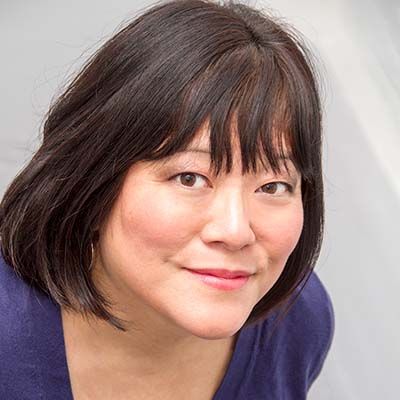
Ann Harada captured our hearts in Avenue Q, where she played the insightful and hilarious Christmas Eve. She has been on Broadway since 1988, making her debut in M. Butterfly. She has played various roles in shows such as Seussical, Les Miserables, 9 to 5, Rodgers + Hammerstein’s Cinderella, and more... Read More
From the show: The Theatre Podcast with Alan Seales
Guests
Featured Shows
About
Ann Harada captured our hearts in Avenue Q, where she played the insightful and hilarious Christmas Eve. She has been on Broadway since 1988, making her debut in M. Butterfly. She has played various roles in shows such as Seussical, Les Miserables, 9 to 5, Rodgers + Hammerstein’s Cinderella, and more.
On this episode, Ann discusses her long career, including becoming a mom while being a working actor. We also talk about her new streaming musical “No One Called Ahead” (which was filmed for a brand new streaming media format) and how film and the internet is changing the theatre industry.
Connect with Ann online:
- Twitter: @annharada
- Instagram: @iamannharada
- No One Called Ahead: noonecalledahead.com
- StreamingMusicals.com
Connect with The Theatre Podcast:
- Support us on Patreon: Patreon.com/TheTheatrePodcast
- TikTok: @thetheatrepodcast
- Twitter & Instagram: @theatre_podcast
- Facebook.com/OfficialTheatrePodcast
- TheTheatrePodcast.com
- Alan's personal Instagram: @alanseales
- Jillian's personal Instagram: @jillianhochman
- Email me at feedback@thetheatrepodcast.com. I want to know what you think.
Thank you to our friends Jukebox The Ghost for our intro and outro music. You can find them on Instagram, Twitter, and Facebook @jukeboxtheghost or via the web via jukeboxtheghost.com.
A very special thanks to our patrons who help make this podcast possible!
If you would like to see your name in this show notes or get a shout out on the pod itself, visit ttp.fm/patreon to become a member and show your support!
Transcript
This transcript was automatically generated and might contain errors.
[0:00] Alan Seales: Welcome to another episode of The Theatre Podcast. Intimate personal conversations with theatre's biggest names. As always, I'm Alan, your host for the podcast.
[0:14] Alan Seales: Who would you be if you weren't?
[0:17] Alan Seales: I would just be some random guy talking on a microphone, I guess. I'm happy you're not a random guy. I'm your usually here producer. This episode is with the wonderful Ann Harada, who has a number of wonderful credits on her resume. One of which is my personal favorite, Christmas Eve from Avenue Q.
[0:36] Alan Seales: Yeah, that was a good one. I remember being a youngin when Avenue Q came out, and we would watch It Sucks to Be Me, the Tony performance all the time. And we would try to copy her accent, which is not politically correct. Don't do that anymore. But she's hilarious.
[0:57] Alan Seales: I wonder, I didn't ask her this, but I wondered if that show would do as well opening in 2019 as it did when it opened originally.
[1:06] Alan Seales: I think anytime you do satire, if you are smart about it and respectful in real life, but it's the same as Book of Mormon. It still works, because it's right.
[1:19] Alan Seales: Yeah, I was gonna bring up Matt Stone and Trey Parker specifically for their continued work on South Park and even The Simpsons for that matter.
[1:26] Alan Seales: Yeah, but Avenue Q lasted 15 years, because it was satire done well, and it was funny, but it made you look deeper inside of your own biases and your own stuff.
[1:38] Alan Seales: Yeah. So Ann came to us here through the promotion of what we're now calling a new soundstage musical, where through noonecalledahead.com, noonecalledahead is the name of this thing, and you can go there to view the trailer. And then on June 13th, you'll be able to actually start watching it, but it is a stage production filmed for a streaming audience.
[2:02] Alan Seales: Yeah, that's a new thing, but I like the idea. I like giving people access who aren't here in New York or aren't seeing as many shows regionally or wherever. If they're not in a physical theater, this is a pretty good alternative.
[2:17] Alan Seales: I like what she said, too. I asked her, I was like, do you think this is kind of taking things away from the Broadway community or whatever? She said, absolutely not. She loves all of this stuff. She loves it. I mean, aside from being in it and obviously wanting to promote it, she said that she used Hamilton as an example of when a rising tide rises all ships, and something that is going to get more people interested in Broadway and interested in theater and interested in musicals in any format is just good for the industry, full stop. It's a gateway. You don't just stop at that one thing that you saw. It kind of brings you to the next thing. Anybody who loves theater remembers the first show that they loved and then all the things that kind of came after that and all the different things that were important to them.
[3:06] Alan Seales: Yeah, I totally agree. So everybody, before we get into the episode, please take a moment and visit us at thetheaterpodcast.com slash Patreon. Show your support in any way you can. We want to take some of these initial patrons and help get transcriptions made. We want to help do some more in-between episodes to continue the ensemble-focused episodes that we continue to receive a ton of good feedback on. So, anyway, everyone please enjoy this episode with Ann Harada.
[3:40] Alan Seales: Making her Broadway debut performance in 1988 in M. Butterfly, she's also been part of productions such as Seussical, Les Mis, 9 to 5, Roger and Hammerstein's Cinderella, and of course Avenue Q, where she originated and defined the iconically witty and funny role of Christmas Eve, now starring in No One Called Ahead, a new stage musical filmed for a brand new internet format, streaming exclusively on streamingmusicals.com. Ann Harada, welcome to the theater podcast.
[4:07] Ann Harada: Thank you very much. It is so nice to have you here.
[4:10] Alan Seales: Oh, thank you. And I guess we normally start with your childhood, but I emphasized filmed for No One Called Ahead because this is what you're here to promote today. It's your new project that is, what do you call it? It's a streaming musical.
[4:28] Ann Harada: It's a soundstage musical. That's what it's being called.
[4:30] Alan Seales: Is that what they're calling it now?
[4:33] Ann Harada: Yeah. Look, I have no idea what it's being called. I just know that I think it's a good idea in terms of getting to perform a show and to have a lot of people get to see it in a kind of a non-traditional way.
[4:40] Alan Seales: Well, what is it, for those who have no idea what I just sped out of my mouth?
[4:51] Ann Harada: I'm not sure I know what it is either, but here's the thing. Paul Gordon wrote a musical, right? He got a bunch of actors together to act it out. And it was filmed on a set, on a stage set, as if we were doing it as a performance. But we didn't. It was filmed. And so it's gonna be, it was edited together, and it's gonna be presented, and you can watch it on your streaming service. It'll be available on noonecalledahead.com and streamingmusicals.com. And I watched the trailer this morning to prepare for this, and it struck me as something uniquely different. And I wanted to ask your opinion on whether you thought it was gonna be the future of a fork of theater?
[5:39] Ann Harada: I don't think theater will ever go completely in that direction. I think it's gonna be the future of developing theater. I think it's a way to get artists who otherwise would not be able to mount a full commercial production. There'll be a way for them to produce it and have a piece of product that then other people can watch easily, as opposed to when you mount a production in New York and you hope that people come and like it, and then maybe somebody will invest in it and will move on to the next step. I think it's a much more efficient way. Whether or not it proves to be lucrative or work in the same way as the old model works, who the hell knows? But I think it's an interesting way to do it.
[6:21] Alan Seales: I think it's incredible. And I was reading through the website, and I'm bringing this up because it's right there on the website, but all the actors that are involved in it are part of a profit-sharing program, right?
[6:31] Ann Harada: Theoretically.
[6:37] Ann Harada: Assuming there is profit? I was gonna say, 1% of nothing is nothing and whatever, so we all know that. But I mean, it's lovely to think that we would all be involved in it should it ever come to pass.
[6:49] Alan Seales: That's an interesting way. That's a truly interesting way of doing this, because I believe for Hamilton, Lin-Manuel was the first creator of a show to give back to the original cast, for a Broadway production at least.
[7:00] Ann Harada: No, but there are many other productions in the past that the cast had points in it, participatory points. The Chorus Line Workshop, all those.
[7:08] Alan Seales: Did they do that?
[7:16] Ann Harada: Oh, yeah.
[7:17] Alan Seales: Oh, educate me, please.
[7:18] Ann Harada: No, I'm just saying there's been a business model for it. It had fallen out of favor, of course, because producers don't like to give money to the actors. But in the past, there were many productions where the actors shared in some of that percentage point.
[7:32] Alan Seales: Oh, well, I think it's a smart idea here. I mean, you have a little bit of more of an ownership over it. But anyway, tell me about No One Called Ahead specifically. What is your role? What's the show about?
[7:44] Ann Harada: Okay. Can we call it a show or do we call it a movie?
[7:47] Alan Seales: I don't know what to call it. I'm calling it a show.
[7:51] Ann Harada: You know, it's a show about art. It's a show about an artist sort of struggling with his own legacy and his place in the world and all of that. And he sort of visited by, I don't know if you want to call them spirits or beings or people that operate in front of him. I'm an angel. And I appear to him and give him advice and help him out and whatever. And there are other women who also appear in his life and act in similar ways. And it's sort of a little meditation on what it is to be an artist and what kind of legacy do you leave behind? And does it even matter if you do? And that kind of stuff. But it's really funny. And the other girls are wonderful. There's hardly any time we're all together in the same space. So we really were only together for a hot minute. But just watching them work was fun. I don't know. I thought it was a very collaborative effort and very moving.
[9:02] Alan Seales: Is it filmed like a film or is it filmed like a stage production where it's just one giant take?
[9:07] Ann Harada: Oh, no, no. It's filmed like a film.
[9:10] Alan Seales: So you can make mistakes and you go back?
[9:11] Ann Harada: Oh, many, many mistakes certainly on my part were made. You shoot it this way, you shoot it that way. Things move around. It's a film.
[9:24] Alan Seales: Oh, that's so cool. I feel like it's going to give an audience, I guess, an intimacy with performers that they probably didn't have before.
[9:34] Ann Harada: Yeah, I think that's part of it too.
[9:36] Ann Harada: Because you can sit here and feel like you're several feet away from your favorite performers. And yet we're singing live. Do you know what I mean?
[9:44] Alan Seales: So there's that part.
[9:46] Ann Harada: Oh, so you are editing it, but you're singing live from various angles.
[9:51] Ann Harada: Correct. It's like we're singing like, okay, so the music's playing and we're singing like in one take. But yes, we're shooting it several different ways. And it's different than in a regular show where you sing it through once from the front. That's different, I guess.
[10:07] Alan Seales: That's fun. Well, okay. So we'll get back to that. But I want to back up to the beginning. And tell me where you grew up. You were born in Hawaii, right?
[10:15] Ann Harada: I was. I was born in Honolulu, Hawaii. And my greatest claim to fame is that I went to high school with Barack Obama. He was two years ahead of me in high school. We did not know each other.
[10:26] Alan Seales: I was hoping there was like we made out under the bleachers.
[10:30] Ann Harada: Wouldn't that have been lovely, but no. He was on the basketball team and I was in the theater department. And unlike high school musical, those two worlds did not meet. So.
[10:43] Alan Seales: Well, then where did you, you said you were in the theater department in high school, but how did you decide you wanted to do theater? What were you drawn to?
[10:50] Ann Harada: Oh, I think just seeing the shows at school. I was just so overwhelmed that people could do that. Kids could do that. And I just thought it just seemed so fascinating and amazing. I wanted to try for myself. But you wanted to be in the production side at first, right? I was reading that.
[11:09] Ann Harada: Oh, I mean, I've worked on the production side. I just didn't know what I wanted to do. I just knew I wanted to work in the theater. You know, when you graduate from college, I don't know, maybe not you, but when I graduated from college, I didn't know if I wanted to be an actor, if I could be an actor, if I had the talent and the desire and all that kind of stuff. So I just started trying to take as many kinds of different jobs as I could and sort of see what appealed to me. And that's always sort of been what I've done my whole life, is try to learn all the parts of the theater world.
[11:40] Alan Seales: Were your parents always supportive of that? Or were they like, get a job?
[11:43] Ann Harada: No, surprisingly, they were. I'm kind of stunned about it even now. But I think they sort of thought, well, it keeps her out of trouble, and we know where she is at night. So that's something. I think they were very happy that I decided to pursue something. But I cared about something enough to want to try.
[12:01] Alan Seales: Do you have siblings?
[12:06] Ann Harada: I don't. I have an only child.
[12:08] Alan Seales: So they let you just go off into the theatrical world.
[12:11] Ann Harada: They did.
[12:12] Alan Seales: Put all their eggs in one basket like that. Oh, good for you, Anne's parents, if you're listening to me.
[12:15] Ann Harada: I know, right? Thank you.
[12:19] Ann Harada: But you went to Brown, yeah?
[12:21] Alan Seales: Yeah. And what did you actually get your degree in?
[12:24] Ann Harada: Theatre Arts and English and American Literature. It's very easy to double major at Brown because there are no course requirements there. And so I was able to sort of, you know, do a lot, but it was fun. And it was way before it was a formalized theatre program. They have one now with Trinity. Do you know what I mean? And at that point, it was basically just sort of like, okay, we're going to do four shows on the main stage and good luck everybody. It was not very formal.
[12:56] Alan Seales: Yeah. That's interesting. I didn't realize that the, I guess the formalization of the theatre program was somewhat of a recent thing.
[13:03] Ann Harada: Yeah. Not particularly. It's just that I was there a really long time ago. So I found it interesting that your first Broadway, your actual first Broadway credit is as a production assistant.
[13:15] Ann Harada: Yes. That's fun. In 1987 for Sleight of Hand.
[13:22] Alan Seales: Yep. So when did you move to New York though? 1985, right after I graduated from college.
[13:31] Ann Harada: 85. And then were you trying to audition for theatre or just working on the crew?
[13:37] Ann Harada: No, I worked as an intern for this Broadway producer. This is how I got to be the production assistant on this show. And she had the rights to this play. And so basically I got to watch kind of like from beginning to end how you produce a play. You know, I got to be with her at casting sessions and make phone calls to investors and help set up the readings and like, you know, all that kind of stuff. So like kind of the nuts and bolts of producing. And I learned very quickly that I did not want to be a producer. But I also could see real people, you know, like real actors auditioning and stuff. And you go to the auditions and you're like, I'm as good as him. I'm not as good as her. You know, like you're watching it and going like, maybe I could do this. Like it helped give me some perspective on what was sort of out there.
[14:26] Alan Seales: That's such a unique position to be in. Before you ever get your first Broadway credit, you're watching other people audition for shows. So you know what works. You hear all the backstage, I guess behind the scenes chatter of like, oh my God, did you see what she was wearing or what he sung or whatever it was. And it's very instructive, especially if you are on a show with like, you know, professional people that it's sort of like, well, everybody's prepared. You know, there's a certain level of talent. And then there's people who are just way more and way less and are not right, clearly deeply not right for a part, but still very talented. It becomes so obvious once you're behind the table and you have no stakes in it, to just be very like, oh yeah, now I see why you would cast this girl over that girl. Do you know what I mean? Without any other kind of like thing on it.
[15:25] Ann Harada: And has that helped you sort of choose which roles you want to go in for?
[15:29] Ann Harada: No, what it's done is helped me realize that I have no control over that situation.
[15:34] Alan Seales: Oh, wow.
[15:35] Ann Harada: You know, it's sort of like, okay, I'll read something and I go, I really don't think I'm right for this. And they're like, they really want you to come in. You're like, okay, maybe I will. But not to have any personal stake in it. It's like, I'll do the best that I can. I know what I can bring to something. I know what I think I'm right for, but I'm happy to go in if they want me. But you know, it's just sort of like, it takes it all that other part out. It takes like, they like me, they don't like me. I'm bad. I'm good. It doesn't matter. It's like, it will become clear if you are right for the role, regardless, I think.
[16:10] Alan Seales: Yeah. There's countless times now on this podcast, especially I've heard stories from people who have been doing this for a decade or more. And they're like, yeah, you just go in, you do your best. It's out of my control. And just make bold choices. And hopefully something works.
[16:28] Ann Harada: Yeah. Yeah. That's really great. I did some casting myself for, I guess it was a TV thing back in, oh goodness. Oh, 405, something like that. And just the immediacy of getting all the submissions and people not knowing what actually eight by 10 is versus eight and a half by 11. And I'm like, trash, trash, trash. Just follow straight instructions. That's step one to get in the door. But anyway, I digress. 2000, you did Seussical. And I pulled a quote out of Wikipedia here. And you say, it was such a rollercoaster ride. Everything that could go wrong went wrong. You'd just show up to work every day and go, I wonder what's going to happen today. There was way too much drama for one show to take. And it didn't deserve that kind of drama because it really is a great little show. Can you explain more about what that meant? What happened behind the scenes?
[17:29] Ann Harada: Oh, I think everybody knows what happened at Seussical. We went out of town. People got fired. It was one of those situations where I felt that nobody really knew what they wanted.
[17:46] Alan Seales: On the creative side?
[17:50] Ann Harada: On the creative team or the production. It's like, for instance, you'd show up and you'd put on the costume and they'd be like, well, we don't like it. And it'd be like, well, you approved it. There's a drawing on the wall that you approved that looks exactly like what I'm wearing. So obviously, people had just sort of not done their communication very well beforehand. And so things just changed very quickly during the Seussical.
[18:18] Alan Seales: Did that throw around the cast a lot, I guess?
[18:23] Ann Harada: Yeah, it was a little depressing. Yeah, it was a little unsettling. I mean, we bonded very strongly, obviously. Those are the shows where you bond with your cast very, very tight. It's almost traumatic in a way, isn't it?
[18:33] Ann Harada: It's very traumatic. Yeah?
[18:35] Alan Seales: Yeah. So it's a little bit... I mean, I've kind of used this analogy before that when you're going through the eight-show-a-week schedule or going through 12-hour-a-day text or whatever it is, you're emotionally exhausted and you just lean on each other and bond.
[18:50] Ann Harada: Yeah.
[18:52] Alan Seales: And so are you still close with the cast from Seussical?
[18:52] Ann Harada: I am. I am close with some of my Seussical buddies. Very close, yeah.
[18:57] Ann Harada: And I don't think that ever goes away. There's a vulnerability about being part of a new production and about things changing around you and you feel like you might not have a job tomorrow and all that stuff that just makes people very close.
[19:19] Alan Seales: Yeah.
[19:19] Ann Harada: And I'm really glad to have had that experience because I do love that show and I'm so grateful for having met all the people involved in that show, but I wouldn't want to repeat that situation again.
[19:32] Alan Seales: Has anything ever come close?
[19:36] Ann Harada: No. I mean, after that, they went into Avenue Q, it looks like, right?
[19:45] Ann Harada: Yeah. So it was... Yes, 2000 was Seussical and then 2003 was Avenue Q.
[19:47] Alan Seales: Yeah. And that sort of changed the trajectory of your career a little bit.
[19:51] Ann Harada: I would say so. Yeah.
[19:53] Alan Seales: The original Christmas Eve. How much input did you have on the character or were you just kind of given the script and you're like, this is what you do?
[19:59] Ann Harada: Oh my God. I had a lot of input.
[20:02] Alan Seales: Yeah?
[20:02] Ann Harada: Because I was with the writers and we were developing it as early as like 1999, like in little table reads and stuff like that. And we all went to the O'Neill together in 2002, develop it further before we went to the Vineyard. So yeah, all of the performers had a lot of input into what their characters were like and it was great.
[20:31] Alan Seales: Yeah. Well, I mean, Christmas Eve is one of the iconic roles I feel like of the past several years. I mean, she's just, gosh, just so unbelievably quick and smart. And I think, gosh, empowering in a time before women needed to... were really starting to come out as being empowering on stage and it hit at a time right as things were ramping up. I mean, so was this part of your conscious choice to bring it in or were you just like, I'm going to be my funny self and do what I need to do?
[21:02] Ann Harada: I think it was just a choice of who she turned out to be. There were many, many drafts of Avenue Q and Christmas Eve had many, many jobs. She went through many jobs sort of in the phase of the development.
[21:21] Ann Harada: Oh yeah. And when they decided she was going to be a therapist, I was like, okay, here we go. This makes some sense now, finally, in terms of the storytelling. And she says, she always sort of acted as an advice giver and a truth teller. And I thought, great, now she has an actual reason to be like this. And it was very helpful. I just feel like at any given point in time, I'm supposed to help develop who the character is on the page. I get the script and I go, okay, this, this, this, this. And then we'd get to a scene and you'd be like, what about this or this? That's sort of the advantage of being with a project for a long time is that you sort of build a trust with the creative team and your other actors. And you go, what do you think about that? What if we tried it this way? So who knows? I mean, it was such a long process, but it was so fun always. And I just always thought, Christmas Eve just has to be real. She just has to be true.
[22:28] Alan Seales: Well, she is real. I think how she treats Brian, the character of Brian, it speaks to a lot of people's relationships and marriages in general.
[22:45] Ann Harada: Yeah, the relationship between the two of them is great, but the show just closed. So moment of silence. Okay, there we go. But then you also, you left to have a baby, right? To have your son Elvis.
[22:58] Ann Harada: Well, I didn't leave to have a baby. I had a baby.
[23:03] Alan Seales: Well, had a baby and took maternity leave.
[23:03] Ann Harada: I did. I took maternity leave, then I came right back. Then I was like, now I need to take a leave. And then when that happened, they tapped me for London.
[23:09] Alan Seales: Right. So, then I took my whole family over to London, was there for six months, opened the show there, came back, got put into Les Mis, was in Les Mis for six months, finished that, went back into Avenue Q. It was like one of those, but I ended up finishing the run on Broadway for Avenue Q.
[23:34] Alan Seales: And I was-
[23:38] Ann Harada: Yeah, you went back to-
[23:38] Ann Harada: I was very happy to do that.
[23:42] Alan Seales: Yeah, yeah. That was, what year was that?
[23:42] Ann Harada: Oh, nine. That was on nine.
[23:44] Alan Seales: Yeah. Before it moved to New World Stages.
[23:44] Ann Harada: Yeah, that was great. I loved that you came back and kind of brought it full circle. I wanted to. I felt like I had something more to say after I had sort of gone away to London and tried out some stuff there. You know what I mean? To me, every part is a changing thing. And I just feel like I'm not done. I don't think I would ever really be done trying to figure out all the ins and outs of her or anybody.
[24:13] Alan Seales: Well, the show had a great 15-year run.
[24:15] Ann Harada: Yeah.
[24:15] Alan Seales: Like both Broadway and Off-Broadway. How did it change from the beginning to the end? How did you see it? You said that you went to London, you came back, and now you're trying new material, trying new stuff. So did every new incarnation of the character as new actors took it over, did it slightly change it or was it still-
[24:31] Ann Harada: It was always it. It was always Avenue Q. But for me,
[30:08] Ann Harada: What do you get when you step on stage and you feel that audience? What is it about it that draws you to that? Oh, it's the thrill of being able to connect with all of those people, to know that you, for better or for worse, have their attention for a short period of time, and to make them laugh and to entertain them. I think it's so lovely. I think it's so valuable for us to have a community. I think people for millennia have been getting together in big groups in front of a stage to watch things. There's something about the collective watching of it that elevates it, that we don't have. We have less and less of that in this world right now. Even before, when there were only three channels on television, you had a fighting chance of seeing the same thing at the same time with a whole bunch of other people and having a shared experience.
Maybe they weren't all next to you, but you at least knew the next day you could talk about it at the office. Okay, well, now you can't do that because there's 500 channels and everybody's watching their own thing and whatever, unless it's some sort of big event, like it's the end of Game of Thrones or whatever. But I'm just saying like there's so few events like that. In our world, it might be like the Tonys or the Oscars, where we all know we're watching the same thing on the same day at the same time. There's a power to that. When you're all sharing a communal experience, you are reminded of your humanity and what it is, why we are who we are. I just feel like there's something so beautiful about being in a theater with everybody else watching the same thing. It's church. I mean, to me, that's where I feel the most happy and contented.
[32:42] Alan Seales: Do you have any sort of preference towards making people laugh versus making them cry, or is it just you just want to make them feel?
[32:48] Ann Harada: That's it. You just want to make them feel something. Yeah.
[32:55] Alan Seales: Okay, so that kind of leads me back to No One Called Ahead. Is it hard or was it hard when filming that to not have an audience?
[33:02] Ann Harada: Oh, I was so grateful we didn't have an audience.
[33:06] Alan Seales: Really?
[33:09] Ann Harada: Oh, my God. Are you kidding? It was so hard because it was very similar to some TV experiences where I've had where we didn't really have enough time to rehearse. So I was just grateful that I was making all my mistakes in front of fewer people as opposed to more people. But it was really, really fun. I really think that the intimacy of it is going to draw people in. It was funny, when I was watching the trailer, it kind of reminded me of watching TV movies when I was a little girl.
[33:42] Alan Seales: Oh, really?
[33:45] Ann Harada: And going like, oh, this could kind of be like that. I just think it's such an innovative way to try to get a project going, or at least get that project out to the public. I feel like a lot of the models that we've had in the past, especially for smaller musicals, haven't really been the most cost-effective, practical. I don't know how... Let's say you're part of a festival for new musicals or something like that, where you still have to spend so much money just to mount a simple production in a terrible, off-Broadway theater. And like, rip down your set in 15 minutes so we can change it for the next one. That just seems so against what we're trying to do here. So I'm thrilled that there's another kind of business model. I hope that it works, and I hope that other people will find success in it.
[35:01] Alan Seales: Yeah, I've noticed at the end of 2018, into this year, 2019, that there have been... It's kind of like a technology, sort of a startup bubble around the Broadway community, the theater community, because there's this, streamingmusicals.com, and Stage Network, and a couple others that are like Broadway HD that are taking the theater and bringing it to people who may never get to New York. And is that... Do you feel... I mean, you sort of already answered this, I think, that you feel it's adding to the, I guess, the ecosystem. That's the word I'm looking for.
[35:36] Ann Harada: Absolutely it is. Everything is... I feel now that every platform, every streamy thing, every kind of media is only helping each other. Do you know what I mean? I don't... At this point, I don't feel like we're competing against each other. I feel like everything branded Broadway is good for Broadway. Every show, like Hamilton, lifts all the boats. Do you know what I'm saying?
[36:06] Alan Seales: Yep.
[36:09] Ann Harada: Because people, if they find something and they're enthused about it, they will keep looking. They will keep going. That's just what we're like. We like a show on Netflix, and we're just like, maybe this one will be good, because I like this guy. You know what I mean? It just keeps going. There's a chain. And so, I sort of feel like that's what we have to encourage. I don't know a good way of putting it, but I sort of feel like if you're somebody who cares about any musical on Broadway, you're going to find another musical you like, and then maybe your fandom of that musical will take you to something else. And pretty soon, you're somebody who's really into Stephen Sondheim. You know what I mean?
[36:57] Ann Harada: Like, you know, Hadestown could be your gateway drug, or whatever, to get to the rest of the canon, or any show. Yeah, you follow it. You follow it. You follow it. The composer, you follow an actor, an actress, or whoever it is. Yeah. And all of us are already in the church. So, it's sort of like, we all care, but we're such a small community. And so, unless we get out there to a wider world, it's not really going to matter. Yeah. There's a lot of opportunities, technologically speaking, that I think we're going to start seeing companies take advantage of it in a good way in the next few years. And I think this is a perfect example of that. And whether or not this works, hopefully it does. We're going to learn from it, and we'll improve upon it.
Yeah. Yeah. I mean, something's going to come out and change the game. And hopefully, it's this. And even if it doesn't, it'll just be another way. Yeah. It might not solve every problem in terms of that sort of thing, but it might be another way for other people. You know what I love about the internet and podcasting, this sort of thing, too, is that once it's out there, it lives in perpetuity.
[38:19] Alan Seales: Correct.
[38:19] Ann Harada: It's just there. And you look at celebrities that try to take their scandals offline, it doesn't go away. And in a good way, that's working to everyone's advantage. So, if everyone wants to find this 20, 30, 40, 50 years from now, it's in digital form. It's not going to degrade. Well, maybe that's good or bad, depending on my performance. But we'll see.
[38:45] Alan Seales: Well, gosh, it releases June 13th, 2019, which is very soon.
[38:51] Ann Harada: Very soon.
[38:52] Alan Seales: Very soon. So, yeah. Well, hopefully, we'll start seeing that all over the place. But I want to get back into a little bit of your career. So, you closed Cinderella in 2015. And, of course, you're working with the lovely Laura Osnes.
[39:05] Ann Harada: She's an angel.
[39:06] Alan Seales: Santino Fontana.
[39:08] Ann Harada: The greatest.
[39:08] Alan Seales: And my friend, Marla Mendel, who's now got – she's all over the Netflix.
[39:12] Ann Harada: She is the sassiest.
[39:13] Alan Seales: She is a queen. I love her.
[39:14] Ann Harada: Oh, my God, Marla Mendel. I love her. And then – so, that was 2015. And between then and now, you've been doing a lot of regional, yeah? Yeah? It was Muni and Paper Mill.
[39:25] Ann Harada: Yeah, I've done the Muni and I've done Paper Mill.
[39:28] Alan Seales: And Bucks County, I think you had.
[39:29] Ann Harada: And Bucks County. And some off-Broadway stuff.
[39:31] Alan Seales: Yeah. And is that – someone told me that you're spending more time with your family? Are you kind of like –
[39:39] Ann Harada: I'm trying not to be out of town so much because I would rather be with my kid until he graduates.
[39:48] Alan Seales: Yeah.
[39:48] Ann Harada: I mean, I think it's very hard to have a career outside of New York with a kid. I just – it makes my husband a de facto single father. And you're just not there. You just don't have a presence. And I would rather try to be there if I could. I don't mind working short jobs, but longer jobs are more problematic.
[40:11] Alan Seales: Yeah. So, he's 14, you said. So, now for the next three to four years, hopefully you'll be sticking around.
[40:15] Ann Harada: Once he goes to college, I'm just like, take me to Cleveland. That's fine.
[40:22] Alan Seales: But right now, I'm like, I really don't want to, but thank you.
[40:26] Ann Harada: Have all the roles that you've taken been sort of the sassy, comedic type? Or have you ever been able to really sink your teeth into a dramatic role?
[40:34] Ann Harada: Oh, I feel like I've done both. And I enjoy both. I enjoy plays just as much as musicals. And I just feel like – I don't know. What am I trying to say? I'm at the point where if somebody has an interesting idea about me, I'm more than willing to give it a shot. Like you were saying earlier, I don't think I'm right, but they want to see me.
[41:09] Alan Seales: Right, exactly. It's sort of like, you think I can play that part? Okay. That's what I felt about the meanie, because this summer I'm going to go off and play in Matilda, the Leslie Margarita role, whose name I cannot remember at all right now. This is Wormwood. Hello, this is Wormwood. And as you know, Leslie Margarita is a very talented woman who can do a cooter smash, and she dances, which is very glamorous, and kick her leg over her head. And I can do none of those things. And I am none of those things. So I was like, really? That's the part you want me to play? But this one is like, what have I got to lose? I haven't heard the term cooter smash in 14 years. So thank you for bringing that back.
[41:57] Alan Seales: Oh, wow, that brings back memories. On Smash, you played the stage manager.
[42:06] Ann Harada: Yes.
[42:07] Alan Seales: The stage manager of the show within the show.
[42:09] Ann Harada: Yes.
[42:09] Alan Seales: Yes. Did you enjoy?
[42:11] Ann Harada: Oh, my God. It was the greatest job of my life.
[42:14] Alan Seales: Really?
[42:15] Ann Harada: Are you kidding me? I had nothing to do. I had no responsibility. All I had to do every day was show up, sit next to Jack Davenport and pretend to take notes. It was amazing. It was like the greatest job I've ever had. One time, I got to sit next to Angelica Houston, and we got to watch Bernadette Peters all afternoon, sing a song. That sounds horrible.
[42:40] Alan Seales: Wasn't doesn't sound terrible. I was like, this is the greatest day of my life. I don't have to do squatty boo. And it was awesome. And I just loved the idea that I could go back to a set over and over. I've never done a lot of TV work. So just to be able to come back and know like, oh, my God, that camera guy, that's his name. And that's what he's gonna do. And that whole thing was great for me. So lovely. Everybody in the show was wonderful. They're all theater people. They're actual people. They're not weirdos. They talk to you.
[43:18] Alan Seales: Of course. Do you want to do more TV?
[43:21] Ann Harada: I would like to, but you know, I again, that's not under my control. But I really, to be a part of Smash was very special just because of the connection to Broadway. And you know, I'm very grateful for that opportunity. That might never happen again that we get another Broadway soap opera typey thing. I think, like I said, I think this is the beginning where that sort of paved the way. Do you feel like it was ahead of its time at all?
[43:55] Ann Harada: Because I feel like that might have been putting too much hardcore Broadway out to people who have never experienced before and they're like, this is too different. Okay. Here's the thing. It probably was a little ahead of its time because to me, Fosse-Verdon is so inside baseball. And if that thing, if normal people are watching Fosse-Verdon and they care, I'm like, what happened? Because to me, that's so much more Broadway in terms of like, you'll get more out of it if you know why there's a Pippin song playing right now. Do you know what I mean? I'm like, who's going to know that? Like in my mind, other than those of us already in the church, like, you know what I mean? So obviously, viewership is diversifying and changing and being more niche.
It just, you know, like just the way shows are nowadays, right? So I do in a way feel like it was a little ahead of its time. And I also feel like it probably should have been on a cable network, like that it would have done better if it had been on Showtime or HBO or something a little more where we'd have more, what is the word that I want? It could have been more, a little more explicit, not necessarily sexually, but we could have been more specific about it as opposed to sort of generally, and now it's Broadway. And I'm like, well, not exactly. Because, you know, obviously there were a lot of holes that we sort of had to skip over to get to the next part of the plot. And you'd just be like, well, huh? A little darker on an HBO, yeah.
[45:37] Alan Seales: Yeah. But I just was like, wow, things are different now. And I absolutely think it would be a better show, or at least a more, maybe a little more sense than what, you know, than what we had.
[45:50] Ann Harada: Yeah. Well, I enjoy Fosse Wirth and I enjoy Smash too.
[45:53] Alan Seales: No, I know. I mean, of course, no, they're both great. And, you know, they're not the same. But like just to have, just to say that there's two.
[46:01] Ann Harada: Yeah.
[46:02] Alan Seales: I'm like, wow, amazing.
[46:04] Ann Harada: Right. Well, we are coming up on our time here for the end of the podcast, and there are three standard questions I ask everyone.
[46:12] Alan Seales: Fire away.
[46:12] Ann Harada: All right. Number one, very simply, what motivates you?
[46:16] Alan Seales: What motivates me?
[46:17] Ann Harada: Yeah.
[46:19] Ann Harada: Joy. I feel like it's very important to remember why we put ourselves through these sorts of things. And I feel like it's more to sort of focus on how it feels to be on a stage and to tell stories with other people.
[46:41] Alan Seales: Okay. Second question, what advice would you give to your younger self or younger people listening now starting out down a similar path?
[46:48] Ann Harada: Well, younger self already knows younger self should have taken dance class. And lots of it a long time ago before younger self got too old to do that. So that's my thing. In terms of advice to people now, it's absolutely trust that you are enough. You know, I feel like I spent so much time trying to be something I wasn't to sort of fit into a mold that I thought would be more commercial, which is ridiculous, because nobody was going to be fooled. Even me with long hair and maybe being a little skinnier, I'm still don't have the talent to be in a lot of shows. But I tried really, really hard to fit into a certain mold. And it was ridiculous. I'm me. I'm still going to be me, you know, so why bother?
[47:38] Alan Seales: All right. Just be you.
[47:39] Ann Harada: Last question, if you could only see one show for the rest of your life, but you can see it as many times as you want, what would you see?
[47:46] Ann Harada: What a horrible question that is.
[47:49] Alan Seales: Who answered this question?
[47:51] Ann Harada: What did they say?
[48:00] Ann Harada: I'm going to say William Finn's Falsetto Land.
[48:04] Ann Harada: All the parts. In Trousers, Falsettos, Falsetto Land. Those three.
[48:13] Alan Seales: In Trousers, March of the Falsettos, Falsetto Land.
[48:14] Ann Harada: Those three parts.
[48:16] Alan Seales: All right. The Marvin Trilogy.
[48:22] Ann Harada: All right. So we can find you on Twitter at Ann Harada. On Instagram at I am Ann Harada. And of course, everyone, please go to NoOneCalledAhead.com. Coming to your favorite device on June 13th. You can also find it on streamingmusicals.com. You can get more of me, the theaterpodcast.com. Support us via Patreon. You can get us on Instagram and Twitter, theater underscore podcast. Or Facebook.com slash official theater podcast. Subscribe wherever you are listening. Rate, review, share. Tell your friends. This is produced by Jillian Hachman, edited by Matthew Hendershot. And as always, thank you to Jukebox the Ghost for the lovely music. And thank you for being here. This has been lovely.
[49:05] Ann Harada: Thank you. Everything is only for now.
© Broadway Podcast Network, All Rights Reserved