

Betty Buckley joins the show to discuss her deep connection to storytelling and the spiritual "calling" she first felt at eleven years old while watching the original Bob Fosse choreography in Pajama Game... Read More
From the show: The Theatre Podcast with Alan Seales
Guests
Featured Shows
About
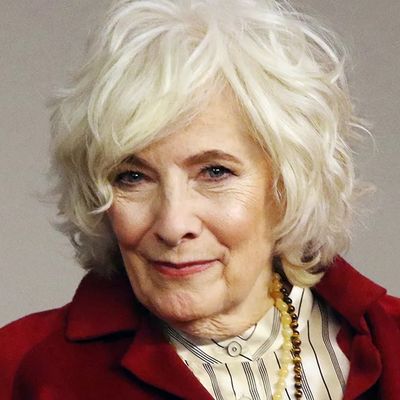
Betty Buckley joins the show to discuss her deep connection to storytelling and the spiritual "calling" she first felt at eleven years old while watching the original Bob Fosse choreography in Pajama Game. She shares incredible stories from her early days in Texas, including her time as a teenage rodeo reporter and the persistent friction with her father regarding her pursuit of a career in show business. Betty also reflects on the power of the "11 O'clock Number," her legendary debut at Carnegie Hall, and why she firmly believes she is responsible for the modern usage of the word "dude".
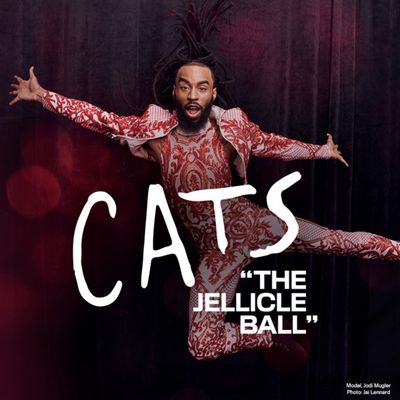
The conversation dives into her yearly residency at Joe's Pub and her role as an artist in residence at Mercyhurst University, where she leads acting workshops. Betty offers her enthusiastic "blessing" to the new Cats: "The Jellicle Ball" production, noting how the original score remains a brilliant social statement in its new ballroom culture setting. From her childhood "super weapon" voice to her studies in comparative world religions, this episode is a masterclass in staying true to one’s essence while navigating a decades long iconic career.
Betty Buckley is a Tony Award winning actress and singer and a Theater Hall of Fame inductee. Her legendary career includes starring roles in Cats, Sunset Boulevard, Triumph of Love, 1776, and Pippin. On screen, she has appeared in films such as Carrie, Tender Mercies, and Split, as well as the hit television series Eight is Enough and Law and Order: SVU.
Connect with Betty:
- Get tickets to see her at Joe's Pub
- IG: @BLBuckley
Connect with The Theatre Podcast:
- Support the podcast on Patreon and watch video versions of the episodes: Patreon.com/TheTheatrePodcast
- Instagram: @theatre_podcast
- Facebook.com/OfficialTheatrePodcast
- TheTheatrePodcast.com
- Alan's personal Instagram: @alanseales
- Email me at feedback@thetheatrepodcast.com. I want to know what you think.
Transcript
This transcript was automatically generated and might contain errors.
[0:00] Betty Buckley: Hi, I'm Betty Buckley. Welcome to The Theatre Podcast with Alan Seales.
[0:11] Alan Seales: Hey, everyone. Welcome to another all-new episode of The Theatre Podcast. Our guest for this episode is a true titan in the theatre industry, Betty Buckley. You know her as a Tony Award winner and Theatre Hall of Fame inductee. And today, though, we get so much deeper than these iconic credits. We talk about her moment at 11 years old when she saw the original choreography of Pajama Game and felt a literal energy force tell her that this was her life's calling. We also dig into her fascinating history as a rodeo reporter in Texas and the surprising story of how she might actually be responsible for the modern way we use the word dude. This is a lovely conversation about storytelling as a form of world religion and how she found her voice as a superweapon when she was only four feet, 11 inches tall.
She's heading back to Joe's Pub the end of April here for her yearly residency, and with us is just sharing some wonderful insights on the new Jellicle Ball production of Cats as well. So make sure to watch this on Patreon and Spotify. If you can, follow me on social media. Leave a rating and a review. It helps the podcast grow. It, you know, trains the algorithms out there that say, hey, this is a podcast everyone needs to listen to. And now, everybody, please enjoy this episode with Betty Buckley.
[1:36] Alan Seales: My guest today is a Tony Award-winning actress and singer and a Theatre Hall of Fame inductee. Her legendary career includes starring roles in Cats, Sunset Boulevard, Triumph of Love, 1776, and Pippin. On screen, she has appeared in films such as Carrie, Tender Mercies, and Split, as well as the hit television series 8 is Enough and Law and Order SVU. She returns to Joe's Pub this April 24th through 26th for six performances only. Betty Buckley, welcome to The Theatre Podcast.
[2:06] Betty Buckley: Hi, Alan. I hear you're the only game in town.
[2:11] Alan Seales: And that was it. Mic drop. We are out of time. I agree with that.
[2:15] Betty Buckley: Well, thank you for joining us today. You've had such an amazing career that has spanned a large, amazing number of decades. And I guess I just want to start...
[2:29] Betty Buckley: Decades. Oh, my God.
[2:31] Alan Seales: I mean, literally, literally. You are a Hall of Fame inductee for a reason, right? Like an icon. So, what has kept you going over these years?
[2:38] Betty Buckley: My love for music, my love for storytelling. What can I say? It's what I do, who I am. I don't know.
[2:48] Alan Seales: Well, what do you get out of it, though? Like, your need for storytelling. A lot of people just want to write. Some people want to draw. Like, you get up and you sing. What is it about musical theater that is your thing?
[2:55] Betty Buckley: Well, Alan, it's just fundamentally, it's what I was born to do, I think. I felt a calling since I was 11 years old. And when I was 13, I had a very specific vision, looking out the window of my bedroom, which was... Our house was a split-level house. And I had this view of these pastures behind our house with the windmill. And it was a beautiful day. And I just realized that I would grow up to be a musical theater singer-actress. And I glimpsed how my voice would affect people and what I was on the planet to do. When I was 11, my mother took me to see my first piece of musical theater. And I had my first epiphany, where this energy force just went up through the top of my head and kind of was looking back down at me saying, this is it. This is what you're doing for the rest of your life. We were seeing Pajama Game with the original Bob Fosse choreography.
[3:51] Alan Seales: Wow.
[3:52] Betty Buckley: And the choreographer of that show and the lead dancer became my teachers shortly thereafter. And my aunt previously had been my dance teacher. She was a professional dancer when she was younger. And my mother had been a singer-dancer. And it's kind of in my DNA, I think.
[4:10] Alan Seales: Are you like an energy-spiritual type of person? Because the way you just described it, it seems like it was very much like, I was drawn to this. It lifted up my chest and pulled me into the ether. And I started to sing and make everyone's lives better.
[4:25] Betty Buckley: Thank you, Alan. I'm a meditator. And I've been a student of comparative world religions since I was in my 20s. So yeah, I'm fascinated by the whole subject of that.
[4:37] Alan Seales: We dive into that. You've loved comparative world religions. What is that?
[4:42] Betty Buckley: Comparative world religions is studying the dogma of each religion and what is the essential teaching. And what I discovered in this path of study that I did was that there is an essential truth that is embodied in every religion on the planet, which is funny because of the different wars based on religious beliefs. It's just all so crazy because at the core, at the heart of every religion, our spiritual teaching is this same essence. Some of it's camouflaged intentionally for political reasons, but it's present. And it's the truth of what's here and what we are experiencing on the planet, which is that there is this core body of truth, and that truth is love and compassion and empathy and oneness, unity, regardless of race, color, creed, gender. It's that oneness that's creating the whole thing, that's manifesting the whole thing. And when you learn that and you experience that, that's it. There's no turning back.
[5:45] Alan Seales: It kind of sounds like you just described a perfect musical theater show. And I'm not saying that to be weird or anything, but when you're talking about playing the truth, being together, feeling everything together as one, that's what a good cast should be able to do. That's what a good show is going to make the audience feel.
[6:03] Betty Buckley: Well, that's why musical theater is such a beautiful medium of expressing that essential truth. But the truth is much larger than specific to musical theater. But the black box experience of going to theater and being in community and watching skilled artists on stage presenting a story, which is all about the metaphors and symbolism of that story, allows the audience to sit in the dark and hopefully let go of their stress of the day and free associate with those ideas and those images about their own lives and to feel a kind of catharsis. That's our purpose as storytellers. And so, in that catharsis, people remember the essence of who they are, their own hearts, and they can remember that and leave the experience refreshed.
[6:58] Alan Seales: When you were going through your career and have been originating some of these iconic roles that are done repeatedly over and over again now, every sort of, I guess, part of yourself that you left with these characters, is that helping you focus more towards this ultimate truth that you're looking for? Or is it kind of the other way around, where the truth was influencing how you made the characters?
[7:19] Betty Buckley: No, I bring that awareness that my job as the storyteller or as playing a character is to create the character in such a way that the audience feels the connection with that. The connection is the truth. So yeah, it's a methodology of bringing that focus, that awareness to the story.
[7:48] Alan Seales: Interesting. Well, where do you approach, I guess, when you're looking at something, when you're reviving a role versus originating a role versus doing something like this gig at Joe's Pub, right? They're all kind of three distinct mediums that all want to get the same thing. You want to bring feeling and bring emotion over the audience. But do you approach the three different things in any sort of different way, or is it all kind of your same process?
[8:14] Betty Buckley: No. I mean, the mediums are different, but the essential job is the same. Looking back though, when did you know you wanted to do this, when you had to do this for a living, for like it was your life?
[8:25] Betty Buckley: When I was 13.
[8:28] Alan Seales: What was that moment though? Was it what you were talking about, like being outside?
[8:31] Betty Buckley: Yeah, when I was looking at the pasture and had that awareness. But when I was 11, I knew that it was a calling. I didn't know what to call that. I just had that experience. And then when I was 15, I made my professional debut at Casa Manana, our regional theater. And then I just continued to work from there.
[8:51] Alan Seales: And was New York was always the end goal, or just like that's where life led?
[8:57] Betty Buckley: Yeah. I knew I was going to be a singer-actor on Broadway.
[9:01] Alan Seales: You just knew it. Was there ever any fallback? Because I was literally talking with Diane Pauls the other day, and she was like, I was a political science major at first. I was like, what? You know, like-
[9:12] Betty Buckley: I was a journalism major.
[9:14] Alan Seales: Oh, weren't you really?
[9:14] Betty Buckley: Mm-hmm.
[9:15] Alan Seales: Did you actually get your degree in journalism, or did you finish that?
[9:18] Betty Buckley: Yeah. And I worked on newspapers and stuff.
[9:21] Alan Seales: Really? Where did you work?
[9:24] Betty Buckley: I worked at the Fort Worth Press. When I was in college, I had my own teen page where I covered the high schools in Fort Worth. And once a week, I had a teen page about wonderful teenagers who were doing great things. And it was fun. I wrote a column for them. And then I became just a reporter, but my specialty was as a rodeo reporter.
[9:51] Alan Seales: You literally would cover rodeos?
[9:53] Betty Buckley: Yeah. The rodeo in Fort Worth, the Fort Worth Fat Stock Show and Rodeo is this huge event every February. And so I was there covering stories, like walking through the horse barns and the cattle barns looking for stories to tell. And yeah, it was super fun. Really fun. Because I love horses, and so that's why I live on a ranch in Texas. I have horses. But yeah, that was really fun. My father was very opposed to my being in show business, and he made my mother stop singing and dancing when he married her.
[10:26] Alan Seales: So she was a journalist as well. She worked on newspapers growing up. So my father thought that a woman's place, basically, he was very traditional in that way. A woman's place was in the home as a mother and wife, but that she could have a job as long as it was complimentary to her husband. So my mother was a journalist, and she was the PR lady at Casa Manana years later for a number of years. And she was a great lady. I first started singing in church when I was three, and then I was in the youth choir, the Methodist church, the junior choir. And I was in the all-city chorus in elementary school, and they always put me on the back row and said, blend in, Betty Lynn, blend in. And I didn't know why I wasn't blending in, but I was really like, oh my God, I've got to blend in.
And so when I was 11 and saw Pajama Game, I realized there was a place for girls with loud voices. I was hugely relieved. And so I told my mother I wanted to learn Steam Heat with the original Fosse choreography. And these gentlemen who had done the show were Fosse acolytes. They'd worked with him on a number of touring shows, and they decided to settle in Fort Worth, and they opened their own school, Ed Holliman and Larry Howard. My mother had seen the ad in the newspaper just that day when I told her I wanted to learn Steam Heat. So she called them and said, my daughter wants to learn Steam Heat. So they said, come in, we'll meet her. And so I had a private lesson with them, and they said, sing this.
I got Steam Heat. So I did, and they said, no, no, sing it as loud as you can. So I went to the back of the studio, and I was like, I sang, and everybody jumped backwards. And so I was like, that was one of the things I enjoyed most as a kid performer was when people, because I was short forever, I mean forever. I was four feet 11 inches tall. I didn't grow until the summer of my 16th birthday. My birthday's in July, so I was 15. I didn't grow until that one summer, and then I had this growth spurt. So I was tiny, tiny, and the idea of this little, tiny girl having this huge voice, they thought that was so funny. But it was my super, super weapon. I would act all shy and diminutive, and then I would sing for people. Or if people bullied me in school, which they did and other stuff, I would think, just wait till you hear me sing. So it was like my weapon.
[13:03] Alan Seales: That's so cool. Yeah, it was somewhere where you could go to feel ultimate comfort. Was it contentious?
[13:07] Betty Buckley: I got into that junior high talent show, and the place went crazy. My mother had this little black suit, vintage Fosse suit, bow tie, bowler hat, little black tie shoes. I did the original Fosse choreography with the original hat tricks, and it was my first time doing the 11 o'clock number, which is the number right before the finale. We stopped the show, and it was just like amazing. So that's been my road ever since, and that's my specialty, the 11 o'clock number.
[13:40] Alan Seales: Was that contentious at home between your parents?
[13:42] Betty Buckley: With my dad, yes. It was hugely a big problem, and so my mother would sneak me out of the house for my dance lessons with Ed and Larry for years. It was a big problem.
[13:54] Alan Seales: I was going to ask about that.
[13:55] Betty Buckley: He refused to come to the opening of Cats. He refused to come to the Tony Awards. He was a troubled guy.
[14:04] Alan Seales: Even after it was clear, this is not something that you're going to do not well. Wait, how do I phrase this? It was clear that you're going to succeed at it, and you're at the highest level, winning the highest awards. He still didn't let go of that?
[14:21] Betty Buckley: No.
[14:21] Alan Seales: Oh, wow.
[14:23] Betty Buckley: Some years later, I was getting my act together and taking it on the road, and he came to see—well, actually, before that. After I did Cats, I was invited to sing at Carnegie Hall with an orchestra, so I did my first orchestral performance, my black velvet gown and my beautiful orchestrations written by this brilliant arranger, and I was on an evening of music with Marvin Hamlisch and Ray Charles.
[14:48] Alan Seales: Wow.
[14:49] Betty Buckley: And it was a huge thing, and my dad came to that. He came backstage afterwards at Carnegie Hall. I was so excited. It was my Carnegie Hall debut, and I said, well, what do you think, Dad? He was really gruff. He's a former lieutenant colonel in the Air Force. He goes, world-class, Betty Lynn, world-class. So that was one compliment. And then another time, he was out on the West Coast. I was in L.A. shooting It Is Enough, and for a few months, I was getting my act together at the Huntington Hartford Theater in L.A., and my dad was there for some civil engineer thing that he had to do, and he came to see me in the show getting my act together, and I was driving him back to his hotel afterwards, and we were kind of silent in the car, and he said, Betty Lynn, I want you to know that I didn't ever want you to be in show business because I think you have a fine mind, and I didn't want you to waste it in the entertainment business, which I think is frivolous.
And he says, but you know that. And he said, but after seeing you today, I realize that you really love people, that you really care about people. And he said, so I want to congratulate you. You did a good job. And so there was that, too. So that meant a lot.
[16:07] Alan Seales: Don't go anywhere. We'll be right back after this break.
[16:11] Alan Seales: Welcome back to the episode. Well, so speaking of your act, tell me about what's going on at Joe's Pub.
[16:15] Betty Buckley: Speaking of what? Oh, act. Your act. Your act. I hardly think of it as an act, but we have a yearly residency at Joe's Pub. We've been doing this for a number of years in the spring, which is great for me because I live in Texas. And it's a great opportunity to come back to New York and present a new collection of songs that I work on for several months with my wonderful collaborator, pianist, music director, Christian Jacob. We've been working together for quite a while and have done several albums together. And my longtime bass player, Tony Marino, a wonderful percussionist, Keita Ogawa, and brilliant guitar player, Jordan Peters, will be there Friday, April 24th, Saturday, April 25th, Sunday, April 26th.
There are two shows a night, seven and nine, seven and nine on Friday and Saturday, and six and 830 on Sunday. So yeah, you know, I really look forward to this every year. It keeps me engaged in being creative, making choices that are hopefully relevant to the moment, and to see these audiences, to see a bunch of old friends that I haven't seen for a while and reconnect with people. It's really a blast. And so we're putting that together now. The week before that, I go to Mercyhurst University, where I'll be doing my fifth concert on April 17th for them with Christian Jacob. And prior to that, that week, April 12th through 16th, I'll be doing a workshop for them, an acting workshop. So this will be my fourth workshop and fifth concert for them.
They've dubbed me their artist-in-residence. The creative art director there, Brett Johnson, he's a great guy, brings me back every year for that. So that's what I'm gearing up for now. But before that, I was just invited by the producers of Cats, the Jellicle Ball, to the opening. So I'm excited about that, to be there for the opening night of Jellicle Ball, which is historic that Cats is coming back in this particular, fascinating form. I was at the first preview downtown, and I loved it. I thought it was just great. So fresh, so original.
[18:40] Alan Seales: I was going to ask that, if you had seen that and what you thought about it.
[18:44] Betty Buckley: Yeah, I was just talking with some friends about Jellicle Ball, literally before this interview started. And I was like, it's not your normal Cats. This is something that, yeah, you definitely have to come and experience because it's something, I think it's going to introduce a whole new generation of people to this musical.
[19:02] Betty Buckley: Yeah, I really hope so. I love it. I think it's great. Just great.
[19:07] Alan Seales: Yeah, I'm glad you give your blessing. That somehow makes me feel better about all of this.
[19:14] Betty Buckley: I think that's why the producers are bringing me in, because they know I love it. And I represent the norm of the audience. And so I'm like, yes, got to see this show. It's great.
[19:29] Alan Seales: Yeah. Well, not a lick of music has changed. It is the original score with all the original songs and everything. And then it's just set in this way. Yeah, it's going to have the generation that's used to the traditional way. And then this younger generation that's just exposing so many new people to the arts. And I think it is brilliant. I can't say enough good things about it.
[19:49] Betty Buckley: I do, too. I think it's really brilliant. And I think it's a great social statement, too.
[19:56] Alan Seales: Yeah, I do, too. All right. So as we start to wind down here, let's get our little game going. Plot in 60 seconds.
[20:03] Betty Buckley: Uh-oh. Uh-oh.
[20:07] Alan Seales: So I'm going to...
[20:08] Betty Buckley: I haven't practiced this. I'm really concerned. I do righteously by whatever we pick.
[20:14] Alan Seales: And give me a number one through 17. And that's going to correspond to whichever musical you want to choose.
[20:24] Betty Buckley: Eight.
[20:25] Alan Seales: Eight. That corresponds to The Sound of Music. Go.
[20:30] Betty Buckley: 60 seconds remaining. Okay. The Sound of Music, it centers around the story of this nun, Maria, who's troublesome to her abbey. And they send her off to be a governess in this house of many children owned by this guy who, gosh, I forget his job position, but he's some kind of major dude. And so there's a chemistry between Maria and this guy that really troubles her because she's a would-be nun. And she teaches the kids to sing, and they become this amazing singing family. And the Nazis are doing their thing as Nazis are wont to do. And so through the music and inspiration that she brings to the family, she falls in love with the dude. The dude decides to marry her, which is really amazing for a nun to make that transition. And then they escape. They escape from Austria under the pressure of the Nazis.
[21:29] Alan Seales: Five, four, three.
[21:30] Betty Buckley: All right. That was great. That was really, really good.
[21:34] Alan Seales: That was pretty decent, right?
[21:36] Betty Buckley: Yeah, that was good. The dude. The dude swayed the nun. The dude and the nun.
[21:41] Alan Seales: He's a major dude.
[21:45] Betty Buckley: Not just a dude, a major dude. By the way, Alan, did you know that I am responsible for the modern-day usage of the word dude?
[21:54] Alan Seales: No. Explain this.
[21:55] Betty Buckley: Yes, it's true. Because when I was in LA in the late 70s, early 80s on It Is Enough, I started using the word dude. And then the surfers picked it up. And thus, it has become a part of our jargon. But I'm the guy that started that. And if anyone challenges that, I'll take them on because I'm sure that I was the one that started that.
[22:19] Alan Seales: That is flipping amazing, man. Like, wow. I enjoy it. I enjoy that a lot. Okay. So three standard closing questions we use to wrap up every episode. The first one simply is just, what motivates you?
[22:32] Betty Buckley: Love for life.
[22:35] Alan Seales: Beautiful. What advice would you give to your younger self and younger people listening now starting out down a similar path?
[22:41] Betty Buckley: Stay true to yourself. Figure out who you are and stick to it. And don't be afraid. Go for it.
[22:47] Alan Seales: All right. Last question. Hardest one. If you could only see one show for the rest of your life, but you could see it as many times as you want, what would you say?
[22:54] Betty Buckley: Oh, no. Oh, God. Oh, my God. Well, I loved Hamilton. That was euphoric. I loved Company. I loved Little Night Music. Yeah, I think any Sondheim show, for sure. I love Andy Lloyd Webber, too. I need to say that.
[23:16] Alan Seales: He's going to come for you.
[23:19] Betty Buckley: There you go. There you go. All right. Cats. Cats. Cats.
[23:22] Alan Seales: That was more than one show, but I'll give you a pass on that.
[23:25] Betty Buckley: I love them all. I love them all.
[23:26] Alan Seales: All right. So aside from Joe's Pub, April 24th through 26th, where else can people connect with you online? Are you on social media?
[23:34] Betty Buckley: Yes, I'm on Instagram. My Instagram name is at BL Buckley.
[23:42] Alan Seales: Betty Lynn Buckley.
[23:43] Betty Buckley: That's it.
[23:44] Alan Seales: Betty Lynn. I love that. All right. You can get more of me on threads, Instagram, TikTok, Facebook. I'm all over the place. Thanks to Jukebox the Ghost for the intro and outro music you're hearing now. Thanks to the lovely folks at welcometotimesquare.com for the use of their space and their studio. And Betty, thank you so much. This has been so much fun.
[24:01] Betty Buckley: Thank you, Alan. It was really fun. I appreciate it. Thank you.
© Broadway Podcast Network, All Rights Reserved