

Throughout June and July, we are working with the Perelman Performing Arts Center reimagined production of CATS called CATS: "The Jellicle Ball" to bring you a series of episodes with the cast and creative team... Read More
From the show: The Wrong Cat Died
Guests

Miniseries Inclusions
Featured Shows

About
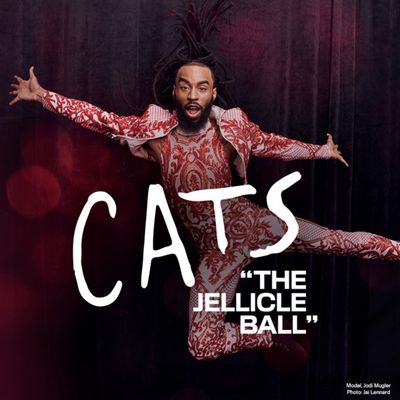
Throughout June and July, we are working with the Perelman Performing Arts Center reimagined production of CATS called CATS: "The Jellicle Ball" to bring you a series of episodes with the cast and creative team.
"I was able to let Tugger sit on me and fit on me listening to them say - you are already Tugger so just be Sydney." This episode features Sydney James Harcourt who plays the Rum Tum Tugger in the production. Hear Sydney discuss having a front row seat to the ballroom culture conversations from icons, how he developed his own personality into Tugger, and the even more of a dive into the Tugger/Mistoffelees relationship (and he's DMs are open for fan art!). Plus, Sydney shares an incredible story about the Gus and Grizabella connection from Junior LaBeija that you won't want to miss.
- Check out Sydney on Instagram: @sydneyharcourt
- Check out Sydney on Twitter: @sydneyharcourt
- Check out CATS: "The Jellicle Ball": pacnyc.org/whats-on/cats-the-jellicle-ball
Produced by:
Alan Seales & Broadway Podcast Network
Social Media: @TheWrongCatDied
Transcript
This transcript was automatically generated and might contain errors.
[0:15] Mike Abrams: Welcome to The Wrong Cat Died, the podcast breakdown of the cat's atrophy. I'm your host, Mike Abrams, and today we have another amazing guest. We are working with the Perelman Performing Arts Center reimagined production of CATS called CATS: The Jellicle Ball to bring you a series of episodes during their run. I am honored to have Sydney James Harcourt with me today. You might have seen Sydney in Hamilton if you watched it on Disney Plus, and you should run to the PAC to see Sydney as the Rum Tum Tugger in this production. So welcome, Sydney. Thank you for joining me.
[0:42] Sydney James Harcourt: Thanks for having me.
[0:44] Mike Abrams: So I want to ask as the theater person, I've talked to mostly ballroom people so far. How much CATS knowledge did you have before this? Was this something that you knew a lot about as the show? I mean, obviously, people know CATS, but how deep was your CATS knowledge before getting the Tugger role?
[1:01] Sydney James Harcourt: It was as deep as me knowing Barbra Streisand's vision of "Memory" very well. And that's about it. I remember the commercials from the 80s, and I just never had it on my radar as something. It seemed a little silly.
[1:25] Mike Abrams: Yeah, for sure. So when I talk to people who've done the musical theater version, a lot of times it's like they grew up dancing it, or they grew up singing it, and they had the VHS. But your production, a lot of the cast has kind of not known it as in detail, which has been great because I think it allows you to bring a different flavor to the story and tell it in a way that's kind of unique. So how much, when you started and you got the role, how much CATS history did you all go through to bring this to life in a different way?
[2:01] Sydney James Harcourt: I would say officially, none.
[2:05] Mike Abrams: None. Okay.
[2:06] Sydney James Harcourt: Yeah. We really concentrated on delving and immersing ourselves into the history of ballroom and the history actually of CATS and the show. I did some of that work on my own. I mean, there's a lot of things about the show that I think are well known, that it was the longest running show on Broadway for a long time, and that it was this 80s phenomenon. It's one of the big Andrew Lloyd Webber scores. But beyond those facts, I didn't know, and I would say still don't know, a lot of CATS history. I feel like all of us in theater know Betty Buckley, and she was sort of for us in a mainstream way, the emergent star of that. But to go back and listen to it and do some work on my own, I was like, oh, he was in that?
He directed this? This Broadway royalty was in this? So a lot of things I think later kind of dawned on me about this as I became more familiar with it. But even with the music, I listened to different versions of the songs that I sing in the show. I really let it almost be like a new show. I learned the music from William Waldron. He taught it to us, and that's how I know it. Before that, I truly never thought I would be jamming out to "Jellicle Socks" with Jeff Pest.
[4:08] Mike Abrams: You didn't realize that that was going to hit your playlist?
[4:09] Sydney James Harcourt: No idea that that was the bop of 24.
[4:17] Mike Abrams: So on the flip side of that, though, you said that you talked a lot about the ballroom culture. So how was that history and lessons learned from you, especially learning it from people that are deeply – I mean, you had Hall of Famers and icons from the ballroom community in your cast. So what was that part of the experience like for you?
[4:32] Sydney James Harcourt: It was epic. In the workshop, meeting Junior LaBeija and having him in the room and have him tell us stories of what it was like with Pepper LaBeija. And not just to watch a video documentary, but to hear it from the mouth of an icon felt like one of those opportunities that you don't normally get when you're experiencing the history of a cultural phenomenon. The legacy of almost what feels like civil rights in what ballroom has brought to the LGBTQIA plus community. And I was in awe of every second of interaction with Junior and the people from the community who wanted to really share and wanted to really make sure we understood that it was a chance for them to live the life, to put on the life of what non-marginalized people experience. And that really resonated with me.
[5:54] Mike Abrams: Yeah. One of the most interesting parts of someone who doesn't know ballroom culture as well as I know CATS and theater was getting to see Junior's Gus. Because Junior's a legend, and on the stage, they are Gus. They could not be more of the Gus character. And to get to see Junior in their element is incredible as a moment. So it's one of the things that when we walked out, me and my producer, Alan, we were talking about the show as we were leaving. And that was one of the moments where I've argued for ages, I think Gus is the correct Jellicle choice and the logical choice. I was like, well, nope, Junior's not ready. Junior's got more time on that catwalk and owning that moment. But it's just a piece that everyone who goes to see this, especially the CATS people that go to see this, are going to experience a different aspect of the ballroom culture that they probably don't get exposed to as much or something that I definitely didn't get as exposed to as much.
So to hear your behind the scenes version of that is amazing to hear, because you got to not just see it on stage, you got to live it during the workshops and the rehearsals and everything else in between.
[7:07] Sydney James Harcourt: Yeah, it revealed a lot to me about myself, learning about the specific categories and what they meant and how people fit into them. And, you know, as you just mentioned, Junior is Gus. Yeah, Junior is Gus. It was almost as if it was written for him and was waiting all of this time. And in that same sense, in the way our version is portrayed, I am Tugger. I didn't realize what realness meant to me, how it had shaped my life, that even though I wasn't in a ballroom house and that I had never walked the realness category, I have been performing realness and walking the category my entire life since people first started saying, hey, don't cross your legs like that. Hey, you don't want to wave like that.
And especially in the business of theater for the longest time, you're not walking into rooms and just being your fabulous gay self when you're trying to book a straight role in a show. You know that when you walk in, you've got to walk into this realness and nobody, not one producer, nobody can clock you or you're not getting that job because they'll be like, oh, well, nobody's going to know that he can be with this girl. And the way that that shaped you really dawned on me and that realness wasn't just, you know, this category that we walk for fun for so many of us. It's a way to have a career. It's self-protection when you feel like, oh, it's late at night and I'm walking home. Let me not get clocked on the subway train and stay firmly in my room. And that just kind of blew my mind.
[9:22] Mike Abrams: Yeah, it is interesting because when I've recorded so many episodes with different cast members from CATS, there is it's a lot of times there's the, oh, I am this character. Like I could not be more personality like the character that they're cast as. And every once in a while, it's a, no, this is acting. Like, this is not me. I just can do this, which is the skill you all possess to be able to do it at this high of a level. But it seems like in your show, the personalities that I've talked to is so perfectly in tune with the character. Like it was almost intentional that like you're acting definitely, but this is you like it's just the cat matches the person. And they really told us that all along the way.
In fact, you know, one of the ways that I really was able to let Tugger just sit on me and fit on me was listening to them say, you know, you can do less. You can, you are already Tugger. So just be Sydney. And that did help a lot. It helped me not feel it because, you know, our in our version, realness isn't pushing. If you ever if you go and watch the videos of what a realness battle looks like, it's like minimalism, like who can be the most minimal? Because masculinity is often, you know, not effusive facial expressions, not a bunch of and what you know, in the way that we associate that in our minds. So I was able to like it in some ways, it becomes one of the easier acting jobs because your challenge is to do less.
And at the same time for me, you know, while Tugger is me in a certain aspect, I guess, Tugger is me, if I lean into what people's outside perception of me is, I'm actually pretty shy. And, you know, not somebody who enjoys walking into a room when I'm not on stage. And being the center of attention. I do all kinds of interesting. Okay, to minimize that, like out in public. I love wearing hats and like keeping my eyes down so that I don't have to have interactions or I don't draw attention to myself. Whereas Tugger is fully fine. And, and not he's not even egotistical about it. He already knows he's gonna walk out there on stage and everybody's gonna go crazy and it's fine. Go ahead and look because that's what I'm here for. I can lean into that aspect of who I am and push into that. And in that way, it is me. And then in the other way of like how I love to live my life, he's not me at all.
[12:31] Sydney James Harcourt: I keep him pretty, you know, happy-go-lucky and carefree off the runway as well. I think maybe it is an aspect of his personality. I think certainly, you know, at least from what I've experienced from my own cat Momo, who is very much like Tugger, there are times when Momo wants to be the center of attention in a room when there's guests over, loves to hear conversation, loves to show off. And there are times when you can't find Momo and she's upstairs under a pillow, like, you know, don't nobody find me right now. I'm doing my thing. And, you know, if you do find me, I'm going to let you touch me and not stretching, whatever it is fine. But really, I want to be left alone. So, you know, I did base it a little off of my own cat as well.
[13:56] Mike Abrams: I love that. Do you have your own house cat or cats? But also in your non-cat? Because I think that's an interesting change in this production is you're not dressed as cats, but you're still, you have motions and movements and pieces of it to kind of pay homage to the original. I want to talk about the storyline. Because you talked a lot about Tugger's kind of particular, you know, the category and the runway. But you all lean into the relationship of Tugger and Mistoffelees. And I got to hear Silk's explanation. I want to hear yours because I don't know if you went deep onto the Internet's archives of Tugger and Mistoffelees, but it is a very, very, very deep dive you can make into that relationship of art and stories and fan fiction. So it sounds like you didn't initially start with that, but you kind of worked that story further along. And I want to hear a little bit about your take on that relationship.
[14:49] Sydney James Harcourt: So, no, I didn't read any of the fan fiction and I really didn't know any of the lore previously. And then during the workshop, I say it was after we had done the workshop of it, Silk sent me, or I think actually Emma sent out into the group chat some different pictures, like really beautiful drawings that people had done of the different cats. And then one of them was this really sort of beautiful and erotic drawing of Mistoffelees and Tugger. And when Emma sent it, I thought that she was trying to say that this was Skimble and Tugger. But then they were like, no, no, that's Mistoffelees. And that was my first inkling that there was something there. As I researched the production, I heard different things about, oh, well, in one of the productions, Rum Tum Tugger is singing it and Mistoffelees is running around with a pride flag like that was in Germany. And that there are little like tips of the hat to it.
[15:56] Now, I will say this. Silk and I are very close. I was amazed by their artistry when I did the workshop. And so we naturally just bonded and were hanging out a lot. We kept in touch all through the eight months of the break, hyping each other up, waiting, waiting, waiting for rehearsals to start. And it was not then, you know, as the like the idea that, oh, Rum Tum Tugger and Mistoffelees are kind of a thing. That felt great because I was like, oh, because we're already we have this strong relationship together. It was through the rehearsal process and the staging process that the relationship really started to become more clear. And from scene to scene, as we knew where we were going and where we were blocked, we were often discreetly put together in certain moments.
[17:07] And as it began to shape, you know, they said, you know, the first day we rehearsed Mistoffelees, Jalen came to me and he said, what is so special to me about the song is that here comes the captain of the football team who's going to say to the rest of the group, no, no. You know who can fix this? It's the fem queen over here. And now we're going to celebrate the power of that fem queen. And that's a message. That's a story I want to tell. And so it really became important to me that even though I'm singing this song, I'm really highlighting and supporting the magic and the artistry of Mistoffelees. And as we kept getting towards like further and further along in the shows, getting more and more stage, they just kept adding little more tidbits.
Like when we come out for moments of happiness, they said, I want you guys to be standing next to each other. And then I'd be like, well, you know, actually, why don't you be arm in arm when you come out? And of course, we love that because we love anything subversive and we love being together on stage.
[18:41] I would say there's some I guess there's some things I should I shouldn't feel right now. If we don't want to spoil, we don't want to spoil some moments that I would say for a lot of people. I would say by the end, it was really an all hands on deck kind of effort. Jaylen and Bill would come with notes. Our amazing assistant director, Cooper, would come with notes and like have little moments, either questions of, hey, so what do you what are you and Mistoffelees thinking in this moment? And then they just gave us license to do what we wanted to do and tell the story that we want to tell. And in club life, you know, you want to be with the baddest bitch in the room. And for me, that's Mistoffelees.
That's so when it got to a point when we were in the tech and we're like running things, we just started making up our own moments of let's tease this. Let's tease that as far as that big, you know, spoiler that I'm not going to reveal right now. That happened one night during Mistoffelees. We were singing and there's just this really passionate lyric. The way I sing, you know, Mistoffelees, it feels like a sexy, like son of a preacher, man, rock, rock. And I really leaned into that. And then on the right after that run, the director came over to me and he whispered in my ear and he said, do this and don't tell anybody you're going to do it. And so I did it in front of the audience that night. And the response was like what I have seen from Michael Jackson concerts when he comes out on stage. And we were like, OK, that's the choice. This is it. And that's how the relationship developed.
[20:41] And I would say now that we've got the show, it's our own now and it's open. It continues to deepen. We continue to find things as one does over the course of. Right. And yeah, who knows? And in another week we might have even more. Yeah. So you hit the nail on the head with the history, which is it starts, I believe, from Tugger singing the lyric and Mistoffelees having Rainbow, especially like in the movie, the 1998 VHS. They put some added graphics in and they did some stuff. So there was that belief that that could happen. And there's staged together a lot, like you said. And then I think it just took off because it was a, you know, it's a fun thing to draw. It's a fun thing to write about. Like, it's a relationship that it's almost polar opposites in the stage production of personalities to see the two together and to see that relationship is fun. It works.
[21:34] Mike Abrams: And so I was in the second preview is when we came and I had the same reaction like we to the thing that's happened. And I was going to come see it. That was that was that the first time that was the first time. OK, well, I was in the audience and I we I mean, the crowd erupted and everything that happens. You will you will know immediately we're talking about when you go see this. And I turned to Alan, you know, the producer who was sitting next to me and I was like, oh, boy, Tugger Mistoffelees, like it's Tugger Mistoffelees, Tugger Mistoffelees, however you want to say it. There's a whole page devoted to it. I was like, this is just amplified.
[22:11] Sydney James Harcourt: Oh, that is amazing. This is really this is exciting because now I'm going to go down this rabbit hole. Thank you, everybody out there for all of the fan fiction. Yeah. And honestly, the artists, I have been highlighting some artists on my social media pages because the artists are incredible. There are some really talented just drawers and people who are graphic designers who are doing stuff in the cat's universe. And it's really cool. A lot of them are erotic Tugger Mistoffelees. But there's also plenty of wholesome and non-erotic stuff as well. But the amount you will get if you if you let the cats fans, if they know that you are into this, I promise you, your DMs will overflow with different Tugger Mistoffelees art that will come.
[22:53] Mike Abrams: Oh, well, calling all fans. I'm into it. So get my DMs.
[22:59] Sydney James Harcourt: OK, we will I will we will send some your way. I know there's a couple that are super into this.
[23:04] Mike Abrams: Awesome. You know, I actually had somebody tell me I don't know if it was opening night or night before or the or the next night. A woman of trans experience came over to me and very emotionally told me how much it meant that the like sort of masculine icon of the show would choose to be with the fem queen and empower that and how incredibly seen they felt.
[23:42] Sydney James Harcourt: And that is why I do are too powerful, have people see themselves and see visibility and representation, because I've always said representation is everything. And while that it's when we build these things, these are things that we throw at the wall and then try them in front of an audience and see what kind of response we get. It can feel like it's cold and calculated and by the numbers. But when you hear the response from the people who were doing this for when the people who love this piece, then, you know, you've done something right.
[24:19] And it's one of the things I love about cats as a vehicle is by having such a large group of characters, there's probably somebody that you relate to in some way. And I think you all amplify that even more by adding the ballroom culture and having a trans woman as Grizabella and, you know, all kinds of different added elements to it to take it even a step further that I've said everything that you'll go into the show and at worst case scenario, you're going to walk out having just had a very energetic, exciting experience of theater, like no matter what.
[25:02] Sydney James Harcourt: The energy is infectious at the shows. And I was like, but there's a good chance you probably understand CATS, the poetry, better than you ever have because the storytelling is so clean. I was like, you're going to see incredible dancing and learn about the ballroom culture that you probably maybe didn't know as much about and just have a good time. And so, I've loved this production. I've loved seeing that the reception of it has been so strong because when you go into something that's different and unique, but on a piece of material that's been around for so long, you never know. It's hard. And so, the people and crowds embracing this has been unbelievable. It's been a dream come true, honestly.
I never usually do revivals. I've always been an actor that really loves to do new things, to try and say something new. And that, I think, I learned actually from doing Shakespeare productions that revivals can be new and interesting because whenever you're doing Shakespeare, it's always, hopefully, a new take and you're trying to put a story on top of a story. And I really appreciate these words, these poems, as Shakespeare in a way, because you've got to mine the meaning from the material and use your imagination to say, but what else could this mean? What else could this mean? And so, to do something, you know, iconic and amazing like Cats and especially fighting the... Well, not necessarily fighting, but especially with the reality of what happened with the movie during COVID, right?
Where, honestly, I might get hate mail for this, but I would look up the reviews and read them out loud to my family and cackle at how disturbingly graphic the reviewers were getting with how much they hated it. And in a way, I feel like that helped us because people come through the door with lower expectations because of some previous versions that they felt were subpar. And then they see something that they could not possibly predict. Every moment is a surprise, and yet we have not changed a word of the show.
[27:28] Mike Abrams: Yeah. I think you're spot on because Cats is polarizing, and the movie didn't help. I mean, the movie, the 2019 movie, or 2020, I guess, whenever... I think it came out on Christmas of 19. It had some challenges, but there's some good parts of this. My show wouldn't exist if it wasn't for that because my original joke came because of that movie. So, we wouldn't be sitting here today without that production. But I do think there's a lot of Cats haters out there, and I've appreciated that. I've yet to meet a Cats hater who gave me a really thoughtful reason of why they didn't like it. It's just like, it's not their cup of tea, which is... It's art. Not every show is for everybody, and that's what's great about theater, I think, is that you can love something, dislike something.
We can have different opinions on it, and that's okay. It's not going to be for everybody. But this production, I've tried to tell every Cats hater. I was like, if you're a Cats lover, you're going to like it because, like you said, you didn't change the words. You get Cats, but you get a new interpretation of it. If you're a Cats hater, you get a version of it that maybe is clearer than the stage because you get rid of some of the stuff that sometimes it's like, well, they're in Cat, and they're in Tail, and they're crawling around. If you eliminate some of that, I've seen, and I've had some Cats haters. You see it on social media. It's like, oh, I'm not a Cats fan, and they always preface it, and then they rave about your production.
And so, I have found that this has been the first time that's blurred the lines, and every Cats lover, every Cats super fan has gone and been thrilled, and every Cats hater has been like, wow, I really enjoyed this. The energy brought it out. So, I've been trying to tell every Cats hater, go see this one because if you still hate it after this one, then you're just a hater, and I don't know what to tell you. But it might convert you to at least the idea of what this musical is about in a different way. And if nothing else, again, you walk out, hopefully having had a good time with the energy that you all bring, and see something new and fun.
[29:28] Sydney James Harcourt: Well, setting Cats aside for a second, the property of the songs and everything that goes along with what people imagine as Cats, and then also setting aside Cats, felines themselves, because there's a lot of people who are like, I'm not a Cat person. I don't like Cats. Setting all that aside, people who love an awesome club night, people who love to go to a mysterious room, and then be entertained with crazy beats and athleticism and wildness, that's coming from Michigan at 19. Going to New York City clubs blew my mind. And the shenanigans that happen, the dramas that play out, the performances that happen on stage, the amazing moments of dancing and music and lights. And it's just thrilling, at least for me as a young kitten, first coming into that scene.
And that is, I think, something else you can tell somebody. So yeah, you don't like Cats, great. You don't like musicals, fine. Come and be entertained tonight. And then also, you're going to get pulled into this story. And you're not going to be able to stop the fact that it's going to change you. It's going to have an effect on you. And you're going to have had the time of your life.
[31:11] Mike Abrams: We're going to take a quick break, and then we'll be back for more of The Wrong Cat Died. Let's do some rapid fire here to close us out. So if you could go on for one other Cat, whether you could sing it, dance it, do it, it doesn't matter. But just one night, whose track would you want to do?
[31:27] Sydney James Harcourt: Well, I mean, if I could be Primo and be Tumble Brutus, and have the magical ability to do all of those things, then I'd want to be Tumble Brutus. But that's never going to happen with this 6'2", 200-pound body. I'd do one of those spinning dips, and I'd be out. This is the question I ask myself. I would say it'd have to be Monkastrap, Monkastrap.
[32:03] Mike Abrams: Monkastrap, okay. Yeah, I asked that question with the preface of whether you could do it, because I can't do any of them. I can't sing, I can't dance. I'm like, whose would be fun? So Tumble Brutus.
[32:11] Sydney James Harcourt: No, it's not Tumble Brutus. If I'm being really honest, it's Victoria.
[32:16] Mike Abrams: Victoria, yeah. Oh, yeah.
[32:18] Sydney James Harcourt: It's Victoria. I mean, that first solo, I could probably do that one.
[32:25] Mike Abrams: All right, I'm ready. One night, you're going out in all white. You're ready to go. I'm going to learn the choreo, and we'll just go out to a club, and I'll do it.
[32:32] Sydney James Harcourt: Yay. I love it. Who are your favorite and least favorite cats, personality-wise? Which one would you be friends with, and which one would kind of bug you?
[32:41] Sydney James Harcourt: Oh, Macavity drives me crazy. Like, my God, always in trouble, always bringing drama. I'm about no drama at the club. I'm about let's be chill and just have a good time, maybe have a good sexy time. Whatever it's going to be, let's drink. Macavity is just self-aggrandizing drama, and I can't deal with it.
[33:03] Mike Abrams: Love it. Who's your favorite?
[33:05] Sydney James Harcourt: Oh, Mistoffelees.
[33:06] Mike Abrams: Yeah, of course. Favorite song from the show?
[33:10] Sydney James Harcourt: Magical Mr. Mistoffelees.
[33:12] Mike Abrams: Okay, so I've been trying to figure out, because I love that there's the House of Glamour. So if Tugger was leading a house, what would Tugger's house name be called?
[33:23] Sydney James Harcourt: The House of Manifestation.
[33:24] Mike Abrams: Ooh, okay. I'm going to ask some AI to get us a house graphic for that. I like that. I'll let you know what it comes up with. It's not very good with cats, the musical, and ballroom, it thinks it does not get ballroom as in the ballroom culture. It gets me ballroom dancing, very posh, traditional. So I've tried a couple of times and nothing's been great yet, but we'll see. I'm going to send that in there. Okay, most important question. I've argued at length, I don't think Grizabella is the right Jellicle choice. So I want to hear who is your Jellicle choice and who would you pick and why?
[34:01] Sydney James Harcourt: I hear you. I hear you on Grizabella not being the right Jellicle choice. In our production, I guess one thing I've never understood, period, is when does Deuteronomy get to be the Jellicle choice? He's got to go eventually. When is that going to happen? Setting that aside, I mean, I've heard a lot that it's Gus, but I think that Gus really enjoys still being here and regaling and living in the past. I've made that argument for Tugger as well. It's like, wait a minute, life's real good right here on whatever plane we're on. I'm not going anywhere. So I'm going to have to disagree with you and say that it's Griz because Griz wants something different than a lot of the cats want. Griz wants a taste of reality, whereas a lot of these cats want to live in their fantasy of who they are and what they're doing in this magical world.
I don't find that in our production anyone needs it as much as Grizabella needs it at that point. She has lived so many of her lives and been out there in a way that I think a lot of the other cats haven't, that for her, this is really the next logical step in order to level up and experience a life that I think many people yearn for and don't get to ever experience in the end. And I feel that the reason that it is Grizzy and not Gus is because, as Junior will tell you, Gus wanted to be Grizabella. Gus didn't have the opportunity to be Grizabella when Gus was a kitten because that kind of stuff didn't exist for them. Junior always says, I always wanted to be a woman, but I never wanted to be a poor Black woman. And it took me a long time to understand what Junior meant when he said that, but Cats makes it completely clear for you, if you're watching.
[36:50] Mike Abrams: Yeah, this has been the hardest as someone who's, again, spent hundreds of episodes arguing with people. As I walked out, I was like, this is the closest to where I'm like, I get the Grizabella argument. My personal take has always been, I don't want to ruin her redemption story. Where we differ is, what is the heavyside layer? Because my joke is the wrong cat died, is that, are you being sacrificed? Is it being murdered at the end, which is not what you would want? Is it a reward? And so that's where I always differ. I was like, I want Grizabella to have her in your production, walk the runway, but I don't want her to go. I want her to still be able to be in the community and be part of the family.
[37:33] Sydney James Harcourt: Is it this place that, you know, we're never going to see Grizz again? Or is it possible that Deuteronomy has always already been to the Heaviside Layer and come back and, like, exists among us as, you know, the Phoenix Force? Yeah. Right? Like, it's one of the magical things about the show is that, yeah, it puts a new frame on top of something you already know. Yeah, it puts a story. But we ask the audience to let their imaginations fill in the specifics of what that means. And that's going to be really personalized from person to person. And while we do have a very specific answer about those questions, we are also allowed to have our own ideas of actually what it means.
[40:05] Mike Abrams: Yeah. So I love that you want just more memory. I feel like you're right. Grizabella actually needs to make a whole studio album before she ascends to the Heaviside Layer, because memory is just not enough singing anymore. She's not done. She's not done yet. That's my thing, is I don't think she's done. And I find it weird to have the embracing. It's like, we're going to accept you back. We want you here. Like, we've been shunning you the whole story. And now we're finally, Cillabub's coming up and saying, welcome back. Like, you can do this. Like, cool. Now get out of here. Like, it seems like, no, let her stay. Let her have some time with the family. But you know, you remember, like, in the first act, before the first act ends, it shows us that Grizabella's done been here.
Yeah. She's got a bag of trophies. She did all that already. So yeah, she could come back and have more fun and play. But that might be living the same life and trying to recapture the height of something she already reached the very top of.
[41:21] Sydney James Harcourt: Yeah. So there's that. There is. But as I've seen... We could go at this all day. I've seen a lot of musicians and artists do their world tours at the end and try to relive it. So, you know, there is a moment where you've got to hang it up. But again, your production's the closest I've ever been to... I'm not changing the podcast name. We're not having it officially converted me over. But I did pause and I was like, I get this one. I get this one a lot more than I have the other stage productions I've seen. Yeah. And you're giving me food for thought, too. I mean, we're always thinking about it. I think about it every night, to be quite honest. The story really does mean a lot. And it's more than just a sarcastic name. It's a great question about who should really be the jellicle choice. And that's going to be different for every person who identifies with a different kind of cat. And then if they should take that and if it's a blessing or if it's not.
[42:14] Mike Abrams: Yeah. Tugger doesn't think it is.
[42:21] Sydney James Harcourt: Yep. For sure. And I think that's what's great about it is you can define it differently depending on how you think about it. And I think part of the beauty of the poetry and cats in general is it is very open to interpretation. And everybody can pull a little bit of themselves into it and figure out a piece of this, but it's also not going to be clearly stated for everybody. It's why I'm able to do this show is I can ask... I learn something new on this show almost every episode that I'm like, I never thought about it from that angle. And that's, I think, really cool that a lot of other stuff, it's very clearly told. You're pointed into the direction of where they want you to go. And here, as you even said, all these little moments that are happening on the sides or you're in the audience part of the times, all those things, you can't see it all when you're in there.
It's why I can't go back so often. And so you have the ability to have those little pieces that if you catch the right moment, the right look, the right thing, it could totally change your perception of how you interpret the story. And I love that about that.
[43:22] Sydney James Harcourt: I love that the world is so open and it's not a follow the storyline from A, B, C to D, and then here's the ending.
[43:28] Mike Abrams: Yeah. Well, I have talked to people who have seen it on multiple nights who are like, oh my gosh, tonight I saw this interaction between such and such that I couldn't see in the seat I was in before. And it made so much more sense now for Cillabub when they run over. And that's amazing.
[43:45] Sydney James Harcourt: Yeah. To have somebody like it's almost like being in a murder mystery thing in a way where it's like you get to put the pieces together yourself based on what you see in the room. And I think it also teaches us that that's sort of like what life is when you're only working with the knowledge of what you saw from one angle in an experience, you can often interpret a situation the wrong way.
[44:07] Mike Abrams: Yeah. Or at least from something that's based in your point of view. Whereas when you get to look at something from multiple sides, you're like, this is not at all what I thought it was. I was putting my own thing on this. But with this new information, I see something different.
[44:41] Sydney James Harcourt: Yeah. I love that. It's such a valuable life lesson, right? Of what we need to know in general. And I tell you, I never, never thought I was going to be learning valuable life lessons from the production of Cats. I mean, truly having done Hamilton, one of the most amazing things I experienced night after night after the show was the profound sense of enlightenment that audience members would walk out of there with. And a lot of it was generally about, I've got to do more with the time that I have here. That was a big theme in Hamilton time, right? We say it 10,000 times at the end of the show. And that I would see inspire people. I would see that. And even reading the book and reading the story of Alexander Hamilton, I was moved to do more with my time.
And it was inspired that like the harder I pushed, the more things would happen. I thought that Cats would be like this exciting introduction to ballroom people in this just banging show. But what I've come to find is that there are so many people who have tears streaming down their face at various points in the show. And who come and tell me like, this was so inspiring me. So inspiring. This has inspired me to change. This has inspired me to go out there and do more and be more of myself. That's why I do theater. It's literally what Shakespeare was talking about. Hold the mirror of humanity and show them their reflection and they will make the decision about what it means.
[46:34] Mike Abrams: Who would have thought, right? This show about cats from the eighties has more to it than you ever could imagine.
[46:39] Sydney James Harcourt: It's the way I've been. I mean, again, I made a joke. I made one joke about Grizabella and here I am learning all kinds of different pieces of this. And the show from the eighties that they insisted was only about cats. In the face of, no, it's about the aristocracy. No, it's about this. No, no. No, it's about cats. They're just competing and they just want to get the trophy. So to unabashedly say, no, this is just something silly and then have it be a life-changing piece. It is magic. It is literal magic. And I'm just so grateful to get to do it.
[47:19] Mike Abrams: Well, I'm glad. I hope everyone gets to go see you do it. And you're running until July 28th. I think you're extended. How can people stay in touch with you on social media?
[47:29] Sydney James Harcourt: I'd say Instagram is still my favorite spot. And it's Sydney Harcourt. Yeah, I'm on Twitter here and there. I get into it. I'm on an animated series called Castlevania Nocturne. And so if I'm not posting about cats, I'm posting about cats.
[47:52] Mike Abrams: Amazing. Well, we'll link everything so people can follow you and keep up with everything you're doing and also link to how to get tickets to the show. Everyone needs to run to go see this before it ends. Do not walk, run.
[48:03] Sydney James Harcourt: I mean, yeah, you have to. I mean, tickets are selling. It's hard to get tickets, so you've got to get them soon.
[48:06] Mike Abrams: Yeah. As soon as the reviews came out, I immediately went on and got tickets for my mom's birthday. And then I was like, maybe I should get some more. I don't know how many she'll want to come. And I went back and that night was completely sold out.
[48:28] Sydney James Harcourt: Wow. So yeah, guys, girls and everybody else, get your tickets.
[48:33] Mike Abrams: Get your tickets.
[48:37] Sydney James Harcourt: Yeah. Well, we'll link it and hopefully you can find time and then see it. It's been amazing. So I really appreciate you coming on. It's been fun to hear your story and talk Cats with you.
[48:44] Mike Abrams: Yeah. And you've added things to my own show. I love getting to talk about it because every single conversation about Cats brings something new for me right now.
[48:50] Sydney James Harcourt: Amazing. Well, next time I come, maybe I'll pick up another moment here and be like, oh, that was part of our conversation.
[48:53] Mike Abrams: That'd be great. Next time you come, I am going to mess with you relentlessly in the audience.
[49:08] Sydney James Harcourt: I'm aware. I was wearing just the most Cats parody shirt too. And I was sitting front center, spotlight on me. And I've interviewed Emma before and I'm like, Emma's going to be in my face the whole time. And it's super fun. So I had a blast.
[49:19] Mike Abrams: Yes. I'm ready. The next time I come to be, I've been joking. I want to convince your team to let me go up to the Heaviside Layer after, you know, Chris, can you still go up? You know, I don't want to change the show, but I want to go after Grace.
[49:27] Sydney James Harcourt: Right. It's fine. Just run up on stage and follow her out the door. No one will care.
[49:32] Mike Abrams: Yeah. Yeah. I'll come with, I'll come with.
[49:36] Sydney James Harcourt: Yeah. But this has been super fun. So thank you. And thanks everyone else for listening to this episode of The Wrong Cat Died. The podcast breakdown, the cat strategy to follow along. You can subscribe on Apple Podcasts, Spotify, or anywhere else to listen to podcasts. Follow us on Twitter, Instagram, TikTok, and Threads. It's @TheWrongCatDied. Check out our website, thewrongcatdied.com.
© Broadway Podcast Network, All Rights Reserved