

Throughout the summer, we are working with the Perelman Performing Arts Center reimagined production of CATS called CATS: "The Jellicle Ball" to bring you a series of episodes with the cast and creative team. "He also has to have that edge of realness... Read More
From the show: The Wrong Cat Died
Guests

Miniseries Inclusions
Featured Shows
About
Throughout the summer, we are working with the Perelman Performing Arts Center reimagined production of CATS called CATS: "The Jellicle Ball" to bring you a series of episodes with the cast and creative team.
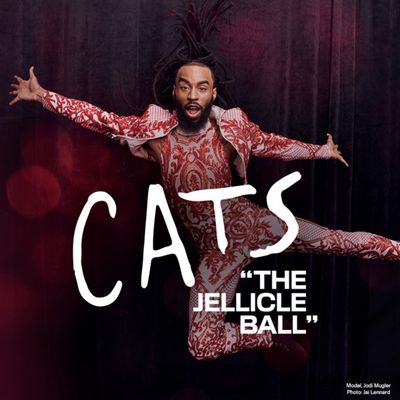
"He also has to have that edge of realness. Like straight passing. Because his life outside of this space is not the same." This episode features Primo who plays Tumblebrutus in this production. Hear Primo share his involvement since the early workshops, how he created the Tumblebrutus storyline, and how the show gives the energy of feeling like you are attending a ball. Plus, Primo shares how he views the Heaviside Layer from the ballroom perspective.
- Check out Primo on Instagram: @primo_ballerino
- Check out Primo on Tik Tok: @primo_ballerino
- Check out CATS: "The Jellicle Ball": pacnyc.org/whats-on/cats-the-jellicle-ball
Produced by:
Alan Seales & Broadway Podcast Network
Social Media: @TheWrongCatDied
Transcript
This transcript was automatically generated and might contain errors.
[0:00] Mike Abrams: There's a cat over here. There's a cat over there. And the wrong one died. And the wrong one died.
[0:15] Mike Abrams: Welcome to The Wrong Cat Died, the podcast breakdown of the cat's atrophy. I'm your host, Mike Abrams, and today we have another amazing guest. We are working with the Perelman Performing Arts Center reimagined production of CATS called CATS: The Jellicle Ball to bring you a series of episodes during the run. I'm honored to have Primo here with me today. Primo is performing as Tumblebrutus in the show. So welcome, Primo. Thank you for joining me.
[0:38] Primo: Thank you for having me. I have enjoyed having the ballroom folks on a lot because as someone who knew less about it, it's been fun to hear your perspectives on tackling this project. But I also kind of love it because I know way too much about CATS and very little, you know, I've learned about ballroom. But I love hearing how much did you know about CATS before this particular production? Was it something you were super familiar with? Or had you seen it before?
[1:06] Primo: So the history of CATS before this for me was not super familiar. And I kind of didn't want to be familiar with it because I went to a performing arts high school. And so like a lot of the music, especially the girls at the high school I went to, everybody always wanted to sing "Memory." Like everybody always wanted to do CATS. The production of CATS had been done multiple times years prior to me going to the school I went to. They had done it a bunch of times. And so it was just like CATS pictures everywhere. And I was like, this just doesn't, like I never understood it. Like I heard the music and I was like, Andrew Lloyd Webber's a really dope composer and things, but I didn't understand the musical. So I didn't really know much or have any like relationship with the project or with the musical prior.
[1:54] Mike Abrams: I love that. So your school did it a ton, but then not while you were there. So you weren't ever in a production or yeah. Okay. I was gonna say, it's kind of interesting when it's kind of formative, if it's in that early phases, cause then, you know, at least some outline of it, but it's not. So then walk me through when you learned about this production, which is still at its core CATS, but with such a twist and spin to it, what did you think when you kind of heard the merging of these two worlds?
[2:28] Primo: So gag, I actually have been a part of this project the longest out of anyone on the cast. I was there in the very, very beginning when the idea was birthed with Bill and Omari. So, and they had the very, very first dance workshop to just get some ideas out, just to see if the idea even worked. And when I heard about it, to me, it automatically made sense because I did, what I didn't know about CATS was that it was a competition and that it was like a ball. And so I was like, it really, really only makes sense, like for it to, you know, be ballroom because it was like all of these different personalities, they represent categories. And I'm like cat category, everything, a lot of things about ballroom are very feline related, especially when it comes to the art of Vogue and walking runway, like everything is very cat-like.
So when I heard that this was going to be a thing, I was like, oh, this is really about to be T because it's like, I never thought. And when this project started, I was like only maybe in ballroom for about seven months. I started this process. So I was actually new to, still new to the art of Voguing and things and everything. So I was like, it was such a dope thing to be able to come into ballroom and something that I am familiar with, which is musical theater, be a world that is, you know, merging and forming a relationship. So I was like, oh yeah, I have to be a part of this because a musical in ballroom, like.
[4:12] Mike Abrams: Yeah. It feels like it meshes perfectly. Like every time I've heard, like I thought about the Cats the first time I saw it as a singing competition, I thought it was the X factor on drugs was always my joke. And so when I heard that there is this like, you know, a competition world of ballroom being brought into it, it felt perfect. And then you have all the cats and, you know, a catwalk, the category, you have a lot of these things that kind of also fit with it too. So I was fascinated by it when you all, like when you first started, like when I heard about it, cause it kind of went viral when the casting notice went out for that workshop. And then I didn't know what to expect when I came in to the theater, you know, two years later, three years later, whatever it was when it actually, you know, when your, your first performance was.
And so as someone who kind of was bridging the two worlds a little bit, having been, you know, having theater experience, but also being from the ballroom community at that time, what was that rehearsal process like of combining those two elements?
[5:15] Primo: Frustrating, rewarding, interesting. Those are the top three words I can use. I'll say frustrating because ballroom is a whole breathing, thriving community, like a living organism. So it's like when you're met with something so institutional, such as musical theater, that's so institutional and so many rules and so many right and wrong ways to do things like literal, there is a right way to do this in a wrong way to do this, that being met with the energy of ballroom with that kind of raw, especially when it comes to voguing, it's like a lot of the times, like it does not matter what you do when you're performing. It's about how you make people feel. So it's like coming from a world where everything is almost like everything is so independent and everything is so self and it's about how you show up versus coming into a space where you're being expected to show up a certain way and perform a certain way and act a certain way and perform a certain way and act a certain way.
Merging those two things together was really, really frustrating for me personally. And it was definitely rewarding in the same token, because it's like, I'm literally doing exactly what I want to be doing. And I also get to help educate in the process because that is one of my biggest things. I always say knowledge and skill go hand in hand. One thing, especially if you don't already have the skill, if you dive deep into the knowledge of things, then the skill will immediately follow if you work hard at it. So I was like, I'm literally getting to go in every day and I get to vogue every day because I vogue every day already. So it's like I get paid to go in and vogue every day, but I also get to sing.
I'm always singing. So it was such a rewarding process because I felt like the artist in me is being honored in so many different ways. And I'll say what was interesting was seeing how many different groups of people, because throughout the workshops, not everybody was the same. So it's like getting to see how so many different people, how ballroom takes to their body and takes to their minds and how some of the ideologies and things that ballroom has, how it helps people grow. You know what I mean? And helps them step outside of such a fixed mindset about themselves as artists that a lot of musical theater and places where you are expected to show up a certain way, institutions, we get so stuck in our minds and in our brains and we don't realize we can really step outside the box.
[8:22] Mike Abrams: Yeah. I love that too. Because I think you're saying it from the artist lens of having all the different people through the workshops and you've had deep theater people who have been on Broadway and in all kinds of stuff. And then you've got ballroom people and then you've got a mix of in between to have both and you kind of combine that. But I'm curious a little bit of, do you feel that way with the audience too? Because a lot of what you just said is what I think is what's so cool about this is the audience is such a wide range of people coming in to see this and there is this kind of education and knowledge that you're providing to a group of people that maybe didn't know much or anything about ballroom before and also kind of allowing them to experience that.
So is that something you're thinking about when you step on stage of how you're bringing this, the voguing and the culture and all of this to a group of people that might otherwise not have the ability to go see that?
[9:10] Primo: No, I'm not thinking about that at all. Because my goal is not for people to come to this show and feel like they understand ballroom because to come to this show and feel like you're going to come to this show and now you understand ballroom and what it is, is not the case at all. And it's like, we don't, we don't, I personally, and I can speak for the ballroom community when I say this, we do not want people to come to this show and feel like, oh, now I'm going to show up to a ball because it's like ballroom is a, ballroom is still a sacred space. Ballroom is still a space curated for a specific group of people who, you know, didn't otherwise have these outlets. You know what I'm saying? What I think is dope about it is that what I feel that comes, what comes across is that people think, wow, this must be what a ball feels like.
And that, that is definitely more along the lines of what we want to go for, because it's like, I don't want you to feel like this is ballroom but I do want you to feel like you are at a ball because Cats does feel like a ball. It looks like a ball. It feels like a ball. The energy gives a ball. It's just in the form of a musical.
[10:38] Mike Abrams: Yeah. So, but it's like, it does not encompass ballroom because it, we couldn't create a show that encompassed all of what ballroom is because it's a thriving community, you know?
[10:50] Primo: Yeah. It's things that, you know, unpredictable things that happen and, you know, things that happen in a community, you know?
[10:54] Mike Abrams: Yeah. It's interesting to hear you say that, because I didn't, I didn't walk in and walk out of the show and feel like, oh, I'm ready. Let me walk tomorrow. You know, like I, I didn't, I know I'm not the person you're having at the ball, but I did learn a lot more about something I do. I didn't know as much about, you know, I had the Paris is burning documentary and that was most of my exposure to it. And so it was for me, interesting to at least learn more about, again, something I knew so little about and then being able to view it in a lens that I knew arguably way too much about. I know way too much about cats. And so I was able to kind of take that and I've loved that, that the audience gets all of that kind of in one. It's interesting to hear you say though, it's not, the goal is the energy and the experience more than like the history and the background and like what's happening in the community.
[11:48] Primo: Because someone in the cast earlier in the rehearsal process, they made a comment and they said, we're teaching the audience ballroom. And I said, no, we're not, we're not, we're not teaching the audience ballroom at all because nothing about this show is teaching ballroom. It's showcasing ballroom. Yeah. If that makes sense. And what ball and things that, that are involved in ballroom, you know what I mean? It's like, it's just like if you were to take anything in life and turn it into a musical, you know what I'm saying? If you were to take, I don't know, make a musical about a robbery, like, you know, everything is not going to obviously be played out the same, how actual robbery would be.
There's going to be some room for fantasy and some room for interpretation and some throwing, you know, throwing some jazz in here and throw some African in here, you know, to make it a full show. You know what I'm saying? You got to beef it up. You got to, you know what I'm saying? You got to make it like that. So it's like, we're not teaching the history of ballroom because that would be, that would have to look completely different. That would happen. I don't, I honestly don't think you could tell, teach the history of ballroom through cats, but what you can do is you can showcase the life.
[13:07] Primo: And the categories and what happens at a ball through CATS. And, and you get, and, and the story of CATS creates a mindset and a story of a person that you can go inside their mind and see what it is that they might be feeling or how that person is, you know, in terms of, you know, it's basically just the personality of ballroom, if that makes sense. It's like every, even every character, every cat, like even with their stories, even though it was meant to be, you know, CATS, it's like, you definitely can take it. And it relates to ballroom. Like there are so many legend ballroom legends and icons that come to the show and they relate to Grizabella a lot because that story of, I was beautiful then I can smile at the old days.
It's like, they've done their due deals. A lot of them is, some of them have had, you know, had to step away because of life and things like that, but they can always think back on those times when they were young and that memory. And, you know, them always want, that's also a thing in ballroom where it's like some of the problems you run into with the people from the older generation, sometimes it's like, they don't want to let those days in some of those toxic ideologies and things that came with, they don't want to let it go.
[14:33] Mike Abrams: Yeah. But it's like, you know. It's so interesting to hear you talk about that from this angle too, because I think there's a lot of, like, we know there's a lot of CATS haters out there and it's always the argument that they don't understand it and it's a little weird. And I've kind of always argued the opposite, which is if you, now the problem is most people aren't doing this, but if you spend 180 plus episodes talking to people about it and you get a really good understanding of what kind of each character is thinking about and all, how the family is built, there's almost too much. And because of that, it fits into so many other things in life. Like I've said, the people who really are drawn to CATS had usually an experience in a formative part of their life, but also were drawn to a character that they could relate to or had an experience like, or felt like.
And that was what I always thought was so universal about the show is there's probably some character that you could relate to or some character that has a personality that's similar to yours or that you're hoping to be. And I thought that's what made CATS so unique and why it's been running for so long. But to hear you kind of say such a similar thing, but from the ballroom community standpoint is so interesting because I think that's why the show has worked so well is the elements that are there are still there for you to tie to, to bring it into a different space, a different world and still tell the story, but in a slightly different lens with a lot of similarities. And that's why I think so many CATS haters have turned and love this production because it's clear of a picture.
It kind of gets rid of some of like, you're not in full CAT, although you are the only one wearing ears, I noticed, or one of the only ones wearing ears. So it's kind of gets rid of some of the things that were easier to poke fun at and makes it a more full story. I mean, I've loved everything about this because there's just been so many elements and pieces to it that are different and unique, but still at its core CATS. And that's what like, as someone who came in again, knowing CATS, I walked in, I wasn't really sure. And I got CATS with this really cool spin on it. And the energy is just electric.
[16:40] Primo: And I think what's also what also contributes to the success of it is that we don't utilize every single CAT that the show has to offer. Because I feel like, I feel like because there are, I don't even know how many CATS we don't use, but there's a lot that we actually don't use. And I feel like that gives by narrowing down the characters that get that allows the audience to get to know the characters that have something to say, you know what I mean? Or they actually contribute to the continuity of the storyline, you know? And so the fact that we have CATS, most of the CATS that we have are CATS that are either talked about or like at the forefront in the musical, if that makes sense. There's a couple of us like Tumblebrutus where it's like my character pretty much was curated.
You know what I'm saying? Like I curated who he was, what he was going to look like, what he was going to act like, because there's not really a, other than the name that we get Tumblebrutus, obviously they gave me that name. They gave me that cat name for a reason, but it's like, the reason is not related to CATS. It's related to ballroom. You know what I'm saying? So I had to curate my own, essentially Tumblebrutus is kind of essentially me. The only difference is Tumblebrutus is a lot more feminine.
[18:02] Mike Abrams: Okay. Well, that's, that's my next question was for you is I wanted to talk about characters because you are in Tumblebrutus. There's a little bit of backstory for Tumblebrutus that's given in the theater production of CATS. Like every cat has three words and they have all this kind of history that goes with it. But to everything you just mentioned, some are like fully developed. Here's everything. Here's the relationships are supposed to be like this. It's not always consistent. And I just talked with Dave about that. Like Mungojerrie and Rumpleteazer could be brother, sister. They could be together. They could be lovers. They could be best friends. Like there's a lot of versions I've heard over the years, but with Tumblebrutus, there's a little bit, but not a ton.
So you said that you've kind of created it in your own image. What was that process like to figure out the personality that you wanted to bring to Tumblebrutus on top of all of the different, I mean, you and Baby, especially in Victoria are working up there frequently. Like you are dancing a ton. So you had all those moments where you knew you were going to be walking certain categories. You knew you were going to be heavily involved in certain dance elements, but how did you add the personality piece to it?
[19:08] Primo: Ballroom. Um, because ballroom, you can't be in ballroom if you don't have personality. Well, you can be in ballroom if you don't have personality, but you ain't going to make very far because like, there are so many people, I'm not going to say so many people, but there are so many people in ballroom nowadays. Um, it's a lot more accessible than it used to be when it was underground. So it's like, if you don't have any personality, you will not stand out. And the goal is to ballroom is supposed to be for the best of the best. Like you're supposed to be the top at what you do. So me, my, the development of the character was easy for me because the personality, I was like, okay, this is a part of musical theater that I get to do that I never get to showcase, which is my shady side, like the shady side.
So it's like, okay, I know I was told given the parameters, you know, Tumblebrutus walks schoolboy realness, which is a category that I actually walk. And then performance. I also walked that category. And then, you know, Tumblebrutus also walks labels. And so the development of the character, it went along the lines of, okay, how do I want to convey ballroom through Tumblebrutus? If that makes sense. So for me, it really was okay. Fun. I have the cat ears. So it's like, obviously this has to be a fun character because it's like, he's a boy who walks around wearing cat ears. You know what I'm saying? And then it's like, he also has to be, have that edge of realness, like straight passing, because you know what I'm saying?
His life outside of here, outside of this space is not the same. It doesn't look the same, which is how my life is. I'm not very, I'm only feminine when I'm voguing really essentially, or when I'm in spaces where I'm around people that I trust. And then it's like, he walks labels. So obviously like, like the development of Tumblebrutus, I realized has a lot of layers and it was easy to develop because, because I'm like, wow, this is so ballroom. You know what I'm saying? That's where I found myself saying that a lot. I'm like, this is so ballroom. This is so ballroom because it's like Tumblebrutus, Victoria, Jennyanydots, the house of dots, they are, if it were a ball, they're called the house of West.
They, the people hate to see the house of West coming because the house of West, they win a lot. They got really strong people. It's a lot of them. They got strong leaders and they are the standard of competition. Like when people come out with new houses or when people come out on the floor, they're like, watch out for those West, or we need to be like the West, or we have to beat the West. That's what the house of dots gives because we win most of the categories at a ball. Sometimes at the end of the ball, they'll have a car, a category. Well, it's not a category, but it's house with the most points or house with the most trophies, meaning whichever house won the most categories, they get a bigger grand prize at the night.
The house of dots would definitely be that because me and Baby and Jenny, like Jennyanydots is the trophy mother Tumblebrutus. He is, he's the type of person he does not like to lose. He's not used to losing. He's a professional at everything he does and he does not like to lose. And Victoria is at the top of her game. Everybody wants to be like her. Like we are the standard, we win everything, you know? And so it's like the development of the character is just, it just ballroom. I love it. I love that the house of dots is the, the, the, the standard, like, you know, the, the group to standard.
[23:03] Mike Abrams: Yeah. So does that bug you when you, I don't want to split, I guess we're spoiling a little bit, but you know, you get, you, you win. I think it's the tag team category you win. And then somebody comes around and steals a trophy from y'all at a real ball. That would be a fight.
[23:19] Primo: Yeah. I was going to say at a real ball, that would definitely be like, girl, I'm definitely like, we're going to have to tear it. Cause that, but also that would never, that, that, that's, that's the beautiful thing about musical theater. It's like stealing a truck. Cause even in ballroom, if you steal a trophy, that does not mean you won and nobody's going to respect or even recognize that you won just because you stole the trophy.
[23:46] Mike Abrams: Yeah, it's great. It's great. Cause it fits their characters too. So I remember when I watched it, I was like, how'd they not win? And then they stole it. I'm like, that's, that's perfectly stored, like aligned to the storytelling for them.
[23:54] Primo: And so I was at that moment I loved, but also the second time I watched the show, you, you and Baby, you and Victoria are really working that dance. Like the two of you, like you do the cartwheel at one point to kind of pay homage to the original number. Like the two of you are dancing through the whole show and are really bringing. And I think that's intentional, right? As two of you have credible ballroom experience and a ton of background.
[24:21] Mike Abrams: Um, but I watched you two more. So in the second time I watched, and the first time, first time I'm following more of the story and the character second time I was also watching before, uh, recording at Broadway con with Arturo and Amara. And so I was like, I need to see the choreography more. And I was, I mean, I couldn't stop watching the two of you.
[24:41] Primo: Thank you. Thank you. Yes. Um, I love it. I really love being like the one when there's, when it's time to dance, like I love being the one that they'd be like, okay, Primo, like when it's time to dance, because that, that just, that makes me feel like all of the work that I put in for all of those years training and all of these different styles and all this stuff. I mean, it's paying off same with Baby.
[25:11] Mike Abrams: We're going to take a quick break and then we'll be back for more of The Wrong Cat Died. So what was that like on the viral clip? You know, like it's the, it's the two of you and Dave are at the front of that, you know, like the three of you are, are at the very front of that viral clip and it took off. Like, you know, was there, I’m always thick with viral. You don't expect it, but then it's like, you kind of hope, right? Like you, you knew that that dance was going to be going to be awesome. Like everyone was going to look at that. And so what was that like for you when it did take off?
[25:42] Primo: As you can see right now, I still am so awkward. Like my whole life, I've always like had to fight to be seen as number one. I've always been gotten like the second best role or like always the second option or always being overlooked or being to this or to that, you know? So it's like to finally be in a position where you are the top dog and everybody's looking at you and everybody's watching you.
[26:15] Primo: Let's do some rapid fire here to bring us home and I we're gonna get to the million dollar question. But the first one is if you could perform as any cat one night, I know you've been on for more than one or two, but it doesn't matter, male or female, doesn't matter if it's in your vocal range or dance number. Just if you could embody one of the characters one night, who do you want to go on as?
[26:45] Primo: Grizabella.
[26:47] Mike Abrams: Grizabella? Go belt that number out there.
[26:50] Primo: Okay.
[26:51] Mike Abrams: Favorite and least favorite cat from a personality standpoint in the sense of who would you really like to hang out with and who would bug you?
[27:00] Primo: Who I would definitely want to hang out with? I'm into the different stuff. So I would want to hang out with Macavity because like, banshee, just real banshee. Like, yeah, live for that. I feel like the person that would probably bug me would be Mungo Jerry because Mungo Jerry is that extra. Mungo Jerry is like that actor kid in school. Like he reminds me of all the actors that went to the high school I went to and I'm just like, yo, you are mad extra. Calm down. Honestly, it's a fight to steal that trophy.
[27:45] Mike Abrams: Yeah, you're coming back for that.
[27:47] Primo: Listen.
[27:48] Mike Abrams: Favorite song in the show?
[27:50] Primo: Addressing of Cats.
[27:52] Mike Abrams: Yeah, okay. And then Tumblebrutus is in the House of Dots. But if Tumblebrutus was starting their own house, what would be the name?
[28:00] Primo: I would probably say like the House of Shaw.
[28:03] Mike Abrams: Okay.
[28:04] Primo: TCH, a cat in French.
[28:06] Mike Abrams: I love it. I love it. Who would you recruit to the House of Dots? Who's not in there from the cast? Like which cat do you think should be in the House of Dots that isn't?
[28:13] Primo: Mustafa Leaves.
[28:15] Mike Abrams: Yeah.
[28:16] Primo: Love it.
[28:17] Mike Abrams: Okay, final question and I'm hoping the answer is gonna go my favorite because I feel like you might be saying Tumblebrutus. But I've argued that Grizabella is not the right choice. And I think your production makes that harder to argue, but I want to hear who is Primo's choice of choice and why?
[28:34] Primo: Mustafa Leaves.
[28:35] Mike Abrams: Mustafa Leaves?
[28:36] Primo: Mustafa Leaves is the Jellicle choice because first of all, in our version, Mustafa Leaves walks mad categories. Nobody does more mechanically, technically. Mustafa Leaves, especially that I've performed it, does a lot. Mustafa Leaves moves a lot of things, fixes a lot of things, sets a lot of things, helps with a lot of things, but also walks a lot of categories. But also, it's kind of a silent killer. But also, this bitch has the most power. She literally is the whole reason why the plot was able to—like why the whole thing? She's essentially the hero. Mustafa Leaves is the hero. You brought Old Deuteronomy back. In my mind, like it's like, no shade to the production of any, no shade to Andrew Lloyd Webber, but in my mind, I literally don't understand how in the hell somebody could bring you back from a dark place and you go and pick over them. Like that just goes crazy. But guess what? You know what it also is? It's ballroom.
[29:43] Mike Abrams: Yeah.
[29:44] Primo: I've loved that you're like, it's perfect. I do think Mustafa Leaves is gaining on the votes and it's always been—the answer has been Grizabella and Gus for so long because of the theater, you know, the version in Broadway that we've seen really neighbors home that Gus story of like ready to be ready to go. But Junior's not ready to go and there's no job. Junior's not ready to go and live in their best life. I mean, every time I'm like, man, just destroying my argument for Gus right here. But it's the Mustafa Leaves character does in your production, like you said, dancing and work and bringing Old Deuteronomy back and in the ballroom scene, like I said, walks more categories and all that stuff. So it's been a common answer from your cast has been a lot of Mustafa Leaves votes, which I love.
[30:45] Mike Abrams: Because honestly, like in terms of ballroom, Mustafa Leaves and the fact that Mustafa Leaves doesn't win the Jellicle choice, it kind of gives very much Mustafa Leaves is the fab girl that everybody hates to see on the floor but loves to see on the floor because she's gonna come out and make a viral moment. But she's always winning and this was a special night and the girls was given very much, oh no, not tonight, Miss Mustafa Leaves. Tonight is not your night. You always win and you carry down love down, but tonight is not your night. It's not about you tonight, Miss Thing. It low-key is shade. It's low-key shade.
[31:34] Primo: Actually, I don't even want to say low-key. It's high-key shade to me that Mustafa Leaves doesn't win. But at the same time, to me, it makes sense in terms of ballroom why Grizabella wins because this is a femme queen we're talking about. This is a trans woman we're talking about and this is also somebody who was an icon. We are talking about somebody who paved the way. There would be no Mustafa Leaves if there was no Grizabella. There would be no any of you's. There would be no Monkey Straps. There would be none of this if it wasn't for Grizabella because Grizabella was the icon who, yes, she might have fell on hard times, but she was out there in that space and now she's back and she's ready to reclaim her space.
And there's nothing more powerful in ballroom than a trans woman, a femme queen claiming her space, standing her ground, or reclaiming her space and standing her ground because, yeah, at the end of the day, ballroom is off the strength of the fight of trans women. You know what I'm saying? So it's like that story, that femme queen power is so strong in ballroom and this show is a testament to that because it shows how literally you could have all of these different people, all of these different cats literally use their bodies, their minds, their voices to do all of these impressive things. But at the end of the day, the power of the femme queen standing solid where she stands in everything that she believes in, everything that she knows, and everything that she's been through, that femme queen power, when a femme queen, a powerful femme queen steps into a ballroom floor, everybody goes up, everybody respects, everybody loves, everybody adores, everybody claps, everybody cheers because it's like we know it is not easy being you.
Because at the end, as a cisgendered person, when we walk out of these spaces, we have a privilege because we are operating in what is considered to be normal, whether we're flamboyant or whether we're masculine or real or straight passing. But to be a person of trans experience, you already have something that everybody else doesn't have and that is a different will to fight, a different ground you stand on, a different ground you have to stand for protection, for peace, for solidity. You know what I mean? Like, mm-hmm, that is also why in this production, I fully—it fully makes sense that Grizabella wins because that femme queen power, especially a femme queen power when it's stood on and it's being operated in with its full throttle force, nothing can stand in the way of that. Nothing can beat that in ballroom in any category, a femme queen, femme queen, no, in any category, a femme queen, femme queen, and nobody can beat that.
[36:32] Mike Abrams: It is such a perfect arc for the character and the story and it's like a beautiful part of being able to tell it in this world because my arguments always against Grizabella and the joke I made in the beginning was not the redemption story. It was that what do you determine the Heaviside Layer means? And when it's a cat with nine lives, my joke is the show's called The Wrong Cat Died. It was death and I don't think your production—it's not death. It's clearly not death. It's going to see there's a ball status, something else. That's a very different question than being chosen in cat form where you're going to be sacrificed essentially. And so that's why I've always—like when I walked out of the show, actually one of the first things I said to my producer Alan, who we saw it together, is I said, this is gonna be really hard to argue about.
Like I was like, oh no. Like I've been arguing this for five years now and this production made it really hard because that story is so beautifully told through that, you know, through everything you just said. And so it was kind of funny for us, a little bit of the, what are we gonna do? But then also fun to kind of like talk through what that meant because it is different than the version that I have always made this joke around. And again, it's the difference in the ballroom elements added to the story.
[38:05] Primo: So yes, I agree.
[38:06] Mike Abrams: I'm putting you down as Mustafa's as your vote though just because I need my numbers to continue to be anti-Grizabella because once your show ends, I'm gonna have—I’m gonna go back to interviewing people who have done it on tour and everything else and I mean I need to keep her votes low as much as I can.
[38:22] Primo: This has been amazing to hear. I've learned a ton and I've loved having you on. I'm so glad we were able to get your experience. How can people stay in touch with you, social media and everything else?
[38:34] Primo: Follow me on Instagram at primo_ballerino, B-a-l-l-e-r-i-n-o, and the same on TikTok.
[38:40] Mike Abrams: We'll tag both. We gotta get you some TikToks. There's a bunch of your TikTok that you can do with all the dancing, all the cat stuff. There's a lot there. We'll tag both so people can click on the link and follow you too. And yeah, we'll also share how to get tickets because there's only a couple weeks left, so buy them now. But thank you for coming on.
[39:03] Primo: Thank you so much for having me.
[39:05] Mike Abrams: Amazing. And thanks everyone else for listening to this episode of The Wrong Cat Died, the podcast breaking down the Cats. To follow along, you can subscribe on Apple Podcasts, Spotify, or anywhere else in the podcast falls on Twitter, Instagram, TikTok, and Threads at The Wrong Cat Died or check our website, TheWrongCatDied.com.
© Broadway Podcast Network, All Rights Reserved