

“I was involved basically since the very first workshop. I was the original Rum Tum Tugger.” This episode features Cooper Howell who was an Associate Director of the Perelman Performing Arts Center's reimagined production of CATS: The Jellicle Ball and will be continuing the role during the Broadway Transfer... Read More
From the show: The Wrong Cat Died
Miniseries Inclusions
Featured Shows
About
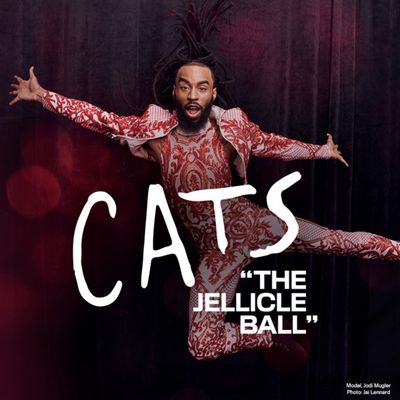
“I was involved basically since the very first workshop. I was the original Rum Tum Tugger.” This episode features Cooper Howell who was an Associate Director of the Perelman Performing Arts Center's reimagined production of CATS: The Jellicle Ball and will be continuing the role during the Broadway Transfer. Cooper shares their unique journey from their first Broadway show experience in the first grade to becoming a pivotal figure in the CATS production. Discover their personal connection to the show, their transition from actor to director, and the exciting elements of the new production. Don't miss this in-depth conversation about theater, creativity, and the transformative power of love.
00:51 Cooper's First Encounter with CATS
15:17 Transition from Actor to Director
21:46 Role of an Associate Director
25:04 Changes for the Broadway Stage
32:52 Guest Judges and Iconic Hosts
38:06 Rapid Fire
- Check out Cooper on Social Media: @thecooperhowell
- Check out CATS: The Jellicle Ball on Social Media: @catsjellicleball
- Check out CATS: The Jellicle Ball: catsthejellicleball.com
Produced by:
Alan Seales & Broadway Podcast Network
Social Media: @TheWrongCatDied
Transcript
This transcript was automatically generated and might contain errors.
[0:00] Mike Abrams: There's a cat over here. There's a cat over there. And the wrong one died. And the wrong one died.
[0:15] Mike Abrams: Welcome to The Wrong Cat Died, the podcast breakdown of the CATSatrophy. I'm your host, Mike Abrams, and today we have another amazing guest. Last summer, I did a series of episodes with the Perelman Performing Arts Center reimagined production of CATS called CATS: The Jellicle Ball, where we brought you a series of episodes throughout their run. I am thrilled because they have officially announced a Broadway transfer. I'm very excited to have Cooper Howell with me today. Cooper was an associate director for the show and is continuing their jellicle journey. So welcome, Cooper, and thank you for joining me.
[0:44] Cooper Howell: Thank you for having me. Continuing my jellicle journey.
[0:48] Mike Abrams: Yeah, continuing the jellicle journey.
[0:50] Cooper Howell: So official.
[0:51] Mike Abrams: Let's start with the beginning of your jellicle journey. When was your introduction to CATS?
[0:57] Cooper Howell: My introduction to CATS was in the first grade. My family lived in Connecticut at the time. My dad is a theater critic, and my mom is an actress. And I had never seen a Broadway show. We had just moved to Connecticut from Los Angeles. And they checked me out of school, which is always exciting. And we took the train into Grand Central Station, which is also really exciting. And I went with my dad. And we went to the Winter Garden Theater. And we sat third row center in the aisle. And we saw CATS. And I have like three vivid memories. One of them was the Rum Tum Tugger jumping up behind me and scaring the shit out of me, which I hated. I hated so much. I remember the boat scene. I remember there was like, there was a boat scene.
And there was like lots of water. And I realized that they later cut that part because it's kind of racist. And then I remember just sobbing my eyes out when it was Liz Callaway. Liz Callaway was my Grizabella. And she was, I mean, Liz Callaway, like the voice of Anastasia, you know, she's awesome. And I remember crying and not really understanding why I was crying. I just felt so moved. And then I remember that, you know, huge tire, she floated up to the ceiling and then thinking, I don't understand what's happening. But I'm so moved, which is I think a lot of people's experience of that production. So yeah, what is happening? And why am I crying? And I love it. Yeah.
[2:39] Mike Abrams: So you're, I mean, that's so cool. So you're moving from LA, you're the first Broadway show ever.
[2:44] Cooper Howell: First Broadway show I ever saw. Yeah.
[2:47] Mike Abrams: Wow. And then you get to go to Winter Garden, Liz Callaway.
[2:50] Cooper Howell: Yeah.
[2:50] Mike Abrams: Incredible cast, I'm sure for, you know, like the original Broadway run.
[2:54] Cooper Howell: Yeah.
[2:56] Mike Abrams: I mean, that is cool. And then you're young enough to not understand some of the like, some of the cats, some of the Jellicle ball stuff, you know, you're just, you're just seeing dancing and singing and having the best time.
[3:09] Cooper Howell: Yeah. And just like, kind of not computing that the people on the stage are actual people too.
[3:16] Mike Abrams: Yeah.
[3:16] Cooper Howell: You know, like, to me, and being six, I was like, Oh, these are actual cats. And they committed to the bit, you know, that I remember at intermission, they allowed specifically children to go up on stage and like, look at the set. I remember looking at the set being like, Oh, wow. I think people are actually, and I remember asking my dad if they were singing live, or if it was pre-recorded, I mean, him telling me that they were singing live. And I just like, could not understand that people's jobs were to show up to this theater and dress like a cat and act like a cat. And then sing and dance in the show.
[3:57] Mike Abrams: Yeah. This is a profession.
[3:58] Cooper Howell: And like this trash heap. Yeah, it just, I didn't know that people could be paid to do that. It was wild.
[4:04] Mike Abrams: Was your dad critiquing it? Or was just this?
[4:07] Cooper Howell: No, no, this is just for fun. Yeah.
[4:09] Mike Abrams: Has he ever done a CATS critique in any form?
[4:14] Cooper Howell: Um, you know, he was a theater critic in Utah, where I was mostly raised for a long time. And in Utah, they just never, it was just not a CATS friendly theater environment in Utah. I don't necessarily know why.
[4:29] Mike Abrams: There's a legendary one that everyone's trying to uncover. It just surfaced on social media within the last couple of months at BYU. They did a college production, but didn't put them in like full cats costumes.
[4:43] Cooper Howell: Yes, I just saw something about that looks hilarious.
[4:45] Mike Abrams: It's been a goal of mine to get somebody from that to tell me more about it. But yeah, Utah. Yeah, that's a that's not usually a tour stop. I don't think for CATS.
[4:54] Cooper Howell: No, no, no, not really. No.
[4:56] Mike Abrams: Okay. Yeah. Okay. So you see it. Did you sing Skimbleshanks the whole way home to Connecticut on the train? Like, was that?
[5:02] Cooper Howell: I just remembered. I remember being like a little feeling maybe a little sexually confused by the Rum Tum Tugger, even though I hated him jumping up behind me.
[5:12] Mike Abrams: Scaring you, yeah.
[5:13] Cooper Howell: Yeah, I thought he was kind of hot in a certain way. But, you know, he's like an Animorph. So not really understanding what that meant. Of course, that was like, you know, part of my homosexual coming out journey, I think. But maybe that was the start of it.
[5:30] Mike Abrams: That's it. That was the beginning.
[5:32] Cooper Howell: That was the first realization, right?
[5:34] Mike Abrams: Yes, yes, yes. You turned me. Yeah.
[5:36] Cooper Howell: Yeah. Okay. So you see it first grade. Do you go back? Like, how often did you because like, I'm assuming you were involved in the PAC production from pretty early on from the, you know, it's a long journey before I hit the stage between readings and everything else.
[5:51] Mike Abrams: Yeah.
[5:52] Cooper Howell: Was there any other cat stops in between that? Or because like the PAC is such a different, in a really unique way, like it's cats adjacent is like the best way I've described it. And so did you have any other moments between then and hearing about the PAC's version?
[6:10] Cooper Howell: So I remember watching the VHS, the '98 VHS and being very, very moved by it and really thinking that there was something very strange and magical about the show. But really wishing that, you know, I was raised again, I was raised by a theater critic and so dramaturgy was sort of just like hammered into my brain. And so I remember, you know, my, I don't know, maybe being 12 at this point and watching CATS and thinking, you know, in my snotty 12-year-old brain, like, Oh, the show would be so much better if there was like a succinct plot and blah, blah, blah, blah, blah, blah, blah, blah, but yeah, but not being able to deny the power that the show has, it just has this like magical power about it. And then I remember, you know, taking an edible with my ex-boyfriend and seeing the movie.
[7:09] Mike Abrams: 2019 one, the new?
[7:14] Cooper Howell: Yeah, yeah. And just thinking, Oh, I'm never, I'm never going to see or hear from CATS ever again, this is the death, I am watching the death of CATS. And then, and then the PAC production, I was involved basically since the very first workshop. I was the original Rum Tum Tugger. So I like came in to audition for it. Yeah. And heels, and like a really tight skirt and a tight shirt. And I sang, I sang Valerie by Amy Winehouse. And I felt pretty good about it. And I left and they asked me to sing Rum Tum Tugger, Seth, I sang it, and then I got cast as Rum Tum Tugger. And I did the first two workshops as the Rum Tum Tugger. And then acting is just not, it's just, it's not, it is not my joy. It's not my calling.
I don't love it enough to, I always wanted to be a director. That's like my whole, whole dream. And so there was an opening for an assistant director. And I felt like that would be more my lane. So I became I applied for the assistant, got it, and then got promoted to associate at the PAC. And I've been with it now CATS. It's just like an everyday part of my existence.
[8:36] Mike Abrams: You started as Tugger. Now you're just fully Jellicle and everything.
[8:42] Cooper Howell: Fully, fully Jellicle. Yeah. Oh yeah. Take me back to the moment when you first heard about the, like the workshop and you were auditioning for it. Yeah. I remember seeing like the postings went viral. Yeah. And what was the, like, was it something where you're like, Oh, I like, I really, like, I remember that first grade moment. This is an opportunity or was it a, this is going to be such a different version. I'm interested in it. Or is it just, I'm auditioning for everything? Because that's the life of an actor at the time.
[9:14] Cooper Howell: That's a great question. I remember seeing it on Instagram and thinking that it was a really brilliant, a really brilliant idea. I think at the time I was feeling really frustrated with the lack of representation that I was seeing on Broadway. And so in my cynical head at the time, I think I read that posting was like, great. I'm going to see a CATS ballroom musical full of, you know, white cis straight people. And it's just going to be one more, you know, missed opportunity. But I got the audition notice from my manager at the time and thought, okay, I'll go. I almost didn't go because I had a cold, but I went because I thought it would be really, really cool. And immediately walking into the room, just recognizing from who was behind the table and the attitudes of the production team that it was going to be a very different experience and that they were going to be very reverential to ballroom as much as they were to the musical theater piece.
And then from there, my attitude changed and I knew I had to be a part of it, but yeah, yeah. It's just one of those, you know, it's just one of those ideas that is so brilliant, you know, Bill and Jalen really, they really thought the hell out of this really works.
[10:45] Mike Abrams: It is. Yeah. I mean, it's, it's one of those, it's a, it's a unique show in the sense that there were so many different versions of where I like learned about it. There was the, like, what is this from the first workshop readings went viral. And of course everyone's sending it to me. Cause I'm still at that point, I'm not like, this isn't an unknown podcast, but it's still pretty early in that journey of the, like the podcast. Um, I actually talked to Bill, I think before the first workshop and it was like, let's hold off until, to seeing until like where this goes. Um, so we actually started that conversation many, many years before, like before it hit the stage. Um, but then it, for me, it was like, I, you know, am less familiar with the ballroom space.
And then you obviously have seen the, you know, the documentary and, you know, kind of learned a little bit about it. But when I started seeing what was coming on stage, the very first time we went to the PAC, I went with, um, my producer and we sat at the, at the edge of the runway at the table that, you know, that they, they stuck us right there. And the minute the music hit, I was like, Oh, this is still CATS, you know, like this is CATS, but then the storytelling is so much cleaner that everyone who's always told me, I don't get it. I'm like, we'll go see this one because you'll get it in a much different way. Um, and then, you know, I loved it. Like you said, the, the infusion of having, as I talk, I mean, I interviewed most of the, the cast members and to hear the, the different backgrounds and stories of everybody to come together, they put this, there's like, there's the traditional music theater backgrounds.
There's the ballroom scene backgrounds. There's, you know, Andre and Junior, like, you know, there's all these different, um, incredible performers coming together and telling a story that's, you know, well-known and also completely new at the same time. And that's what I thought, why it landed so well, I think was so many different audiences. It was such a diverse audience every totally to, which was really cool to see.
[12:47] Cooper Howell: Oh yeah. Oh yeah. I love that. You are such a fan and supporter of CATS just in general. I just think this podcast is so rad.
[12:54] Mike Abrams: I pretty cool. I got fascinated by the storytelling and I've always had some gripes with the storytelling and this, and this solved a lot of those gripes. I actually joked the first time I saw it, I like went up to Bill and Jalen after, and I was like, y'all just ruined my show because like, I can't, I can't argue against this Grizabella as easily because it's not the death that I saw in like, you know, the, um, I don't even know how to call it. Just the other where they're in CATS productions. And I'm like, it bothers me that she leaves her family and goes, but I'm like, no, this, like this Grizabella is not leaving her family. She's kind of like, it's a different ending and it leads to it better.
And it, you know, for me, it also really, I love the, like the moment of moments of happiness turn, because I've always felt that that song in, in the other ones, it's kind of a weird introduction to act and like, yeah. So there's just a lot of things I thought cleared up some stuff that I always was confused about as someone who the first time I saw, I knew nothing about CATS. Like I walked in totally blind with a free press ticket from a friend who couldn't even go. And I had lived in New York for like three weeks. And so like, I was totally in over my head. And then I was like trying to figure out what I watched. And I think that you'll see that originally, did you see that original production or did you see the revival?
[14:17] Cooper Howell: 2016 revival. Okay. Second to last preview. Yeah. And that was, that was what I saw. Yeah. So I didn't, I couldn't have told you the first thing about the difference in choreography or anything. I've now know a little bit of that, but when I went, I was like, yeah, it's a, I knew the song and then memory. I'm like, oh, I know this song. Like, but I didn't go in with this like super fandom or knowledge when I started, it was very much a kind of this, you know, this trying to figure out the story. And then by the time PAC starts, I'm now multiple years into talking to people about it. And so I now know probably way too much about it. And then I get to go to this version and I'm like, this is, this is great.
It solves some of the stuff. So I, that's why I was, I was so cool. And I love that it's, it's, you know, transferring. I, you know, obviously it was rumored for a long time, but I'm glad it's official. But before we get to the, to the, I want to get, I want to get to that. Cause I, I'm gonna ask you a bunch of questions that you're probably gonna be like, yeah, I'm not answering that, but we're still going to try. Yeah. Before that though, I want to hear a little bit about the transition from Tugger to producer. I'm like, what does that, what does that role change feel like? And then also how does that, how was it with like going from, cause a lot of the same cast was still through all of it to going from being on stage or not on stage workshopping with them to now a totally different role within the company.
[15:28] Cooper Howell: Yeah. Um, so, so I grew up in Utah, I grew up in Utah and I grew up Mormon. Uh, very, very, very, very Mormon, very, very Christian, very white centered, very Mormon, very Republican. And I am a half black, gay, non-binary person. And I've felt that in my body my whole life. And so being in that environment my whole life, I felt like I was always auditioning constantly for a society. There was like, I, I spent the first 22 years of my life, not actually focusing on who I was as a person, but trying to, um, shape who I was every single day to pass, uh, you know, to be straight enough for the straight people to be Mormon enough for the Christians to be, you know, Republican enough for the, you know, it was just constantly auditioning constantly, constantly, constantly.
And, you know, I left the church when I was 20, I was served a Mormon mission, did the whole thing, went to Texas, came back, almost got married to a woman, was kissed by a boy. And that was a wrap for me, you know, and I realized that, oh, there's like this full other side of myself that I had been ignoring because, because I'd been auditioning for my friends and family and community for 20 years. And so then I spent the next 15 years being a professional actor. And the process of being a professional actor and going through the audition circuit, it's, um, it really, it felt like a continuation of being Mormon, even though I wasn't Mormon anymore, where, you know, with auditioning as an actor, you walk it, you prepare and you prepare and you prepare and you walk into a room and you audition and you, you do your, your stuff.
And it's not in your control, whether someone hires you or not. And with acting, it's almost more brutal than, than other Mormon churches, for example, because they don't just say no to you, they kind of ghost you. If you don't get the part, they just, yeah. And so it, there was just a part of my mental health that wasn't able to really level up from my mental health wasn't where I wanted it to be in my own life journey. And it took a lot, you know, I spent so many years acting and my mom is an actress and it's like a family thing that a lot of my identity was tied to that, but I was just deeply unhappy. And also that combined with, I love theater way too much to be an actor. You know, I, it's very hard for me to sit in a rehearsal room and to, you know, I'm constantly thinking about ways to make things easier or better or simpler.
I'm thinking of the dramaturgy of, you know, my parents would put me to sleep every single night. As a kid, there was a CD player next to my bed and they taught me how to read by taking a Broadway cast album and I would have to read the plot. And then they would be like, okay, now tonight's musical is a little night music or whatever. And they would be like, let's read it. And I would read the plot summary and they'd be like, okay, good night. And they turn off the lights and I'd lay down and they push play. And so like every night of my childhood was me looking at the glow in the dark stars on my childhood bedroom and like picturing what was happening on a stage while the music played, you know, so my parents kind of created a director out of me and I really didn't want to go to graduate school.
I just am not an academic. It's just not my thing. So I thought what I'll do is I'll become a famous Broadway actor and then I'll use that clout to transition into directing. But at the time of the third CATS workshop, I was just at a place in my life where I just wanted a lot of things to change and I really wanted to do the thing that I actually thought that I know that I am here on this earth to do, which is to be a director and a producer and a playwright. And I love acting. I love it so much. But telling the same story eight times a week, it's just it's just not my journey. Yeah, my mental health is incredible. I love myself so much right now. It's dangerous. And so transitioning out of look, I love CATS: The Jellicle Ball and the Rum Tum Tugger is so fun and Sydney does it better than I could have ever done it.
Sydney just is watching Sydney play the Rum Tum Tugger. It's like, oh, this is exactly this is exactly what it was supposed to be. And Sydney, you know, gets so much joy out of doing it eight times a week and he finds different things to do in the role eight times a week. It's really fun to watch Sydney do it. But I'll be honest, like my I'm 37 and my 37-year-old body does not want to catwalk and and death drop and duck walk like I I love those actors, you know, I'd step in front of a bus for them, but I definitely don't want to put my knees through what those actors have to do in the show. So I am very happy to be on the other side of the table and, you know, make sure that their lives are good and that kind of stuff.
[21:27] Mike Abrams: That's amazing. I love that your parents did this whole thing of like, we're going to put this music on. We're going to make you read like almost basically being like now they're going to like there's going to be you're going to sing this. You're gonna get ready to be an actor. And it's like, well, they created the director instead.
[21:40] Cooper Howell: They really, really did. Yeah.
[21:42] Mike Abrams: I love that. There was no choice. There was no choice what I was going to be. Yeah.
[21:46] Cooper Howell: So before we move to talking about the upcoming production, there's definitely some people that are listening to this that probably don't know what, you know, is involved in your role. So what, like, how would you describe what your associate producer role was doing at the PAC and is doing currently?
[22:07] Cooper Howell: Yeah. Well, first, I want to say that the associate producer of the production is Miranda Go.
[22:18] Mike Abrams: Okay.
[22:18] Cooper Howell: I am the associate director.
[22:19] Mike Abrams: Associate director. Sorry.
[22:20] Cooper Howell: Yeah. No, it's all good. It's all good. So the way that I describe the associate director role is Andrew Lloyd Webber has a ranch called CATS: The Jellicle Ranch, and Bill Roush and Jalen Levinson are the ranchers. And every day they drive up to the ranch in a pickup truck and they open the back door. And my job is I'm the border collie. And they go, yep, yep. And I jump out of the truck and the actors are the sheep. And I run around and I run around and I run around and I run around. I make sure they're going through like certain gates and I make sure that they're, you know, that is sort of I'm the border collie on CATS: The Jellicle Ranch. Essentially, you are herding cats.
[23:10] Mike Abrams: You are literally herding cats.
[23:11] Cooper Howell: Literally, literally herding cats, giving notes out, giving the director's notes out. But I don't even know how to describe what I do. I'm like, I love that description.
[23:26] Mike Abrams: Does that make sense?
[23:27] Cooper Howell: Yeah, it makes a ton of sense. I mean, also, I grew up in Indiana, so I'm like, yes, makes sense to me. But I hope everyone else, you know, all the New Yorkers are like, all right, you've yeah, you know what a ranch is, you know what's going on. Yeah, I love that description. The liaison between the actors and the directors, the direct Bill and Jalen, it's not just working with the actors, it's the tech, it's the big picture of everything. There's so there's so much of what they do that a lot of times they will give me assignments to go and do things. A lot of my job is finding the problems before the problems happen. That kind of stuff too.
[24:09] Cooper Howell: If you've played Legend of Zelda, I am the fairy that sort of flies around.
[24:15] Mike Abrams: Okay, around Lincoln, look over here. Yeah, look over here. Yeah, okay, we're going to take a quick break and then we back for more of The Wrong Cat Died. Let's now bring us forward in this journey to now announce the Broadway transfer. Yeah, this is we're recording this. It'll be probably sometime in the winter that this is people are listening to this. Yeah, it's starting in March. Yeah, I have my first preview tickets.
[24:45] Cooper Howell: Oh my God. Oh my God. See you there.
[24:45] Mike Abrams: What's the like? What can people expect? Let's let's let me ask this two ways. What can people who came to the PAC expect if they if and hopefully they're all coming back when they come back? And for anybody that didn't get to see it, what can they expect? Like, is there sweeping changes? Like, obviously, it's a venue change. There's a lot of other stuff. But how much is being adjusted for the Broadway stage versus what we experienced last summer?
[25:14] Cooper Howell: Great question. Well, the first if you if you have seen it at the PAC, I think the the change is that the PAC as a physical building and the Broadhurst Theater as a physical building are two different buildings. And so a lot is just adjusted with the physical actual space that it's being played in. I actually think that this show will play better at the Broadhurst because it's you were a little bit more on top of each other. The the mezzanine is directly on top of the orchestra. And so it just feels like we are all completely in the same room as each other, as opposed to the PAC where you could see it maybe six different times from six different seats and get six different shows, where in this show, you know, one of the incredible things about CATS, and the hard thing for the actors, but an incredible thing for an audience member is that those cats never leave the stage.
With few exceptions, they are on stage. It's like a chorus line. They are on stage the entire time. And so at the PAC, really, depending on where you sat, you got like maybe a third of the cat story, you know, when there were when they weren't in categories or whatever, you know, they'd be at their house table, and you'd be able to follow them. Whereas in this production, you will be able to track where everyone is what all the relationships are, that kind of thing. So I think that that will be actually really, really, really exciting. And you will walk in and it will feel like you're in a already existing ecosystem of ballroom, which is really, really exciting. And then I think another obvious, I guess, upgrade, I suppose, is that it's, you know, it's CATS: The Jellicle Ball times capitalism.
And so, you know, certain things might look a little shinier and flashier than they did at the PAC production, which we love shiny and flashy, especially for the show is pretty cool. But if you have never seen the production before, I think the vibe of the show is going to be the same, if not even more heightened now. And it's less of like a musical theater piece. And it's, it kind of is more like a circus event, where, you know, you will still scream yourself hoarse the same way, you know, the merch might be a little flashier than at the back now to still like clack your fan, it will still be the show that you loved at the PAC just shinier and more, you know, more and more condensed audience physical experience. Yeah.
[28:17] Mike Abrams: Okay. I do love that. I love I love Broadway budget means that, you know, like I'm expecting upgrades in Mustafa's magic and some of these other things. And then it's so true about the, I sat in different seats every single time I went at the PAC. And you're right, I definitely got very different experiences. Because one time I was by Nora and Bustopher. And I got a lot of their, like little side comments and stuff that that I didn't expect to hear. And then when I was on the complete other side, I was with more Mungo, Jerry and Rumple Teaser. And so you're right, you did. So now it's with it being on stage, you're gonna, it'll all be there for you to see. Yeah, yeah. Okay, that's interesting.
Yeah. And then you're, you know, I've said, I told everybody, I was like, you'd have to go see it, whether you love or hate CATS, because if you hate it, it's going to explain it to you in a much better way. Sure. Yeah, a lot of the CATS haters that I that I've met, love this production, right? Because it's solved their biggest grapes. 1000%. And I also think, I think like, even in like a larger than CATS conversational way, to to watch a black trans woman in 2026, during a Trump presidency, be win the Jellicle prize. Yeah. And be selected by a community as the person who is the most deserving of an award, and see them spoiler alert, Grizabella wins, you know, and to watch a black trans woman win that award, in a Trump presidency is like, the I think the thing that is the actual largest difference between 2024 summer last summer of Biden presidency, where it was like, look at this cool thing that we created, look at how we're doing CATS, it will now feel like an act of war, a little bit.
It feels like extreme, extreme radical activism. And we're not really changing much, just like the meaning of it is so much deeper. And I think that moment alone is worth the ticket price, to be part of like, a major moment in American social history, that a show on Broadway, have a black trans female lead, who essentially wins a competition show. Yeah, I think is is the most radical and amazing thing.
[30:53] Mike Abrams: Yeah. It's such a, again, like, the storytelling is like, it's still CATS, but there are these other moments that you get to add to it. Yeah, with that being a, you know, a clear one. And just also the way, you know, Grizabella gets to like, with it being a ballroom, it's not, you know, the show's called The Wrong Cat Died, because I'm like, Grizabella is being sacrificed, you know, to the Jellicle moon and the Heaviside lair. And I never felt that way in your, in your performance, I felt the like, which is why it almost like ruins my show. But I'm like, I like I felt like, yeah, Grizabella does like, she wins, like, she's winning. And she's not like when she's in, I don't want to spoil because I don't know how you're going to do the ending.
Yeah, at least the PAC, it didn't feel like it was a finale. Like it was the end of Grizabella. It felt like the beginning. And that and that to me is where I didn't feel like it was the beginning in the, you know, the other productions I saw, because I felt like it was like, all right, we're gonna buy. Well said. Well, and so I think that that is a cool moment. You're totally right. And I think that like, it is like, again, now on Broadway, in a major house, you know, like it is, it is going to be a moment I can't, can't wait to be at the first preview. And then, you know, hopefully for goes for for a long time.
[32:12] Cooper Howell: Yeah, 2020 years, let's like beat the Winter Garden. Yeah, keep going. Yeah. I am curious about the like, one thing I thought that was really cool. You all did at the PAC was these, like the guests, like the judges, the guest judges. And that's going to continue, I think, right? So like, how's that? Like, how are you thinking through that? And what that looks like? Because I, you know, every time I went, it was usually someone from ballroom. But you had a limited run to where you had only so many you have, you're going to be doing this eight times a week for Yeah, as you said, hopefully 20 years. How are you thinking through that kind of part of the show?
[33:34] Cooper Howell: That's a great question. I, the guests, the guest judges are returning. For sure. It's like an integral part. Now. I it's, it's always been very important that this production in doing CATS, all the choices that we make have to make sense not only for Andrew Lloyd Webber, CATS, but it also has to make sense for ballroom. So it really does feel like a 5050 equal marriage, or 100 100 equal marriage of the two worlds. And the priority, as far as I understand it, is to continue to have ballroom icons be those hosts. And I think, I think, in all fairness, because, you know, we do want to run obviously until, you know, 2046. Yeah. That that we also have musical theater icons as well. Come and judge that too.
So yeah, thankfully, this time around, no, I should not say thankfully. This time around, it is. It is not my responsibility to do the the the guest judges either booking or whatnot. So I'm not sure of the intricacies of that. But it is a it was a huge job last time. It was a very huge job. The other associate director, Naomi Stewart. It was like a big part of her, her job, and she killed it. The sort of the learning sheets that all the judges do and making sure that they meet Munka strap before the show and Munka strap, you know, Dudley teaches them sort of like when he points or whatever. Yeah, what they can do how they can Yeah, and I'm sure that will be a part of it as well. And it's a lot of extra work, but I actually do think it it really adds to the experience of it.
[35:06] Mike Abrams: Oh yeah. I love that part of it. And I love that it's continuing and it opens up, you know, with the opens up a lot of pieces. Some other shows have done similar things. And it was always a cool kind of like, who'd you have, you know, moment that yes, great word of mouth, too. So I'm glad that that's continue.
[35:15] Cooper Howell: Yeah. Yeah. My only other question, you might not be able to answer this one. But I sat with Andre, you know, when I recorded with him at his at his throne, and it was like it was there were there were audience members next to him and behind him and like very much like part of that. How are you going to try to preserve some of that level of like old Deuteronomy is running the show and judging, but it's going to be in front of us a lot more with it on stage. Like, how do you try to incorporate that moment? Because I thought that was such a cool part of it, too, when he first comes out and kind of, you know, basically commands the crowd like you've never seen. And then he comes and sits like right in the middle of us all.
[36:01] Cooper Howell: Yeah. Great question. I there's, there's both a lot that we don't know yet. Yeah. Since we're not in rehearsals. And there's a lot that I cannot say in terms of like, what the, you know, actual stage will look like. Yeah. However, by just being Andre De Shields, I you there, I don't think there's any way in the world that we could put Andre underneath a trash can in the alleyway outside of the Broadhurst theater, and he would still find a way from inside of that trash can to command all of the energy in that room. So I think it I think actually, this time on Broadway will be even more powerful, just given, you know, the kinds of Andre always said, if this show goes to Broadway, the revolution will begin.
He has always said that since the first workshop. And I think that is especially true now. You know, I think he is like really awakened to the storytelling and the activism that the show just is by the people, the bodies we have on stage. And I think that that sort of experience that he gave everyone at the PAC of just being this supernatural, godlike being will only be hyenas this time around.
[37:31] Mike Abrams: Yeah, I can't wait. I mean, honestly, this is the perfect teaser. If you want to know how it ends up happening come March, yeah, you got to buy a ticket and come. And it'll be it'll be great. I cannot wait. We'll link obviously how to buy tickets. You can buy them now. I've bought I've bought mine already for the preview. I'm sure I'll go multiple times during during the run during the especially when it goes to, you know, past 2046. Yeah, be plenty of times for me to come. Yeah. And I can't wait for you. I know you still haven't finished announcing the cast and there's a lot to come. So we're excited but I want to do some rapid fire. Okay, I do. We're gonna do this from the PAC perspective. Okay, these questions. So if you could go on one night for any of the cats characters, who would you want to play as and why?
[38:18] Cooper Howell: Oh my God. I mean, I guess I'm I should say Rum Tum Tugger, I guess. Um, if I had to go on for any of the characters, um, I would go on as Mr. Mistoffelees.
[38:34] Mike Abrams: Okay. Yeah. The other half of that. But yeah, yeah, yeah, that was a fun track. For sure. Who are your favorite and least favorite cats from a character like personality wise? Like which one would you want to hang out with? And which one would drive you crazy?
[38:47] Cooper Howell: I would love to hang out with Grizabella. Because I feel like she needs some extra love and attention and care. And you know, she's an icon. I think Jenny Any Dots would annoy the shit out of me a little bit. She's like a little. She's like a little too angsty and on top of everybody. Yeah.
[39:12] Mike Abrams: I think that's my answer. Okay. Yeah. Favorite song in the show?
[39:18] Cooper Howell: Oh, that's a great question. I think my favorite song in the show is the naming of cats. Munkustrap sings. Yeah. Yeah, I think there's something very hypnotic and commanding about it. Especially the way that Dudney sings it.
[39:24] Mike Abrams: Yeah. There's a I mean, there's so many in this in this production that I love. So yeah, it changes for me all the time. And totally. Okay, my which is I always have to follow on by it for for PAC. I asked you all what house would you be in?
[39:45] Cooper Howell: Probably the house of Macavity. Probably some cavity. Okay. I'm a Slytherin. So I feel like that makes sense.
[39:50] Mike Abrams: So you're right. You knew right away. That makes sense. All right. I asked this question to everybody. I did get a wide variety of answers from everyone from the PAC production. But I've obviously argued that I don't think Grizabella is the right Jellicle choice. Here we go. So I want to hear your argument for who's your Jellicle choice and why.
[40:05] Cooper Howell: So the last day of tech at the PAC. I got in a heated, heated discussion with the choreographers where we asked ourselves this very question and it lasted it was an argument that last it was a friendly argument. But you know, we like really litigated this, this argument. And I think my answer, their answers were very fair. And I think my argument is the same today as it was last time. I think Sillabub is the Jellicle choice. I think Sillabub. Yes, Grizabella has an amazing transformation. I think there's like, Andre was one time in rehearsal, he was talking about how each of the cats, he was talking about his perspective of Deuteronomy, that each of the cast kind of has like a mortal sin that each of the named cats has like a mortal sin that like why they didn't get it, get the Jellicle choice like, like Tugger, it's pride and yada, yada, yada, yada, yada, yada, yada.
But for me, Sillabub is the only member of the tribe that actually sees he sees Grizabella, they see Grizabella and what Grizabella is worth before even Old Deuteronomy does. And they are the one, it's not Deuteronomy, it's Sillabub that's like, no girl, go out and walk this runway and tell your story. It's Sillabub that does it. And so I think the purity of heart, because of purity of heart, and you know, their unconditional love and regard for all people, I actually think that Sillabub is the most worthy Jellicle choice.
[42:05] Mike Abrams: I love it. I have a Sillabub question for you. This is a director Sillabub question for you. Sure, here we go. Teddy took a lot of photos. Yeah, yeah, yeah.
[42:14] Cooper Howell: Those were real cameras. Yeah.
[42:17] Mike Abrams: Where's the Jellicle yearbook? Why are you not selling that?
[42:23] Cooper Howell: So there was no film in the cameras. All of them had no film?
[42:27] Cooper Howell: Yeah, you can wind them up and still click it.
[42:30] Mike Abrams: Yeah. So I asked Teddy, and I thought the conversation was that there was film and that this was actually a camera.
[42:37] Cooper Howell: Okay, well, I thought you had a ton of photographs from weeks of productions.
[42:44] Cooper Howell: From my understanding, there was no film in it. I would love it if there was. That would have been quite a history book.
[42:52] Mike Abrams: Oh my God, yeah.
[42:53] Cooper Howell: Okay, well, I love the Sillabub answer. I do think there's a lot of truth in that character changes on who's the first one to approach Grizabella, depending on production to production.
[43:04] Cooper Howell: Yeah, because sometimes it's like Tantamile or something like that.
[43:07] Mike Abrams: Yeah, sometimes it's Tantamile. Sometimes it's usually one of the younger kittens, but it's usually somebody from there that's also singing part of it. It's not 100% every time.
[43:18] Cooper Howell: Right.
[43:19] Mike Abrams: But yeah, I love the way, and Teddy was so fun doing it too, but there's such a story there of that encouragement of, Grizabella, it is your time. It's your time to walk. You go make this moment. And that is, again, also a little different in the other productions where it feels like Sillabub or whoever comes up is the first one to say, yes, I'm welcoming you, but Old Deuteronomy is kind of encouraging it. Whereas this one, it's before, like you said, Old Deuteronomy.
[43:49] Cooper Howell: Right, right. Yep.
[43:51] Mike Abrams: There's a beautiful moment if you're... I think it's during Little Memory. Maybe it'll be much easier to see on a Broadway stage, but depending on where you were, Sillabub is looking at Grizabella, and I think Grizabella was up in the balcony. And so it's like, depending on where you're looking, you can kind of see that moment. And it is, like you said, a little bit, not challenging, but different depending on where you're sitting. And I think maybe you'll be able to do more with that with a Broadway stage, which is cool.
[44:22] Cooper Howell: Absolutely. Absolutely.
[44:24] Mike Abrams: All right. I love any non-Grizabella vote. So that's a plus for this podcast, for the column here. But yeah, how can people stay in touch with you, what you're doing? We obviously will link how to get tickets to the show, but anything else to kind of tease everyone up ahead of March?
[44:45] Cooper Howell: Personally or cats-wise?
[44:48] Cooper Howell: I mean, before March, the new additions to the cast will be announced. We've had a full week of auditions this week and saw some really exciting choices. So that will be really fun to see those people and those announcements. And, you know, this is the kind of show that deserves to be on Broadway. Yeah.
[45:17] Cooper Howell: You know, this isn't like the umpteenth revival of a show that your great grandparents bought the vinyl for in the 40s. You know, this is like a radical, socially aware celebration of queerness and transness and blackness and brownness and otherness. And so following CATS on social media and buying tickets to it and, you know, I think it's it deserves. I mean, the economy is crazy right now, but this deserves your money. So is and the social media of CATS is also killing it.
[45:57] Mike Abrams: Oh my gosh. The TikToks and Instagrams are unbelievable. So, you know, keeping up with that, you can always follow me personally at the Cooper Howell on Instagram. You know, I'm a little bit of like a wild card with what I put on there, but, you know.
[46:14] Cooper Howell: Yeah. Yeah. I don't know.
[46:15] Mike Abrams: Yeah. Follow the show, you know, follow the show, follow you. Obviously, you know, there's a lot out there to see. I've always felt there's some stuff. I'm like, that's good. But, you know, I paid a lot for it. Every single dollar I went to it felt like I got my money's back and more seeing the show.
[46:31] Cooper Howell: It's so good to hear.
[46:32] Mike Abrams: And like you said, because of the it is a story being told that is known, but also very different and celebrating stuff that needs to be celebrated right now. And that's.
[46:42] Cooper Howell: Yeah. Yeah.
[46:44] Mike Abrams: It's cool to see, see how it came together. And I love that it was embraced and that it's, you know, it is transferring. I think that the the greatest thing about CATS and I think the thing that Bill and Jalen really nailed with this production is that CATS ultimately is a story about the transformative power of love. That is what the show is about. And I think it gets really lost under leg warmers and makeup and blasting Andrew Lloyd Webber tunes in the other version of it. It becomes more of like a spectacle event as opposed to. And when you strip it all away and you put modern bodies in it and the category becomes CATS as opposed to they are actually cats and then you put other bodies in those cats and then you tell the story of the transformative power of love.
I think it will be very hard to come and see this show and then walk out of the Broadhurst Theater and look at the news about what is happening in our country, in the world and not have a different perspective on it. You know, and I think that is that ultimately is the best thing about theater is that, you know, theater was created by the Greeks so that they could push morals and lessons into society. And I think this version of CATS does that perfectly without being, you know, without changing a word of the script or a note in the score. And it's not pushy. It is just representational. And we need more stories on Broadway and just in general about how, like, actually loving thy neighbor really does transform not only communities, but individuals as well.
[48:48] Mike Abrams: Well said. I don't think I can. That is beautifully said and so true. And I'm so glad that you all are continuing to have this moment. And hopefully, this is the beginning of many more episodes with you all and everyone should go see it. March 18th, first preview, I believe. Yes. I will be there.
[49:07] Cooper Howell: Okay. I'll be there, ready to go. I cannot wait. And so, thank you again for coming on and-
[49:12] Cooper Howell: Yes, of course.
[49:13] Mike Abrams: During a busy time, obviously, you're in the middle of everything of this big move. And so, thank you for taking time out of your busy schedule.
[49:21] Cooper Howell: You are so great. This is so great. I really love this podcast.
[49:25] Mike Abrams: I'm happy to help every way I can. I love supporting the Jellicle community, but also, I've loved everything about this show and this production and I'm excited. I was waiting for the transfer for a while. So, I'm glad it's real and happening.
[49:40] Cooper Howell: It's amazing.
[49:42] Mike Abrams: Well, thank you for coming on the show and thanks everyone else for listening to this episode of The Wrong Cat Died, the podcast breakdown of the CATSatrophy. To follow along, you can subscribe on Apple Podcasts, Spotify, or any of us's podcasts, follow us on social media at TheWrongCatDied, or check our website, thewrongcatdied.com.
© Broadway Podcast Network, All Rights Reserved