

“Something I’ve always noticed about CATS is that they typically cast actors with balletic bodies. It’s a dance heavy show so I do understand that. But all sorts of body types can dance.” This episode features Stephanie Lexis who is the Founder of the Broadway Body Positivity Project... Read More
From the show: The Wrong Cat Died
Featured Shows
About
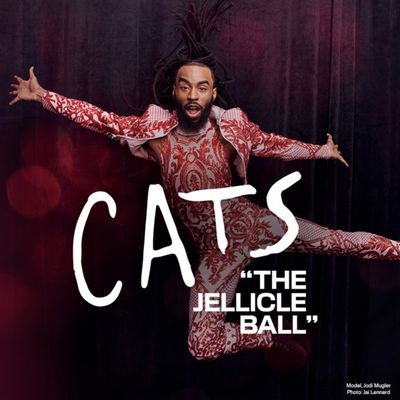
“Something I’ve always noticed about CATS is that they typically cast actors with balletic bodies. It’s a dance heavy show so I do understand that. But all sorts of body types can dance.” This episode features Stephanie Lexis who is the Founder of the Broadway Body Positivity Project. Hear Stephanie discuss her early love of CATS through an Andrew Lloyd Webber cassette tape, the London pro shot, and Broadway Kids, before seeing Cats: The Jellicle Ball live. She discusses how The Jellicle Ball exemplified intersectional, body-positive, and authentic ballroom representation, including reimagining Bustopher Jones through confident casting and varied body types onstage. She shares about how she launched her project in 2018 to challenge industry standards and shares her goal of making the work unnecessary through equitable casting. She highlights the importance of body diversity on creative teams, notes disability representation choices in The Jellicle Ball, and shares many other thoughts on the industry.
00:48 CATS Childhood Obsession
05:09 Finding Jellicle Ball
07:26 Body Positive CATS Reimagined
16:26 Ballroom Roots and Inclusion
24:58 Creative Team Representation
26:14 Costumes That Celebrate Bodies
27:28 Body Diversity in Choreography
31:46 Disability Representation
35:12 Rapid Fire Cats Questions
- Check out Broadway Body Positivity on Social Media: @broadwaybopo
Produced by:
Alan Seales & Broadway Podcast Network
Social Media: @TheWrongCatDied
Transcript
This transcript was automatically generated and might contain errors.
[0:15] Mike Abrams: Welcome to The Wrong Cat Died, the podcast breakdown, the cast interview. I'm your host Mike Abrams, and today we have another amazing guest.
[0:20] Mike Abrams: She is the founder of the Broadway Body Positivity Project, which advocates for inclusive casting in musical theater. She's spoken powerfully about the Jellicle Ball and what it says about who gets to be in and on that stage. So welcome, Stephanie Lexis, and thank you for joining me.
[0:33] Stephanie Lexis: Hi, thank you for having me. I'm so excited to be here.
[0:36] Mike Abrams: I'm excited for this conversation because we've kind of exchanged some messages a little bit, and I loved what you were talking about during the ball, but then you said you have an extensive cat's history. So we're going to dive into all of it. Let's start there with your cat's history.
[0:51] Stephanie Lexis: Oh, so I have to credit my grandmother from Jersey City for getting me into cats. When I was a kid, she had this cassette tape of the best of Andrew Lloyd Webber. And while Phantom of the Opera is...
[1:08] Mike Abrams: I have it right behind me. I have that cassette tape right behind me.
[1:10] Stephanie Lexis: Do you really? Oh, my God.
[1:13] Stephanie Lexis: I found it at a small record player store, and I forget where. So I was at an event, and I found it, and I bought it. So I have the cassette literally behind me.
[1:22] Stephanie Lexis: Oh, my God. I don't think you understood. She played it every time we were in the car. So I learned everything. I learned Evita, Sunset Boulevard, Joseph the Technicolor Dreamcoat, definitely Phantom of the Opera, but also in there was cats.
[1:36] Stephanie Lexis: I think my grandmother said she saw cats on Broadway and told me that people were crawling around the stage or even in the audience. I don't know if that's strange, but kind of cool. And then I think around the same time she started playing the cassette tape, the London Pro Shot came out, and I watched that obsessively.
[1:58] Stephanie Lexis: I was down bad for the Rum Tum Tugger. And even then, at a young age, I was like, this is really kind of odd, very sexual, but also very intriguing. And it was definitely, I think, one of my gateways into musical theater. And then on top of that, I don't know if you're familiar with the Broadway Kids.
[2:17] Mike Abrams: But okay, so before Kidz Bop, there was the Broadway Kids. And they did, I guess you would say they're family friendly covers of Broadway songs. And it was like in the late, like early 90s to early 2000s. And on this CD that I had, the opening number was, you know, the opening number to Cats.
[2:41] Stephanie Lexis: And all these kids are singing, Jellicle cats, Jellicles do. And at the end, there's this dialogue between the kids. And the first person asks, what's a Jellicle cat? And the other person says, would you sing a whole song about it?
[2:54] Mike Abrams: I love it.
[2:55] Stephanie Lexis: Have you ever heard of Broadway Kids?
[2:57] Mike Abrams: No.
[2:58] Stephanie Lexis: I'm gonna find it for you.
[2:59] Mike Abrams: Okay, I was gonna say, I literally just wrote down a note to be like, I gotta do some research on.
[3:04] Stephanie Lexis: I didn't grow up like a theater kid or a theater person. My mom's a music teacher. So like, I definitely went to things. But I grew up playing hockey five days a week, six days a week. So I was not that like there. So I'm fascinated by this. I love that. And I'm like, now desperate to try to find this. I'm gonna go find that the copy of that CD.
[3:23] Stephanie Lexis: I'm pretty sure like you can at least find it on YouTube.
[3:25] Stephanie Lexis: So I will search after because now I'm feeling a little nostalgic. I want to hear this moment. It's like it's got to be on something like there's no way it's not anywhere.
[3:34] Mike Abrams: Okay, so you're listening to this. When did you go see it for the first time?
[3:38] Stephanie Lexis: I don't think I've ever actually seen it in person until Cats a Jellicle Ball.
[3:43] Mike Abrams: Never. So you watch the pro shot, you listen to the cassette tape.
[3:48] Stephanie Lexis: That's a funny thing. When I bought the cassette tape, I don't have a cassette player. So I just bought the tape to like own it. And I think I paid less than a dollar for it.
[3:56] Mike Abrams: And so it's now okay, so you're and you've watched the 1998 movie. So you've like seen it, you know, intimately, but you've never, you didn't go in 2016 when they did the revival?
[4:06] Stephanie Lexis: No, honestly, I grew up like my interest kind of like, I don't really have an interest anymore after like, maybe I was 10, to be honest. But I did watch like the pro shot obsessively as a child.
[4:18] Mike Abrams: Did you watch the 2019 movie?
[4:23] Stephanie Lexis: I only recently started watching it, but I can only, I've only watched pieces and like, you know, clips of it.
[4:30] Mike Abrams: That feels right. That feels about right.
[4:32] Stephanie Lexis: Yeah.
[4:33] Mike Abrams: Okay, I'm fascinated by this, because it's your entryway to like theater, and it's like a big part of your childhood. And you just have not seen any stage version. I've met a few people that have had that same thing. But I'm surprised even 2016, because that's where I got introduced like really to it. Just like everyone, I knew a little bit about it.
[4:52] Mike Abrams: But I truly saw it on stage for the first time when they revived it in 2016.
[4:56] Stephanie Lexis: Yeah, I don't remember like feeling a desire to see it. Nothing against it. I just, I just didn't.
[5:03] Mike Abrams: Just not, just not for you. Okay. So then tell me about when you heard about the Joe Cabal. Because that was, I mean, what phrase? Like I, there was the cast postings for when they were doing auditions and table reads to then like it actually going to the Perlman Performing Arts Center. What was that? When did you get introduced?
[5:21] Stephanie Lexis: So I don't know if I found it myself through like an Instagram feed or if someone sent it to me. Chances are someone did send it to me because something that I love about my following is that they know my taste. They know what my values are. And I don't just care about like body liberation, body diversity. I care about the intersectionality that can come with it too, and should come with it.
[5:51] Stephanie Lexis: And I mean, Kat's Joe Cabal is just is the perfect example of how intersectionality should be celebrated on stage. And the second I saw it, it was rehearsal footage. I was in love immediately. I could not get enough.
[6:10] Stephanie Lexis: And this was for their Off-Broadway run at Perlman Performing Arts Center. And Nora Schell and I have been chatting on and off for years. And shout out to Nora Schell because they're the reason why I got to see Off-Broadway and in previews on Broadway.
[6:33] Stephanie Lexis: Nora and I both share the same values when it comes to fat representation on Broadway and the performing arts in general. And I was hyped all the way till I went to that performance. And after I saw the Off-Broadway production, I could not stop thinking about it. Could not stop.
[6:52] Stephanie Lexis: I said immediate Broadway transfer. It is absolutely necessary. I was heartbroken I couldn't see it more than twice. More than once, I mean, after I saw it Off-Broadway. But I say it with my full chest and I have a lot of chest. But that is truly probably one of the most body positive productions I've ever seen in my entire life. Actually not even one of it is the most body positive productions I think Broadway and Off-Broadway has ever seen. And I will go into that if need be.
[7:22] Mike Abrams: I do want to dive into it. I agree with you. I was fortunate to talk to so much of the cast including Nora and Bebe. And they talked a lot about their own body and taking over that. I do think Cats is an interesting show before The Jellicle Ball. And I'd love to hear your take on it. Let's start with how you started your project and what you share online. I'll go into my Cats specific questions. Because I think what you're doing is fascinating. When I learned about it, I started following you. I'm trying to remember when.
[7:58] Stephanie Lexis: It was either before The Jellicle Ball when I started getting more into the Broadway space. But then definitely started watching a lot more of your stuff during The Jellicle Ball when it was a lot more involved with that storyline. So share a little bit about how you started this project.
[8:13] Stephanie Lexis: In September 2018, I was on vacation with my family. And I was also caregiving for my sibling. But there was just one evening or afternoon where I had a lot of time to myself. And I was trying to plot Operation Anjanew Body. Where I was trying to find a way to lose enough weight. And become toned enough to have a body that was worthy of a leading lady. And I was trying to figure out how I'm going to eat. How I'm going to exercise. None of it was sustainable.
[8:47] Stephanie Lexis: And then the proverbial lightbulb just lit up over my head. And I thought to myself, you know what? If I were to become a successful actor on Broadway. Or anywhere because I lost weight. I'm so afraid of how I could negatively influence children. Because body image issues start very young. I think I read a study recently that said it starts as early as three. Or three or five. Don't quote me on this. But I thought to myself, what if I instead of trying to change my own body. What if I just try to change the industry. Change their standards of what a body should look like on stage.
[9:34] Stephanie Lexis: And so I thought of creating a photo shoot of plus size actors. As romantic leads, heroes, etc. So I started recruiting some people that I already knew. Some actors I already knew. And then I thought to myself. I could put this on my own social media. But this is so much bigger than myself. I started to recruit some of my actor friends. For a plus size heroine, leading lady, hero, whatever. you know, photo shoot. And then I was going to put it on my personal social media. But then realized it was just much bigger than I am or any of us were. So I created a Broadway Body Positivity Project.
[10:17] Mike Abrams: Amazing. I love the idea of how. I love the thoughtfulness of. I want to do this as a career. I'm really passionate about it. And the current industry standard is to do X. And you're like. But there's some ramifications of doing that. And there's some potential harm in doing that. Opening up more eyes to this mission and this thought.
[10:43] Mike Abrams: And I'm very curious about. And one of the main reasons I was really interested to talk to you is. Cats has a long history. Especially early on. Of the body type. Is that character so specifically. And it's definitely changed over time. And I think some of that's probably your work. And just the growth of human beings in general. But for a long time it was like. Bombay Arena had to be tall and thin. And this person had to be. Shorter and this. And so there was a lot of different pieces. And I'm curious.
[11:16] Stephanie Lexis: Did you. How did you think about that? From the cats angle. Knowing it's obviously a part of what you're working to help change. Something I've always noticed about cats. Is that they typically cast actors with balletic bodies. It is a dance heavy show. So I do understand that. However. All sorts of body types can dance. What I've always also noticed about the show. Is that any of the elderly characters. Or non-dancing characters. Were cast in bigger bodies. Like Old Deuteronomy. We don't necessarily have a fat suit. But we'll have a very heavy coat.
[11:52] Stephanie Lexis: You know, Bustopher Jones, if you look at the original costume design for it, like it clearly looks like it was designed to have a fat suit. And then, you know, Grizabella, not necessarily like a plus size character or anything, but like, you know, may have like more like heavy costuming to make them look worn down. It's a great point. I want to go back to Nora, because with Bustopher, such an interesting piece in general, because it's listed in the lyrics in the poem about being a twenty-five pounder. And the idea is, is that like the character supposed to be large. And I remember Nora when like walking body and taking I thought I was fascinated by taking the fat to fat. And I thought that was so smart because it took away this like Bustopher's always been an interesting polarizing character where it's cut in a productions.
It kind of doesn't really fit in a lot of places like it's one I've never really fully grasped. And I thought Nora was the first one to like really bring back in the Jellicle ball more to the character and like a story arc than just being the obese cat that is supposed to be the twenty-five pound obese cat that eats and does all this stuff. And that's like the entire punchline of the song.
[13:13] Stephanie Lexis: Yeah. So as I had mentioned before, like Nora, shout out to Nora, they're the reason why I even got to see the show twice. And Nora kind of was my gateway into Cats the Jellicle ball. So I've learned a lot from them about how they helped reinvent Bustopher. I have also spoken to casting director Victor Vasquez about Bustopher Jones, and he was looking for someone who was really confident in their body. And I think the creative team, they all agreed they wanted Bustopher to be in the category body. And obviously, Nora was perfect for that because they're very confident and they can knock you out of the park with their voice. Something that Nora told me about Bustopher Jones is that being fat is the least interesting thing about the character.
[14:07] Mike Abrams: No, it's so true, because I think that Bustopher is always confusing in non-Jellicle cats. Bustopher is also usually Gus and dancing in the opening number is some random name. And Nora, they created this like an entire story about owning the club, being part of their running the nightclub, keeping some of the cats in order. And so there's so much more and so like so much that after I talked with Nora in our episode, the next time I saw it and I was thankfully fortunate to see it a couple of times. I only really focused on them. And like at one point, I actually sat as close as I could to their bar. So I could kind of see how some of that worked out, because there is much more of a story, especially when Nora had the ability to play Bustopher the entire time with more of an arc. So I thought that there was like a recreation of this. Now, there was a lot of recreation in the Jellicle ball. That's what made it so great. But Nora really, really did that a lot.
[15:08] Stephanie Lexis: Yeah. So Nora's track, yes, is Bustopher Jones, but also like I don't know. I don't know if you'd say like also a bouncer character in the beginning, but I think you have to have so much confidence to do that entire track. And Nora, I couldn't think of anyone more confident and fierce to do it. But I'm just truly impressed by how Nora transformed Bustopher Jones into a character that is so confident and sexy and owns their body, loves their body. And can we just talk about the way they bodied that costume after the reveal? Probably the best costume in the show, in my opinion. It's it's fantastic. And it's so it's such a fun piece. And then it's also I mean, it's, you know, bodies also going against Sidney, who's literally stripping off his clothes off.
And so it's a it's a part of like, again, it kind of was it was when I was like, when I knew we were talking, this is where I was like, this is the the type of thing I think you're like whole project is working towards.
[16:14] Mike Abrams: Like reclaiming a character where the punch line is the weight and turning it into something else.
[16:20] Stephanie Lexis: Yeah. And something that I really liked about the number Bustopher Jones is that when Bustopher Jones, Rum Tum Tugger and other dancers are competing, they specifically had dancers of very different body types. Like no one had the same body type in that number, which was really cool. Like you had curvy, you had slender and tall, you had muscular, you had plus size. I feel like that was just so well thought out. And and also it's just very true to the the culture of ballroom. Ballroom has always been so inclusive. You know, there are so many categories that exist to accommodate everybody. And also just historically, if you watch Paris is Burning, if you watch the ball, you will see every body type represented from slender to plus size, tall to curvy, etc. Because, you know, ballroom was obviously a place that was created by, you know, queer, trans, black and Latino New Yorkers and New Jerseyans.
But there were so much intersectionality with body type because I don't know if you've I'm sure you've seen Paris is Burning, but Pepperlip Asia says, like, this is basically everyone's chance to be like to be like at the Oscars. This is their version of the Oscars. This is their chance to be a runway model. And when you think about Hollywood and the fashion world, what body types have been excluded the most? And that's people in bigger bodies.
[17:52] Mike Abrams: So it made sense that ballroom created space for people in bigger bodies.
[17:58] Stephanie Lexis: Yeah. We're going to take a quick break and then we'll be back for more of The Wrong Cat Died. The other part I thought was really interesting is and I think it was BB that said this was they're talking to they're talking about, like, owning your body. And then they were talking to some of the trans women and they were like they were basically saying, like, they are would love to have some of those, you know, issues or things or their insecurities, because by being a trans woman of having that's like they just they're so confident owning their body. And it kind of like reshaped their focus of that. And I thought that's such a beautiful part of ballroom is everyone is like, yes, it's fierce and competing.
And like there is this like this competition, like as root of it. But also there's this like family and there's this like acceptance. And that was the part that I took away most from the Jellicle Ball. I got to know all these people and talk to them is is they are like very open and inclusive and like wants that they're all rooting for each other in the end, even if they're competing.
[18:57] Mike Abrams: Something, you know, I mean, yes, that's that's 100% true. And I think for anyone who's ever been pushing to the margins of society for the way they look, I think we've we've become some most loving and accepting people. As a result, we're always rooting for each other. Anytime I perform an event that's like just exclusively fat performers, we are just so supportive of one another. There is no competition. We want to see each other succeed. And I think that and honestly, I think, you know, something that makes me kind of sad is that I don't feel like ballroom ever gets enough credit for their contributions to the body positive movement. Like what I originally learned about the body positive movement, like I never really read anything about ballroom. And I really feel like that should be included in like body positive history or the history of the body positivity movement.
[19:50] Stephanie Lexis: Yeah. So what is your like dream for the Broadway Body Positivity Project? Like what's the what's the the not end goal, but like what's your what's your vision for it?
[20:00] Mike Abrams: My vision is for it to never to never need to exist.
[20:03] Stephanie Lexis: True. I always keep saying like, I just just want there to be more equitable casting for people marginalized bodies to be treated well. What else? You know, for people to think outside the box. And I hate that considering a fat person to be a romantic leader or or a physically disabled person to be a romantic leader here or whatever is sticking outside the box. But my actual but as far as like actual tangible goals, right now I'm in grad school. I'm getting a master's degree in entertainment industry management at California State University, Northridge. And my goal is to start my own film production company in New Jersey, where I hope to produce in green light stories about people in marginalized bodies and just cast people in marginalized bodies in everyday type of characters where the by type is even part of the discussion.
[20:56] Mike Abrams: Yeah, it's it's ideas. It's not part of the story.
[20:58] Stephanie Lexis: It's not the storyline. It's just the person's there. Some people might be wondering, like, why am I getting a master's degree in something that's going to, you know, make me a leader in the film and TV industry. But I'm here for the musical theater community. I want to adapt musicals into movies. I want to do pro shots. If I already had a production company, I would have done a pro shot of Cats the Jellicle Ball.
[21:20] Mike Abrams: Yes, for sure. I am curious of, like, what would you say to someone who's listening to this about how they could be most helpful as part of this project? Like, to people who don't live in the margins of society because their body type? Like, how?
[21:37] Stephanie Lexis: Yeah, just like everybody that's listening. What's the best thing they could do? I think the best thing you could do is not talk over people in marginalized bodies. If you're in a slimmer body, please don't speak over fat people. You know, if you're not physically disabled, please don't speak over physically disabled actors, you know, stuff like that. But also, you know, if you have any connections in the industry, you know, speak the names of people who are marginalized bodies into different rooms. Let them know that these talented people exist. Encourage people to cast authentically. Also, like, you know, don't contribute to diet culture. What else can I say? Gosh, there's just so many things you could do. I would just say mostly just listen to people in marginalized bodies in this industry. Take their concerns seriously. Offer to help in any ways that you can. And if you plan on becoming a gatekeeper in this industry, use that power for good.
[22:36] Mike Abrams: And consult people in marginalized bodies. For example, you can consult me. You can hire me to consult for your musical, your movie, whatever. I'm ready to work.
[22:47] Stephanie Lexis: So I guess what why isn't that a thing? Because there's like I know there's usually like other consultants. There's intimacy coordinators. There's there's gender consultants. There's like a lot of different other these roles. Why is this not an actual like current job?
[23:04] Mike Abrams: Yeah.
[23:05] Stephanie Lexis: Yeah. Funny you mentioned intimacy coordinators because I'm studying to be an intimacy coordinator for Epic. But yeah, I mean, well, there are sensitivity readers. So maybe that maybe they think that's enough. And hey, sensitivity readers are great. I can do that as well. I think people don't really consider like fat phobia to be a real form of marginalization. But it is. And I guess I don't know. I don't think enough people value that enough. The voices of fat actors and creatives to even think to hire them. And it's very unfortunate. I'm trying to change that. I've been reaching out to some projects saying, hey.
[23:45] Stephanie Lexis: Listen, you could have me be a consultant. We could talk about things like costuming, the script, the cast. I want to see your project succeed. I don't want any project to have backlash. I want every project to succeed and do well. I mean, listen, there's certain projects, I should say, that I never want to see succeed, like The Whale. I've spoken out against that so much. If they consulted me, I'd say just burn the whole thing down and let's just tell a different story. But right now there's going to be a biopic about Cass Elliot. It was my dream to play her in the movie. But if I could have any role in the production, it would be to consult on how you do the storytelling because Cass Elliot's legacy was tainted by rumors.
And the other thing is when almost when your creative team is almost exclusively thin, you need a fat voice involved. And in my case, I'm fat and Jewish like Cass was, and I'm a singer and actress like she was. So I think I could be very helpful for something like that. I just need to be believed in, I guess.
[24:53] Mike Abrams: I want to shift gears a little bit because we talked a lot about the casting and the particular performers, but there's a lot more and even some of these other parts of the creative team in terms of intimacy coordinators, but there's a lot of people on the creative team. There's directors, there's the choreographers, there's wig and there's costumes. So how do you think about it holistically?
[25:18] Stephanie Lexis: I think diversity and representation are just as important behind the table as it is in front. And another reason 1,000 million that I love Cass' Angelical Ball is that the creative team was just as body diverse as the cast. So I was at the closing night of Cass' Angelical Ball, which why did it close? It should still be running. But I think all the creative team was there. I met Queen Jeanne and you're looking at a goddess when you get to meet Queen Jeanne. And I said to her, I said, hi, I'm in awe of you. You're incredible. You're an icon. You're everything. But I don't know if this was in my head or not, but I said to her, I felt like the plus size and curvier actors in the show had by far the best costumes.
There's not a single bad costume in Cass' Angelical Ball. Let's just make that clear. Everything is stunning. But I just couldn't help but notice that maybe the plus size and curvier performances were just a hell of a bit more sparkle or extravagance. And I don't want to misquote her or anything, but I think she said that it was intentional. And again, if I'm misquoting her, I'm so sorry. But I mean, look at that. Every costume in that show is incredible. But Nora, they had that really sparkly, what do you call that? A very sparkly costume and the matching boots. And then Dudney had that one gorgeous costume at the end of Act One. And then everyone else had bright, just very bright, sparkly outfits.
And as someone who has been plus size and mid-size for a very long time, I've always been taught, wear black. Make yourself look slimmer. Don't wear bright colors. Don't wear patterns. And here, all the patterns, all the colors, we're not sparkle. We're not here to hide anything. And I think that's one of the reasons why Katsujelukoval is so special to me is because it truly is a celebration of the human body and all the amazing things it can do and the way we can express ourselves with our bodies, which cannot be limited to a single body type. What I love about Arturo and Omari, who choreographed Katsujelukoval is that they're both in very different body types. They're both equally amazing.
But I think it's so important for dancers and performers to see how dance and choreography looks on different kinds of bodies. And I think that needs to be normalized as seeing choreographers of all body types working on Broadway shows. The way a dancer does a certain move in a smaller body is going to look different on a bigger body. I also think it's important that when you do have choreographers of different body types that it's easier to provide modifications if necessary and make sure that the choreography looks good on body types that aren't usually represented on stage. Definitely. I think the Jelukoval was so brilliant for so many different reasons, and it opens up a lot of things that cats generally didn't because cats were cats.
They were in cat costumes, and they were supposed to be cats. They're humans in cat form, and so you're supposed to almost suspend your belief when you go and walk into the junkyard. And the Jelukoval was inviting you to a ball, and it was that way from day one. And a ball, like you've said earlier, embraces everybody and welcomes everybody and wants you to be a part of it. And I think you saw that in so many different ways, including casting and body types and costumes and choreography and all of those moments. It's so clear that everything was intentional and thought through versus an accident. They might have gotten there, but I just love how they did it, and I'm with you. It should have run forever.
[29:38] Mike Abrams: Something... Yeah. Oh, my God. I thought it was going to.
[29:42] Stephanie Lexis: I wish. I wish. Something that I've said before about the show is that they could have not necessarily had a body diaper show outside of Bustopher Jones, and it still would have been a very beautiful show, but it's the perfect show because they valued the authenticity of ballroom by having all body types included.
[30:05] Mike Abrams: Yeah. I was going to say, I don't know if they could, though, at least in the sense that if they wanted to stick to ballroom, like if they wanted to keep the ballroom element, then they have to be authentic to ballroom. And they were very specific about that with, like, again, with all the different elements. And so I don't think that this production was... it even crossed their mind to do that because of the way they thought about it.
[30:27] Stephanie Lexis: Yeah. When I spoke to Victor, like, I'm such a fan of Victor. He also cast Real Women Up Curve, so I'm just a huge fan. They looked for real ballroom dancers. They wanted it to be authentic. I don't think the show... yeah, I don't think the show would have worked if there was no authenticity at all. Yeah. And they were vocal about it. They talked about... like, I mean, I had Victor on the show, but, like, right when they started kind of, like, promoting the Broadway transfer, there was a post, and I remember complimenting the social media team and everybody involved that talked about how they had these three different groups that they're going to be recruiting from. And I love that they were sharing that up front because it showed, again, the thoughtfulness of putting this on stage and the way they were going about it, especially for someone who didn't maybe see it at the pack or know Paris is Burning to watch.
Like, you know, I didn't know much about ballroom before the show. I've learned a lot from it. But that's, like, there's a lot of people that walked in with no knowledge. And so that was some type of thing where if you're researching what you're seeing, and you fall onto their social media page, you've got a little bit of history there.
[31:34] Mike Abrams: We're going to take a quick break, and then we'll be back for more of The Wrong Cat Died. Is there anything else from the show that stood out to you?
[31:41] Stephanie Lexis: Yeah, I think they really leveled up disability representation in Cats that Juggle Ball, especially from Off-Broadway to Broadway. And I was really impressed by that, specifically for the characters Gus the Theater Cat and Old Deuteronomy. I mean, first of all, they're both canonically disabled characters. It's right there in the libretto. Starting off with Gus the Theater Cat, when I saw it Off-Broadway at the Pearlman, when Junior LaBeija would sing Gus the Theater Cat with Jelly Morem, he would sit in, like, a foldable chair when he's singing to the younger kittens. But in the Broadway production, he's sitting on some type of mobility device.
[32:32] Mike Abrams: Yeah, it's a walker, essentially.
[32:34] Stephanie Lexis: Yeah, it was a walker, correct. And I thought that was really cool to depict disability in a more authentic way. It was a very relatable note, too, for me, because I remember when my grandfather was in a retirement community and really couldn't walk anymore. That was the walker we bought him, because that was the nice, high-end one. And I remember the first time I saw that on the Broadway stage, I kind of chuckled a little bit, because I'm like, oh, here's my grandfather. And that's Gus, too. Gus as a character is supposed to be that. So it made me laugh, because I remember the amount of times I had to fold that thing up and carry it when we went to dinner and stuff. And so I thought that was a brilliant choice of also, again, depicting the character really well.
[33:23] Mike Abrams: Yeah. And I like the idea that they respect his needs and accommodate him so that he can tell his story to the current generation of ballroom artists. Then, as for Old Deuteronomy, in the off-Broadway production of The Pearlman, Andre De Shields sings, My legs may be tottery, I must go slow. And he sings it standing there contemplating his life, I guess. But then in the Broadway production, when he sings, My legs may be tottery, his legs actually shake. And then I believe Rum Tum Tugger and Muggle Strap, they both help support him so that he's stable. I don't know if this was in typical performances, but I do remember on the Tony Awards that Rum Tum Tugger and Muggle Strap helped Old Deuteronomy stand up, sit down, which I thought was really cool.
Because I mean, it's been a long time since I've seen any other production of Cats, by that I mean the London Pro Shot. But I like this idea of respecting elders and being accommodating to them and their disabilities, which I was really touched by.
[34:46] Stephanie Lexis: Yeah. The Pro Shot's interesting because I learned that it was Sir John Mills, and he was almost blind when they filmed that, and he was very, very old. So they walk him out and they sit him down because he actually couldn't do a lot more, but they wanted him in there for that particular production. And so I hope that's still right. I remember that vaguely. But let's do some rapid fire. So I want to hear, you can answer these, these are all Stephanie questions, but you can answer them from either the Jellicle Ball or the Pro Shot, whichever one you want to kind of think from. So if you could play one cat, who would you want to go on as?
[35:23] Stephanie Lexis: In Cats? Yep. Oh my god, I don't think I've ever wanted to be in Cats as much as I do enjoy it. Wait, wait. Well, okay, I probably would play Grizabella one day because I've been singing memories since I was a child. And also my mom recorded...
[36:09] Stephanie Lexis: Um, probably Rum Tum Tugger, even though that I was down bad for him as a child. I don't know, I just, I feel like he's just too full of himself. And I'm like, No, you're not gonna work on me. Sorry. Favorite song in the show? Oh, God. So many favorites. I okay. Is it gonna be way too cliche if I say memories? My favorite? No, no, that's a great song. Really knows how to write, write, write a ballad, you know? Yeah. So I always that's one fun one. And if Broadway Kids came back, we've got a new version of it. What cat song? What cat song should they record first? Oh, okay. Well, let's fool. It's rough. I have an answer. I want to hear yours first.
[36:57] Mike Abrams: If they could record well, because there's certain songs they should not be singing from for sure. Um, maybe Skimbleshanks. Actually, that was my answer. I think that's the I think that's the best one. It's kids. It's why there's no wrong answer. Well, there's one they should not sing Macavity.
[37:12] Stephanie Lexis: Oh, I was gonna say they shouldn't sing Rum Tum Tugger. They shouldn't sing Macavity. They could do Mistoffelees. They could do but I think Skimbleshanks would be fun because it's a, you know, it's trains. It's kids. It's kind of upbeat. It's fun. But I love that they did the opening number. Like, that's kind of a fun one. I can't wait to find this later. I am. Yeah, I'm gonna sit as soon as I find it. Like, oh, I know. We're both gonna literally hang up and go search for this is gonna be the only thing I think about until I find it.
[37:40] Mike Abrams: You know, it's so funny. I think there is like a famous Broadway actor who was part of it.
[37:40] Stephanie Lexis: Yeah, of course. Yes. So of course there is. I can't wait. You got to interview that person. I'm gonna it's gonna be again the only thing I until I until I find it and then I send you a message after when we figure it out.
[37:59] Mike Abrams: Yeah. My million dollar question is so I ask everybody my million dollar question is if I don't think Grisbell's the right Jellicle choice. I want to hear who's your Jellicle choice and why.
[38:08] Stephanie Lexis: I was gonna ask you who's the cat that should have died?
[38:13] Mike Abrams: Well, that's my entire show. Do you ever reveal it?
[38:13] Stephanie Lexis: I've given my answer a million times. I have a lot. Wait, what's the answer? I'm team Gus.
[38:20] Mike Abrams: Okay, that makes sense. Um, I'm, you know what, I'm team no cat. Live your life. You don't need no heavy side layer. Just party and die. And that's it.
[38:34] Stephanie Lexis: Yeah. So just welcome. I know no cat. Just nobody's.
[38:34] Mike Abrams: Yeah, I like it. I don't. I think that's fine. I mean, it kind of breaks a ritual of once a year. They said one but I'm okay with no pick because again, I'm my whole goal is to just not have it be Grisabella. So no cat is not Grisabella.
[38:53] Stephanie Lexis: So why not Grisabella?
[38:53] Mike Abrams: I don't think she's old enough. I think they think it's weird to welcome right now the Jellicle ball change on this, but I think it's weird to welcome back this like redemption arc to your family and then immediately murder her.
[39:07] Stephanie Lexis: But is it really murder? Or is it the opportunity to transcend and start?
[39:12] Mike Abrams: That's ultimately the question of the argument.
[39:12] Stephanie Lexis: That is where if you think it's I just think it's like she's not coming back as Grisabella. And I've just welcomed her back to my family. Like I want her to have a birthday. Like a party with her with her family. Like, that's that's my guy.
[39:28] Mike Abrams: Then die. Then next year.
[39:28] Stephanie Lexis: That's wholesome. That does make sense for God. You know what? I don't know.
[39:35] Mike Abrams: Yeah, I just don't. I don't know. I guess because I don't fully I don't know what it's like to have a new Jellicle life. I don't know the true benefits of coming back to a new Jellicle life. So I just say, I don't know. I don't think they thought about it. So that's why this this podcast is fun in itself. Because I'm asking a question that nobody even probably considered in the 80s.
[39:54] Stephanie Lexis: This was really fun. What is there anything else we didn't cover today? Because I know like we talked a lot.
[39:59] Mike Abrams: Yeah, I would like to maybe discuss the discourse surrounding Best Revival at the Tony Awards this year. As you know, Ragtime had won for Best Revival. And I want to be very clear when I say this. I love Ragtime. I've done Ragtime. And I'd love to actually do Ragtime again as Emma Goldman, maybe even Mother one day, one of the most beautiful scores in the musical theater catalog. But one thing that did frustrate me about that win was, you know, nothing against the cast or the creative team. It really was beautiful. But I just was a little frustrated with the argument that audience members were making that it deserved to win because it was most topical and most relevant right now. And I agree.
Listen, I'm Jewish. I agree. And like there's a lot of Jewish representation in the story. It is very relevant. It's relevant for many reasons. But Cats the Jungle Ball was also just as relevant, and perhaps even relevant in ways that that did not, that were not, you know, depicted on Ragtime just because it's a different time period.
[41:03] Stephanie Lexis: I think they're both topical. But I think something that people maybe weren't considering about Cats the Jungle Ball is that, you know, we are living in, you know, under a fascist administration right now. And when there's fascism, thinness becomes the ideal, again, not looking for left, but there's been a lot of pressure for people to lose weight with GLP-1s like Ozempic and Munjaro. So to see, like, people in bigger bodies being celebrated was particularly meaningful in the times that we're living in. I mean, people, so many people are just dropping weight here, like, left and right. And listen, I believe in bodily autonomy, do what you think is best for you. But it just meant that much more to see people who look like me on the stage in this time, especially because, like, as a fat person, I'm always told, well, you know, you have no excuse now, you could just take that objection.
And I really don't, you know, even as a type 2 diabetic, who, you know, I'm actually the very kind of person who should have priority for that medication over anyone else, because it was designed for people like me. But I don't like some of the risks associated with it. So yeah, it really meant that much more to see bigger bodies on stage in this era that we're living in.
[42:25] Stephanie Lexis: But also, what I think is so special about Cats A Jellicle Ball, that is so topical, is that we are seeing people in marginalized identities, whether it's because of their sexuality, their race, their body type, their disability. And it's truly just a celebration of their joy and their existence. There's no, it's not about their trauma. It's not about their suffering. And it's through the lens of those communities of queer, trans, Latina, Black, fat flesh plus size, disabled. Whereas as much, again, as much as I love Indoor Ragtime, it's, I mean, it's just, it's unfortunately so trauma centered. And I think we need to normalize celebrating joy through the lens of marginalized people.
[43:14] Mike Abrams: Yeah.
[43:14] Stephanie Lexis: The Tonys were, I think, all word show. I'm always a little, just as a viewer, confused. I'm not a voter. I'm not involved in anything. I'm not in the room. I don't know how it works. And I'm not honestly, well versed enough to know, oh, I go see stuff, but I think so much of art is so subjective that I'm like, this is a great performance that the show just might not have been for me. And where I run into is I just don't think there's consistency with what is the best revival? What does that even mean? And what is this? And so I think that just in general, award shows are a celebration, but it's also challenging. And it's challenging in an industry where it makes such a big difference financially for them to keep running. But I agree with you. I think, I mean, I was biased, but I was rooting for heavily the Jellicle Ball and everything. But also it was one of the most fun times I had at the theater this year every single time I went.
[44:01] Stephanie Lexis: And I think it's, see, I feel it was very conflicted about any type of award show, because at the end of the day, it is just, it's there to promote work. And I hate to say, but I feel like Cats the Jellicle Ball needed that win to maybe last a little bit longer. I mean, it's, we've seen this before, when a show doesn't get enough awards, they're more likely to close. And so I don't think it needed to win to be validated as a brilliant piece of work, but it needed to be validated in order to generate more ticket sales. So that's why I was especially upset. And again, no hate to anyone involved in Ragtime. From what I've seen, it looks gorgeous.
[44:49] Mike Abrams: Yeah. No, it was, it was, it was well done. I mean, I saw it and it was, it was well done and it's great and it's topical and the performances were incredible. So I, it's, it's, it's, there's a lot to it.
[44:59] Stephanie Lexis: Another thing is obviously like Ragtime is very topical in concerns to immigration, you know, right now. Unfortunately, ICE agents are terrorizing immigrants, even indigenous Americans right now. And so I understand why people really latched onto Ragtime as being the most topical show, but in Cats the Jellicle Ball, you have, you know, you have Latina characters singing joyfully and in Spanish in a time where they're unfortunately a target of police state violence by ICE. And, you know, it's another reason why I was so sad that Real Women Have Curves closed because while it did depict trauma related to ICE, it also depicted their joy. And so I really would love Broadway producers to just invest more in shows that celebrate the joy of people living in the margins of society and not just their trauma.
[46:06] Mike Abrams: So it's a good way for us to kind of close. So how can people stay in touch with you and your social media project and everything you're working on?
[46:14] Stephanie Lexis: Yeah. It's BroadwayBOPo on TikTok, Instagram, Facebook. If you want to watch my non-theater related content, Stephanie Lexis on Instagram, TikTok, Facebook. If you like Cass Elliott on TikTok, I have an account called Cassology101. And I'm always a DM or email away. I really love to hear from people. Even if you politely disagree, I'm always open to having conversation. And I love collaboration. So always feel free to reach out to me.
[46:55] Mike Abrams: Amazing. We'll link all those so people can find you and message you and hopefully hire you in the future when you finish with all the things you're working on. So this has been so fun. Thank you for coming on.
[47:07] Stephanie Lexis: Thank you.
[47:08] Mike Abrams: And thanks everyone else for listening to this episode of The Wrong Cat Died, the podcast brought to you by The Cast Fashion Feed. To follow along, you can subscribe on Apple Podcasts, Spotify, or listen to podcasts. Follow us on social media at TheWrongCatDied or check our website at thewrongcatdied.com.
© Broadway Podcast Network, All Rights Reserved