

In the previous episode, you heard actress and singer Ann Harada share her stories of grinding it out as an Asian actress trying to fit in with what she thought casting directors wanted but then discovered her superpower as an artist, being herself... Read More
From the show: Why I‘ll Never Make It
Guests
Featured Shows
About
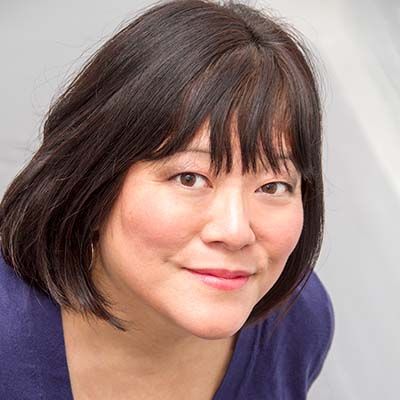
In the previous episode, you heard actress and singer Ann Harada share her stories of grinding it out as an Asian actress trying to fit in with what she thought casting directors wanted but then discovered her superpower as an artist, being herself. Now she’s back to share more lessons she’s learned and answer the Final Five Questions in this bonus episode of Why I’ll Never Make It.
Podcast theme music created by host and producer Patrick Oliver Jones.
Transcript
This transcript was automatically generated and might contain errors.
[0:00] Ann Harada: Last time we heard from Ann Harada as she shared her journey through the ups and downs of a life in theater, from her first Broadway gig as a production assistant to her breakout role in Avenue Q and everything in between.
[0:14] Ann Harada: Today she's back for the final five questions.
[0:17] Ann Harada: This is where we get right to the heart of what it really takes to build a lasting career on stage.
[0:24] Ann Harada: From stories about her first professional gig, yes, there are dinner rolls and plastic cutlery involved, to how she's seen the industry evolve over the years, and brings honesty, humor, and plenty of perspective to every answer.
[0:39] Ann Harada: If you loved hearing Ann's stories and wisdom last time, get ready as she drops even more insights as we jump into the final five.
[0:51] Patrick Oliver Jones: All right, well, let's get to these final five questions then.
[0:55] Patrick Oliver Jones: And number one, what do you remember most about your first professional show?
[1:01] Ann Harada: My first professional show was in college when I did summer stock in the summertime.
[1:07] Ann Harada: And I worked at a theater now sadly defunct, uh, called the Booth Bay Dinner Theater, which was in Booth Bay Harbor, Maine.
[1:15] Ann Harada: And I think I made $40 a week plus tips.
[1:20] Ann Harada: Because we also had to serve drinks before the show.
[1:23] Ann Harada: Drinks and appetizers before the show.
[1:25] Ann Harada: Do the cabaret show.
[1:28] Ann Harada: Come back entree.
[1:30] Ann Harada: Come back.
[1:32] Ann Harada: Entree and dessert.
[1:34] Ann Harada: Come back.
[1:35] Ann Harada: Do the show show.
[1:37] Ann Harada: Come back.
[1:37] Ann Harada: Give the check.
[1:38] Ann Harada: I mean honestly.
[1:39] Ann Harada: So, all right.
[1:41] Ann Harada: And all the food was in baskets, like no like metal cutlery, so it didn't make noise.
[1:47] Ann Harada: It was all like baskets and plastic cutlery.
[1:50] Ann Harada: Um, doesn't this sound like the funnest evening of your life?
[1:53] Ann Harada: But it was so great for me because we did a ton of like we did a bunch of different shows that summer.
[1:58] Ann Harada: I got very you know you get to be very close to these people that you're like spending every hour of the day with.
[2:04] Ann Harada: Some of them are still my very, very closest friends.
[2:07] Ann Harada: You know, you it's it's it was a great experience.
[2:10] Ann Harada: And I thought, well, this is what it's like like this is to be an actor is hard.
[2:15] Ann Harada: It's like it's a lot.
[2:17] Ann Harada: It's a lot.
[2:18] Ann Harada: So that was my first professional show and then my first equity show uh was uh called one to three for five it was a workshop production at Manhattan Theater Club and it was a very high powered cast.
[2:33] Ann Harada: Everybody in it was famous except me um every third person in the room was a Tony nominee.
[2:40] Ann Harada: Like I l like on the first day I went great like you know you just look around you're like fantastic there must have been a part of like what am I doing in this room?
[2:40] Ann Harada: What am I doing here?
[2:50] Ann Harada: Of course every day I said what am I doing here?
[2:53] Ann Harada: But it was fun, you know, playing into like a girl type fine and I got to work with some these incredible actors Alice Playton, Louis Stadlin, Jonathan Hidari, Mary Gordon Murray, William Humans, Vicky Lewis, Liz Callaway, Davis Gaines, these were the people in the show that I was like, I can't believe I get to eat lunch with them.
[3:17] Ann Harada: Um that was that was great.
[3:20] Ann Harada: It's really great.
[3:21] Patrick Oliver Jones: That sounds wonderful.
[3:22] Patrick Oliver Jones: That sounds really wonderful.
[3:23] Ann Harada: I mean talk about like learning stuff that had nothing to do with the play.
[3:27] Ann Harada: You know, just being with pros.
[3:30] Ann Harada: That's really what I learned.
[3:32] Ann Harada: How to hold yourself in a room, how to, you know, I'm very grateful that it kind of worked out the way that it did.
[3:37] Ann Harada: It was Jerry Mitchell's first show as a choreographer.
[3:41] Ann Harada: I did I got to interview him earlier, yeah, a couple of years ago.
[3:45] Patrick Oliver Jones: Wonderful.
[3:45] Ann Harada: That's fantastic.
[3:46] Ann Harada: You know, and I got to work Maury Yeston and I got to work with uh Larry Gelbart.
[3:51] Ann Harada: Very uh overwhelming kind of uh first equity experience, but fun.
[3:59] Ann Harada: Yeah, my first big show in New York was a national tour and Jerry Zachs was directing.
[4:03] Ann Harada: Wow.
[4:04] Ann Harada: So yeah.
[4:04] Ann Harada: And yeah.
[4:05] Ann Harada: Douglas Sills was on that tour.
[4:06] Ann Harada: So it was you just amazing.
[4:08] Ann Harada: Right.
[4:08] Ann Harada: These kind of people that you are in awe of, but yet you watch and and they're normal people, obviously, but but you yeah, you watch how they carry a room, how they interact with the cast, with the creative team.
[4:19] Ann Harada: You will pick up things that you can't be taught in in college class or in acting class, whatever.
[4:25] Ann Harada: It's things that you just learn by watching.
[4:29] Ann Harada: And it was it's really wonderful to just uh just be with him and see what a leader looks like in a cast and how he took that on so gracefully.
[4:37] Patrick Oliver Jones: Yeah, well, and that's a that's a very important lesson to learn.
[4:41] Patrick Oliver Jones: When I think about that, I'm usually not the leader because I usually not I'm usually not, as I think of it, number one on the call sheet.
[4:49] Ann Harada: Right.
[4:49] Patrick Oliver Jones: Very rarely.
[4:50] Patrick Oliver Jones: Um, but but I do appreciate good leaders of companies.
[4:55] Patrick Oliver Jones: I do appreciate people who are willing to take that burden on.
[4:59] Patrick Oliver Jones: And uh I've been lucky to work with a lot of really amazing people in my career.
[5:03] Patrick Oliver Jones: So number two, how has the industry changed most since you first started?
[5:20] Ann Harada: Well, for me personally, it has changed for the better, in the sense that I no longer feel so acutely aware of being typed by my face.
[5:32] Ann Harada: I do feel that the opportunities for me and for my fellow uh minority actors have only improved in terms of people being willing and happy to offer us roles with a little more scope, um, roles that are not so stereotypical.
[5:54] Ann Harada: For example, um, I just did a show out in La Hoya Playhouse where I played the wife of the lead.
[6:00] Patrick Oliver Jones: Okay.
[6:02] Ann Harada: And I feel that in years gone by, had I been in this play, I would have been cast as friend of the wife of the lead.
[6:11] Ann Harada: Does that make sense?
[6:14] Ann Harada: Um, or like comedy relief of the wife of the lead, not the wife of the lead.
[6:21] Ann Harada: And similarly, the guy who was cast as best friend of the lead was also Asian.
[6:28] Ann Harada: And every day we would look at each other and go, like, can you believe we are not married in this play?
[6:37] Ann Harada: I know that sounds stupid, but it's kind of true.
[6:41] Patrick Oliver Jones: No, no, no, I I heard this one actor talk about Amy was in Oklahoma, and there were only two black people in the whole show, and of course they were married.
[6:50] Ann Harada: Yeah.
[6:50] Patrick Oliver Jones: We read the ensemble in the back, but they were always together.
[6:52] Ann Harada: Of course.
[6:54] Ann Harada: No, we were like, it's incredible.
[6:56] Ann Harada: I literally people thought, I mean, I know that I mean, I would read stuff like you know on the internet and would like, oh, Ann and Francis are in this play.
[7:04] Ann Harada: They, they must be married.
[7:06] Ann Harada: You know, you know.
[7:06] Ann Harada: It's like, no, he's the best friend, and I'm the wife of the lead.
[7:12] Ann Harada: Like you just like that's something that we've been kind of like trying to fight our whole lives.
[7:20] Ann Harada: All this to say is that nobody, not at any point in time ever, not one review, not one patron that I'm aware of, raised their hand and said, like, why are two Asian people like the wife and the best friend of the white guy?
[7:36] Ann Harada: And I just thought, okay, we're we've come some way.
[7:39] Ann Harada: Because I assure you that would not have happened in 1995 or whenever the hell, you know, it it just wouldn't have.
[7:45] Ann Harada: They've even considered letting us play those parts.
[7:49] Ann Harada: One.
[7:50] Ann Harada: And now I guess people are more aware or cooler or something.
[7:56] Ann Harada: Like they're able to say, like, oh, we have some dimensions ourselves.
[8:00] Ann Harada: I don't know why.
[8:00] Ann Harada: I'm grateful, but I'm grateful.
[8:02] Patrick Oliver Jones: Yeah, I I found the same thing.
[8:04] Ann Harada: I did Anna Green Gables and the, you know, the Cutburg, Marilla.
[8:08] Ann Harada: Yes, the two leads.
[8:10] Ann Harada: One was a black woman and a white man, and they were brother and sister.
[8:14] Ann Harada: And no review ever mentioned it.
[8:16] Ann Harada: I didn't hear any audience that they would just talk about how great the show was, the music, blah, blah, blah.
[8:20] Ann Harada: But no one ever mentioned this dynamic.
[8:23] Ann Harada: And thank God.
[8:24] Ann Harada: Yeah, because people recognize, well, that that can be a family.
[8:28] Ann Harada: There's no reason that can't be a family.
[8:30] Ann Harada: No.
[8:31] Ann Harada: I'm grateful.
[8:32] Ann Harada: I don't know why this like sticks with us so firmly in our head.
[8:36] Ann Harada: I guess because for so long we've just been so marginalized, you know, kind of like prescribed these are the parts you're allowed to play.
[8:45] Ann Harada: And I'm done with it.
[8:48] Ann Harada: I you know.
[8:49] Ann Harada: Yeah, I think it's better for all of us if we're all in the same mix role rather than, well, you can only do this because you're that you can only do this.
[8:58] Ann Harada: No, it's it's I I think it's it's better for us as actors as well, because then it it stretches us as actors and we become better the more diverse roles we we get to play.
[9:08] Patrick Oliver Jones: Of course.
[9:09] Patrick Oliver Jones: Outside of our own life experience, outside of our own, you know, just daily life.
[9:14] Patrick Oliver Jones: Well, getting to number three, what does success or making it mean to you?
[9:19] Ann Harada: I am already to me a success because I've been working.
[9:25] Ann Harada: All I've ever wanted to do is be a working actress and have the respect of my peers.
[9:30] Ann Harada: And for the most part, I believe I have that.
[9:34] Ann Harada: And I have no big, you know, goals.
[9:44] Ann Harada: I don't I don't um of course, yes.
[9:48] Ann Harada: Would I like to be on Broadway in like a new show that was written on me?
[9:54] Ann Harada: Yeah, okay, sure.
[9:56] Ann Harada: Would I like to be in a TV show uh that runs for a while?
[10:01] Ann Harada: You bet.
[10:02] Ann Harada: These are all things that might happen or might not happen, but they're gonna have no bearing on my happiness.
[10:09] Ann Harada: I'm happy.
[10:10] Ann Harada: I'm super happy that I've been able to be in this industry for as long as I have.
[10:17] Ann Harada: Right?
[10:17] Ann Harada: I got my equity card in 1987.
[10:19] Ann Harada: Well, you'll have to do the math because I'm not good at math.
[10:22] Ann Harada: But that's a long time, as I recall from now.
[10:26] Ann Harada: 37?
[10:27] Ann Harada: 37.
[10:27] Ann Harada: Yeah.
[10:27] Ann Harada: 37 years.
[10:28] Ann Harada: Anyway.
[10:29] Ann Harada: Um that's incredible to me to have had a foot in the door for 37 years.
[10:36] Ann Harada: Been able to do the kinds of parts I've been able to play.
[10:40] Ann Harada: Had the kind of experiences I've been able to have.
[10:43] Ann Harada: I I never expected kind of like the joy I felt from just being in a play when I was like a kid in high school to kind of like expand and fill my life to the extent that it has.
[10:56] Ann Harada: That basically by following that one dream, that one feeling of like I like this feeling and I want to keep having this feeling over and over again.
[11:06] Ann Harada: That just kind of like listening to that voice has given me this unbelievable life, this unbelievable career that like fills me.
[11:16] Ann Harada: I still have take great joy in it.
[11:19] Ann Harada: I have no idea what tomorrow's going to bring.
[11:22] Ann Harada: I enjoy that.
[11:23] Ann Harada: I live in New York City.
[11:25] Ann Harada: I have a family.
[11:27] Ann Harada: I've been able to do that and be an actor.
[11:31] Ann Harada: What a treat.
[11:32] Ann Harada: What a gift, you know.
[11:34] Ann Harada: Take you a while to come to that happiness that as an actor.
[11:38] Ann Harada: Not once I accepted who I was and all my various limitations and uh strengths.
[11:49] Ann Harada: You know, once I was like, Ann, this is who you are, and it's okay.
[11:52] Ann Harada: And you don't have to put on your Laura Ashley dress anymore. You know, and you don't you can you can show up as you and it you're still acceptable. It's that whole thing of like for so long, uh I was and I in a way I still am like this in terms of like doing a cabaret show was like the hardest thing I do because I have to be me, right? I like being another person. I like being another character on stage. I don't like me. I don't like being me so much, right? And that's why I'm an actor. So um I'm more comfortable in my own skin now than I've ever been before, possibly because of my advanced age. And knowing like there's no, what are my options? This is it. Like, you know, you're gonna get what you get at this point.
But that that is plenty good enough. And like kind of accepting that and really like knowing it. Because I I do believe that it's true. If we are all plenty good enough, but we all have to get to that point where it's like, no, no, I'm okay. You know, and I'm lucky because I'm I'm a character actor. So as I often say, five pounds up, five pounds down, nobody cares. Right? As long as you're funny. Right. And I remember like worrying so much about my weight when I was younger, right? Um, and like, oh, the camera had so much weight. It's like at this point, nobody cares. Doesn't matter. So it's fine. Just it's okay. You're gonna be all right. Yeah, I just feel really, really happy and uh fortunate to to be working and to be here.
[13:34] Patrick Oliver Jones: Well, this gets us right into number four, which is describe a personal lesson that took you a while to learn, or one that you're still working on to this day.
[13:42] Ann Harada: Isn't that it? I feel like that's it. Discovering who we are, discovering ourselves. Yeah. Just being like, I'm cool with it. I'm cool with me. And you know, uh, of course there are things I'd like to do better, be better. Things that I'm working on, things that I uh, you know, I'm always trying to be better at my job. I'm always trying to improve my technique and whatever. I care very much about being a good actress on stage or film or any of that. I'm trying, you know, I try very hard to be prepared. I try very hard. Well, you know. But ultimately, it's about also like, but I'm enough and I'm okay. What I bring to the table is good and fine. I don't have to be any more than what I am. And that's good.
That's fine. And recognizing that who we are as we get older, as we have more like experiences, that that changes as well. And who we were the room changes over time. Of course. And how grateful I am, like how cool it is to have been in the business long enough to have worked with some people over and over again. And like know that you have a trust with certain actors and creative types, directors, choreographers, however it is, musical directors, that you're like, I can trust them. They trust me. We have a shorthand. It's so much easier, you know, when you have that kind of like built-in bond already. So I'm still really lucky that I'm so old and have worked with so many people that it's very rare to work on a project that's like, I never heard of any of them.
Like they don't know me at all. You know what I mean? It's like, no, I know you. I could I did something with you 10 years ago. I worked with you, you know, I did a reading with you seven years ago. And like you just, it's just that's what it is now. And it feels really great to have that kind of like history of safety and work, and we're all on the same page. And to just know, like we've got each other's backs.
[16:02] Patrick Oliver Jones: Well, earlier in our interview, you had uh talked about advice that you give to young performers. Well, for question number five, what's the most useful advice that you have received and how have you applied it?
[16:14] Ann Harada: Um, I think it was when my roommate said, Like, do you honestly think not getting one job? That's gonna ruin your career. Like you're it's like, who cares? It's one job. Yes, it was a job that you thought you wanted. Yes, it was a job that maybe you could do, yes, whatever. It's a job that pays a lot of money. Yes, it's a job that will run forever. Great. It's not for you, you have to move on. There's other things, there's other shows, there's other parts. Nothing is a deal breaker. Um, you know, one point I thought, I'm not in Gilligan's Island the musical. Now how am I gonna make my name in the world? Well, somehow I did. It's never the thing that you think. That I mean, that's really sort of the thing.
It's like you can read the trades and be like, oh, this show is coming. I'll be perfect for that. I'm gonna be in that show. That's never the job you get. That's never for me, anyway. It never has been like that. You can't control the jobs you get. You can only control what you do and the jobs you do get. And that's to me, it's like if you just are you, if you just do your work, you know, you bring your best game and you're devoted and you work really hard. That's your calling card. That's your reputation, that's your legacy. That's how people know you. I don't know how to describe it any other way. It's it's like to me, it's like I don't understand people who think like, if I could just be alphabet, everything would change.
It's like, well, yeah, you'd be Elphaba, which is great, but it's not necessarily a guarantee that you're always gonna get jobs that big, right? Or whatever. It doesn't necessarily mean you're gonna become a star. Doesn't necessarily mean anything. It's a job. They're all just jobs. Good jobs, bad jobs, you know, better jobs, but they're jobs. You know, you've got to give the same devotion to the ones that don't seem like much as you do to the ones that do seem like something. Because that's it's just showing up every day. That's what you're supposed to do. That's what I think I'm supposed to do.
[18:26] Patrick Oliver Jones: Well, one of the jobs that you recently showed up for as we wind up here is an audio podcast called Twits.
[18:35] Ann Harada: Oh, yes. And so tell us about how you became involved with the show and your part in it.
[18:41] Ann Harada: Okay, well, this is a perfect example of you work with people in plays, and then they just stay your friends, and then you would just end up doing stuff for them because they're your friends. Um, Tom Allen Robbins wrote Twits, and I did a show called Brooklynite with him at the Vineyard Theater, uh, which is one of the many, many this is this the Vineyard Theater is like has been my second home for many, many years. Literally, I would I could work there when I nobody else would hire me. Um in those all those dark years of like, what am I doing? Um so Tom had this really great idea. It's sort of like a steampunk Jeeves and Worcester kind of tale that he's spun, right? And he decided to uh turn it into a podcast with like all these great New York actors, and he wanted to know if I would voice a character, and I was like, of course I will, because we ran a pandemic, and what else am I doing?
So I I became basically the servant character for every single household in this world because they're all the servants in this world are robots, and so my character in every household is basically the same character, only with a different name, and all my names are like treats, like I'm Mrs. Cedar, I'm Mrs. Pine, I'm you know, in different houses. Right. Um, and and it was just a chance for me to pull out my dodgy British servant dialect and have at it, and it was really fun. Um, and I just think Tom is a very wonderful writer. So it was thrilling to do that.
[20:28] Patrick Oliver Jones: How has it been doing voice acting versus you know, our bodies on stage acting?
[20:32] Ann Harada: I love it. I love it. I've been doing a lot more of that lately. It's funny. Um, I just did a I didn't just do it, but I just saw it. There's this episode of a cartoon called Moon Girl and Double Dinosaur, and I play Moon Girl's grandmother's friend. Okay. Um, but we're all scientists, so that was very cool. And it's sort of like it's Jackie Harry's one of the other friends. And you know, of course, did I see anybody? No, I did it by myself in a booth many months ago. I like that's like it happened. I have no recollection, and then you watch and you're like, oh right, I remember. Um, but it's so much fun to to have have so much freedom and and work like that. I also played this very interesting character on uh this Netflix show called Blue Eyes Samurai. I don't know if you've ever heard of that.
[21:26] Patrick Oliver Jones: I think I have heard of that, yeah.
[21:27] Ann Harada: It's a very dark, it's maybe the darkest anime feature you'll ever watch. There's a lot of violence, a lot of silence going on there, especially involving me.
[21:43] Patrick Oliver Jones: Um did you remember that whole experience?
[21:47] Ann Harada: I just remember me screaming constantly, just screaming. Just like they'd be like, okay, just give me give me a good three minutes of just you screaming. Okay. No, louder. Okay. You know, it's wonderful to have kind of like the freedom of voice acting. I don't know. As another thing I can do. I why not?
[22:15] Patrick Oliver Jones: Yeah, yeah. I love it. I love it.
[22:16] Ann Harada: Well, and this has been a a total treat to meet you, to talk to you, and to to get to hear your story. So thank you for sharing them with us today.
[22:26] Ann Harada: Oh, thank you. I mean, I appreciate it. Uh and uh yeah, I don't know. I I do care, I do care that people uh give twits a listen. All I can say is like all the actors in it are really comic geniuses, and it's so it's such a treat to be able to play with them even sort of virtually, you know what I mean? And also because it's just a fun genre. I just love British humor, and this is very much in that style. And I don't know.
[23:00] Patrick Oliver Jones: Well, it sounds great. Sounds great. We'll definitely check it out.
[23:01] Ann Harada: Well, thank you again, Ed.
[23:03] Patrick Oliver Jones: Thank you.
[23:07] Patrick Oliver Jones: Thanks for listening to this bonus episode. And to get more bonus content like audition stories and listen to these conversations ad-free, then become a subscriber by going to why I'll never make it.com and click subscribe or just look for the link in the show notes. Well, until next time, I'm your host, Patrick Oliver Jones, and this is Why I'll Never Make It.
© Broadway Podcast Network, All Rights Reserved