

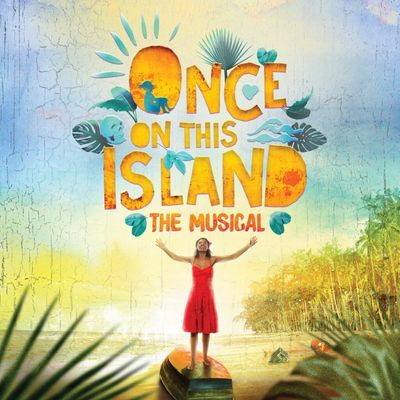
We chose to make our first Bonus Episode in honor of the Tony Awards! To celebrate those truly making it on Broadway we invited Alvin Hough, music director and conductor for ONCE ON THIS ISLAND, to chat about the glorious music and amazing cast that make this Broadway revival so magical... Read More
From the show: Why I‘ll Never Make It
Featured Shows
About
We chose to make our first Bonus Episode in honor of the Tony Awards! To celebrate those truly making it on Broadway we invited Alvin Hough, music director and conductor for ONCE ON THIS ISLAND, to chat about the glorious music and amazing cast that make this Broadway revival so magical. He gives insight into the making and staging of this uplifting musical and its eight Tony nominations!
Learn more about Alvin as well as ONCE ON THIS ISLAND.
The time and expense needed to bring these guests and conversations to you each week is both sometimes challenging but always rewarding. Please consider buying me a coffee to support this work that goes into each episode. Join the WINMI community by following on Instagram or Twitter as well as reaching out to Patrick with any questions or comments: contact.winmipodcast.com"Hot Swing" by Kevin MacLeod (incompetech.com)
Licensed under Creative Commons: By Attribution 3.0
http://creativecommons.org/licenses/by/3.0/
Transcript
This transcript was automatically generated and might contain errors.
[0:08] Patrick Oliver Jones: Hello and welcome to the premier bonus episode of Why I'll Never Make It, the Tony Awards, the Tony Awards.
[0:16] Patrick Oliver Jones: I am Patrick Oliver Jones, and I'm going to be your host as we embark on this journey of the Tony Awards.
[0:23] Patrick Oliver Jones: Dewey Cadell is actually out of town doing a show.
[0:27] Patrick Oliver Jones: He's actually working it.
[0:28] Patrick Oliver Jones: He is making it.
[0:29] Patrick Oliver Jones: So I'm gonna let him focus on that.
[0:32] Patrick Oliver Jones: I will be focusing on the Tony Awards.
[0:35] Patrick Oliver Jones: For these bonus episodes, we're going to take a look at some of the shows nominated for Tony Awards, and I'm going to sit down with people involved in these shows to talk about the process, the production itself, as well as the nominations and what that has meant for the show.
[0:51] Patrick Oliver Jones: So why don't we go ahead and get started with a wonderful, wonderful show, Once on This Island.
[0:58] Patrick Oliver Jones: I sat down with the musical director Alvin Hough to talk about the show.
[1:03] Patrick Oliver Jones: And it is currently up for eight Tony nominations, including Best Revival of a Musical, Best Leading Actress, Haley Kilgore, Best Scenic Design, Dane Laffrey, Best Costume Design, Clint Ramos, Best Lighting Design, Jules Fisher and Peggy Eisenhower, Best Sound Design, Peter Holinski, Best Direction of a Musical, Michael Arden, and Best Orchestrations, Anne-Marie Malazzo and Michael Starabin.
[1:32] Patrick Oliver Jones: Now, for those of you who may not know a little bit about Once on This Island, let me give you a brief synopsis of its story.
[1:38] Patrick Oliver Jones: T-Moon is a fearless peasant girl who falls in love with a wealthy boy from the other side of the island.
[1:45] Patrick Oliver Jones: Now, when their divided cultures threaten to keep them apart, T-Moon, guided by the island gods, sets out on a remarkable quest to reunite with the man who has captured her heart.
[1:56] Patrick Oliver Jones: Now, Once on This Island originally premiered off-Broadway in 1990 at the Playwrights Horizon Theater before eventually transferring to Broadway, where it was also nominated for eight Tony Awards in that year.
[2:11] Patrick Oliver Jones: So let's get this show underway where I join Alvin Hough, the musical director of Once on This Island at the Circle in the Square Theater backstage.
[2:30] Patrick Oliver Jones: Thank you for joining.
[2:33] Patrick Oliver Jones: So this has been nominated for not only Best Revival, but a total of eight nominations for Tony.
[2:39] Patrick Oliver Jones: One of those is Best Orchestrations.
[2:47] Alvin Hough: Um, I guess first off, I gotta give kudos to Stephen Flaherty, who wrote and Lynn, you know, let's get let's give credit where credit is due.
[2:55] Alvin Hough: Um, but they wrote such a fantastic show, and they did it, they did it right 28 years ago, and now we're just doing it different.
[3:02] Alvin Hough: Uh doing it just a little differently.
[3:04] Alvin Hough: Um it's it's so much fun to be at this theater to feel like the energy from the audience.
[3:10] Alvin Hough: Um there's no other theater in the round on Broadway, and it's my first time doing something here, and it's really magical to be a part of it eight times a week.
[3:17] Alvin Hough: Um the orchestrations are unique, and that really doesn't begin to describe it.
[3:22] Alvin Hough: Unique is the least, you know, descriptive word I can use.
[3:26] Alvin Hough: Yeah.
[3:26] Alvin Hough: Um Michael Starabin, who was around for the original 28 years ago, he orchestrated the band section, and I mean we're only four now.
[3:34] Alvin Hough: We're piano, bass, drums, guitar.
[3:36] Patrick Oliver Jones: And how many was it originally?
[3:37] Alvin Hough: I think originally it was six or seven.
[3:38] Alvin Hough: I think for the tour they expanded to nine.
[3:41] Alvin Hough: I mean, they definitely had a couple of reeds, like a sax, you know, they put some trumpets on the cast album even.
[3:46] Alvin Hough: I mean it got really, you know, really wild and crazy.
[3:49] Alvin Hough: Um, but now we the concept of the show was really developed by Michael Arden, our director, and Anne-Marie Malazzo, who's great.
[3:58] Alvin Hough: She's worked on Spring Awakening and so many other fantastic shows.
[4:02] Alvin Hough: Um the concept was what would happen if you did Once on This Island in a parking lot.
[4:09] Alvin Hough: Really?
[4:11] Alvin Hough: Which sounds a little out of the box.
[4:13] Patrick Oliver Jones: Right.
[4:13] Alvin Hough: A little weird.
[4:14] Alvin Hough: But like the real breakdown of that was what would happen if an island, like if the stage really got struck by a hurricane, what would you have left?
[4:24] Alvin Hough: You'd have yourself, you have the human body, the human voice, and you'd have all the debris, all the trash left over from the storm just lying around.
[4:36] Alvin Hough: So we pair with a company called Bash the Trash, which is run by John Bertles in Brooklyn.
[4:43] Alvin Hough: Fantastic.
[4:44] Alvin Hough: He literally scours the universe, it feels like, for someone's trash.
[4:50] Alvin Hough: You know, one man's trash is another it's now our treasure.
[4:53] Alvin Hough: We have him on the stage.
[4:54] Alvin Hough: He finds all sorts of things that people we bang, we blow into, we you know, use some kind of way to make it.
[5:02] Alvin Hough: Yeah, it's not traditional instruments on the city.
[5:04] Alvin Hough: Not traditional, and the actors are responsible for playing those.
[5:07] Alvin Hough: And we had parts like written out for them by Michael, Stare, but who were like he did the four, you know, you know, union musician players, and he wrote parts for the actors to, you know, to sing something, and then they would bang on a pot.
[5:19] Alvin Hough: Or they'd spin a whirly tube, or something really, really, you know, out of the box, anything like that.
[5:24] Alvin Hough: And the human element of it was Anne-Marie said, Well, you have yourself.
[5:29] Alvin Hough: And so the background vocals, you know, typically when you think of you hear of vocals, you think of it's a vocal arrangement.
[5:36] Alvin Hough: You're like, here's the melody, we're gonna arrange some like oohs and ahs below it.
[5:40] Patrick Oliver Jones: Right.
[5:40] Alvin Hough: Oh, that's not what we did here.
[5:42] Alvin Hough: Um she said, Well, I want you to sound like a flute.
[5:42] Alvin Hough: I want you to sound like a saxophone, I want you to sound like a harp.
[5:47] Alvin Hough: I want you to sound like an organ.
[5:52] Alvin Hough: Like you, the human is gonna replace all the instrument, the real instruments that we don't have.
[5:56] Alvin Hough: Yeah, but you know, and for those of you listening who haven't seen the show, I I've seen the show, and and you're right, they do use the voice to create these sounds and the atmosphere basically for the story as it's being told.
[6:09] Alvin Hough: I take zero credit in writing the orchestrations, but well, oh, I should say that.
[6:13] Alvin Hough: Um typically you think of vocal arrangements, but because these are so complex and they're replacing what the orchestra would have done.
[6:19] Alvin Hough: She's essentially she's done vocal orchestration.
[6:22] Alvin Hough: She's co-orchestrator.
[6:23] Alvin Hough: She writes with Mike, they wrote together.
[6:25] Alvin Hough: She said, Well, no, I mean the guitar shouldn't play that because I'm gonna have, you know, the third auto do a little something that's gonna mimic that sound.
[6:33] Alvin Hough: Like, no, take the guitar away.
[6:34] Alvin Hough: I'm gonna have the singer do that.
[6:37] Alvin Hough: So to say it's like a 16-part harmony is a little misleading, but every individual in our show has his own line, his or her own line of music, their own music track.
[6:49] Patrick Oliver Jones: Oh wow.
[6:49] Alvin Hough: Every, you know, so no one's singing 16 notes in the music.
[6:52] Alvin Hough: So every voice is literally important and the one of a kind in the orchestration.
[6:56] Alvin Hough: They're not 16 different notes being sung at the same time.
[6:58] Alvin Hough: But what Anne-Marie would do, which is genius.
[7:00] Alvin Hough: She has, you know, she had her own ideas, but what she would what she did was she looked back at what was done 28 years ago and she said, Oh, here's a flute line.
[7:08] Alvin Hough: And it, you know, it curves like this.
[7:10] Alvin Hough: You know, I'm gonna take the first three notes and give it to Soprano 2 and Alto 3 and bass four.
[7:16] Alvin Hough: And then I'm gonna give the next four notes to like Soprano One, and out and she just splits it up and creates these like weird, like if they seem weird and unusual by themselves.
[7:26] Alvin Hough: It's like, why am I singing this?
[7:28] Alvin Hough: This these two notes right here.
[7:30] Alvin Hough: Oh, but it makes sense when you hear the whole line and it just feeds, and everyone's listening to each other and feeding off each other, and that's why it's really so much more of an ensemble piece.
[7:39] Alvin Hough: It's like a community piece.
[7:40] Alvin Hough: And you're listening to each other and finishing each other's thoughts and starting the next one.
[7:44] Alvin Hough: Because even in the program, it's not called ensemble, everyone is a storyteller.
[7:48] Alvin Hough: And so part of that storytelling is the music itself.
[7:51] Patrick Oliver Jones: And I can certainly attest to the fact that when it when everyone is together, it is a magical sound.
[7:57] Patrick Oliver Jones: It really is.
[7:58] Patrick Oliver Jones: And so it's uh I can certainly attest to the work that you and all the actors have done in putting those voices together and blending them so well.
[8:06] Patrick Oliver Jones: And sound design, they were also nominated.
[8:08] Patrick Oliver Jones: So that's that's a big part of that creating that sound on stage.
[8:12] Alvin Hough: I heard from so many people before.
[8:14] Alvin Hough: Well, I get um I'm contractually uh I can I get one show a week to sit in the audience and take notes.
[8:19] Patrick Oliver Jones: Okay.
[8:20] Alvin Hough: And but I couldn't do that until after we had opened and you know smoothed out all the kinks.
[8:25] Alvin Hough: And people, you know, friends of mine would come and say, Oh, it sounds so good in the house.
[8:29] Alvin Hough: Like, what did I'm like, I I don't know, I haven't heard it yet.
[8:32] Alvin Hough: I'm up, I'm up, I have my own mix in my earphones, and I listen to that, and I'm like, I I can't wait to get out in the house.
[8:37] Alvin Hough: And the first time I took notes, I almost couldn't write for the first I don't know, 10, 20 minutes.
[8:42] Alvin Hough: I'm like, this sounds so amazing.
[8:45] Alvin Hough: It's um people often come and say, Are you sure there are only four guys up there playing?
[8:51] Alvin Hough: Are you sure it's only four guys in that band?
[8:53] Alvin Hough: It's because we're all doing a lot.
[8:55] Patrick Oliver Jones: Actually, because of what are the four instruments?
[8:58] Alvin Hough: Um piano, bass, drums, guitar.
[9:00] Alvin Hough: That's all we have.
[9:00] Alvin Hough: The bassist is is playing, you know, one electric, you know, bass for the entire show.
[9:04] Patrick Oliver Jones: Right.
[9:04] Alvin Hough: Guitarist has he has four different guitars.
[9:06] Alvin Hough: The percussion kit is something that I'm no drummer.
[9:10] Alvin Hough: I can't, you know, fully explain.
[9:11] Alvin Hough: But I think anyone with, you know, a pair of eyes can just look at what he has set up and realize this is unusual.
[9:18] Alvin Hough: Yeah.
[9:18] Alvin Hough: This is not I mean, he it's so unique.
[9:21] Alvin Hough: I think he's got four or five cowbells.
[9:23] Alvin Hough: He's got a Junjoon, he's got he has to have a snare drum for certain parts.
[9:27] Alvin Hough: He's I it's so unique.
[9:30] Alvin Hough: And everything is set up within like a millimeter of if he's cramping this tiny little space.
[9:36] Alvin Hough: I mean, he makes it work.
[9:37] Patrick Oliver Jones: Right.
[9:38] Alvin Hough: It makes sense, but it doesn't quarters are tight.
[9:41] Alvin Hough: That's its own choreography for the drummer.
[9:43] Alvin Hough: Just to know, okay, now I need to reach over to the left and hit this to the right and hit in front.
[9:47] Alvin Hough: Yeah, just for me, I'm conducting, I'm playing keyboard, I and with your keyboard, do you do other sounds, or is it mostly just the piano sounds like that?
[9:55] Alvin Hough: I have plenty of I have plenty of sounds to, you know, kind of trick the ear.
[10:00] Alvin Hough: Uh patch changes all over the place, but it's wonderful.
[10:03] Alvin Hough: Uh Randy Cohen did the programming and it's it's great.
[10:06] Alvin Hough: Um I guess I could say they're first for everything on Broadway, and I am I'm playing percussion myself at times.
[10:14] Alvin Hough: Oh that's right.
[10:15] Alvin Hough: I've got I'm playing a like a Spanish gourd that Javi Javi Diaz is our wonderful percussionist.
[10:20] Alvin Hough: He gave me a Spanish gourd.
[10:21] Alvin Hough: There's there's a moment in the show that's entire song is just a percussion solo.
[10:26] Alvin Hough: Okay and it feels as though Javi has he's already playing so much.
[10:29] Alvin Hough: Is that the dance?
[10:30] Patrick Oliver Jones: Yeah, that's that's the dance at the ball, yeah.
[10:31] Alvin Hough: Yeah.
[10:32] Patrick Oliver Jones: And he's like, Albert, can you can I yeah, yeah, give give me something I can like lay down a beat and you can like play uh play around me.
[10:39] Alvin Hough: It's it's so much fun. Playing some percussion. Um I'm playing uh I'm playing the melodica.
[10:44] Patrick Oliver Jones: What is the melodica?
[10:45] Alvin Hough: Well is um it's a very unique instrument. I uh I I I wish I knew exactly how many notes were. I think it's about two and a half, maybe three octaves, and you just hold in your hand, and it's it's an actual keyboard, uh-huh, but there reads inside. And the only way to produce sound is to attach a little mouthpiece to it.
[11:02] Patrick Oliver Jones: Oh, so you're blind.
[11:04] Alvin Hough: And then playing the keys, yeah.
[11:06] Patrick Oliver Jones: Oh, and it's I I think I've seen that instrument before.
[11:08] Alvin Hough: Uh it's uh it's fun. I uh well I I've often wondered doing other shows, like you know, we if there's a two show day and some guys in the band go out and hang out, it's like, hey, let's go get some, I don't know, some pizza or some something heavy. And I feel all the read players, all the all the win players are like, I don't know, I don't know if I could eat, you know, an entire whatever on a and I'm like, come on, guys, you guys are being you guys are being whims. What's wrong with you? And then now I realize it's hard to play on a full stomach. My my breath support is nothing like the pros. I I will not take credit for that, but um I find myself you know struggling some nights after I've had like a big like burrito or something.
I'm like, I'm running out of air. It's it's uh you're exercising new muscles within your musical prowess. Um and I have to like pick that up for eight measures and then throw it down and go back to playing the keyboard. It's a workout, it's a great show. It's 90 minutes, there's no intermission.
[12:03] Patrick Oliver Jones: Yeah, which it which is really nice as an audience member. You just come watch it straight through, and then and then you're done. So it's certainly it's certainly wonderful.
[12:10] Alvin Hough: Well, well, speaking of of the voices, which we were talking about, you have uh such a wide range of performers. You didn't you you have low low basses, you have wonderful sopranos, and then you have people who like Leia Salonga, who are you know, traditional musical theater Miss Saigon, and then you have Tamara Gray, who is known for her American Idol pop, and all the voices in between. What is it like bringing all these different styles and voices together?
[12:37] Alvin Hough: It's it is a difficult yet rewarding process to get people to do this, to do what Anne Marie has written down. When you get the score and you have like this legal-sized piece of paper and you have 16 lines of like, oh my gosh, this looks so overwhelming. You're you get four measures a page, you're turning pages seeming like every every two seconds. Um it's a daunting task. But I know Anne Marie preached um two large uh concepts. She's like, uh, let's take away as much of the vibrato as we can. Okay. Try to make things as straight tone as possible because we're like, we really gotta listen to each other and blend, and that's you know, not easy for you know, some people. Yeah. Um, and then since like these voices are replacing flutes and clarinets and saxophones and and and you know, those sorts of instruments, think about the breadth behind, you know, think of a breathy quality to your tone.
Like we're not, you know, there are moments where yes, you can't belt and you know, and you know, belt for Jesus and have a great time. Uh but most of the shows, since you're, you know, like think like a flute, and you have you have to put put some air, like poke some holes in the sound that you make. But because of that, you're allowing other other tones that other people are producing to like filter through, and you get like this wonderful, like you you probably get confused sometimes. Like, if am I listening to a harp? Yeah. You know, in the whole realm of things.
[14:02] Alvin Hough: Um, one of our actresses is amazing. She does the really, really crazy high soprano stuff of Cassandra James, wonderful. Um, and she's multi-talented because she can also play a mean flute. So there were three numbers in the show where she steps away from the uh the stage and and and kind of stands underneath where the band is, and that's uh giving away a little something. Yeah, the band is not in a pit. We're a little higher than that. Yeah, yeah, you're kinda up. We're kinda up, you know. I don't want to give everything away. You gotta come see us.
[14:31] Patrick Oliver Jones: Right.
[14:31] Alvin Hough: Um, but she stands over on the side and she plays three numbers on the flute, like an actual flute.
[14:36] Patrick Oliver Jones: Oh yeah.
[14:36] Alvin Hough: And it's a nice, a nice color, and you realize, oh, it's it's kind of what I've been listening to all night, like with the background vocals singing together and creating this kind of like breathy atmosphere around uh, you know, certain sections. Um it's uh a lot of hard work, but I think the seeing people seeing seeing people's eye eyebrows raise when things start to come into focus. When you sit in a semicircle and you're struggling with this one line, you're like, no, no, no, just listen to the whole thing, feed off of each other, listen to each other, and once you know, repetition, you just you just do it over and over again. But people start to realize blend. It does you have to listen. Matching. Mm-hmm. Exactly.
[15:19] Alvin Hough: Um, and Leia, I I mean I I can't say a bad word about her, even if I even if I tried my mouth wouldn't let me. She's amazing.
[15:27] Patrick Oliver Jones: Yeah, I mean, I I I will say you have you have a talented cast from top to bottom. But there was something special about Leia Salonga in the different solos and the bits that she had when I when I saw the show. It was it it truly was just like it just went through through me as as I listened to it. There's just something about this voice. Actually, th this seems daunting for Broadway, but for her, she said sh I she had done sort of multi-part harmonies similar to this back uh in the Philippines. And I'm like, Well, bring that knowledge right on to the island. Yeah, you know, from one island to another. Just come come on over. Um she's she's great. Tamara uh has been a wonderful addition to our to our cast. She's and she's playing what was uh originally a male role.
[16:08] Alvin Hough: That um that part of casting was was exciting and scary all at the same time. It took us a while to cast the show. But yeah, she's um she's playing the role of Papa Gay.
[16:18] Patrick Oliver Jones: And was that original from the onset? It's like, okay, we're gonna have to do it.
[16:22] Alvin Hough: Just kinda happened.
[16:23] Patrick Oliver Jones: It just it just kind of happened.
[16:24] Alvin Hough: Yeah. Um we were we we were struggling to find like the right the right look for the gods. Like knowing that we have Leia, you know, on an island that, you know, is Haiti, but it isn't Haiti, but it is Haiti. Um, and and it uh an entire cast of you know of darker skinned people, and we have Leia as one of the gods, and we're like, well, how do we how do we make this group of gods seem uh transcendent? How do we make them special? How do we make them beyond the race, beyond human, beyond the race? Exactly. And that's where we're that's where we what we were thinking, and we said, well, Leo was signed on, we got Quentin Darrington to play Augway, and he's fantastic. And we looked at the other two gods and said, huh. So we have an Asian woman, a a black man. What are we gonna do with the other two roles to keep things, you know, to keep the gods above the rest.
[17:17] Alvin Hough: And we said, you know, and Michael said he had a really great relationship with Alex Newell. We brought him in just to see if he could sing it. You know, he's from his Glee days. He's you know, he's got that crazy trick voice. He's got the oh, he does he have the range. Um, we brought him in, he killed Mawa Provide. He sang it effortlessly, and we're like, uh, yeah, I c I kind of like what that is. And um Merle Dandridge originally she opened a show as as Papa Gay uh before she went back to film for Greenleaf on uh on Own. She's got she's you know, just the lead of a show on Oprah's network, no big deal. TV calls sometimes, but she has a the range too to sing like to sing resonant to have resonance down in a low register and and to to be a scary yet uh seductive sly demon of death that is Papa Gay, and and it was just an experiment.
It's like, well, let's see what happens if we bring in people of you know the opposite role for these two parts, and we got several people to come in and we're like, I think this can work. I think I don't think you know audience members will be thrown off by this. I think they'll be willing to embrace something different.
[18:24] Patrick Oliver Jones: I mean, I I I will admit, like the again, I I I don't take anything away from all of the cast, but there was something special about Tamara's performance. It it was it was I I I think because of that casting, because she was taking on a traditional male role, I think she brought something to it that I I don't think a guy could have brought to it. And so for that for that reason, every time she was on, it was just riveting to watch what she was gonna do next and what she did with the role. And and and to know her, I you know, I've listened to her recordings, I heard her on American Idol. Season one. She has she has a beautiful voice, but she she dirties it up a bit for the for this role.
[19:03] Alvin Hough: It's something that, you know, honestly didn't didn't come from me. I don't even think she knew exactly where it came from in her, but once, you know, you get the size and she came to see the show and she was directed, you know, Michael and David Perlow, our associate director, like, you know, sat down and did a lot of sessions with her and figured out things like uh like body language, like Camille Brown, fantastic choreographer. She just simple things like how how would Papa Gay walk? How would he, you know, s uh, you know, how would he hold his shoulders? How would he, you know, what what's his body like? Yeah. And those kind of things, she's like, well, how can I produce, what sounds can I produce if I'm hunched over, if I roll my back, if I, you know, uh putting you in different situations that are s scary, like how would I impose my will in this village where the people, frankly, they're they're they're a little scared of me because I I am the demon of death, I can take them away at any moment if they, you know, don't act right.
[19:58] Patrick Oliver Jones: Yeah.
[19:59] Alvin Hough: Um, and I think she took all of that and just really worked really hard, and she's a strong actor, and put all that together, and then it kind of like somehow her voice got affected, and she gets she gets low and it gets gra gravelly, and then I can't do it, I'm no singer or actor. She's phenomenal.
[20:16] Patrick Oliver Jones: And well, you you can definitely see how the the physicality of of that role and that that kind of choreographical movement in influences her voice.
[20:25] Alvin Hough: And and the two definitely work seamlessly together. And it's uh it's it's a lot to ask, especially on well, I I guess I will give this away, on a stage that's full of sand.
[20:34] Patrick Oliver Jones: Yeah.
[20:35] Alvin Hough: Uh like learning you have to almost relearn how to walk, and then you have to learn how to do all the choreography again because you learned it in a studio on you know, you know, regular floor, and now you have to learn how to do it in sand.
[20:47] Patrick Oliver Jones: Yeah.
[20:47] Alvin Hough: And I think I feel that with each, you know, level of rehearsal, each new curveball that was thrown at the cast, they felt like, oh, I have to rise to the occasion.
[20:58] Alvin Hough: I mean, okay, great. I learned the vocals by myself, awesome. Now, what does it sound like in a group? What does it sound like when all the autos are sitting next to each other? And now we get on stage and the blocking says all the autos are spread apart, you know. You know, how do I still maintain my note? What's it like to dance to learn it in a regular studio and now I have to learn it in the sand? Like there were always, I feel no one got bored with this show. Yeah. You were constantly learning, you're constantly, I mean, even the sand depth is slightly different every night because some of it gets carried up the stairs and we use the entire theater. Some of it gets wet. Yeah. So, um, and of course, we have a wonderful crew that you know replenishes it every few days.
But it's always a guessing game. Like, am I, you know, how much footing do I have? And you're right, because they're blocked not only on the stage in the area, but then they come up into the audience, they're in the seats sometimes. Oh, yeah. So they're, it's wonderful to hear the ushers, you know, remind every audience remember. It's like the aisles are used, aisles keep up with the purses out of the aisles, keep your feet out of the aisles, and you know, it's the beauty of live theater. You don't know what you're gonna get. Um, we love when the audience is raucous and right there with us. It takes us to a different level. Um, being on stage with the bandit in costume is a lot of fun. Yeah.
Um from my perch, um, it's good to like look down and see, you know, certain audience members let's be honest. Like, okay, this guy didn't really want to be here. He got dragged in by his wife, he's kind of nodding off a little bit. Let's get to a loud number and we can wake him up. Like, oh, this girl is like really into it, like she's crying, like this, just to see different emotions throughout the show. And I guarantee you, no matter where you sit the first time, and I say the first time for a reason, you're gonna you'll see a lot of things, but you'll miss 17 other surprises that we wanted you to see. And it's going to almost force you to say, I gotta go back again and sit on the other side so I can see what happens from that vantage point.
[22:52] Alvin Hough: Yeah, because we were talking earlier, how you mentioned there's a certain animal that comes out from the show. I never saw that animal. We could say that. Um if, and I should say when, when you come see the show. Yeah, um, my recommendation is to get here early. Yeah. Um I can laud Michael Arden for a ton of things. Um and he's nominated for best director, and I uh certainly hope the voters are recognized what he's done. Um it's something he's an actor, he's an actor turn director himself, and he said he would could come to work, go to his dressing room, get in the costume, get in a wig, put on his mic, go downstairs, go on stage, and have a riveting scene with someone, I don't know, something very emotional, and he's never seen the person all day.
Again, in his actual life. He's never seen the person. He doesn't know if that what that person has gone through that day. Have they won the lottery? Did their dog die? Did like, you know, what kind of energy are you giving me today? Yeah. You know, before I do this love scene, dead scene, whatever, this emotional scene with you. And he said, you know, we're not gonna do that here on the island. We have a pre-show. Um, it's an opportunity for everyone to come on stage and to be members of this community and to just check in with each other. Like, you know, we're it's almost, you know, the audience is there, but we come to like just like enjoy ourselves and to figure each person on the stage for the pre-show has a different name than they do in the actual show.
They have a different personality, they have different responsibilities in the community. Like, you know, people might fish, people might paint. There's one girl who's doing the laundry, like you they have their roles, and it's just the community coming to check in. Hey, how you doing today? Right. And we just have a little show with ourselves to just see how you're feeling today. And you can, you know, sometimes you can say, Oh, you're not, you're giving me a little down energy. Maybe, you know, something, you know, maybe the subway was late or something. Like something happened to you right before you got here. You're not, you know, in the best of moods. And so you know, like, okay, when I actually interact with them during the show, I have to be a little more focused with them because, you know, I gotta bring them, break them out of their funk.
Or someone could have, one of our cast members just got married a few days ago. And he has brought I mean he's always been super, super energetic and just a great different level. He just got married on uh Friday, I think it was. Um, it's great. Yeah, and so he's like showing his ring around again. It's wonderful. He has a he has a different energy. Absolutely. Yeah, it's higher. So it Michael really wanted that to be an integral part of the show. And hey, we're on an island. We have some animals. Right. We got goats, we got chickens, you know. There's the chickens I never saw. I don't know where I don't know what I was looking at, but I never saw four. Well, we have we have two goats and four chickens, uh total.
Okay. Um, uh Sparky is our is our number one goat, and Peapod's the understudy. Now I hear that these goats took a certain room from a certain somebody. I I don't know what you're uh talking about. Um I guess that somebody would be me. I I love the goats. I got here for tech, and I had a there's a room picked out, like Alan's is great. I'm like, yeah, sure, it's perfect for understudy rehearsal purposes and things like that. And then it got to a point where uh they said, Um, sorry we had to take your room from you because it's really close to the stage, and we gave it to the animals. Yeah. Yeah. We gave it to the goats. Gave it to the goats. Uh I was a little d you know, downtrodden for a while, but I I got a room backstage.
The stage managers were nice enough to partition part of their room off. And I have I have my room, that's where we are right now, actually. Right. We have, like I said, two two goats, four chickens. They're named after the dream girls. Oh. Effie, love, Dina, and and Michelle. Brilliant. And one of the four is out on stage every night. Um, and it's so much fun. I mean, you come to the island, you you don't know what you're gonna get, you know, each night. Because I mean, we have a little bit of something different, because we we feed off the audience in the reaction. But I can guarantee you one thing, you'll get um some top-notch performances. You'll get a great story that uh I hope resonates with people long after they leave the theater and they're thinking about love and and the future and what one girl's decision uh how it can change future generations. Um, and it's it's a really remarkable show. I'm I am I still can't believe I wake up some days. I'm like, Am I really doing this? Yeah, am I really doing this? It's so so rewarding.
[27:09] Alvin Hough: Yeah, yeah, because uh one one last thing before before we let you go, because you have a show coming up. The original, as you mentioned, back in 1990, when it opened, it garnered, I think, eight or nine Tony nominations, and a lot of the same ones that it's being nominated for now for for this year. And so, what is it like bringing something that was so rewarded back then and bringing it to a new audience 28 years later? Um it's it's amazing because both Lynn and Steven are still alive, still like they were in rehearsals every day. Oh, they were such a part of the process. I mean, you could revive carousel or you know, my fair lady, and you and you can't you can't, you know, just call up the composer.
Hey, what do you think about can we try this? Yeah, um I I will say working with Lynn and Steven was just so so magical. They had they had their ideas from 1990, and it and they had a great run. They won Olivier Awards in in London. And Michael really wanted to try new things. He wanted, he wanted real things. Yeah. Um, we have real water, we have real fire, we have real sand. Like it actually feels like you're on the outside he wanted to transform the art. Like take them out of New York City, or you know, and put them in a place that, you know, you know, may not be comfortable for the audience. They have to figure out, you know, what's going on. Um and to do it differently, of course, we're in the round, and the original was on a proscenium, and changing the staging for that to make sure the entire house feels included now.
Um was was a challenge. And directing in the round, I'm sure is no easy task. I don't interview Michael for that at all. Um, but it was great to to watch Lynn and Steven over the process, you know, hold on to their original thoughts, like this is what we did before, and like we know that worked, and then to be shown something different, and to say, huh? I don't know, maybe maybe maybe it can work that way. I don't know. That's why we have previews. Yeah. And to see them, you know, what to get the audience reaction from the previews and to say, oh wow, they really do like this this change. They really do do appreciate the things. Um, Tamoon's dance, the big dance towards the end of the show, was choreographed and written, and it you know, we had notes and everything was written out and the drum beats for what was done 28 years ago.
And we tried to do that and use those that same music in rehearsal. And after, I don't know, a few minutes, maybe not even, Steven just came over to me and said, Alvin, throw that away. So isn't so he he just rewrote it for this new production? And and no, yes and no. He didn't do a thing. He said, you know what? Javi's a great percussionist, Camille is an awesome choreographer, and you've got these dancers. You guys, figure something out that works for 2018, that works for these bodies, that works for that percussionist, and let's do something special. Let's do something for these, you know, for this group of people. Let's make something. And I don't know, it took us several days, and I I don't even know all the iterations it went through, but now it's this is our T-Moon's dance.
If you go back and listen to the record the uh the original, doesn't sound like that. No, no. And and and believe me, the the audience, as as you were saying, the audience responds to it. It's like a huge applause for that. That's so much.
[30:16] Alvin Hough: And uh yeah. Well, thank you so much for talking with this album. It's uh it was a joy to watch the show, and I hope that that everyone gets to see it. It's currently playing at Circle in the Square, nominee for Best Revival, along with many other Tony's June 10th. We're performing on the awards. So uh be sure to check us out. Uh you uh you may be surprised what you see. I definitely can't reveal anything about that. No, no, no. No, no, no. We'll all wait and see it. Thank you again for talking with us, Alvin. I appreciate it.
[30:45] Alvin Hough: You've been listening to Alvin Hough, music director for the Broadway musical Once on This Island.
[30:50] Patrick Oliver Jones: Why I'll Never Make It is a bi-weekly theater podcast hosted by Dewey Cadell and Patrick Oliver Jones. These Tony Award bonus episodes are produced by Dylan Adams with intro music by Kevin MacLeod and incidental music created by yours truly on Garage Band. Join me next time when we take an inside look into Spongebob SquarePants, the musical. See you then.
© Broadway Podcast Network, All Rights Reserved