

When it comes to our lives and our careers, perhaps no shift has been more dramatic or significant as our increase in time online and on our phones. The biggest driver of this is social media... Read More
From the show: Why I‘ll Never Make It
Guests
Featured Shows
About
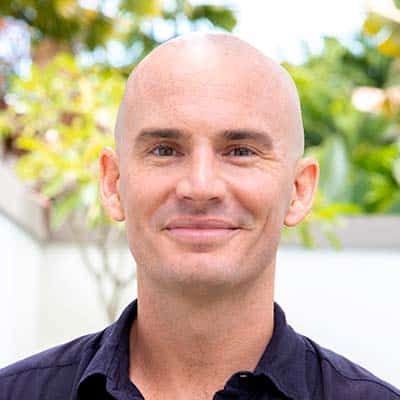
When it comes to our lives and our careers, perhaps no shift has been more dramatic or significant as our increase in time online and on our phones. The biggest driver of this is social media. Digital strategist Tony Howell pays another visit to the podcast as we talk about branding, online presence, and our use of social apps.
Sign up for the WINMI newsletter...
Tony first appeared on the podcast back in season two. Since performing together on a national tour, he has left the physical stage behind and now helps us artists on the virtual stage, which in this pandemic has grown to be even more important. What I love about Tony’s approach is that it isn’t about tricks and filters and quick fixes for our social media lives. He takes a very personal path to growing and connecting with followers, helping us become a unique presence both online and offline.Follow Tony: Website / Instagram / Twitter / YouTube
Follow WINMI: Instagram / Twitter / Website
- Donate to the podcast and gain access to the supporters-only episodes: pod.fan/winmipodcast
- Don't forget to check out all the helpful offers available to you through WINMI guests and partners: resources.winmipodcast.com
- WINMI is a Top 20 Theater Podcast thanks to you! https://blog.feedspot.com/theatre_podcasts/
Transcript
This transcript was automatically generated and might contain errors.
[0:00] Patrick Oliver Jones: When it comes to our lives and our careers, perhaps no shift has been more dramatic or significant as our increase in time online and on our smartphones. The biggest driver of this is social media. Digital strategist Tony Howell pays another visit to the podcast as we talk about branding, online presence, and our use of social apps.
[0:53] Patrick Oliver Jones: I'm your host, Patrick Oliver Jones, an actor, singer, and backstage expert. To join the WINMI community, go to whyillnevermakeit.com. There you can sign up for the monthly newsletter as well as gain access to members-only bonus episodes. That's whyillnevermakeit.com.
[1:16] Patrick Oliver Jones: The most recent statistics of the top social platforms in the world were compiled in July of 2020. And no surprise, Facebook is still on top with 2.7 billion active users, with YouTube and WhatsApp tied for second with 2 billion users each. And the one surprising number was that of Twitter, which came in a distant 17 on the list, behind the likes of Reddit, Pinterest, and several Chinese platforms. Still, at 353 million users and its constant appearance in the news, Twitter has a huge amount of influence and presence in our lives. And that influence is slowly beginning to affect our careers as well.
[2:23] Patrick Oliver Jones: For various reasons, people are being fired for what they say online. People magazine had a recent article detailing a news presenter who lost his job for hitting on a woman using the Weather Channel's Twitter account. Ugh, some people are so stupid. Another was an unfortunate incident where a woman was discharged from the Army for a blog post about her romantic involvement with another woman. So for good and bad reasons, our social media use is being used against us sometimes. But there is also a growing number of cases where social media keeps us from being hired in the first place.
[3:04] Patrick Oliver Jones: In that same People magazine article, one person said they didn't get a job because they didn't have Facebook, etc., and apparently the company wanted to see what kind of person this was, but was told, quote, "I like my privacy." So even being off of social media can cost us. But the world of entertainment is really no different, whether on camera or on stage. A social media presence is important for branding and promotion, but its influence is starting to reach into the audition room as well.
[3:39] Patrick Oliver Jones: Heidi Dean, a backstage expert and founder of Marketing for Actors, was asked if social media is actually determining who gets cast in a role. Yes, and I know firsthand, one of the first reasons I get clients from agents is because they're being passed over other people because of follower count. So, yes, a social media following can help you get cast, but at the end of the day, you still have to perform in that audition room. You still have to be good in that movie or on stage. And if you really want a long-lasting career in this business, a following is not enough.
[4:18] Patrick Oliver Jones: However, Randy Hiller, the senior vice president of feature casting for Walt Disney Studios, apparently disagrees with Heidi Dean on the value of an actor's talent. A few years ago at a South by Southwest panel, Ms. Hiller joined several other casting directors and said that actors should take comfort from the fact that there are many variables that come into play before acting talent becomes a deciding factor in whether or not an actor gets a particular part. Acting talent, she said, may only account for 7% of the reason a particular actor would be cast in the role. 7%. She cites other factors ranging from age, ethnicity, and quote, "box office value in China." Wow.
[5:07] Patrick Oliver Jones: So maybe we should start focusing on all those social platforms in China that ranked ahead about Mitch Gossett, who is a talent agent who's repped people like Miley Cyrus, Demi Lovato. He laid it out very bluntly. Quote, "the casting process has really shifted toward making those social media metrics relevant in casting." Okay. He goes on to give this example. If you have two clients up for the same part, and one has six million followers and one has 27, they're going to give it to the one with six million followers because of the direct access to promotion that will cost them nothing. That is a pretty extreme example, but yes, it shows that producers and directors are making business decisions when it comes to creative choices.
[6:04] Patrick Oliver Jones: And it's really not different than, you know, 10, 15 years ago when Broadway was just hiring TV actors all the time. You know, they have to put butts in the seats. So social media is really just the next step for that. Heidi Dean is right, and Broadway is still doing that, as those from the TV and film worlds are constantly headlining shows that would probably not make it to Broadway or even have a production to begin with without their star names attached. So what can we do? How can we compete in this increasingly competitive online space? Well, that's why I brought back Tony Howell, who first appeared on the podcast back in season two.
[6:46] Patrick Oliver Jones: And since he and I performed together on a national tour, he has left the physical stage behind and now helps us artists on the virtual stage, which in this pandemic has grown together doing Evita. And prior to that, I was working at MTI and I was commissioned to write some articles about how theaters can use social media to get younger subscribers and butts in seats. And while I went off on the road on a different show, those never got published, they kind of came back to the surface in 2013 when I was on the road with Evita. And I made that decision that I would start teaching other artists how to use social media successfully in the way that I had done, using it strategically for networking purposes.
[7:36] Patrick Oliver Jones: So I taught that seminar as we traveled. Um, and that eventually morphed into online courses. And the whole intention was to create a business so that when I got back to New York, I could work for myself, which I did. But then when I got back to New York, at that point, I think this was 2014, if my timeline is right, the market really was ready to pay for websites for me, but they weren't ready to pay for social media advice. And so I built a lot of websites. But the secret there that I would tell people now is you're not building a website, you're building your business.
[8:10] Patrick Oliver Jones: What I love about Tony's approach is that it isn't about tricks and filters and quick fixes for our social media lives. He takes a very personal path to growing and connecting with followers to becoming a unique presence offline as much as online. So the first thing is sort of the role of social media, and it's evolved from the early days of Facebook in 2004 being a social network. But I think social media morphed into people using it for marketing and becoming heavily focused on the marketing aspect.
[8:50] Tony Howell: And then recently there's a documentary I would encourage everyone to watch on Netflix called The Great Hack. And it shows how social media has evolved into advertising and it's all just data-driven. So we are the commodity. Every click, every like, every engagement is monitored, and then the data is sold so that people can target us. Political elections, not just in the US but around the world have been influenced heavily by Facebook ads. So where does the artist come in? Well, I think the artist can use the tool for good. And if there's one takeaway I can pass on, it's like get out of thinking that social media is the tool to promote yourself. Think of it as a way to connect with other people, whether that's one-to-one with like the highest players in your field, or if that is one to many and using your voice in new ways.
[9:40] Tony Howell: I have a director in LA, and because he wants to move to New York and direct on Broadway, I said, well, Broadway's closed. So at this point, how can you use social media as Broadway? Like, how can you tell stories on this platform while we're in this pandemic? And back to your original question about being an activist. Um, I think that artists are here for a reason. I was on a panel at SAG-AFTRA, and this question was asked, and there was a social media agent on the panel, and she answered differently, and I disagreed, but she answered of like, keep your social media clean, but look at the world we're in right now. And I think artists are going to play a crucial role in that.
[10:18] Tony Howell: And so if you are vocal about things, and maybe that means that you'll lose a Disney contract or a Nickelodeon contract. But I actually don't know that that's going to be true in 2020, 2021 and beyond. Um, I think that our world is different and that we all need to speak out and create the world that reflects the world that we're living in. To say that we need to still be politically active can mean different things to different people. And the message that they want to get out there will be different as well. So what might not be controversial in one circle might be controversial in a separate circle.
[10:56] Tony Howell: And so, do we need to temper what we need to say by basing it on what we think our audience will respond to? So the way that I look at social, and a common question that comes up is like, what should I do? I need to be professional? Is this too personal? Is this too private? And that's all gonna be a subjective line. Same thing with politics or religion. But the thing that I would say to the listener is like, would you be okay if the New York Times quoted you? Because I'm researching for my next podcast guest right now, and their social media is reported on in the news. Like their tweets, their Instagrams are embedded in articles.
[11:40] Tony Howell: And then in terms of tempering it, if you have a platform, if you have people that are following you, I think you can be effective in sharing your point of view and convincing others. However, I don't believe that getting into debates, having keyboard warriors is an effective way to make change. And so I just want to caution people from thinking this is the only way to make change. And one practical way, because I'm really trying to do what I can to create the world that I want to live in, one thing that the algorithms kind of show you who you interact with, right? So I took the opportunity while watching the RNC to add all of my family to a special list on Facebook.
[12:23] Tony Howell: And so now, when interacting with their normal day-to-day content, ideally we can show up in each other's lives a little bit more digitally. With that said, Patrick, you know, anytime you disagree with someone or anytime you don't know someone, you know, you have a relationship takes work and take time. So what I'm trying to do is plant the seeds digitally so that the moment that so that it doesn't feel odd that we can have a political conversation by phone, some of my family members. So that's one thing that I hope might be helpful to someone else listening is like, I don't know, you know, sharing all one view, one partisan view on social is going to affect people that are not in your bubble, but you do have to consciously reach out across the aisle.
[13:08] Tony Howell: And if you want the networks to work in your favor, go engage with people who don't believe what you believe. Yeah, which is absolutely something that I carry with me in my own life. You know, I have views that this side will disagree with, and then other views that the other side will disagree with. So I very much find myself in the middle. And I know for myself, I tread lightly and may put an opinion out there, but for the most part, I try to keep it clean and keep it professional, as that social media person said in the meeting that you were at. I like what you say about it being a way to start a conversation in this digital world, this digital platform, but then so that it's not so weird or awkward or some abrupt transition, should you ever meet face to face or have a more personal conversation with someone so that you've already laid the groundwork for what can hopefully be a productive conversation in a personal way.
[14:08] Tony Howell: Yeah, you have to establish a connection in order and safety so that you can really have a civil conversation with someone that they're open to engaging in that way.
[14:20] Tony Howell: And this personal way of using social media platforms can launch us into a more professional image and a way of using it to talk about, "I'm doing this project. Come join me, support me in this project." And has that strategy changed in order to promote ourselves online now that really online is the only way to go?
[14:42] Tony Howell: I don't know that, well, the strategy has changed. Um, and I guess what I want to say to that is let's not even look at the acting industry. Let's look at retail. So back in pre-internet days, you have to go to the mall in order to buy new shoes, new pairs of jeans, whatever it might be. And now you can check out on Instagram directly through Instagram's checkout without ever having to go to that retailer's website.
[15:07] Tony Howell: So the difference there, Patrick, is inbound versus outbound, literally having to go in and drive to the mall versus kind of bringing the jeans to your doorstep. So one of the things that I'm seeing in our industry is that there's a lot of pushing. There's a lot of people pushing and pushing and pushing out their message. And what I would campaign for is the pull and to stand in the singular factor that only you have and knowing that the right people will find you and say yes, which is easy for me to say as an entrepreneur when there's not 12, you know, versions of me in New York City. But I hope that that gives a little bit of resonance to someone.
[15:48] Tony Howell: Um, and it even goes into photography. So let me give another example with headshots. A lot of times actors come to me and they want to talk about type. And I take them to Apple.com and I show them a picture of the iPhone that is just the product on a black or a white background. And I say, that allows me to imagine taking the iPhone to Bali, taking the iPhone to New York City, to Montana. I could take her anywhere. And so when creating photos, I and even Google Merrill Street Headshots, it creates a pull or it allows the viewer to like project onto you. And that is one of the things that I think makes my work different.
[16:29] Tony Howell: I want to get to know you on a spiritual level. I want to talk about why you're on this planet, what you're here to do. And I think in terms of your messaging on social media, it's going to be a mix. And I don't think you need to divide personal and professional. They're actually one and the same. And we could get platform specific, such as the difference between a Facebook page with likes and a personal profile. But to be honest, there should be crossover because your friends and family want to know about your professional updates and your fans want to know about your personal life. So there is, there's got to just be a nice blend there.
[17:04] Tony Howell: And so one little mantra that I have is personal is professional, professional is personal. Nothing online is private. So just don't put anything out there that you wouldn't want printed on the New York Times homepage, and you should be good to go.
[17:23] Tony Howell: According to a new survey from The Manifest, which is a business news and how-to website, about 90% of employers look at potential employees' social media profiles. And 79% of those employers have rejected a candidate based on what they found. So what we say online really matters, whether in the corporate environment or in the acting world.
[17:50] Tony Howell: Here's casting director Benton Whitley talking about online presence. Social media is so important. I'm all over social media. I mean, I follow me on social media. I use it professionally and socially. And I think it is so important to ride a line of either keeping two very separate worlds, having a social world that's personal and private, and having a professional world. But I think what is important as an actor today is that you need to have an online presence because there are people out there that are so good at it and that are winning at having a social media presence, and it makes them appear bigger and more involved than they actually are from the get-go.
[18:34] Tony Howell: They create something out of nothing instantly, they make us pay attention, they do it in a great professional way. So, how do we find that balance of both? I teach some of this in my annual class called Smartest, because it's actually two-sided, Patrick, and it's going to be individual. So let's just look at a pizza shop as an example. There's going to be what the kind of pizza that the owner wants to serve, but then he's going to have customers that may be requesting certain ingredients or whatnot. So it is a two-sided conversation where you, the creator or the artist, have something that you want to share, and then there's going to be your audience and what they respond to.
[19:33] Tony Howell: So the real answer, I think, is to examine both sides. You do that through looking at your analytics of what has done well. And is that in alignment with what you want to put out there? How are other people seeing you in the way that you wish to be perceived? So you can acquire that information through surveys. You can look at your analytics. And if I'm gonna like simplify that, I like to tell this metaphor to my artist. Imagine that your followers are sitting in the red seats, whether it's the movie theater or the theatrical opera concert hall, but you have people that are out there sitting in red seats. So I'm gonna ask you to kind of like survey the room and say what's the general age, what's the overall gender identity, and really create like what's called an avatar or like, you know, you know exactly who is in the room.
[20:22] Tony Howell: And there may be different types of people. So you could have a younger audience and older audience, but you get a lot of that through analytics. But the metaphor is who's sitting in your audience right now. And then you have to look at as if it's an out-of-town tryout or a movie, like the first screening, what are they really responding to? When does the crowd go wild? Or when do you have them? You can hear a pin drop. That is helpful for you as an artist to look at your social media to know how to share your news and updates.
[20:51] Tony Howell: A couple of practical tips, just because I'm all about it. Um, photos of you, go look at your top post. Pictures of you are probably they've probably performed much higher. And a lot of times artists are scared of coming across too self-promotional. They don't want to like, it's not the me, me show, but actually, it's not, it doesn't have to be the me, me show just because it's a photo of you. You can still be of service. But the reason why these pictures of you are going to do better is because we don't get to see you every day, especially in a pandemic. So to share a selfie or to share a throwback photo or whatever it might be is actually of service to your audience, or it can be, because you they get to respond to your face, just like any celebrity popping up, you know, in your world, they your audience goes, it's Patrick.
[21:39] Tony Howell: Um, and then on another technical level, all of the algorithms, whether it's Google, whether it's YouTube, whether it's Instagram, Facebook, they are measuring engagement, not necessarily just reach. So it doesn't matter how many people are in your theater, how big your theater is. It's like how effective are you as a content creator, as a storyteller, as an artist. And so what they measure is dwell time or how long people spend on your work. And so one practical way that you can increase that on Instagram is the carousel. It does really, really well. Um, so uploading a couple of slides and a swipable post, it just increases the amount of time that people spend on your post and then add an engaging caption below that and it and it'll perform better.
[22:25] Patrick Oliver Jones: I like that. I like that.
[22:26] Patrick Oliver Jones: Yeah, I love practical stuff like that because I'll be honest. Like when it comes to Instagram, which is my preferred platform, I love just like I took a crazy picture or I'm in this show, or it's just kind of a spur of the moment kind of thing, and then I share it. But it sounds like that you want us as artists to be more deliberate in the kind of things that we share as well as how we share them.
[22:51] Tony Howell: I think so, Patrick. I mean, it's I I'll go back to Simon Sinek's language, and like we're gonna start with the why, the purpose, the calling, the reason, why you do what you do, and then we go into the how and the what. And so I actually on a computer when I meet with clients, I will zoom out on so that we can see maybe like 24 squares on the screen. And I say, Imagine this is an art gallery, or imagine this is a quilt. And what story is it telling? So that is where you need to make sure that you're consciously mixing things that are of value to you. Um, so that if you are a parent, you include, you know, that into your quilt or your art gallery. Um, if you have a particular hobby you want your audience to know about, but it's not all just, you know, one note, one color.
[23:39] Patrick Oliver Jones: So basically what you're saying is we need to, you know, if we're in a show, rather than having seven picks of all about that show, we need to mix it in with, oh, I did this last year. Oh, look what I went out to eat and had this. It needs to kind of blend different things that are important to us rather than it just being one thematic message for however many posts.
[24:01] Tony Howell: Um am I understanding?
[24:03] Tony Howell: Yeah, and and yeah, you mix mix it in. So I'll give you two examples. Let's just imagine you and I are still on the road together. So instead of seven pictures, production photos of a Vita in a row, we want to be creative with the creative, like the literal art that's there. So maybe we would show a picture, you would show a picture of you doing the whitewater rafting and say, like, I had this awesome adventure. Then there could be a throwback photo from another role to remind people that you're still available to submit self tapes. Then maybe like a childhood photo or a photo with your family. But even uh another example is I worked for a bar for a little bit, and rather than like the same graphic design ad for this party on Friday, I was like, show a photo of a bartender, like and then put the caption below about the party that's happening on Friday. But to share the same thing over and over and over again is not necessarily effective.
[24:57] Tony Howell: And I want to address Instagram in particular because it's the new Pinterest. Like Pinterest was the first world that was like my picture perfect, happy life. And Instagram has become that, unfortunately, just like as a general culture on that platform. So your grid is actually like a magazine or an art gallery or, you know, this quilt. You want to be conscious of what you publish. You can archive things, you can curate that, you can really design it the way that you want, but you also want to use your black box theater called stories to test some material to see what is getting engagement. And then you, of course, you have other tools like IGTV and IG Reels, and you can really, really get creative.
[25:39] Tony Howell: But uh in a way, Patrick, what I would say is like we are all now publishers, we are all putting out our own magazine or the Oprah Winfrey Network, like, you know, we're all creating stuff, and you don't have to put out your own podcast, for example, if you don't want to, if that's not what you want to do. But it is we are competing against CNN, and you know, everyone's fighting for attention, and so I think it is like learning to play the rules a little bit with some of the big brands and traditional media.
[26:11] Patrick Oliver Jones: Yeah, and this is something that in listening to and speaking with other podcasters, that a lot of times there is that. Well, I can't compete with Joe Rogan or Conan O'Brien or you know, these big names that have a podcast. So, how can I compete? And and again and again, the advice is to well then drill down into what it is that you do best. Find that niche and just explore it and mine it for all it's worth. And that's how you're going to find this community. You if you try to cast a wide net to millions of people, you're going to be hitting a brick wall. But if you find what it is that is special that is unique about your point of view or your specialty, then you're going to find an audience that craves what you put out.
[27:00] Tony Howell: And the one thing, too, that I'll just share. I don't know if you feel this way as a podcaster, but especially in this medium, the response isn't as instant. You don't get the gratification of the likes and the comments as soon as you put out something. It feels like an audition that you kind of have to walk away from. And even on social back, maybe someone listening is not a podcaster. We want to take away the emphasis on the instant metrics because you really do, you never know the impact that that singular post had on someone or that story. But I think it's important to consciously say, no, I need to make this statement today. I'm going to put this out there. And regardless of the response.
[27:53] Tony Howell: And that is how we go about complaining and airing our grievances.
[27:57] Patrick Oliver Jones: Here's Benton Whitley again.
[27:59] Benton Whitley: I'm friends with so many actors on social media, and so many actors are friends with me on social media. And it's amazing watching and reading the rants that I see people in this industry do about the industry, the actual internal self-hate that we have about our business. And I just want to remind you that you're friending and you're friending people that run this business. I mean, you know, my employers follow me on social media. And I have to, you know, I am constantly thinking about that. And it's amazing just reading the rants, you know, that I specifically see, you know, actors do all the time about how unhappy they are about either themselves in this business or how unhappy they are about other people in this business.
And it's not an attractive thing. So there is that line we can cross where our personal opinions can get in the way of making a personal connection. But professionally, we can make that same mistake and turn off those people who could be casting us by not keeping our materials up to date and not accurately representing our current type and who we are today. You need to actually actively be having a professional presence on social media. So that means having a YouTube channel with actual videos that represent you and what your skill set is right now, not what your skill set was five years ago or 10 years ago. That's something that you know it's really interesting. I've now been in the city for about 10 years, and there are some videos out there of actors that I was watching 10 years ago that still are the videos that come up when I Google them today.
And that's not helpful because I promise you, in the past 10 years, that actor has changed types. And so you've got to go through every year or two and kind of look at reassess, you know, how you're being actually, you know, displayed online, and is it actually a valid and helpful and good representation of you? And if not, then you need to get rid of stuff.
[30:01] Tony Howell: It sounds like that this isn't something to just post it. There needs to be more deliberate thought and strategy, strategy, digital strategist. That's what you are. It's all about a strategy. And how best do we take those first steps?
[30:19] Benton Whitley: It is gonna start with who you are. And beyond that, of like, well, I'm a white man in New York City at the age of 35. You want to like, why are you alive on this planet? And I will tell you, Patrick, in terms of practical advice, there are three major themes that go viral on the internet: information, inspiration, entertainment. So you can mix those, like this podcast where we have inspiration, information, and entertainment in one, or pick one color, but those would be like your primary colors and paint with those. What I will also share that I think is happening in 2020, are this is what's trending right now. Is it simple? Can I understand this as I'm swiping through with six seconds or less like per post?
Everyone is like being inundated, especially in the pandemic. Suddenly everyone was like overdoing it and performative on social media. But can I understand exactly what's happening as I scroll or swipe through? Simple, simple, simple. Is it real? We're tired of the fake projections, performative, retouched, glossy versions of people. We want people to be real, humans that we identify and relate with. So keep it real. And then finally, is it meaningful? Is it meaningful to you? Or is it going to be meaningful to your audience? And if it's not, then why does it need to interrupt someone's day? So I would say, like those are some practical tips, and you could apply that per platform.
[31:57] Patrick Oliver Jones: Yeah. And this is a personal question. Like I know myself as an actor. I know myself as a podcaster. I'm a husband. You know, there are these different parts of myself that I can certainly give definition to and explain what that is. But when I step back and I look at myself as a whole, there are some times when I can't answer the question of, well, wait, who am I exactly? What am I doing? And is there a way to kind of dig into that purposeful question?
[32:28] Tony Howell: Yeah. I mean, I don't know if I'm gonna be able to help you tap into that in the next five minutes, but I need you to fix me.
[32:28] Patrick Oliver Jones: Fix me.
[32:36] Tony Howell: There's a couple of tools that I would use. The first is asking what you do and hearing you label the nouns that you said actor, podcaster, husband. And then I'm gonna ask you how are you a different husband than every other husband? How are you a different actor? How are you a different podcaster? And that goes back to like that sort of special thing that you were talking about earlier. And then the why is what I think really can unlock things. So the first question I'll ask you, Patrick is why did you start this podcast?
[33:09] Patrick Oliver Jones: Well, for me, it was just on a lark with a friend. And it seemed like a very fun and lighthearted way to tell some stories.
[33:20] Tony Howell: Okay. And why do you keep doing it?
[33:23] Patrick Oliver Jones: Why do I keep doing it? Is because I because at first the podcast just seemed like a hobby. It's just kind of this throwaway thing that he and I, my co-host, were working on but then I wanted to really dig deeper into it and so once it became my own podcast then I wanted to make it into something that could really make a difference rather than just, you know, tell a fun story I want it to be like making a difference. Why did you start acting?
[33:29] Patrick Oliver Jones: Well, I love to sing and so the best place to do that was on stage. So that's why I wanted to do that from a young age. And why do you still keep acting?
[33:29] Patrick Oliver Jones: It's what I know. It's what I do. It's what I'm comfortable doing and I've established this career over 25 plus years and so now it's in some ways it's the habit. It's like what else am I going to call myself? This is what I do. Is there a deeper purpose below that?
[33:29] Patrick Oliver Jones: I would say that if I had to give some meaning behind why I act it is that there is the me reason and that I want to do something that inhabits a character that gets into a role that tells a particular story that I feel like I have been somewhere I've gone somewhere outside of myself and experienced something that is so novel to me. And so that would be the me reason. But then in the broader reason when it comes to the audience, it is to show them something that they've never seen before. So I guess the answers are similar. It's showing both myself as well as an audience an experience that neither of us have done before.
[35:22] Tony Howell: So I will reflect back. There were some verbs in there. And then what I would say, just like our freshman acting class where we learn to poke, to prod, to pull, like these different verbs, even in dance, these are the lobin movements. Here's how you can use social media to fulfill your purpose. First, you're going to dig. How can you dig with social media? Then you're going to make. How can you make things to make a difference? To sing via these platforms, to inhabit to have to experience yourself and then to create an experience for others, to show, to reveal. But ultimately, all of it is in service to tell stories. But beyond that, Patrick, that's like one little thing. But I took some classes and both in Bali in person and then on the internet.
And I think that it might be might be a nice thing to do to like revisit your childhood. And so you can do it as a timeline of highs and lows. And I like to look at like, what did you learn from that peak? What did you learn from that valley? Then I also like revisiting your childhood and saying, what were your hobbies? For me, it was like puzzles and like why what is it about puzzles and it's problem solving. And that's I'm like, oh, well, that makes perfect sense with why I do what I do today. If I may cap that with like a little mantra that I have, which I think is helpful for branding, but also if you're creating a character or directing a revival or writing a screenplay, and it's this honor the past.
We don't have to bring everything with us to prove that we've done our work, that we're worthy. We just need to give it a nod and honor the past or the expectation. Then present the present. Present the gift right now, today. And it doesn't matter if you've had a career or not had a career, you're here to present the present. And I like the word present because there is theatricality required, no matter what it is that you are trying to promote. So whether it's Macy's and the holiday windows or Fifth Avenue and the holiday windows, that's presenting the present. But for us as artists, we have to present the present in the room, but also on the internet. And so, how can you present the present?
And in doing so, the last is design the future. And what I will say is like, you know, how you wrap that gift, you know, is going to influence how people say yes and take you into the future. Traditionally, I would use the word your honor your past, present your present, design your future. But as I was thinking about this interview before we got online, I was like, you know what? I want to make it applicable. That formula does, you can apply it to something you're writing or directing or whatever it might be. But lately, it goes back to asking you about the deeper purpose for acting. And Ava Duvernay at South by Southwest said this: if your dream only includes you, it's not big enough. And so lately I've been really saying, we're not designing your future.
We're designing our future. I think you have tremendous power at your fingertips. So social media democratized power so far. I mean, until things change. So it is a world of equal opportunity, and but they are power tools, they're dangerous, they can do a lot of damage. And so it's just using them as a change maker for good. You've asked this why question, and it's something that we need to kind of bring back onto ourselves about why we're doing this or why we're heading in this direction or why we want to tell this story. And so I wanted to pose the question back to you as a digital strategist. Why is this type of work? Why is this type of I'm considering what I'm posting? I'm considering how I'm presenting it, I'm considering the balance of personal and professional, all these things that we need to consider. Why is it important that we do this? Why do we need to think so much about how we present ourselves socially?
[39:38] Tony Howell: Well, let's just be honest and truthful and say if you were a victim to a crime or to a disease, or whatever it might be, what you just shared on social media might be the last words that you left on this planet. So every single day you're creating a digital legacy. And I think that's just where this idea of consciousness of like how you're representing yourself online that is accessible long after you're gone, is something to keep in mind. It's a scrapbook of our day-to-day life, of our day-to-day interactions and the things that we find important. And Facebook literally calls it a timeline. Like that was one of the big changes that they made in 2010 or so. And it used to be you could actually go through someone's timeline and be like, oh wow, in 1990, Patrick was here.
[40:34] Patrick Oliver Jones: Yeah.
[40:35] Tony Howell: And it's called a feed. It is literally what are we feeding others? What food are we giving them of ourselves for them to enjoy, digest, understand? And sometimes people need vegetables.
[40:50] Patrick Oliver Jones: That's right.
[40:50] Tony Howell: It can all be ice cream, which is wonderful, and pizza, which is good. But yeah, sometimes we gotta throw some Brussels sprouts in there. Healthy diet.
[40:59] Patrick Oliver Jones: Right, right, exactly.
[41:04] Tony Howell: And that healthy diet need not just be online, but also offline in our personal lives. Having a rich diet of experiences and cultures is just as important. Now you have been on quite a journey since you were last on the podcast. You actually were living out of the country, you were in Bali for a while. And what was it that led you to want to kind of get away from the US and explore and travel the world?
[41:38] Tony Howell: I don't know if I need to explain why. I wanted to get away from the US at this moment in time. Um, but yeah, I had I had done a little bit of traveling just as like a personal tool that someone can check out. There was a website called Love Home Swap that allowed me to change my studio in Harlem and swap houses with people. So I had traveled to New Zealand, to Paris, to Barcelona, and fast forward, and I had put my things in storage to go be with family. My stepfather was ill, and I wanted to help my mom through that transition. And after doing that, I was free to travel. So I went over with another website called NomadList.com, which allows you to rank cities around the world based on various elements that might be important to you, such as is it good for families or is it good for LGBT folks?
And Thailand and Bali were very high on the list. So I left my dog with my mom and I went overseas and I gave Thailand three weeks of travel and I gave Bali three weeks of travel and Bali one. And I just spent a year over there. I have a blip in my story uh involving deportation. So I had a large villa there, which was delightful, you know, for less than I paid for a shoebox in New York. I had a two-bedroom, you know, ocean view, rice field in the backyard, and I paid a thousand a month. I'll just say that. And I was using Airbnb to sublet my extra room, thinking it was okay, but I got in some trouble because my visa uh for immigration does not allow that. So I was actually deported after doing a little bit of a battle that honestly, Patrick, it felt like entrapment and extortion.
And it looks like that from all angles. But my attempt is to return to Bali because it is a wonderful, wonderful place. And my dog is there and I love it there. And so I'm currently in New York, but hoping to return to Bali. And if not, the game plan is ideally to get to Thailand and get Max over to Thailand as well.
[43:41] Patrick Oliver Jones: What a journey. Ivy, you go away to find, you know, some peace, a different environment, and it ends up. It's 2020. I'm telling you. It does not escape anyone around the world. It is a horrific year. And uh I feel very blessed, you know, for like the little inconvenience that I have. Bali has been called the land of the gods, and tourism makes up a huge chunk of the island's economy. And what do people most want to see? Well, those beautiful beaches and sacred temples top most lists as people enjoy both the physical and spiritual refreshment. Tony found his own personal oasis there, and it even went on to influence the work and structure of his own business.
[44:32] Tony Howell: So after working with hundreds of artists and businesses as well, you know, I've now call myself a business coach and a digital designer or a digital strategist. And this is sort of the method that I've developed, which is color-coded and it's connected to your chakras. So take a moment and just be a little woo-woo here with me. But if you know the chakras, your third eye and your crown chakra are purple. And in my method, purple means business. But if you think about why anyone would go into the business or any business, it's because of a sense of purpose. And so to me, purple, your crown chakra, your third eye is about that higher calling, that intention, that reason, that mission. And then we move down into your throat chakra, which is blue.
And that is the world of branding. And that is sharing your humanity. And so for personal brands listening, that's how you share who you are, not what you do, but who you are with the world. But then for larger brands like Delta or Starbucks, it's how they connect with the humanity of their user. So how they make you feel special, how they make you feel seen and heard. Then we move down into the heart chakra, which is green. And that is your website. And like a heart, I think it's your home. It's where you welcome people. You create the guest experience, or in tech language, the user experience. We want to delight people when they visit your world, just like Disney World. If we go down further, we get into your solar plexus, which is yellow or orange is yellow.
And that's for me the world of email, which I connotate as physical mail. It might be electronic mail, but you might as well think about writing a letter to someone. And if you want to take that even further, um, we could go back to Morse code and telegrams. And that's to me what text messaging is in 2020, is like the new version of Morse code or a telegram. So in your solar plexus, it's how you communicate, put your words together and share them with someone else. And at the very base, we get to where we started this, which is the root chakra in red. And that is to me what social media is. The modern equivalent uh of social media is actually just the rebirth of the telephone. So in the same way that sometimes uh let's take it back to the 90s or even the invention of the telephone, you would get so excited for that phone to ring, and then you could be like, you know, supremely emotionally rewarded or disappointed with whatever, whoever was on the other line.
And I think a lot of people expect social media to be their savior to make them rich and famous because suddenly they can talk to anyone and everyone. But if you equate it to the telephone, you know, it's just a tool. And so to me, that's why it's at the end. Um, it's the cherry on the Sunday. You have to do the deeper work of like, why am I on this planet? What am I here to do? And so when it comes to the work that you do with others, obviously, you then have a central message that you're trying to get out. What is that that central core message that you're trying to do with each of these different courses that you present?
[47:41] Tony Howell: This isn't as articulate as I'd like it to be yet, Patrick. But my real central core message is I just believe in the power of one. And that is baked into all the courses of empowering someone to be a healthy CEO, to step it up and to fulfill their purpose on the planet and make the change that they were intended to make on this earth, whether that's with changing one person's life or as an artist trying to reach thousands or millions. Um, but that's really what I want to do is to help the artist to become a healthy CEO.
[48:18] Patrick Oliver Jones: And do you have an example of someone utilizing uh the courses that you've done and embodying that power of one idea?
[48:26] Tony Howell: One story that I well, I'll tell you two. One is Mindy DeLacy, who's an actor in Los Angeles, and for 25 years, she left the industry and she worked on Rodeo Drive in fashion. So she served all the celebrities, created a network, and like had people on speed dial, but wasn't doing what she was called to do on the planet. So and it might be called a shadow artist in Julia Cameron's language. Um, but Mindy later on decided, I'm gonna do this. And we worked together in I think 2015, built her website shortly thereafter. On Twitter. She got a DM from a director offering her a feature film role because he had gone to her website and seen her work and loved it. So she's now in the sequel to the human centipede called the Oniana Club.
Um idea they were making a sequel. Wow. Yes. But she's also been on feud and other TV shows. And so she's an example of someone that I love that is using the tools. Uh another example is an artist uh who we're very close with. He's in all the courses and just a very active community member. His name is Tony Lepresti. And early in his career, he was a silent actor, sometimes known as a mime to people, something that, you know, how many mimes do you know? Uh, but he was a part of, I don't know the names, but he was a part of a real serious troupe. But then he had kids. And so he worked for the NYPD for 25 years telling stories in their video department. He became their head video person. And now, Patrick, it's it's quite beautiful and lovely.
He's finding his voice in podcasting and writing. And as I talk to Tony, I'm like, Tony, well, just look at the trajectory. Like, first you learn to use movement, then you learn to use media. And now you're combining words and you have all these different channels of ways to move people. Um, and I love the work that he's doing. And he is a man of I don't even know his age, but uh, you know, he's not letting his age be an excuse, which is something that I hear from a lot of people. Uh, he is doing the work and rolling up his sleeves and and creating incredible results, like going to Italy and and performing and teaching and getting interviews and things. So he's really leveraging the tools.
[49:22] Patrick Oliver Jones: I love that. I love that. So, what is the best way for people to find you, get in touch with you, and learn more about what you offer?
[50:51] Tony Howell: Google. Google me. Google, go ahead. I mean, like, to be honest, that's the way I like to answer that question because that's that is the way that people are going to find you. And I would flip that back on the listener and say Google yourself. But quite literally, my website address is TonyHowell.me, because, like you, maybe the dot com is a hard thing to come by. Uh, but you can find me on social at Tony Howell, and that's pretty much it.
[51:16] Patrick Oliver Jones: Well, thank you so much, Tony, for giving us insight and even, you know, giving me a little something to think about myself.
[51:22] Tony Howell: Yes, go ruminate on those verbs, Patrick, and think about your childhood. And I can't wait to see what you post on social media today.
[51:29] Patrick Oliver Jones: That's going that's right. It's going to be a lot more Brussels sprouts.
[51:33] Tony Howell: Literally. He's like, I have a passion for baking. Here are the Brussels sprouts.
[51:39] Patrick Oliver Jones: Oh. Thank you for having me. It's been a pleasure.
[51:45] Patrick Oliver Jones: Well, how do you feel about adding another layer to this business of auditions and training and networking? A purposeful positioning of ourselves online as real people with distinct personalities, as well as fabulous talent. For some, this digital presence is easy and their content is constant. But others of us, it can be daunting to juggle these virtual social skills with a pandemic and politics and our personal lives. But I hope today's conversation has shown you that it comes down to a very basic core message, and that is letting the world see the real you in a very real and honest way. Tony has helped me see that I need more vegetables in my online diet. What has he shown you? I would love to hear about your own digital journey by reaching out to me at winmepodcast.com. But what I'd really love is for you to share this episode with someone who you think could also benefit from our conversation today. And if you'd like a deeper dive into what we've talked about today, then check out Tony's classes, which are constantly being updated and improved.
[53:05] Tony Howell: All my classes are annually recurring. So if someone joins in 2020, I like to say it's like the Rockefeller tree, like there'll be a better version the next year. So I always like optimize it.
[53:16] Patrick Oliver Jones: Thank you so much, Tony, for coming back to the podcast and to you for continually listening and reaching out to me on social media. Recently, Speak LA Podcast loved and commented on the Spanish episode during Hispanic Heritage Month. Brittany on Instagram commented on my posting about theater and pandemics by saying, wow, that's insane. And last week I appeared on podcast pontifications as a guest host. The creator and producer of that show, Evo Terra, tweeted, Very happy you elected to participate and great advice shared. Well, thank you so much, Ivo. As Tony said, social media is a tool to connect and to network. And it's up to us how we use it. Well, I'm your host, Patrick Oliver Jones, in charge of recording, editing, and producing this podcast.
Dylan Adams is the booking producer. I'm actually on the hunt for a production assistant, so reach out to me if you or someone you know would be interested. Music in this episode provided by Blue Dot Sessions, Kai Engel, and Vortex. Join me next week with actress and team USA athlete Kristen Hetzel as we talk more about why I'll never make it.
[55:01] Tony Howell: A reactive manual approach.
[55:02] Tony Howell: CFOs and controllers, you deserve better.
[55:05] Tony Howell: You deserve a unified spend platform from Brex.
[55:08] Tony Howell: Brex makes it easy to proactively control spend with cards, spend management, travel, and bill pay in one place.
[55:15] Tony Howell: You can create budgets with controls built in, track and adjust in real time to keep teams accountable, and automate compliance to close the books faster.
[55:22] Tony Howell: Ready to control your spend with one unified platform?
[55:25] Tony Howell: Visit Brex.com.
© Broadway Podcast Network, All Rights Reserved