

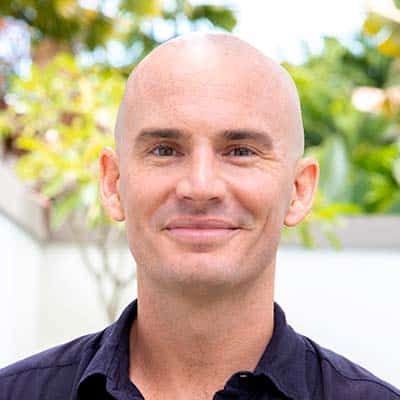
Tony Howell is a digital strategist for Emmy, Grammy, Tony, Oscar, and Olivier award-winning artists. His work has been featured by Google, Squarespace, SAG-AFTRA, Actors' Equity Association, and more... Read More
From the show: Why I‘ll Never Make It
Guests
Featured Shows
About
Tony Howell is a digital strategist for Emmy, Grammy, Tony, Oscar, and Olivier award-winning artists. His work has been featured by Google, Squarespace, SAG-AFTRA, Actors' Equity Association, and more. On today's episode, he shares his insights of how to match our online presence with our in-person persona.
Before becoming an entrepreneur, he was an actor for 20+ years-performing on Broadway, Off-Broadway, National Tours, and more. In addition to weekly free content and scholarships to his quarterly programs, Tony donates a percentage of profits to Broadway Cares/Equity Fights AIDS and 100% of all the profits from his book, Artists to Artist to the ACLU.
He gives Patrick a digital branding session and talks about what to work on when creating a social media strategy. That session begins at 26:44, almost midway through the episode.
Learn more at TonyHowell.me.
Follow him on Instagram and Twitter.
Transcript
This transcript was automatically generated and might contain errors.
[0:23] Patrick Oliver Jones: Welcome to Why I'll Never Make It, a lighthearted podcast that takes a revealing look at a career in the entertainment industry, featuring stories and interviews with those on stage and backstage, on screen and behind the scenes.
[0:38] Patrick Oliver Jones: I'm Patrick Oliver Jones, and this is Why I'll Never Make It.
[0:50] Patrick Oliver Jones: Welcome everyone to the show. I'm Patrick Oliver Jones. It is cold out there. I don't know if wherever you are, but here in New York City, it is cold. So that I hope you are staying warm as I am. I'm in my apartment, and I am joined by a special guest today, Tony Howell. He and I know each other from a national tour of Evita, which he and I did back in, I think that was 2013. Yeah, that was 2013-2014 was that national tour. And he and I were both in the ensemble. We were actors, singers, dancers, and that was really the last time that I ever did so much dancing and so much moving in any one show. But Tony and I, we made it through that national tour. And right after that national tour, he started a company.
He'd kind of been doing it a little bit even while we were on tour. But he started his own company, Tony Howell and Company. And basically what they do is they do digital strategies for artists. Now that's kind of a mouthful, and that's why I'm bringing him on so he can explain exactly what that means. But they do a lot of branding and basically trying to get your offline personality to match up with your online persona. So that's a basic gist of what they do. But believe me, Tony is going to explain it much better than I can.
[2:22] Tony Howell: Hello, everyone. Thank you. Thank you for having me.
[2:27] Patrick Oliver Jones: Oh absolutely. I am so happy that you are on the show. I'm thrilled to be here. It's good to reconnect. Thanks for having me.
[2:35] Patrick Oliver Jones: Yeah, yeah, but because I mean, I think the last time we physically saw each other, and even now we're see, see everyone, we're doing this online. So I'm looking at him on a screen, and vice versa. So even now it's not really in person, but we haven't seen each other really talked in I would say at least two or three years. And that time has flown by. I don't know where it went. But you have definitely been keeping yourself busy, you know, with this business, right?
[3:01] Tony Howell: It's just kind of been taking off.
[3:06] Patrick Oliver Jones: Well, why don't we just dive right into it? So, as you're kind of a branding strategist and you kind of help artists figure out themselves and what they want to be and how what they want to put out there into the world. What have you found? What have you learned making it means? What does that entail exactly?
[3:27] Tony Howell: I think in my own journey from artist entrepreneur, I had to redefine what does success look like. And I think that that's an important thing for everyone to give their own definition. And also, what does happiness mean to you? And so in my work, I think that people come to me if I'm going to generalize because they want to be rich and famous, which is the world of the internet culture. I think at the core, what we're all looking for is love and safety. And then I recently had an epiphany that if you put those two words together, it's connection. And if you look at the success of Facebook and Instagram and these things, they help us get connected. And it may not be the full connection of human-to-human relationships, but that's really what they're selling is connection.
So when you scale that idea of connection, that love and safety in one moment with someone, that's when you create community. So that's a long-winded answer. But for me, making it means being in alignment with your own definition of happiness and success. And I think that I would not take the first answer that you give to yourself. I would keep going deeper and deeper. And I think ultimately what everyone wants is to matter. And I think to do so, you have to first articulate why you're alive.
[4:41] Patrick Oliver Jones: Wow. It just got deep real quick. I'm like, we went there fast. But no, it's interesting what you said about finding love and safety. And really, that's kind of the whole audition process. We go into the audition room for the love, for the affirmation, for yes, you're being called back. Yes, we want to hire you. And then that safety of I have a job, I have a paycheck coming in. So both of those are very like basic core needs, especially for the actor. And it's something that we try to do all in 90 seconds in a room. And it's something that's not always fully in your control in the traditional commercial theater. But I do think that if you examine why people want to be rich or famous, it's that's what they're really looking for: is love and safety.
[5:27] Tony Howell: Yeah, yeah, absolutely. And is that something that you noticed in other people or you noticed in yourself that made you think, hey, I wanna start a company that revolves around this?
[5:39] Tony Howell: Well, that discovery has been many years in the making. My own evolution was Evita was my second big national tour. The first was a non-equity tour of Disney's Beauty and the Beast, but we were the first national company of this. And in both instances, in my mind, I was like, I'm supposed to be living my dream, but something feels off. And so I dug deep. I said, Well, why did I start this to begin with? Why did I become an actor? And in my method, I actually ask people to give a verb to that, much like in acting when we have a verb in acting class, I'm gonna seduce in this scene or I'm going to poke. It gives you something to do online and offline. So my verbs for why I became an actor were inspire and create.
And then I kept asking why, why do I want to inspire? Why do I want to create? And then ultimately it's to change the world, which is a large thing to say. But I think every artist would find that catalyst if they keep digging, is that that's ultimately what we're trying to do is create change. So articulating love and safety came later, after literally five years in business, an analysis of why do people hire me? And looking beyond, I say a lot of people come to me for a website, but it goes beyond that. And for me, the evolution of going from artist to freelancer or entrepreneur was looking at what made me happiest. And it really was how can I take control and how can I inspire on my own? How can I create things on my own? And how can I change the world without waiting for someone else to give me permission to do so?
[7:17] Patrick Oliver Jones: And that is so essential to us as artists because so much of it is, like I said, going in that audition room, waiting on someone else to give you that information, to give you that job. Whereas you found a way that you, like you said, you could take control of your own career and your trajectory as far as the type of life that you want to live. You could take control of that by starting your own company. Did it start out, as you said, just with websites and then it grew from there? Or did you have a, yeah, what was your vision for it as you began?
[7:50] Tony Howell: Initially, the company started as being called social media in theater. And if I rewind, before Evita, I was freelancing at Music Theater International, and I saw Newsies, and there was a bookmark in the playbill that said share your story. And it was the first time I had seen a Broadway show using social media. So I went back to my boss at MTI and I took the bookmark, and I said, we should. So I took the bookmark back to my boss at MTI and I said, we should be teaching our customers how to use social media because I had worked at a number of these theaters, and there were gray hairs in the audience of dying subscribers. So, how do we get people to not watch Netflix and go see a live show? So I said, I think we need to get younger people to go to the theater.
That's through social media. I did a lot of research on how theaters around the country and around the world were using social media in theater. And it just what happened was I booked the Beauty and the Beast Tour and I left MTI. So those blog articles never got published, and I wasn't a very good writer at that point. But the research informed their strategies, and then it also helped me have all of this knowledge of social media and theater. Fast forward, and I was making progress in my own acting career using networking. And that's really the key. If there's actionable takeaways, don't think of social media for marketing. Think of it for networking. And I was creating offline relationships with Jerry Mitchell, Jen Namoff, Duncan Stewart through social media through these tools.
And so I decided that I was going to teach it to other actors. So my initial vision was first the first layer is to teach the actor how to use this tool for themselves, then teach them how to use it for a business so that instead of waiting tables, you were like Instagramming for the restaurant. And then later, initially, I was going to create an agency that was more off-Broadway. Like I didn't want to compete with Sereno Coin and these other large Broadway agencies. But I was like, how can we run an artist-led company that will help you promote your show at 54 Below or the Green Room? That was the initial vision. But in learning about myself, I don't like managing a huge amount of people, especially people who may leave for a job or be like, well, I have a callback on Thursday. I can't do that anymore.
[10:00] Patrick Oliver Jones: Well, yeah, because yeah, we're always leaving for the next job out of town. I mean, like today, for example, I had four auditions in one day, which is it was kind of crazy. But I did four auditions, all of them, well, one was for off-Broadway and the rest were all out of town. And it's just like, yeah, because we're constantly leaving. So but I still will pass on that if you get really good at this telling stories, telling your story, shaping your brand, growing your audience, you can do the same for other people. So you can make additional freelance money doing this kind of digital marketing work for others.
[10:36] Tony Howell: And that's basically what you found for yourself was that you were able to create your own job, create your own work. In and so did you start with the goal of balancing both, or did you kind of go full tilt into this digital career?
[10:54] Tony Howell: It was definitely both at once. So when we got home from Evita, I decided to go full tilt boogie woogie, and that was kind of my goal on the road was to build my business so that when I went back to New York, I had something that would pay the rent. So I did that, and then I had a point where I was living what I thought was my dream life in New York. I paid nothing in rent. I had a fancy office, a fancy gym membership, and I was just, you know, living the dream.
[11:24] Patrick Oliver Jones: Yeah.
[11:24] Tony Howell: Fast forward, and it was becoming a lot to manage of how do I build a personal brand of Tony Howell, the actor, and build a company or a business as what was called creative social media at the time. I literally had the realization that by dividing personal and professional or personal brand and business brand, I was doubling my workload, time, money, energy. And I was also dividing my audience. People didn't know where they should connect with me or follow. So I had to have a real what I call Shavasana moment. If I hopefully I said that right.
[12:00] Patrick Oliver Jones: I don't even know what that means. What does that mean?
[12:01] Tony Howell: Savasana, that's what I'm saying. Savasana at the end of yoga.
[12:04] Patrick Oliver Jones: Oh, that's where I always force myself to lay there and listen to the truth.
[12:10] Tony Howell: And the real truth was that I am okay, you know, combining them. I'm willing to take the risk of making a name for myself as Tony Howell, digital strategist or brand strategist. People I like, I still don't even really know what to call myself some days, but I'm okay creating a business persona and not needing to fit in the box of like an actor. And that may be useful for someone else to go like ultimately we're all personal brands. So it's about taking stock of what kind of reputation you're building.
[12:42] Patrick Oliver Jones: Yeah. Which is very interesting because next week, actually, Ryan Baylor, who was on the Evita tour with us, he did the same thing. He started a tech company. He talks about how it's tough to make that balance of having an acting career going down one path, having this tech company going down another path. And so you found a way to basically merge the two.
[13:06] Tony Howell: Yeah, I had a real moment where I was writing for Backstage and someone asked me, can I start a side business? And the answer is absolutely yes. But the real truth is that starting a business is a lot of work. And so I decided do I continue to have two brands or do I merge them? And I really had a moment where it was after 30 years of seeking Broadway, Broadway, Broadway, was I really ready to let go of that dream and pursue other opportunities. My slick marketing way of saying it is that I didn't give up, I gave in to a larger calling.
[13:40] Tony Howell: That the internet is now my stage and that, you know, like Broadway is eight times a week for a limited amount of people, but the internet is forever for like billions of people, you know, and I'm throwing it out there because it's true, but I will also say that through, you know, years of therapy, I'm able to clarify what Broadway represents to me, and also find ways that I'm seeking to create recognition in other ways.
[14:07] Tony Howell: Like for me, going back to what I said, recognition is a driving source for whatever reason, and it probably rewinds back to looking for love and safety. So to me, that's a fancy way of saying fame. I'm looking for recognition. But that's that to me is all that I was seeking in that Broadway career. And if I can create that for myself on something that I can control that lasts beyond a closing notice, then great.
[14:35] Tony Howell: So with that in mind, what do you think holds you back now? What is it that keeps you from making it? And do you feel that that saying or kind of putting aside the Broadway goals for now? I mean, you said it was not giving up but giving in. What does that mean to you now that you've kind of put that aside and you're moving forward in a different direction?
[14:59] Tony Howell: Well, first, I'm gonna gently like nudge back and say that there's something in the title of the podcast that I think is a limiting belief. So why I will never make it is very like an affirmation that it's not going to happen. So one of the things in my own experience is that we all can play the worst possible case scenario, but it's always good to balance that with the best possible case scenario. Um, so and then I think you have to individually formulate rather than being influenced by social or cultural forces of saying this is what success looks like and happiness, whether that's, you know, mass media or social media or whatever it may be, you have to define what making it means.
[15:53] Tony Howell: And I don't even know that you would ever make it because as soon as you I have worked with clients at all levels, and it's there's new level, there's new levels of problems at every area. Very true. So success, and this sounds very like motivational speaker, but it's always in moving forward, and you're gonna have peaks and valleys. And so even your bank account has that. So at any point in your life, you don't know where you are along that pathway. What and you may feel it if you're at a peak or you're in a valley, but you don't know what's ahead. You really only know what's behind you.
[16:31] Tony Howell: So one of my definitions of success is consistency and persistency, is that you're always moving forward no matter what. And if you look at that, think about that visual of a sound wave or a graph, there will be times that you feel like you're at the top of a mountain, and then there will be times that you feel like you're drowning underwater, that nothing is going right. But it is about always moving forward. And so to me, that I guess that is the key is having the mindset of change is inevitable. I will always keep moving forward. There is no such thing as like anything guaranteed. So it's just my job to keep moving forward.
[17:10] Tony Howell: And as such, my own journey, I was like, I had to evaluate. And at that point, I don't feel like I really don't feel like I gave up on making it. And in some ways I've had what I call like spiritual satisfaction moments where you're like, oh my God, I'm in alignment, or this is exactly what I'm supposed to be doing. Um, and that has happened seeing some of my work on Ninth Avenue. That's happened with some clients or some emails that have come my way, some people that I've said yes to doing my podcast and things like that. And maybe this is me, you're welcome to nudge back. Maybe this is me fighting back, saying, like, I didn't give up.
[17:47] Tony Howell: Um, but in my in the back of my mind too, I have the ability at point later in my career, if I become Susie Orman, then I can go be in a specific show on Broadway as the brand that I am, you know? There is something to be said for that. I mean, yeah, that because like before, I think back in the golden age of Broadway, it was a lot of people started in New York, made a name for themselves, and then Hollywood wanted them. And now it's basically the opposite. A lot of TV film people and Broadway wants them because that's the only, according to the producer's mind, that's the only sure way to get people in the seats is to have this known brand, this known name on stage, and then they know they'll have an audience.
[18:33] Tony Howell: So yeah, I think that to re push back on something you said, the name is in and of itself, I agree. That there is a negative connotation to it, but it's done with a very positive forward looking because then think about it. As we're hired and cast, and as long as we're getting callbacks, we're doing, you know, we're progressing forward. It's really easy to love this job, to love what you do, to feel like you're making it, quote unquote. You know, all things are going in the right direction. But when you don't get a callback, when it's been six months since you've been cast, when your bank account, as you said, is hitting one of those valleys instead of peak, all these things that do hold us back that do get in the way.
[19:20] Tony Howell: I think those are the moments that really are the hardest ones and that determine do we really want to do this? Do we have what it takes? Can we keep pushing on through? And it's those moments when we feel like when we have that voice saying you're not gonna make it, you can't do it, then it's finding that voice. And I think that's a real integral part of deciding if this career is for you.
[19:44] Tony Howell: Absolutely. And I think that as creative artists, someone who I would recommend everyone follow is Jen Waldman. She's a friend and client and teacher. She is so wonderful.
[19:53] Patrick Oliver Jones: Yes, I've worked with her before as a director. She's wonderful.
[19:57] Tony Howell: And something that she has said recently is through Bill T. Jones, but there's there's interpretive artists and there's creative artists. So creative artists are writers, they actually make the work. And interpretive artists are people like dancers and singers who take something and interpret it in their own way. Um, but the definition is like we're creative people. So it is not letting any obstacles get in your way, finding a way to get there. And it is a business at the end of the day.
[20:26] Tony Howell: And so, yes, I think the other thing is that you have to be the CEO or the boss, and that will be making decisions for your company. One of the things that I'll just also gently say is that I rebranded like three or four times. And so rebranding is also always on the table. Yeah, because we're constantly finding, I mean, one of the things is our age as we go from 20s to 30s to 40s and on up, we are in a different sphere of the type of roles that we're going to do. Our voice is changing, maybe it's going higher, maybe it's going, you know, all these different things. So we, as self-businesses, are having to rebrand and figure out, okay, now what do I want to do? What uh get new headshots? What is that look gonna entail? You know, all those different kinds of things.
[21:12] Patrick Oliver Jones: I love it. I can't wait to dive in with you.
[21:16] Tony Howell: Yes, yeah, you couldn't see it, but he's like, he's like nodding his head with everything that I say.
[21:21] Tony Howell: So yes, he's giving me the love and safety I need in order to move forward.
[21:29] Patrick Oliver Jones: Right, exactly. So on now to why are you still here? We we've started to kind of talk about it, like like why you're still here, what keeps you going. And finding this business, Tony Howell and Company, what did that provide for you that you didn't have before that's kept you going?
[21:52] Tony Howell: One of the things that the life of the artist is very risky. And I think that it was divine in a way that I had this 30 years of experience in the arts and the idea of not knowing where the next job or the next paycheck was coming, which makes the risky world of entrepreneurship for most people, the people that are used to corporate work, I'm like, I have such security here because I have a five years and hundreds of people and thousands of subscribers and whatever, like I have assets now that that I did not have as an artist that was seeking a job. So, in some ways, that gives me a sense of security.
[22:34] Tony Howell: But the real reason too of why I do what I do is I lost my father when I was 17. And so theater provided an escape for me. I could go be someone else for two or three hours. And at the time, to take thousands of people or hundreds of people away from their troubles for two hours or teach them something in two hours was a noble thing. And that's why I followed that path for so many years. But fast forward and I became very disillusioned with the commercial theater and the market there. And so that's where I had that moment of looking at my intention of why I became an actor and how can I, instead of focusing on the what, which was Broadway, Broadway, Broadway, how can I focus on the why? But how can I start with my intention and look at those verbs? How can I go out in the world and inspire or create or change? I've created different pathways for myself.
[23:27] Tony Howell: And so it sounds like that you, because I've been the same way for 10 years, focused on Broadway, Broadway, Broadway, but it sounds like that you found a way to shift that focus away from me, me, me, which I think is a good thing whenever you focus on yourself and can love yourself and figure out what it is that you want to do. But at some point, that focus does need to go outward, as like you were saying, like making a difference, finding a community. And it sounds like that Tony Howell and company were able to find that community and connection.
[23:58] Tony Howell: Yeah, and I will I will definitely say, you know, there is definitely a balance between what I say you party of one and them, party of 7.8 billion people in the world. You know, Sherry Renee Scott in her show says you are a speck of dust, but also the world belongs to you. So there's always a balance or a duality of thinking, you know, how did Lynn Manuel become Lynn Manuel? He just stood into his, like he got in alignment with what he's supposed to do in the world and like pushed through all obstacles and has created himself. You could say the same thing about Beyoncé or Gaga or anyone else that we know, like a singular name.
[24:32] Tony Howell: Right. So for me, uh just to rewind, I think that I'm very driven by legacy and impact just from losing my father and and being a gay man and not wanting children. It's about the work at this point, then my name. And but in the same way, it has to go beyond oneself. Ava Duvernay said that if your if your dream only involves you, it's too small. And I really like that. That you gotta, especially in the world that we live in right now, you have to dream bigger because especially as an artist, um, make it more than about you. And there's also business strategy in relation to that, because if you can get people to jump into a movement or to latch on to a mission with you, then you're not sort of asking, you're inviting.
[25:18] Tony Howell: And that's something that in just doing this podcast, for example, that's something that I've had to kind of figure out over the last year as I started it. And you know, I was with Dewey Cadell, a co-host at first, and now it's just kind of become my own thing. And through those ups and downs of it, I've had to really kind of figure out well, am I doing this just because I like talking with people? Am I doing that because I enjoy just kind of gabbing about theater? But over the last, I would say two or three, four months, it's become more about engagement and like what is it that I want to share with people so that they could be like, oh, I can be a better artist, I can be a better person now, you know, thinking about something in a different way.
[26:01] Tony Howell: You've mentioned engagement before and finding that community. And that's really what I think it has to be, no matter what job you're doing, it has to be for and with other people.
[26:13] Tony Howell: Yeah, one of the things about business or building a brand, it's like you provide something that other people need. And even a candy bar or a luxury purse, someone thinks that they need because it's satisfying an emotional moment for them. But um, that's really the way to think about others is like what do people need or how can I help and then deliver it to them.
[26:34] Patrick Oliver Jones: Yeah. Well, speaking of delivering, what do you say, right? What do you say? You and I have like a little mini session, kind of show me and and all of you listening, show us the process to go through and strategizing branding, becoming a digital persona online.
[26:55] Tony Howell: I'd love to. And I wish that people could see me dancing along as you're talking. So we're gonna focus on you as a personal brand. But keep in mind that at times brands can have different branches. So Ellen DeGeneres has LN TV, she has her game show.
[27:19] Patrick Oliver Jones: So you, as Patrick Oliver Jones also have branches to you where the podcast is one like sort of wing in your empire.
[27:27] Tony Howell: Right.
[27:27] Patrick Oliver Jones: Oh, I have an empire.
[27:29] Tony Howell: Wow.
[27:29] Patrick Oliver Jones: There we go. And get ready because today's empire becomes tomorrow's estate that you pass on to your future generations, honey.
[27:36] Tony Howell: Wow, wow.
[27:37] Patrick Oliver Jones: Okay. All right. Yeah, but one little parcel of land at a time before I get a whole estate.
[27:44] Tony Howell: So your brand name, I want to start by just saying that brand is a fancy buzzword that everyone likes to use. But the way that I've defined it after my experience is it's this formula brand equals name, identity, and reputation. So name plus identity plus reputation. I'm gonna explain that. Yeah, brand name, Nike, brand identity, swoosh symbol, brand reputation, global athletic company that helps us all move forward.
[28:14] Patrick Oliver Jones: Yeah.
[28:14] Tony Howell: Here's a personal brand, brand name, Oprah. Brand identity is actually her face, whether it's a live or on an image or a video, that's her brand identity. That's her logo. And then her reputation is just a goddess who helps us all move forward.
[28:31] Patrick Oliver Jones: Yeah.
[28:31] Tony Howell: So you, the brand name is Patrick Oliver Jones. You're a three namer, so that you're not Patrick Oliver Jones like thousands of others on the internet, but we have Patrick Oliver Jones. Identity is a loaded word because there's who does Patrick think he is, and there's also who does the market or the world see as Patrick Oliver Jones.
[28:49] Patrick Oliver Jones: And how does one distinguish that?
[28:51] Tony Howell: Because certainly as actors, we think we're, you know, I'm a tall, baritone leading man.
[28:58] Patrick Oliver Jones: Okay.
[28:58] Tony Howell: That's one, but how does how do we know what comes across to other people?
[29:03] Tony Howell: Well, I'm glad you asked, because one of the things that we do inside that is we take a survey. So in the same way that if I were going to put an invention on the marketplace, I would want to take a survey of what do people think this is and how does it work for you once you use it? And then saying, all right, well, if we're trying to target ex audience, what should we change about our product? So I in my survey, I asked about the first impression. That's an external, like judging a book by its cover. Also sometimes called type in this industry.
[29:36] Patrick Oliver Jones: Right, right.
[29:37] Tony Howell: Telsi loves to do that a lot.
[29:39] Patrick Oliver Jones: Telsi just types us out of certain.
[29:47] Tony Howell: So that's really your soul, your work ethic, and describing that. So the use of the product or working with you. Then the third question is: if my goal is to be a series regular on TV, if my goal is to be a New York Times bestselling author, if my goal is to be on Broadway in 12 months, what needs to change in order to make that happen? And this is an anonymous survey. So you're actually getting objective feedback saying, like, you might want to work on your extension, you might want to work on your low notes or your high range or whatever it may be. There also is the idea that if you tell people what you want, they're more willing to help you. So if they know that you're working on X goal, they'll say, Oh my goodness, well, let me, they'll keep you in mind, they'll put it in their mental role at X.
[30:35] Patrick Oliver Jones: Yeah.
[30:36] Tony Howell: Always include one last question that says, like, anything else you want to add, which is often where people reveal themselves to you, not an anonymous, just you know, like, or they'll throw in more support. But then you get all of this valuable data about you, the product, or you, the business, or the brand, no different than Yelp reviews or the surveys after you call your bank or a hotel comment card or a restaurant. I feel like we, as personal brands, it's hard because if you are the business, like it's hard to take that feedback, but I think it's super, super valuable.
[31:08] Patrick Oliver Jones: And so you're talking about like an actual questionnaire that what you would give family and friends, or who do you reach out for for this kind of feedback?
[31:17] Tony Howell: It's up to you who you want to send it to. So you could post it on social media and get hundreds of people to fill it out. You could send it to two to like 10 trusted VIPs, say, I don't know if you're gonna do this or not, because it's anonymous, but I'm seeking your opinion because I value it. You could ask family and friends, you're gonna get a little bit of a tainted data there because they see you in a very specific way, not necessarily the way a stranger might. I joke, but like sometimes go to your grocery checkout or your Starbucks barista and ask them to take the survey so that you get a pretty much a stranger opinion.
[31:54] Patrick Oliver Jones: But that's interesting.
[31:55] Tony Howell: Yeah. So I mean, if but if you think about that, you are your you were the CEO of your name, Empire. So, you know, Ellen DeGeneres, her production company, but she has an empire, right? So they may do audience analysis or beta testing with specific groups for different things. That's what you would be doing on a smaller level.
[32:15] Patrick Oliver Jones: Yeah, yeah, because it's interesting you bring Ellen up because I remember I was, I think I was reading an interview of her, and she was asked, like, you know, what's hard about being Ellen? And she said that I can't ever have like an angry moment. She's known as the queen of smiles and happiness. And so for her to have like a crappy day or be in a bad mood is not part of her brand. It's tough for her to like be a human sometimes because she has to adhere to this persona. Imagine Oprah at 3 a.m. being, you know, awoken by cameras, not ready. Like right. There is something to be said, and then there's a balance then of public persona and private, you know, all of that. But just to rewind and punctuate this, I think as you're working to build your brand, you're making a name for yourself.
You're bringing more awareness of your name to people and their relationship to that. So when they see your name, what do they think? When they see your face, what do they think? That is branding. It's like actually trying to shape that.
[33:14] Tony Howell: And then the last part is reputation, which I think is I look at like a pointillism painting because you can only control so much. So it's bringing consciousness to every little thing that you do, like Ellen. Like if she has an angry day, that's a big blot on someone's painting of who she is that she will then have to like, you know, paint over with more positive impressions until they see her in a different light.
[33:37] Patrick Oliver Jones: That's yeah, yeah, that's so interesting.
[33:39] Tony Howell: For example, we were mentioning Telsey and how they type things. I remember whenever I was first getting to the city, I would go to an audition and they started to kind of call me in for things, which is nice, but I had a really bad audition once, and I went months without hearing from them. And so it can be a while before you get back in front and can kind of you know gloss over that one bad audition. And it's not just Telsey, it can be you know with anyone.
[34:05] Patrick Oliver Jones: Yeah, and then there are times that there may be damage to your painting, whether that's self-inflicted or like a bad review, might like throw coffee all over your painting and you think like I'm ruined, I'll never work again. But it's really about bringing conscious impressions on top of what's there because we can only move forward. So once you have this kind of feedback, and you know, whether it's family, friends, co-workers, other, you know, actors or singers, strangers, I think it's really interesting to just walk up to someone who like may have just met you and be like, I have three quick questions to ask you, you know, kind of thing. But yeah, so once you kind of have that feedback, what do you do with all of those different opinions?
[34:48] Tony Howell: I think it's up to you to make that decision, but there's always a balance between you and them. Again, party of one, the way that you see yourself versus the way that the world may see you. And so it's really good to evaluate what might need to change. For example, if your survey says resting bitch face, or like you look like a bitch, but then your core is that you're like the sweetest person, then something might need to change in the way that you present yourself or bringing consciousness to the way that you present yourself in the real world. And so I'll just give an example. In 2016, when I sent out my survey, I got ambitious. And I thought, I think that's a euphemism for a polite way of saying you're a little intense, a little too much. So I've worked to make things seem more fun and easy and simple and joyful, as opposed to like really, you know, fighting hard to get what I want or need in the world.
[35:44] Patrick Oliver Jones: Right, to grind it out, you know, to really, yeah, yeah.
[35:46] Tony Howell: Yeah. So and it's working. So that is just something to be aware of. Much like if you get feedback about your show or your movie, you know, and you get this feedback about what might needs to change, then you as the creator or the business owner can decide whether or not you're going to honor that feedback or push back and say, like, actually this is right, and we are going to force you to look at something differently.
[36:12] Patrick Oliver Jones: Yeah. Let's say that I have feedback that's somewhat similar to what I think, you know, people think that I'm nice, you know, that I have a good baritone voice, I can play these types of roles, whether it's like dad or lawyer, businessman, you know. So they start to kind of give me a type, as you were saying. Then how do I start to take those bits of description and make it into a brand or put that online in any way?
[36:38] Tony Howell: Well, it's definitely a conscious thing. So if you think of branding again as a pointillism painting, you have multiple ways to make impressions with people offline and online. And so over the past five years, I've developed a method, and I really just decided to do so because if Martha Graham can have a method and Strasburg can have a method, it's 2019 and Tony Howell has a method.
[37:02] Patrick Oliver Jones: All right. I can't wait.
[37:03] Tony Howell: So branding is the first part. It's a four-part method. Branding is the first part, which is really getting clear and it's aligning online and offline, as you said so beautifully in the introduction. Really making sure in this digital world that we live in that it is all consistent. And it is alignment is that word, like matching what we see externally also with who you are internally and who you identify as, who you want to reach, what you're trying to do in the world, putting all of that in a way that is ideally as clear and specific and different and unique as possible. Then we build the website. The website doesn't have to be huge, and in most instances it's a first impression, although your website can serve as a hub for people who are interested to go find the latest and greatest on you.
[37:55] Patrick Oliver Jones: Yeah.
[37:55] Tony Howell: All things Patrick Oliver Jones, for example. And then the latter three and four, which we can dive into either or any of these, are email and social media. And I put email before social because it came first. And it's also a more direct way to do business and to reach people. Social media is a power tool and it's a fun world. It's also dangerous, like a power tool. And so I like to put it as the cherry on the sundae. You don't get to play in that world of like hashtags and Instagram and all of that until you've done all of your other foundational work. Then we can really focus on scaling that up. And there may be a listener here who's like disagreeing, but here's the deal it's inbound versus outbound marketing, which is traditional versus risky new ways.
So the idea is like if you put all of your eggs in the social media basket and you say, I don't need a website, I'm gonna invest in Instagram only. When Instagram changes their terms of service and you have to pay to reach your followers, you have nothing. Like you don't own your audience, or if the algorithm changes and suddenly you're not getting the engagement, you have nothing. So it's better to take ownership and use these platforms for relationships and reputation building and networking. But and I know this may be contrary to what you're being told in the casting room, but social media is the last part of the method. And it's and it is a world that I want to help you have a better relationship with.
[39:26] Patrick Oliver Jones: Yeah. Because like, and I brought this up in another episode, and because it seems to be a growing trend, certainly in TV film followers and having that influencer type of brand online can go a long way towards casting directors, you know, bringing someone into a show or not. And theater, it's slowly creeping in, but it isn't pervasive yet, thankfully. And so as you said, you know, our algorithm as far as how we're seeing like it's again we want to have control, but even on these social media platforms, there's very little control that we have as far as well, how is this hashtag gonna reach this person or that person? How is it gonna spread around? And so when it comes to once we've gone through these different steps, what would you say is like the number one thing to keep in mind as you think about using social media as an actor or as a creative professional in general?
[40:23] Tony Howell: I think the number one thing to keep in mind is that it's a networking party. They're social networks, they're not called social networks. And so the beauty of it, and the reason why everyone's life looks picture perfect on social media is because it's the way that you would show up to a holiday party or a networking event or the red carpet at the Oscars. Everyone is putting it on and showing off their best because they're trying to impress other people and connect with others. So that is also damaging us because we're having comparison of well, did you see what that person wore to the party?
[40:59] Tony Howell: Like, I don't have an outfit like that, or my life doesn't look like that. My partner doesn't look like that. So if you remember that, that these are networking parties, it also is going to help the way that you show up to these parties of Facebook and Twitter and Instagram, because you're in the same room as Steven Spielberg and Bernie Telsey and everyone else in the world. And I want to rewind, Patrick, and say, you know, this idea of influencer casting and popularity and followers, it's not new. It's always been around. And so keep that in mind that, you know, Ethel Merman used to star in the show because she was Ethel Merman. So she built a brand. Um, but there's always the opportunity for the understudy to move up, like Sutton or Shirley or whoever.
Um, and then I also want to share a story. I just taught at my college, Ball State University shout out, We Fly. And they have a student who did the LA showcase, and they had a relationship where they were doing self tapes, and the tape somehow found its way to Steven Spielberg. And this actor got employed by Steven Spielberg in their first feature film. Wow. Without any of the traditional, you know, pathway. So keep in mind the beauty and the power tool of the internet is that we all have access to these power players. And likewise, they have access to us. So it's leveraging the tool for what it is without hyper focusing on comparison and metrics and numbers. Because yes, influencer casting has always existed.
It's why some people get endorsement contracts for commercials. Then other times they hire actors to play real people. So it's no different in any genre that we work in that there will always be sort of Renee Fleming coming in to do the role, but then there will be other times that they're looking for someone, you know, unknown or someone new to come in and do something. So it's I really am focused on um, especially in the the age that we live in, bringing consciousness and purpose and just health, mental health, physical health, balance, work-life balance. It's about having a healthy relationship with these tools and these networks and apps and devices and all of that.
[43:14] Patrick Oliver Jones: Yeah, because you bring up an interesting way of looking at it that I hadn't really thought about before, is that like say when you're on Instagram, you're basically all in this huge room. Now, some people may be crowded over in this corner or that corner, depending on who's there, but we're all in the same room. And I can post something that will pop up, and people may see it, they may not, but I I have a way of reaching out to people, as well as, as you said, like the Steven Spielbergs and Oprahs. I I can like Twitter them. Wow. Let me say it correctly. I can tweet them if I want to. No, please Twitter them. Twitter them away. Uh, right, right. So I can, you know, I can actually like not that I'm on the same level as far as like um that's a mindset thing.
Remember, we talked about what's in your way. All right. The first thing that I do, and you can you can talk to some of my clients is I push back. Why can't you be Beyonce? Why can't you be Oprah? Why can't you be Tony Robbins? Well, I I would say that I I'm not saying that I can't be, I just know that I'm not that right now.
[44:24] Tony Howell: There we go. Yeah. Because I mean, like in coming here to New York, I always had that belief, I'm going to get to Broadway somehow, some way at some time, I believe it's going to happen.
[44:35] Tony Howell: I just don't know when.
[44:36] Patrick Oliver Jones: I do too. It's got it's gonna happen. And it's gonna it's gonna change the name of the podcast too.
[44:42] Tony Howell: Right, right. It's it's gonna be why I didn't make it after 10 years.
[44:46] Patrick Oliver Jones: But but no, but but I mean, I I will say that it has been interesting that which is probably part of the reason where the the name of the podcast came from. But over these last couple of years, not that that belief in my ability to be on Broadway has gone away, but my belief that it can happen has waned. Like I I still think that I am as good a performer, if not better in some ways, and I'm constantly growing and and kind of stretching myself here this way and that way. But I realize that so much of it is out of my control. And so will it happen? I don't know, but can it happen? Should it happen? Yes. So the the mindset has slightly altered, or maybe in some ways it's become more realistic.
[45:36] Tony Howell: I well, the thing is the the beauty of Broadway and New York City is that exciting and magical things happen every single day. And so, yes, I agree too. You have to balance that with pragmatism. And New York City and Broadway are also gritty, like, let's be real, if you go backstage.
[45:54] Patrick Oliver Jones: Yeah.
[45:55] Tony Howell: So you've seen both sides, you know, all sides. And you also know that, like, when that flip of a switch happens and you get to wear your Broadway top hat, it's not really gonna change who you are or anything about your life and career, other than you now have the Broadway top hat that you get to wear. So one of the things that I believe is acting as if it's already true. So you are just waiting for the affirmation from the universe. That sounds very woo-woo, but you all you're doing is waiting for like the affirmation or the flip of a switch because you're already a Broadway actor. You just need that contract to like say, like, yeah, I did that. To confirm it, right?
[46:34] Patrick Oliver Jones: I do have that belief in myself and my own abilities, but it's it's that it's that love from someone else. Uh going back to what we were saying before, that affirmation from someone else. Like, okay, yep, stamp of approval. Now you're a Broadway actor.
[46:50] Tony Howell: Mm-hmm. Yeah. And I mean, I would just keep focusing, thinking outside the box. Look at how you can run your business like a business. And then again, you are the product. So what what I will also balance is that only so much branding and marketing and networking can help. Like it's also, I'm not this is not at all about you, Patrick, but do not get blindsided by focusing on Instagram or your website or your photos. Like you really have to deliver, especially in this city, eight times a week. So that's the thing to focus on, and that will be like the Steven Spielberg story, where it's like you didn't need a website or the Instagram followers or the expensive headshots. They just fell in love with you as a human or the craft or the nuance, the whatever that you brought to the table.
So I find is that artists are always looking to fix, which is a beautiful, admirable, applaudable thing of why I didn't get it. So if I work on this, I'm gonna get it next time. One of the things that in my own business journey is saying, what's what's meant to be mine will come to me. I've had plenty of people tell me no as a business owner who like inquire and then never really follow through. That's the nature of doing business. I think that it's important to know that as long as you do the work and that you do it really incredibly well, and that you do it in a way that no one else can do it like you, you will attract more and more work. You will find people who want Patrick Oliver Jones.
They don't want to substitute or uh someone an alternate. They want Patrick Oliver Jones for this part. And I almost called it a track because we know that that's the reality. But let's also put you in principle territory that like they want Patrick Oliver Jones to do his thing on this role.
[48:52] Patrick Oliver Jones: And I think that that's one one thing that I was this past week, I was auditioning for this concert that was going to be uh like basically a Frank Sinatra retrospective. It was going to focus on his younger years, kind of the the middle movie years, and then him later as as a as a legend, you know, as in his older years doing all these concerts. Part of the audition is to, you know, they weren't looking for people who look like him that sounded like him per se, but they wanted someone who had that style, that essence, that persona, and could bring that into a room and interpret these songs in much the same way, you know, just to kind of give that that feel. And it was interesting in going through figuring out what songs I wanted to do, kind of watching some of his videos.
And I know that for myself, I need to do that and figure out well, what is my statement? What is my, what is my sound, what is my look? What is when if if I'm gonna do a song, what's my interpretation? And so much of my acting career has been about, well, oh, well, you know, Hugh Jackman did a role like that, and I I think I could do that, and so I'm gonna be that. Or, you know, or you know, Brian Stokes Mitchell, hey, he sings like this, and I think I can have a baritone like it. It's so much about hearing and seeing someone else doing what, oh, I think I can do that, rather than well, what does Patrick want to do? Whenever I get a song and I want to express it, I want to sing it. What am I gonna accentuate? How am I gonna deliver those lyrics?
[50:25] Tony Howell: Yeah, and I'll I'll just punctuate that. Hopefully, it clarifies for all of us. Um, you know, if I'm casting a show, I'm gonna get very different performance if I hire Cher, or if I hire Nathan Lane, or if I hire um oh, let's pull out someone else, Whoopi Goldberg, you know, like it's gonna be they have a brand and it's who they are. That's the thing. They're not affecting themselves, that's who they are. Now they may be amplifying a certain part of themselves. Um, that's knowing your audience, or sort of knowing what the market is looking for. Oh, I need to be bitchy here, or I need to be funny here, or this is a serious moment. Um, it's different sides of you, but it is coming from that. And then the other thing that I will say is I just had this epiphany with you of like, don't think ensemble, think principal, and great.
If you get cast in the ensemble, you know, whatever. It's just means the next job is principal. Because in my business journey and in my business coaching, to think of yourself as a premium product is helpful because it's going to require the yeses and the no's may it may be longer between jobs, or God, let me take three for this. In my own business journey, it's been helpful to think larger and and always as freelancers, we can only get better and better clients or better and better jobs. So to think of yourself as a premium product and that there's no one else like you, and that you are you are a high-ticket item in the same way, like getting Nathan Lane or Cher or Whoopi Goldberg to do the show, really positioning yourself as a celebrity personal brand.
And the metaphor for this or the example would be I could build 10 500 websites and I've had 10 clients to please, or I could take one job for five thousand dollars and only work really hard at a five thousand dollar rate for one person. And when you actually have a higher bottom line, you deliver on that.
[52:20] Tony Howell: So I would I would that's something Jen Waldman taught me, like set a bottom line for yourself. And in my world, it's like positioning yourself as a premium product that if they're really looking for that chartreuse bow tie, they hire Tony Howell.
[52:34] Patrick Oliver Jones: Because if there's anything that says Tony Howell, it's a chartreuse bow tie.
[52:40] Tony Howell: No, no, what you're saying is so true because as I've progressed in my own journey, like there became like in the monetary sense, there became those bottom lines, like, okay, at this point, I I can't take the job for for this little amount. It needs to be this or higher. You know, when I was first starting out, sure, 200, 300 bucks a week, okay. You you just kind of start. Well, you know, I started 25 years ago, so that two or three hundred bucks was not bad. But but yeah, but as as things keep progressing, then then I my my bottom line kind of shifts with that. And kind of what you were saying, for example, when I go regionally, I don't I don't do ensemble work anymore. I've done that, but now at this point, I'm only gonna go and leave the city if it's for a principal role.
And Broadway will eventually will eventually catch up to that. Um, but uh but but yeah, I th I think as as you said, it's a mindset about positioning ourselves and and being like, you know what, I am the only one who can deliver this set of goods and this particular voice or this particular character. And so I need to own that and show them why why I'm here. And then, you know, again, it's still still gonna be up to them whether they cast us or not. That's that's what's not in our control. But we always have to be true to ourselves.
[54:08] Tony Howell: And just a little mindset, like something to pepper into that sauce is you're presenting them the opportunity of finding you as the solution, of utilizing you as a solution rather than seeking permission or the job. You were saying, this is what I can deliver, if it's right. Otherwise, we'll wait for the right opportunity for us to work together.
[54:29] Patrick Oliver Jones: That's so true. Because whenever I interviewed Woachik and C, they said the exact same thing that each actor that comes into the room is is a problem solver.
[54:39] Tony Howell: Did they solve the problem or not? And that's really all it comes down to. It almost has nothing to do with their ability per se. It's just like, do you fit what we're trying to cast at this particular time? And it's either yes or no. And if it's a no, maybe it's later on, you know, that kind of thing. And Patrick, if they're finding actor after actor trying to fit the mold, then someone who comes in and does their own thing and puts some stank on it is gonna stand out.
[55:08] Patrick Oliver Jones: True.
[55:08] Tony Howell: Because there's something else business-wise that I want to say is it's really hard to compete to be the best. If you are the best dancer, the best singer, the best whatever, you have so much work to do and to maintain that position as being the best. What's easier or perhaps smarter for your health is to work to be different so that no one else does it the way that you do. It's just a thing in business of like, I could fight really hard to be the best website designer, or I could just say I'm different because I work with artists and I'm specialized in this area. So apply that how you will, but it's always good to really differentiate yourself and highlight your unique strengths and own that.
[55:51] Tony Howell: And I also just want to throw in I have a celebrity client, and it was a discovery, he was actually my first, that he says, you know, I don't sometimes I don't work as frequently, but when I do work, they're big projects. So bringing that awareness, there's a balance there for artists of deciding if you're someone who just wants to work all the time, or if you have an artistic bottom line or a financial bottom line or a recognition bottom line or whatever it may be, your deciding factors that you know that like only this type of project works for me as a collaborator.
[56:24] Patrick Oliver Jones: Yeah.
[56:25] Tony Howell: And that's one of those things that for me has definitely changed over time. And the fact like when I first got here, it was just like just get a job. It was that financial bottom line. Like, I need a job, I need to pay my bills, I need to, you know, I'm trying to get more of a resume, you know, just the basics of it. Then it became all right. Well, I'm only going to do New York work. So then I wasn't auditioning much regionally, and I just wanted to stay in New York, stay in New York. And now I'm more at a place where if it's a role, if it's a show that I wanted to do, you know, I want to go after those bucket list moments and shows that I know is going to bring me satisfaction. It's like, you know, I've always wanted to do Billy Flynn.
So let's go for a place where they're doing Chicago and I can be Billy Flynn. So it's, it's, I'm now more going for the experience. You know, for example, whenever I finally got to do Man of La Mancha and play Don Quixote, I did it for 380 a week. It was in the small little theater. And so for me, the finance wasn't the bottom line. I mean, it would have been nice to get paid more, but I did it because for the first time I was cast in a role that I've been wanting to do since I was in college, you know.
[57:41] Patrick Oliver Jones: So I went more for an experience than I did anything else.
[57:47] Tony Howell: I like it. And I would just say, like, that is your first time doing that role. Now, what's the next time?
[57:52] Patrick Oliver Jones: Right, right.
[57:53] Tony Howell: So it's, I mean, it's still one of those things that, you know, Man of the Munch is one of those shows that I could do forever and ever. But yeah, I think what you say is very true because so much of this is about being better than the person before you, better than the other dancer across the room, better, better, but you know, I'm trying to be trying to better and and that's exhausting.
[58:17] Patrick Oliver Jones: It is exhausting to look and be like, you know, whenever I watch like a Stephanie J. Block or Jeremy Jordan or whoever on the TV, and I'm like, I don't seem like that. You know, I'm not gonna be better than that. But they can't be me. You know, I have to bring my own self. So I think it's interesting that you word it and position it that way.
[58:43] Tony Howell: And there's more. I can't take credit for this. What I've done is I've translated a lot of business books. And what I think my gift is is translating information that I learn as an entrepreneur and then applying that to artists as personal brands because it's the world that I came from.
[58:58] Patrick Oliver Jones: Yeah, yeah.
[58:59] Tony Howell: I mean, because yes, this is a business and this is a career, and so there's a lot that goes into it both financially as far as you know, marketing, and there's a bunch of different things. But at the same time, it is a creative and very personal, soul fulfilling career that has to bring some joy with it. I think, you know, there are those jobs that you can do, and there are jobs that a lot of people do just for the money and the stability. And, you know, I have a family, so I'm gonna do this. And then on the weekends, they go fishing or they run marathons or whatever their outlet is to kind of be themselves. But we kind of have that luxury, but also a responsibility to ourselves to make that day in, day out a happiness and a joyful thing.
[59:55] Tony Howell: Yeah, but I will also just like reflect on that and say, absolutely. I also had to make a conscious choice that I have office hours, that I work from 10 to 5 on weekdays, you know. And so you, as the business owner, may need to give yourself a day of rest and figure out how that works in your weekly schedule so that you're hitting your financial goals and still saying yes to opportunities, but also saying no if it encroaches on your personal time.
[1:00:22] Patrick Oliver Jones: Yeah, that that's one of those things that I myself have started thinking about just in the last couple of weeks. Of I noticed that kind of throughout the day, I'm always kind of like working on this audition or this headshot or my podcast or what I'm always kind of like doing little tidbits of things. And it's all of a sudden like 10 or 11 o'clock at night, and I'm still doing.
[1:00:47] Tony Howell: Yeah, yeah.
[1:00:47] Patrick Oliver Jones: I need to like give myself, okay, office hours are done. Now it's on to I need to make dinner, I need to, you know, go have a date, or I need to watch a movie. I, you know, whatever it is, whatever it is, you know.
[1:00:58] Tony Howell: Well, I will applaud your podcast website. I love the sign-up process. It was very automated. I was very proud of you.
[1:01:04] Patrick Oliver Jones: Well, that's one of those things that I'm trying to be very professional and come across very organized and efficient because I in my own life, that is not something that naturally happens. I have to like force myself to, okay, how can I streamline this as easy as possible?
[1:01:22] Tony Howell: Well, I thought it was one of your superpowers after walking through that experience.
[1:01:28] Patrick Oliver Jones: Well, okay. So as we start to kind of wrap up here, so I think it's interesting that you say superpowers. What are like the one or two things that you can leave us with that will kind of make us feel, you know, give us those kind of superpowers to be like, you know, if I could do these one or two things, I can really stand tall, stand firm in who I am and what I want to do.
[1:01:51] Tony Howell: Well, I will rewind to what I asked you before we recorded an email and say, what do you really want? What is in the future vision for yourself? And I like to call that the Emerald City Dream. It's not you can see it in the future, you can see it. You just don't know how you're gonna get there. For you, your Emerald City dream is Broadway. But for someone else, it may be an agent or it may be a publishing deal, or it may be a movie in LA, you know. So really getting clarity on what you want, because I think as artists, we have a tendency to take what is given to us as opposed to being really clear about what we actually want. That is something that I would share is spend some time alone reflecting and really making sure that you're also not buying into social pressure or cultural pressure for me.
Like I had to reevaluate, do I really, really want Broadway? Or is that something that I've just like locked myself into from 30 years of experience and training and telling everyone that's what I'm going after? Am I okay? So that is part one. And then part two is tapping into the purpose or the intention or the calling, which I think is like my favorite word, and going back to asking yourself why. And so that's Simon Sinek's work, but answering it with a verb. So if you say, I am a singer, I'm gonna say, How are you different than other singers? And you may say, Well, I sing R&B and I can sing really high and I look great. I'm like, cool. So that makes you a little bit different than any other all the other singers in the world.
But the real key is why did you start singing to begin with? And as you answer that question, look for a verb. I started singing in order to inspire, create, challenge, educate, soothe, heal. Workshop your verbs, and that's going to give you something to do online and offline. So that you use Instagram or Facebook or YouTube as your way to inspire or to soothe or to educate as opposed to market and network. It will make you more attractive because going back to like that idea of being in alignment, like you start to radiate purpose and it's attractive to people. Like they're like, wow, they're really passionate. They know who they are and what they're going after and really change the energy of the room.
So that's what I would say. Get really clear. There's some past, present, future work there, but where you want to go in the future, and then looking back so that in this present moment you are in alignment.
[1:04:31] Patrick Oliver Jones: Yeah.
[1:04:31] Tony Howell: No, no, I think that's a great way to look at it. I think this industry is so like go, go, go, and I feel like I'm behind and I feel like I need to catch up, and I feel like I, you know, I'm an audition. Okay, now I have another one. But and so it can really be hard for us to take that moment to stop and start to ask ourselves these questions. Cause I know it's it's a question that I these are questions that I don't ask myself enough of because it. Because as you said, like, okay, if my purpose is to why I want to sing is to bring enjoyment to an audience. Okay. Well, then how can my podcast do that? How can my social media account, the things that I post, the things that I retweet, whatever it is, how can I start to influence the way you walk into the grocery store, just like just in your own subtle way, bringing enjoyment to people.
[1:05:25] Tony Howell: Yeah.
[1:05:26] Patrick Oliver Jones: I don't know. That might make you look like a crazy person, but I'm saying woo-hoo.
[1:05:30] Tony Howell: Yeah. One final thing that I want to share that has become a little bit of a mantra for me that I think applies to branding, but I think it'll also really make sense to people at a soul level. Is it in relation to past, present, and future? You have to honor your past, present your present, design your future. We all have a past, so it's honoring the highs and the lows. It made it's made you who you are today. And it's not that's something that in website, you don't have to share everything you've ever done. Just here's a nod, here's what you know me for. Present your present. Here's what I have to give today in this audition on this social media, in my day-to-day life. I'm present and I'm presenting you with my presence.
Then designing your future is about how you do that present work, how you're sharing, because what you do today shapes what happens tomorrow. And it is going back to that conscious decision making, so that people see you as the leading man celebrity star that you are.
[1:06:33] Patrick Oliver Jones: I love that. And that is a great way to finish this episode. I'm gonna finish with being a leading man celebrity star. Work it. Thank you so much, Tony. This has been a joy. And wow, you've certainly given me a lot to think about. So I appreciate you sharing your insights and your knowledge of something that I really I'm finding out that I have not given as much thought to as I need to.
[1:06:59] Tony Howell: Thank you for having me. And it's never finished or perfect. It's just a part of us. So if I can be of service, I would love to help everyone.
[1:07:08] Patrick Oliver Jones: Thank you so much, Tony. And if you want to find out more about Tony, you can find him at TonyHowell.me. That's TonyHowell.me. And you can also find him on Instagram and Twitter and contact him for your own branding strategy. As for myself, you can find me on Instagram and the Twitter and the Facebook, all at WinMe podcast. As I mentioned, Ryan Baylor, who Tony Howell and I worked with on the A Vita Tour. He's going to be with me next week, and he's going to share his own business experiences as well as juggling having his own work and life as an actor singer. So join me next week for that. Until then, keep making it, and I'll see you next time.
[1:07:59] Tony Howell: Yes!
© Broadway Podcast Network, All Rights Reserved