

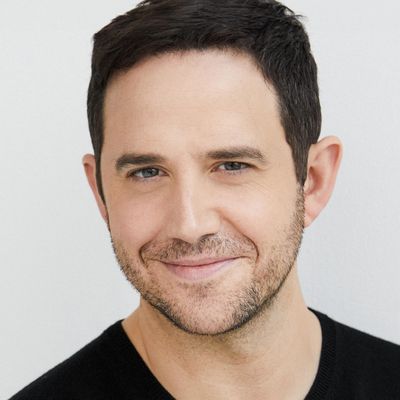
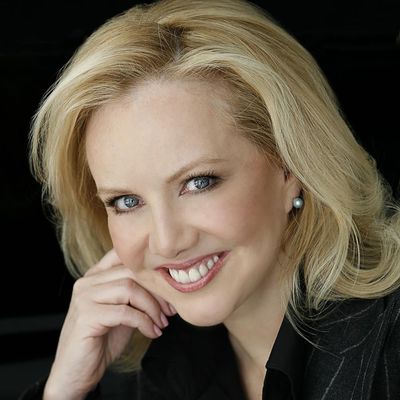
Behind the Awards goes on location to bring you to The Kleban Awards! This live episode brings you interviews with Santino Fontana, Susan Stroman, Richard Maltby Jr, Maury Yeston, and John Weidman as well as performances by Talia Suskauer, Santino Fontana and more... Read More
From the show: Behind the Awards with Eila Mell & Bruce Gotlieb
Guests

Featured Shows
About
Behind the Awards goes on location to bring you to The Kleban Awards! This live episode brings you interviews with Santino Fontana, Susan Stroman, Richard Maltby Jr, Maury Yeston, and John Weidman as well as performances by Talia Suskauer, Santino Fontana and more. Congratulations to the winners Phillip Christian Smith and Eric Price.
Also in this episode - Suffs PBS Airdate announced for May 8th starring Shaina Taub, Hannah Cruz, Jenn Colella and Nikki M. James to name a few.
Make sure to check out Eila's book, "The Tony Awards", and all her other amazing books: https://amzn.to/43WMu5Y.
Connect with Eila and Bruce:
- Instagram @behind_the_awards
- Eila @eilamell
- Bruce @cominghomewithbruce
Transcript
This transcript was automatically generated and might contain errors.
[0:00] Eila Mell: Hello and welcome to Behind the Awards. I'm Eila and I am here with Bruce. Hello there.
[0:06] Bruce Gotlieb: Good morning. How are you doing today?
[0:09] Eila Mell: Well, I'm good. It's cold. I thought we were done with the snow and our temperature had gone up, but now we're back. It snowed again last night and it's cold.
[0:19] Bruce Gotlieb: It did.
[0:20] Eila Mell: Ah, but tomorrow's supposed to be better, so just one more day.
[0:24] Bruce Gotlieb: You know what they say, the sun will come out tomorrow.
[0:26] Eila Mell: Yeah, that's true.
[0:29] Eila Mell: Well, Bruce, I have my calendar marked for May 8th because finally I get to see Suffs because it's going to be on PBS.
[0:38] Bruce Gotlieb: Yes, it is. It's finally got a release date.
[0:41] Eila Mell: I know.
[0:45] Eila Mell: It's a great show with some really, really fantastic performers. Of course, Shaina Taub, who, what's the word I'm looking for, who just, you know, took this piece and...
[0:56] Bruce Gotlieb: Well, she created it.
[1:00] Eila Mell: I know. She did everything, pretty much.
[1:01] Bruce Gotlieb: What a one-woman show.
[1:03] Eila Mell: Right. That's right. And our guest, Hannah Cruz.
[1:06] Bruce Gotlieb: Yes. Yes.
[1:07] Eila Mell: I can't believe that I wasn't able to see it in person, but now I can write that wrong and I get to see it.
[1:14] Bruce Gotlieb: And that's right.
[1:15] Eila Mell: So many other people get to see it, which is really the point of, you know, these great PBS performances.
[1:22] Bruce Gotlieb: Yeah. And listen, if you're somebody who, you know, isn't necessarily going to be able to get there when it's airing, you can DVR it and then you have it forever.
[1:30] Eila Mell: That's right.
[1:31] Bruce Gotlieb: So you can watch it whenever you want.
[1:33] Eila Mell: That's right. And I'm sure it's streaming, so, you know.
[1:36] Bruce Gotlieb: I would imagine.
[1:37] Eila Mell: Yeah. But sometimes you have to pay for it. That PBS on demand.
[1:43] Bruce Gotlieb: Yeah. It depends on the device, what product it's streaming on.
[1:47] Eila Mell: Yeah, exactly. All right. So I want to tell you about this event I went to, which was the Cleveland Awards.
[1:55] Bruce Gotlieb: Yes. Thank you for representing.
[1:57] Eila Mell: Yes.
[1:57] Bruce Gotlieb: I was not able to attend.
[1:59] Eila Mell: I know. I know. You were missed. Our guest Santino Fontana was there.
[2:04] Bruce Gotlieb: Yes, he was.
[2:05] Eila Mell: So, all right. I want people to know that this is not an ordinary episode, because we have some performances in this.
[2:13] Bruce Gotlieb: Yes. And it's a live episode.
[2:15] Eila Mell: So, you know, you did everything on the fly.
[2:19] Bruce Gotlieb: I know. I know. So, yeah.
[2:22] Eila Mell: So the first part is interviews with amazing people like Santino and Susan Stroman.
[2:29] Bruce Gotlieb: Who we love.
[2:29] Eila Mell: Richard Maltby Jr. and Maury Yeston.
[2:33] Bruce Gotlieb: People who are responsible for some of the best musicals ever.
[2:38] Eila Mell: So, and then we have the performances. Cleveland Awards is for writers.
[2:42] Bruce Gotlieb: And Richard Maltby Jr. will explain.
[2:45] Eila Mell: I don't need to explain, because if you just fast forward a little bit, you'll hear Richard Maltby Jr. explain why this award was set up.
[2:54] Eila Mell: And in case you don't know, Ed Kleban wrote A Chorus Line.
[2:59] Bruce Gotlieb: That little show.
[3:00] Eila Mell: That little show. It was a really exciting night. There are two winners, and they get $100,000 each for two years.
[3:11] Bruce Gotlieb: Used to be a lot of money, and now it's still not bad.
[3:15] Eila Mell: Yeah, to try to further their work and to continue with their efforts to have, you know, musical theater history on their resume as well.
[3:25] Bruce Gotlieb: Exactly right.
[3:26] Eila Mell: So you'll hear performances from brand new musicals performed by Talia Susskauer, who is in Wicked.
[3:36] Bruce Gotlieb: Yeah.
[3:36] Eila Mell: She's incredible. And other people. You'll hear.
[3:39] Bruce Gotlieb: It's just, it's great.
[3:40] Eila Mell: So here we go.
[3:42] Eila Mell: And enjoy the Kleban Award.
[3:45] Bruce Gotlieb: That's right, live.
[3:56] Richard Maltby Jr.: I asked Richard Maltby Jr. about Edward Kleban. We arrived in New York almost at the same time. You know, we were those hustling young writers, you know, doing anything that you could do.
[4:11] Richard Maltby Jr.: And it was, we met actually because we were both employed by Columbia Records. He was assistant to Goddard Lieberson, which is a big deal. And I wrote the Columbia Record called Magazine, which was silly.
[4:26] Richard Maltby Jr.: But, you know, the trio Los Panchos play south of the border hits and that sort of thing. And I make it sound exciting. But it was during that time that he realized that David Shire, my partner, worked all the time. He accompanied singers.
[4:45] Richard Maltby Jr.: He accompanied dance classes. He was a rehearsal pianist. He could always work in the theater. Nobody wants to hire a lyricist. There's no job for a lyricist. And the same is pretty much true of a librettist.
[5:03] Richard Maltby Jr.: So when it came time, when he realized that he was dying and that he was going to have to, you know, he was going to have a legacy from A Chorus Line, he decided to do something that would not, that would only, an award that was only for librettists and lyricists. Just the word people.
[5:25] Richard Maltby Jr.: Composers could take care of themselves. But he wanted that. And it was extremely smart of him because, in truth, that is the case. It is very hard for writers to find time to write.
[5:39] Richard Maltby Jr.: And when you had $100,000 over two years, well, it used to be a lot of money. It's now not so much money as it used to be. But it certainly makes life a lot easier. And what's really thrilling is that just about everybody who has gone on to a career in the theater has won one of these awards. And that's pretty thrilling.
[6:03] Richard Maltby Jr.: We have two winners a year. We've been doing it for 35 years. That's 70 people. And just about everybody of substance has passed through our doors.
[6:17] Richard Maltby Jr.: And it's moving. These events are, they seem like they're just an award to give, you know, give somebody a present. But in fact, it's not. It's the welcoming of new writers into the world. And who doesn't, at the same time as we are giving the award to someone else, also remember the first thing that happened was the break that came, the surprise that came.
[6:47] Susan Stroman: This is Susan Stroman talking about A Chorus Line. I certainly think it's one of the greatest shows that has ever been written. It is one of my favorite shows. And well, absolutely, because when I came to the city, it wasn't long after that A Chorus Line happened. So for me, it was a spectacular moment in the theater when I witnessed a masterpiece.
[7:10] Eila Mell: Did you see it early on?
[7:12] Susan Stroman: Yes.
[7:12] Eila Mell: You didn't know what to expect.
[7:13] Susan Stroman: I had no idea what to expect right when it opened. I heard they were working on something. I didn't know what it was. I was doing the national tour of Chicago when this was happening. So when I came back, I got to see it, which I love.
[7:25] Eila Mell: Here's John Weidman on the innovation of A Chorus Line.
[7:29] John Weidman: It was very innovative in the way it came to Broadway. I mean, it had done public theater first and then moved to 44th Street. That was not a pathway that really existed at the time. And now it's become a very traditional way for shows to start out and then come to Broadway.
[7:43] John Weidman: I was very impressed by the economy with which the show was created. All musicals have to be economical. And I thought the balance between the book and the score was extraordinary. And, you know, I mean, at the time, it was considered revolutionary, you know, to see a show. Robin Wagner did the set. And I think he won the Tony Award, even though there wasn't any set. But that was the trick of it.
[8:08] John Weidman: That was the trick of it. But one of the other things that was remarkable about it is that most musicals then, and still pretty much the case, are set elsewhere, either in time or place. Because I think it's easier for an audience to listen to somebody sing if they're in France in 1851 than if they're standing on the corner of 44th Street. And A Chorus Line is one of the first shows I remember that used contemporary characters and contemporary language in the lyrics and in the book. And that was a revolutionary idea at the time.
[8:39] John Weidman: And I would think also a lot of the themes in the show were probably controversial at the time. Just, you know, Paul's monologue and so many of them.
[8:46] Eila Mell: Yes, Paul's monologue was riveting.
[8:50] Susan Stroman: Yeah.
[8:50] Eila Mell: And deeply moving.
[8:52] Santino Fontana: I'm singing The Violet Hour, which is the title song from their musical based on Richard Greenberg's play that is fantastic. It's a five-person show with one set. I can't believe it hasn't been produced. And Jeremy Jordan and me and Brandon Uranowitz and Solea Pfeiffer and Erica Henningsen did a cast recording of it, fully produced with a huge orchestra, orchestrated by Charlie Rosen, who just won a Grammy last night.
[9:24] Santino Fontana: Just won his second Grammy, I think.
[9:25] Bruce Gotlieb: Wow.
[9:26] Santino Fontana: And from Moulin Rouge.
[9:28] Bruce Gotlieb: Yes.
[9:28] Santino Fontana: And he also has a Tony and amazing orchestrator. And he's so young.
[9:32] Bruce Gotlieb: Yes.
[9:32] Santino Fontana: So, and that music people can listen to wherever they get their music. But yeah, it's a great show.
[9:38] Bruce Gotlieb: Yeah.
[9:39] Santino Fontana: And their writing is fantastic.
[9:41] Maury Yeston: There was a workshop created by a Broadway legend. He was a great, great conductor. His name was Layman Engle. And he went to broadcast music and he said, I want broadcast to sponsor. I want to teach young writers how to write a show. And he created the Layman Engle Music Theater Workshop. And so I got into it. And when I got into it, there were some people, guys, although there was this guy, Eddie Kleban. I was in it. A few other people.
[10:12] Maury Yeston: About a year and a half after I got into it, young Alan Menken joined it. We're all there together. And he taught us how to write shows. He taught us how to write a theater song. He taught us how to write a comedy song. He taught us how to write a love song. He taught us how to write an opening, right? And we learned that. And so many people from that show, of course, Ed was the first one to go through, right? Then I did with mine. And then Alan did with everything else.
[10:45] Bruce Gotlieb: Live from the Kleban Awards.
[11:15] Eric Price: On December 20th, I was standing behind a paella and then an ice cream bar. There was another event that night, and the staff and I were moving furniture around 4 p.m. when my phone rang with a suspicious phone number, and I did what no one else in America does. I answered my phone. I was carrying a four-top over my head. I set it down. I looked around to make sure that my boss wasn't lurking. Hello? Hello, Philip, this is Maury Yeston and Richard Maltby Jr. of the Cleveland Foundation. Cleveland? Ohio? Kleban! Philip, you are the winner of the Kleban Prize for Most Promising Librettist. I went into shock. I put the table down, and I sat in a chair next to it. Remember, I'm at work. I'm supposed to be working.
It reminded me of when Emily Morse called me and admitted me into New Dramatists. I cried then, too. I'm going to keep answering calls from strange numbers and some stories. I said, The Kleban Prize? The $100,000 Kleban Prize? This is such a mess. I'm kind of like the kid who opens the card and shakes it before reading it. There might be a $10 bill from Grandma, and I have to buy a lot of ice creams. I think it was Maury who said, Well, it's actually $50,000 a year for two years in a row. Who is on this call? I said, I'm investigating them. Maury Yeston and Richard Maltby Jr. Obviously, I know these names, but out of context, it sounded like a dream. Afterwards, I walked around the room. It's a dining room.
In a daze, not quite knowing what to do, pick up this table or pick up that table, several people asked me if I was okay. I think they all thought that someone had died and wanted to steer clear of me. I told my husband he couldn't comprehend it either. He's the manager who's lurking. Everyone laughs and says, Oh, this is sweet, when I get in trouble. I did not want that to happen. By the way, my husband was so overwhelmed, the whole restaurant was pretty sure that we'd had a major death in the family. The entire management team ended up knowing the secret that I wasn't supposed to tell and be laughing about. They're not theater people, so they don't count. They probably thought I won American Idol.
[14:12] Bruce Gotlieb: So let's bring up the most promising, next, fabulous lyricist in the musical theater, Eric.
[14:36] Eric Price: To Maury and to Richard, thank you for being such responsible custodians for this award and for your leadership. And of course, for your writing, which has been an inspiration to me my whole life. Maury, I discovered Nine at around age nine. And that's not necessarily the perfect moment to meet Guido Contini. And Richard, when the musical Big came out in 1996, I was the same age as the little boy at the center of the story. I was 13 years old, and I, too, wanted to grow up, to become Big, so that one day I could do what Richard Maltby did for a living, which was write lyrics for musicals. I wanted to see my name on a cast recording directly after the phrase, lyrics by. Getting to know the score for Big and seeing Richard's name on the album gave me a target, a thing that I wanted to be.
And shortly after that cast album came out, a book was written by a journalist named Barbara Eisenberg called Making It Big. It was a behind-the-scenes account of everything that led to that show's Broadway production. And as several people in this room know firsthand, it was a fairly hellacious process. And Barbara Eisenberg's account did just about everything it could to suggest that writing a musical is not for the faint of heart, that it is a path that would likely lead to stress and doubt and misery and regret. And yet, after reading that book, I wanted to be like Richard Maltby Jr. even more. I wanted my own out-of-town tryout. I wanted to be in the trenches with a collaborator. I wanted to spend my life telling stories with songs and with stagecraft.
That book didn't scare me away at all. It clarified my dream. It showed me exactly what I wanted. Another name that I kept seeing on the liner notes of all of my cast albums was Harold Prince. In fact, his name was the unifying element on all of the cast albums that most impacted and transformed me. And at a certain point, I decided that the best education I could possibly get was to find a way to work for him. I also went to college and grad school. But beginning in 2003, I was lucky enough to be in the room with John Weidman and Stephen Sondheim and Hal Prince as they built that. And then to work in Hal's office for years, where my job was to talk about theater with him every day and to take any idea that was in his mind or heart and work to make it real.
It was the most extraordinary apprenticeship imaginable. And I'm so grateful for all those years, and I miss him all the time. During that era, I was working on Hal's shows during the day, and I often stayed at his office late into the night writing my own. My life was about balancing being an assistant with being an artist. And one of the shows I was working on was called Presto Chango, which was commissioned by the singular William Finn, who we lost this year and who I miss so much, and co-commissioned by Barrington Stage. I wrote it with the remarkable composer Joel Wagner, who can't be here tonight because he's performing in Mexico City. But I'm so proud of the musical that we created together.
Presto Chango is about a family of stage magicians, but one of its central characters is a magician's assistant, and her boss is one of the most celebrated illusionists in all the world. So the song you're about to hear isn't entirely autobiographical, but it did give me the courage to eventually leave Hal's incredible office so that I could focus on my own creative work. And that work has led me here tonight. So hearing that song will always make me think of Hal Prince and how lucky I was to learn so much about making new musicals from the very best. So the first song for tonight is going to involve our virtuoso pianist, Tosh Hite, and the brilliant Talia Suskauer, who will be reprising her role of Elphaba on Broadway this weekend. But right now, she's going to sing Ta-Da from Presto Chango.
[19:16] ♪ Musical number: "Ta-Da" — performed by Talia Suskauer ♪
[19:42] ♪ Musical number: "The Violet Hour" — performed by Santino Fontana ♪
[21:11] Bruce Gotlieb: Thank you all for coming. Thank you for coming to the Kleban Awards. And thank you for supporting musical theater. Thank you for joining us for this week's episode live from the Kleban Awards. And we will see everyone next time on Behind the Awards.
© Broadway Podcast Network, All Rights Reserved