

Season 4 is here, and we’re kicking things off in studio with Tony Award-winning costume designer, activist, and storyteller Qween Jean in a conversation about what happens when you stop waiting to be chosen and start trusting what you bring to the room... Read More
From the show: Empowered Artist Collective Podcast - for actors, singers, dancers, writers, creators and performers
Guests

Featured Shows

About
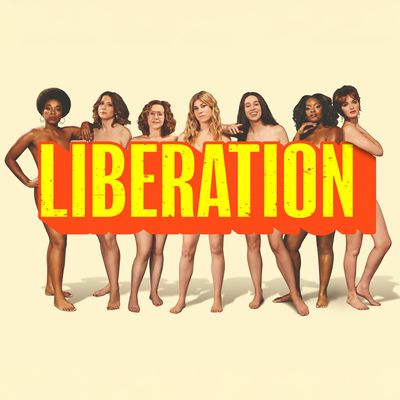
Season 4 is here, and we’re kicking things off in studio with Tony Award-winning costume designer, activist, and storyteller Qween Jean in a conversation about what happens when you stop waiting to be chosen and start trusting what you bring to the room. Together, they get candid about knocking on theatre doors before anyone knew Qween's name, trusting the instincts that became her artistic signature, advocating for herself and her collaborators, and learning to speak up without fearing it will cost her the next job. From Cats: The Jellicle Ball to Liberation, Qween offers a joyful, practical reminder that building a creative career isn’t just about getting the opportunity. It’s about knowing who you are when it arrives.
Haitian storyteller, human rights activist, and celebrated costume designer, Jean designed the feline fashion for Cats: The Jellicle Ball (opening on Broadway in spring 2026), for which she won a Tony Award and an Obie Award. Projects she has created designs for include Liberation (Broadway), Oh Happy Day, Saturday Church, Swamp Dwellers, Wedding Band, Macbeth in Stride, Walden and Donja R. Love’s new film Home. Jean founded Black Trans Liberation, an organization that provides fellowship, food, groceries, and housing resources for the transgender and gender nonconforming community. She is the co-author of Revolution is Love: A Year of Black Trans Liberation, a visual and narrative celebration of an activist movement.
Download the FREE Monologue Selection Toolkit: www.jenniferapple.net/freebie
Want to coach with Jennifer? Schedule a session here!
Learn more about Jennifer Apple: www.jenniferapple.net
Jennifer Apple’s IG: @JenniferApple_
EAC IG: @EmpoweredArtistCollective
EAC TikTok: @EmpowerArtistCollective
Learn more: https://www.empoweredartistcollective.com/
Sign up for our newsletter: https://www.empoweredartistcollective.com/newslettersignup
Check Out Our Merch: https://empoweredartistcollective.threadless.com
Any thoughts you'd like to share? Email us at EmpoweredArtistCollective@gmail.com
Transcript
This transcript was automatically generated and might contain errors.
[0:00] Qween Jean: Hey everyone, it's your girl Qween Jean and we are here at the Empowered Artist Collective Podcast. Darling, get ready.
[0:09] Jennifer Apple: Well folks, we are back with season four of the Empowered Artist Collective Podcast. I genuinely cannot tell you how excited I am. We have so much in store, so many incredible guests already lined up and we are doing so in person for the first time in three seasons, which brings a completely different energy to everything, having these conversations face-to-face, spending time in studio, in Times Square together. And I honestly cannot think of a better person to kick this season off than with Tony Award-winning costume designer, activist, organizer, storyteller and just one of those people who brings so much life and conviction into everything she does, Qween Jean. We talk about costume design as storytelling, about clothes as armor, about how what someone wears can completely transform how they move through the world, and about the incredible craft that goes into building character from the outside in.
We also get into how Qween built this career, her experience with Cats: The Jellicle Ball and Liberation, quite literally showing up and banging on doors, learning to advocate for herself and the people around her, and what it means to stop separating the different parts of who you are to just make yourself easier for an industry to understand. I hope this episode leaves you thinking about what might happen if you trusted what you uniquely have to offer, showed up fully, and let all of who you are inform the work you make. More importantly, I am so, so happy to be back with you for season four. Enjoy.
[1:33] Jennifer Apple: Welcome to the Empowered Artist Collective podcast. I am your host, Jennifer Apple, actor, writer, coach, monologue whisperer, dog mom, and creator of the Empowered Artist Framework. But who I really am is someone who believes that there is another way to build a creative, sustainable life in the arts that doesn't involve losing yourself. This podcast unmasks the reality of life as an artist through conversations with women and non-binary changemakers in the industry. We get crystal clear on how you want to show up and not how you think you need to show up in this wild industry. Whether you're headed to your first ever audition, auditioning for BFA or MFA programs, sitting in a Broadway dressing room, feeling like you haven't made it or been at this for a long time and something isn't working, I see you. This episode is powered by welcome to timesquare.com, the billboard where you can be a star for the day. Let's get to it.
[2:31] Jennifer Apple: Qween Jean, welcome to the space. Hi, how are you?
[2:37] Qween Jean: I am hanging in. You look amazing.
[2:42] Jennifer Apple: So do you. For anybody who's not tuning in, tune in on the YouTube, like gorge, truly, truly gorge beat. Amazing.
[2:47] Qween Jean: Thank you. For anybody who does not know you, who are you today?
[2:52] Qween Jean: Hi, everyone. My name is Qween Jean. I'm a proud storyteller here in New York City. I show up in many capacities as a costume designer, a proud costume designer, as well as a human rights leader in the city that really I try to advocate for a lot of resources for our communities, especially young people, folks in the margins, immigrants and people that unfortunately are oppressed by this system. But I am really excited to be here. Thank you for having me.
[3:17] Jennifer Apple: Oh, my God. Truly, truly so grateful that you're here. The work that you're doing and that you have done is, I believe, transforming the industry and showing what's possible. And I hope that this podcast is a resource that shows that to folks. So thank you for sharing in this space. Yeah, I am so curious. And you probably told this somewhere else. But for our listeners, how did you begin your journey in the costume space specifically?
[3:44] Qween Jean: This is a great question. I definitely, I mean, I don't know if stumble is the right word, but I kind of like push the door open.
[3:50] Qween Jean: Yeah, or beg to tell. I mean, I've always had like an affinity and a desire to like make clothes, be around clothing. My grandmother was a dressmaker in Haiti. And so for me, it was like a way of like expression. Also, just seeing like, you know, clothes are armor. And so when you put something on, and it like helps transform your attitude, your confidence. And so I just love being able to do that for myself personally, and also for other people. And so I think ultimately, like moving to New York City, I think folks like as soon as you were like, you know, they're like, okay, what do you do? Are you a singer? Yeah, you're an actor, you're a writer, playwright. I'm a costume designer. And so I felt that was I was always greeted with that.
[4:42] Qween Jean: Yeah, yeah, a costume designer. And so that's really how I started. I mean, obviously, because I had a real passion for textile design, as well as clothing being a tool for storytelling. And that then, you know, allowed me to take it into deeper studies. I ended up on graduate school at NYU, Tisch School of the Arts, under Susan Helfriti. And that just really helped to allow me to like, take it into the next level.
[5:13] Jennifer Apple: Yeah, and to own it. I know for me, when I got my MFA, it wasn't because I didn't think I had the skills necessarily, though, obviously, it helped. But it's also like, there's something about, and I don't know if you experienced this for yourself of like the labeling in this industry, unfortunately, like people then somehow take you seriously. And you're like, I did this well before. But now that I have the three letters in front of my name, you're like, I guess now you're accredited somehow, which is a wild thing.
[5:40] Qween Jean: Yeah, a very extensive validation. I'll tell you that much.
[5:44] Jennifer Apple: Yeah, 100%. How long is that program?
[5:47] Qween Jean: The program was three years.
[5:48] Jennifer Apple: Wow. Yeah, that's an extensive, extensive time. I'm curious how you got to that point. So obviously, your grandma grew up with it for you as a form of expression, but to know that that was like a career as opposed to just a hobby.
[6:02] Qween Jean: Yes. So I mean, I think a lot of folks like that are pursuing theater, storytelling, drama league, theater, thespians, we end up doing a lot of summer stock. And so you know, and I was like, okay, you know, I tried to do the performance, you know, I was giving showboat or like hairspray. And I was like, okay, not for me. But love them. But you know, and so I found like, I was, yeah, I just found more excitement as like a stitcher, cutter, draper.
[6:36] Jennifer Apple: Were you doing that like simultaneously while you were performing? You're like, can I also be like stitching my costumes?
[6:40] Qween Jean: Also, and more so because you know, the clothes, I wanted it to fit a little bit, you know, just to snatch me in and my colleagues. But and so that just was like a really empowering, empowering. Yeah. And also, I think to like, that then what ultimately I learned, which the grad experience, grad school experience really shaped was around like really communicating your vision as an artist. I think for me before I was just doing it, you know, meeting with folks, artists, or, hey, can you help me on the show? Like, I'm trying to do something. This is the ideas, you know, anything you can do, you know, this is the budget, though, you know, I felt like there was a lot of like prayers, and like requests to like design something.
But ultimately, I found actually being able to create garments, learning, I mean, obviously, you know, really, but like the foundation of dressmaking, tailoring, craftsmanship, that really helped me as an artist to really have a foundation about how costumes can be realized.
[7:49] Qween Jean: Yeah, yeah. But that summer stock was what I that was the genesis. Yeah, a lot of really quick turnaround productions, which honestly, really, I go back, I'm like, you know, we're doing pretty good. 100%. But yeah, just like really, being able to take a pre-existing garment, make it more magical, or, you know, make it more dramaturgically, you know, suitable for the story. And I imagine to just like the resourcefulness you need in a summer stock space, but there isn't, there's no resources.
[8:21] Qween Jean: Yeah, you know, you're spraying hot glue and tape in. Yeah, yeah. Yeah, that's true. A lot of prayers. Yeah. And it's 100%. And it's formative. I feel like so many of us, myself included, it's like, if we didn't have that, we wouldn't know the hustle and the grit in the same kind of way. And I don't think it's the only way to do the thing. But it's certainly a different kind of entry in of like, if you know what you don't have, you can figure out what you need by knowing when you finally have the resources, like, oh, I did this with actually glue. And now you have a person that's giving me a real budget to have a person sew this thing. Like what a gift. I imagine there's some gratitude that comes down later in the line as well.
[9:01] Qween Jean: Immense gratitude. Yeah, yeah. I love it. Yeah, yeah. And I think I mean, and then that like helped to shape more into like leadership roles. It became like an assistant costume shop manager. Yeah. And so and I did that for a while, you know, that was like the hustle or the, you know, to earn our daily bread, you know, to pay the rent. And so that was even when I moved to New York, so I was still doing that work.
[9:21] Jennifer Apple: Well, I'm curious to break down just for folks who are listening who are like, okay, cool. I'm interested in this world. Yes. Let's break it down of like, if you have the team who is leading how it works, is that budget dependent? If you're a person who wears all the hats, and as you have in many points, how the costume land exists for folks?
[9:35] Qween Jean: No, this is a great question. I would say that, I mean, the entire team, right, is in a collaboration. And so oftentimes, the director is like, well, maybe the producing part. Yeah. Okay. Maybe the producing people, the folks that are housing the production probably are in charge. But then, you know, we have our director. And sometimes if it's a musical or a more devised piece, you might have a choreographer, you might have a movement specialist. And so those folks really are, you know, helping to answer the questions. And then they bring on like a design team. And so you'll have scenery, lighting, design, projections. And, you know, and at times, like there can also be like, if there's different installation work, hair design, makeup design, you know, if there's like support for that, which there should be, hello.
And then of course, our department, which is costumes. And so for us, like, we help to create, I think, sometimes like the look or the visuals, wardrobe for the story. Yeah. And really, those are the items and the storytelling tools that really help guide the character through the story.
[10:56] Qween Jean: Yeah. And so I would say that the designer kind of really is like at the top, and then you also will have like an assistant or an associate artist that is supporting that designer to help, you know, facilitate conversations, textiles, in conversation with production management, as well as stage management as well. And then, you know, in terms of like, if it's like a, if you're working in a bigger institution, that might have a costume shop or other resources, you know, then you'll work with the shop manager, the draper, stitcher, firsthand. These are folks that are literally creating, you know, that are taking the pattern from the draper and then making, you know, cutting it out and preparing it for it to be stitched.
[11:37] Qween Jean: Yeah. Yeah. And then there's crafts as well, painting, the dyeing department, D-E-Y. Yeah. You know, and so, you know, folks that are doing a lot of incredible rigorous work to manipulate the textiles in order to achieve a more, you know, closer to real life garment. Yeah. I think naming it is, and that's why I'm, thank you for doing that because I think people, you see an outfit on stage and you're just like, oh, it's a shirt.
[12:06] Jennifer Apple: Welcome back to the Empowered Artist Collective Podcast! I’m your host, Jennifer Apple, and today we’re kicking off Season 4 with a very special guest, Tony Award-winning costume designer, activist, and storyteller, Qween Jean.
[12:20] Qween Jean: Thank you for having me, Jennifer! I’m excited to be here.
[12:52] Jennifer Apple: I’m so glad you’re here. You have such an incredible journey, and I can’t wait to dive into it. Let’s start with your story. You’ve been knocking on theatre doors for a while now, and I’d love to hear about that experience.
[13:02] Qween Jean: Absolutely! I think it’s important to share that journey because it’s not just about the accolades; it’s about the struggle and the perseverance. When I first started, I was often overlooked, but I kept pushing forward, trusting my instincts and what I brought to the room.
[13:33] Jennifer Apple: That’s such a powerful mindset. How did you learn to trust your instincts?
[13:59] Qween Jean: It took time and a lot of self-reflection. I had to realize that my perspective and my voice were valid. I learned that advocating for myself and my collaborators was crucial in this industry.
[14:27] Jennifer Apple: That’s a great point. Speaking up can be intimidating, especially when you fear it might cost you a job. How did you navigate that fear?
[14:53] Qween Jean: It’s definitely a balancing act. I had to remind myself that my worth isn’t tied to any one opportunity. When I learned to speak up, I found that it actually opened more doors for me rather than closing them.
[15:21] Jennifer Apple: That’s such an important lesson for all artists. It’s about knowing who you are when the opportunity arrives, right?
[15:49] Qween Jean: Exactly! It’s not just about getting the job; it’s about being confident in your identity and what you bring to the table. That’s what makes your work truly unique.
[16:17] Jennifer Apple: I love that. You’ve designed for some incredible projects, including Cats: The Jellicle Ball. Can you share a bit about that experience?
[16:43] Qween Jean: Designing for Cats was a dream come true! It was a chance to bring my vision to life and create something that resonates with audiences. The process was collaborative and filled with creativity, which I absolutely loved.
[17:11] Jennifer Apple: It sounds amazing! And you’ve also been involved in activism, founding Black Trans Liberation. Can you tell us more about that?
[17:31] Qween Jean: Yes! Black Trans Liberation is an organization that provides resources for the transgender and gender nonconforming community. It’s vital to support those who are often marginalized, and I’m proud to be part of that movement.
[17:49] Jennifer Apple: That’s incredible work. It’s so important to uplift and empower others in our community.
[18:07] Qween Jean: Absolutely! We need to create spaces where everyone feels seen and valued. That’s what drives me in both my art and my activism.
[18:27] Jennifer Apple: Thank you for sharing that. It’s inspiring to see how you blend your artistry with your advocacy.
[18:47] Qween Jean: Thank you! I believe they go hand in hand. When we tell stories through our art, we have the power to change perceptions and create a more inclusive world.
[19:07] Jennifer Apple: Well said! I’m excited to see where your journey takes you next.
[19:37] Qween Jean: Thank you, Jennifer! I’m excited too.
[20:05] Jennifer Apple: Let’s take a quick break, and when we come back, we’ll dive deeper into what it means to trust your artistic instincts and how that can shape your career.
[20:33] Qween Jean: Sounds great!
[21:01] Jennifer Apple: Stay tuned!
[21:25] Qween Jean: I can’t wait!
[21:55] Jennifer Apple: We’ll be right back.
[22:19] Qween Jean: See you soon!
[22:49] Jennifer Apple: Don’t go anywhere!
[23:19] Qween Jean: We’ll be back shortly.
[23:47] Jennifer Apple: This is going to be a great conversation!
[24:12] Qween Jean: One of the things I do when I'm on set is I do a lot of things. I have these giant portfolios displaying my production work, artist work, installation work. Oh, I can also sew. There's also incredible skills as well. So I would drop off my resume, how y'all doing? Bring a snack. Hey, I'm also cooking. Hire me. Hire me. And so even in Liberation, they have snack, they have cheese balls. I mean, I literally was like, this is, I mean, whether or not you, I feel like it's embedded in our soul and our bone marrow, that like hospitality and love and showing up. Yes. These are all core ingredients as human. And so, but I seriously was just like, okay, I want to, you know, let people know that I'm ready to work.
And so there was a posting for Cats and this really just like an invitation, you know, like, or, you know, brain fusing these incredible worlds together, looking for artists, you know, who would participate. And maybe this was actually maybe more for performers, but I said, baby, I'm available. And so I like, you know, through my hat or my chapeau, I threw my bonnet into the ring and I said, let's get into it. And like a few weeks later, I had an incredible conversation with Bill Roush and Jason Livingston about the story and ultimately like how to celebrate this community and this incredible culture, ballroom, New York City ballroom culture that for decades has shaped the lives of so many people and now is a worldwide revolution.
People are voguing and dancing and teaching all over the world about the fundamentals and the sacredness of a chosen family and being able to share your talents in a really special way. And oftentimes, of course, it was like, you know, it has a subculture, but now it's completely out in daylight. And so for me, that opportunity, the invitation really to collaborate helped me as an artist to also like step into this with like real truth and with real fortification and the responsibility of also having to make sure that, you know, not only that our work is authentic, but that we're also really respecting and paying homage and giving reverence to the incredible pioneers in the late 70s. Thinking about Crystal LaBeija, folks that were fighting to create space for themselves, their families and people that they love.
When we talk about a revival, that was a revival. Resuscitate. I mean, let's be clear, it's still Cats. And then you see Cats done like this and you're like, how was it done any other way? And that for me is like, that's a revival. We did something that you can't even unsee. And the homage of the video, I'm not ruining anything that happens in Act Two. Moments of happiness. And it's just, it's really, it really is a celebration of human beings and what their bodies can do differently in a space. I mean, some of these dancers, I like my jaw. Breathtaking. Oh, my jaw. Soul snatching. Spirit lifting. And the voices too. Like all of it. But the dance. Oh, yeah. No, no. Unbelievable. Yeah. Unreal.
Yeah. It was really. And everyone. Everyone dances. Everyone sings. Yeah. Every cat. From eight to 88. Every cat. From their top to their bottom. Like full, I don't know if it's from their paw to the paw. You know, paw to tail. Something. Yeah. Truly. It was really, it's really incredible. So I'm curious then to know for two very different pieces and also just generally for how you work. Do you use somebody that's like, okay, I'm going to do a ton of research? Is it more like there's a gut feeling about the world and then the research in, you know, I incorporate that later? Is it a collaboration conversation first about where are you at? And then I marry it or, hey, I bring this for, like, where is your process? These are all extremely valid and all crucial ways to work and or valid ways to work, I would say. And I think every project is different, but knowing me.
[29:04] Qween Jean: Yeah. I definitely lead with like an instinctual, like, you know, OK, spirit is saying, OK, I think it's this. But I would definitely say that what I what really helps me is like the text, the score and really like ingesting it, I guess, I don't know if that's the right word, but, you know, really integrating all of those ideas and impulse, like things that I like highlighted in the script or I'm like, oh, this was interesting. Like, let me circle that in Cats. You know, there's like a reference about like the Nile in the very beginning, you know, about ancient Egypt. And so I then I circled that in like the very first reading and then like that manifested into offering for the end of Act One, the Joker Fall finale sequence, where there's like a bizarre costume that comes out.
And I really wanted to I was like, oh, no, no, no. This was like one of the first impulses. I was like, oh, this is incredible that we have to love and, you know, like, you know, that T.S. Elliott moment here is crucial. And so we then created a really powerful, truly dynamic, ancient kitty cat costume for the audience, but also, you know, for old Deuteronomy to select the angelical choice. But and so but for me, I think that that's kind of like where I start really. And then I think gaining a lot of immediate impulses and like dramaturgy work, then kind of take it into research. And sometimes the research is also paired with like textile work as well, samples, photographs, magazines. I'm not trying to like use everything. So just so that as like I have a real vast and a real expansive understanding of like the world.
[31:01] Qween Jean: Yeah. And then I really begin to then shape character from the world. OK. And at that point, there's like some I love to have consultations with the performers. This is the world. This is what I'm thinking. But also like what what are some things that have resonated and come up for them? You know, and also as a performer, there are things that I mean, I'm always like, let's go 10 miles further, you know, or like, let's take it to the max. Yeah. And, you know, some artists are like, absolutely. Someone has to look. I've tried the max before. I'm going to do the many. Yeah. You know, it's like I have eight shows to do this week. I can't do the max eight shows. So let's find the dial. Yeah. And so we collaborate and we find that journey and like to like really have an opportunity for the work and the collaboration to evolve as well.
[32:48] Qween Jean: Yeah. But we have a lot of fun. I mean, we have a lot of fun. I mean, I'm this is how I show up in this space. And so I feel deeply empowered to share what I know, my experiences with our collaborators, right, with our directing, with our writer, as well as our choreography team, as well to at times and involving the performers, like ensuring that we're all in the same production.
[33:23] Qween Jean: Yeah. But and also, too, that like we are working towards a really similar clear goal. Yeah. And so and the ideas. Oh, I mean, I'm always sitting on it. I love it. Oh, this is nice. How about. Are you the kind of person that like on a subway when you see an outfit, you're jotting it down or does it go into like the recesses of your brain?
[33:43] Qween Jean: Yeah. Yeah. So I definitely log. I'm always logging. Yeah. I see stuff or I hear something. I'm like, OK, that'll work. Yeah. You know, and I kind of just like file it away. But also sometimes if it's really good, I kind of take a picture. Or do you just do? You know, if they're given like approachable. Yeah. Hey, boo. I love the outfit. Do you mind if I take a picture? Can we take one together? Yeah. You know, but if it's given like New York crazy, you know, but I'm into it, though. OK. And this could be very helpful for something else in the future.
[34:17] Qween Jean: Yeah. I'm snapping. We all know a little like sneak attack that kind of happens. And for sure. That is good.
[34:29] Qween Jean: Yeah. From all angles. We love it.
[34:33] Qween Jean: Yeah. Honestly sometimes it's really I'm like, you're gonna laugh. But for me, it's about shoes. I'm always like very curious about like how people tie their shoelaces. So I'm always just like, okay, like, so I just like clock that.
[34:49] Qween Jean: Interesting.
[34:50] Qween Jean: Yeah. Is that always a thing? Or is it a recent...
[34:52] Qween Jean: Not always.
[34:53] Qween Jean: Shoelaces specifically.
[34:54] Qween Jean: Interesting.
[34:55] Qween Jean: I mean, but just like, yeah, I'm like, I don't know, because sometimes like, you know, like no one, there's not just one setting for anything really. We all kind of learn.
[35:03] Qween Jean: I mean, in my brain, like everybody learns like you tie it like a little like bunny rabbit knot. But people did not. That was not the way that everybody did it.
[35:12] Qween Jean: Did you bunny wrap it?
[35:13] Qween Jean: I did Velcro.
[35:14] Qween Jean: I honestly want Velcro to make a comeback.
[35:15] Qween Jean: I did Velcro.
[35:16] Qween Jean: I really do.
[35:17] Qween Jean: It's so much easier.
[35:18] Qween Jean: I was like, this is so great.
[35:25] Qween Jean: And I desire the little light up thing. Babe.
[35:27] Qween Jean: I want those now.
[35:28] Qween Jean: Why we don't have those as adults?
[35:30] Qween Jean: They started bringing back the jelly shoes, which I'm here for.
[35:32] Qween Jean: Absolutely.
[35:33] Qween Jean: That they'll like rip up the back of your heels.
[35:34] Qween Jean: And on a hot day.
[35:35] Qween Jean: I don't know.
[35:36] Qween Jean: But okay.
[35:37] Qween Jean: The sweat.
[35:38] Qween Jean: No, no, no, no, no.
[35:39] Qween Jean: For real.
[35:40] Qween Jean: For real.
[35:41] Qween Jean: Okay.
[35:42] Qween Jean: So now you have nominations. You have some wins. Let's talk about how these two Tony nominations came in for Best Costume Design in a play and in a musical. I mean, wild.
[35:52] Qween Jean: And again, like for such different pieces, but that both have an underbelly of, yeah, this expression and freedom and liberation. And how did you feel? How did it happen? And let's talk about this moment.
[36:10] Qween Jean: This moment, honestly, this moment is a real dream come true. It is like a manifested, divine, orchestrated. Yes. And in years, I mean, I think that it didn't happen overnight, but I mean, it feels like that sometimes, but it didn't. I know a lot of folks like, I had no idea that you were, you know, some folks really know me as like an organizer. Some folks only know me as a designer. So like now I feel like the world is like, oh no, you're meeting the whole queen, you know, and not just parts. And it feels really great to share the whole human.
[36:18] Qween Jean: It held us as artists and as humans in such a genuine way, right? In a way that was filled with care and consideration and empathy.
[38:01] Qween Jean: And so when that stopped, I was like, okay, okay, all right, we'll keep going. But then we were like, okay, if the universe lets us, we'll keep at it. And then last year, we were able to collaborate at the Laura Pels Theater. We saw, I would say every night, entire cathartic ritual love sessions happening in real time. People would leave the theater, oh my God, I had to text my mom, I called my parent, or I went to go visit their grave site. It was stirring up real visceral emotions and reminding people that it's not too late. Time is a gift, right? And we have this present moment to make change happen. And let's do it. And so there was like a collectiveness around the collaboration about healing. And also just reminding people that no, we can, why can't we make it happen? And so there was this energy that was brewing and it brewed into the next season.
[39:18] Qween Jean: You're like more than a thing and you grieve it and you're like, that was a chapter and I guess we're closing the book in the season. And then it comes back again. And also, even at the closing night on 46th Street, we were all just like, no, this can't be, what? And we're all like, no, don't close. And so that desire and that craving to share this story further was unanimous and it was universal. And that was my first, yeah, that was my Broadway debut. And I love this place so much. And I just find personally, I identify with each of those women, all of them, even Béla. But I just identify with all the characters and I feel like they, Bess has written a masterpiece that speaks to human condition, the human mind, our emotions as we juggle relationships, balance things, try to balance love.
Lizzie reminds us, you can have love, you can have liberation. But almost, I think, but rarely can you get both. And I think that this has really activated us to pursue both. And that there is love and liberation.
[41:00] Jennifer Apple: Yeah, and you're being recognized for contributing to that with both of these pieces. Have you felt a different form of empowerment being recognized in this capacity? How has that transformed the way that you're showing up, potentially the work that you're pursuing, the work that you're currently doing?
[41:25] Qween Jean: For me, it's really great to be recognized. But I will say that for our community, it has galvanized in a really big, powerful way. And so much, I mean, it's just like, in a way, if one person gets it, we all win. And so there's a real collective sense of joy with liberation and, of course, with Cast the Jellicle Ball, but we're here. And we're here to stay. And it's just the beginning. And I think at the Lucila Tower, we're just getting started. Okay, there's more ideas, there's more love, there's more collaboration. There's so much that we've been waiting to start. So in a way, as Ti Moune says, waiting for life to begin. And so this feels like a very monumental start. And especially to be debuting for both shows. I was like, this feels so storybook.
[42:40] Qween Jean: But again, like an alignment around the fact that like, it'd be one thing if you were nominated for a show that like, yes, you're proud of. But like, it was a job in some kind of way, which happens. And we're grateful. Hashtag work is wonderful. Thank you. Like, it's hard out here on these streets very much in every capacity, certainly for anybody who's a freelance human being, which is most of us artists. But to have this for pieces that for you are so much about your own and lived experience. It's I can imagine just like so gratifying. And I'm so, so happy for you for those. I love it. For like this next season, obviously, these pieces will continue being breathed into and hopefully many iterations of their lives.
But for you now in this next season, are there certain kinds of projects that now you're looking for? Are people pitching to you? Are you dropping off a little lookbook? You don't need to do that anymore. But like, you know, the hustle is different. How are you pursuing this next season of the work? And what is it?
[43:39] Qween Jean: Yeah, well, the season started like, four months ago. Yeah, correct. Yeah. Oh, this is what I prayed for. But thank you, universe. Thank you, ancestors. Thank you, ancestors. Yeah, baby, they said lock in. And so we are buckled. I had the distinct honor and real pleasure to collaborate during the tech cat. I was doing a production at the Steppenwolf Theater called Windfall, an incredible, I mean, play movement ritual, written by Terrell Avenue Craney directed by away tempo, dealing with folks that are protesting injustice. And ultimately, the question around how, you know, is money able to soothe a human life? Right. And so and there was a lot of things, themes in the story about like family reconciliation, it just felt at times autobiographical.
And so, but that production happened in April. And so I was able to go to Chicago and come back to come back to the fronters. But we collaborated on that. And it was just such a very beautiful play. And I'm deeply honored, like to collaborate with those artists. And, and it Yeah, so that drama is still waiting for me. So grateful for that. I'm coming back to Broadway. Oh, God, I feel so grateful and so loved. Yeah. So I'll be back at MTC.
[45:20] Qween Jean: Mm hmm. Name it with, with Jocelyn Veal's Cool Girls or the African Girls Mean Girls play directed by Whitney White. I'm it's so funny, because in some ways, it feels like a Pokemon situation where I'm like, I got to get them all. We're having Jocelyn on this. Yeah, you know, this season. Yeah. And we had Whitney last. And it's like, you know, like, it's amazing. Yeah. Like, for me, it's also like, who are the people that I'm admiring, and we're doing transformative work that allows us to think and push us perhaps outside of our own comfort zones and be exposed to things and people and experiences that are maybe not of our own. Yes. And how do we all then continue to support one another and better listen, and hopefully be? Yeah, a better community for one another. Absolutely. And so it's exciting to know and yay for plugging that. Yeah, you're coming back. Yes.
[46:11] Qween Jean: More things brewing. What is filling you as a human being with joy with groundedness? How do you come back to yourself when things are hard? When the world is hard when the industry is hard when things aren't just rainbows and butterflies? Like what are the things that are your pillars as a human being?
[46:28] Qween Jean: This question really resonates. It does. I mean, yeah, the world is so great. And I find that, you know, life is an epic thing, epic movement, and that grief and joy often occupy the same space. Yeah. And so as I'm like, really excited and celebrating, I know that there are people that are completely in, you know, being terrorized at this moment in agony and like looking for a way out. Yeah. And so I, I hold this multitude of feelings. But just also knowing that like, like, I don't get lost in like one or the other. Yeah. I firmly understand that, like, you know, both have to be balanced. Yeah. But also that like, they both can't be ignored. You know, we have to figure out a way to be better humans, but also to like still be, you know, the thing that's in us as artists.
Yeah. In order for us to like be okay, to sustain and to have like, joy. Yeah. And so that for me, I think I don't have to answer the question. But for me, like, you know, really being able to connect with nature has been something that I yeah, you got to go out and touch grass. Yeah. Yeah, it helps to just give gratitude back to the areas of our lives that we don't often get to support. Yeah. And I also know too that like, you know, relationships are crucial. I mean, obviously being a freelance artist or just any artists in this industry, you know, time is, you know, and so, and, and, you know, and what I mean by that is like, you're often having to, like, miss things or like not be present in every part or every.
[48:54] Qween Jean: This is an and, like these things are and do it. I think it's really empowering to hear somebody talk to it, and you can be celebrating. There's always more work to do. I think that that's what I think this year has really taught me and that it can be done and most importantly to like, really enjoy.
[50:36] Qween Jean: Yeah, I mean, there are moments like I think about liberation, like our attack, I mean, it was like we were working, of course, but I would I looks like the last or our freeze day. Oh, my gosh, it was like. It was a celebration, it was sad, I was like, wait a minute, I don't get to see you all like what I got a cake, we got to eat, we got to eat, but it was like a radical lesbian cake and I was, but it was, you know, everyone, like, ate around our faces, like, I don't know if I should be eating, but it was just, I don't know, it was just so. Yeah, it was like, it felt so magical to be a part of this and to have been able to do it with each other and to now, like, share with the world and now, like, really, like, really share it as it continues to, like, now reach other cities, other homes, other communities, it truly is, feels like a life changing experience. I love it. And so I'm grateful to be a part of, or have my fist in the fight towards a liberation that we all deserve.
[52:08] Qween Jean: For anybody who wants to pursue costume design or wants to think about their activism as part of their artistry, what would be the thing that you would recommend folks in terms of, like, an entry point or like, try this, do this look? Well, for folks that are interested in costume design, I really would, like, urge you to, I think, just immerse yourself with artistry or I guess I would really find the things that you like and explore more. For example, for some folks, it might be films, it might be embroidery, it might be hats, you know, there's a myriad of ways to really get into costume design. But I think that, like, you just got to put that one toe in, you know, and then you really begin to deepen your understanding of storytelling.
Every artist is, you know, like, everyone's perspective is crucial. And that's what helps us to, like, build a deeper and more compelling story. And so I think for me, like, I would also say that really having understanding and, like, loving and firming up your voice as an artist is crucial as a costume designer. But, yeah, you know, obviously, you got to really know some stuff, especially just around clothing, history of clothing. And it doesn't necessarily have to be like, oh, yes, I read this book and, like, understand it, you know, from front to back. I think it's really about understanding, like, what are the things that are important for you to have an understanding, whether it's about the evolution of hats, the evolution of dress shirts, like the quality materials, what economical things your character may be experiencing.
Just things that help to really shape and to build the world that you're creating, to have an understanding on how to do that, I think, for me, has been very helpful. And sometimes you can build those rules and you can also break them. For cats, I say, maybe I'm breaking the rules. And so I think it's really about what the story is calling for and being able to, like, confidently support it and show up.
[54:18] Qween Jean: And for folks that are activists, advocates, folks that are tired of just waiting for something to change, like myself, you just get up and go. And I think it sounds easy, but I think I would say that my advice would really be to trust your voice and trust what you know. And if it's moving from a place of deep care, deep, deep understanding, deep empathy, how can it be wrong? And at times, I think the hard part is being able to convey that and to share that with other people. You know, there's a lot of things in this world people are contentious about or don't agree with. And it's like, OK, but what we can agree on is that people, you know, exist and people should have access to things, their basic human rights that, you know, are not for debate.
And I think oftentimes the desire to debate or to deny people is in order to have control, to have dominion. And if that's the way that we want to live, then, you know, like we can't say that we love our neighbor. And even with our civil rights, I mean, if everyone didn't say this is enough, we would still be drinking from different water fountains. And like it wasn't that long ago. No. And so I'm just like, hello, people like this is it's so real and it's so immediate and it's urgent and like caring. I guess I would say that not caring for someone else's rights is how you lose yours.
[56:01] Qween Jean: That part. That part. Yeah. Let us be better stewards of this world. And it's, you know, time goes so quickly. And I think that as an artist, what I'm what I'm constantly like what you're saying is how every opportunity or as Bess Wolfe says, right, every brick in the wall allows us to build ourselves up. And so what will we do? Right. That's the question that she asked us at the end of the story. And I think for me, it's like, yeah, I I'm going to play my part. Yeah. You know, and this is the part that I play. So I will try to do it like with full conviction, with sincerity, with benevolence and with love.
[56:56] Jennifer Apple: For anybody who wants to check out your work, who wants to reach out and support you, who wants to communicate or ask for advice or whatever within your own boundaries. Where can people find you?
[57:10] Qween Jean: Yes, people can find me at Black Trans Liberation dot com. We have a weekly fellowship. So Black Trans Liberation, we are an organization that feeds the community. Literally, we feed folks. We have fellowship and programming every week and we build a space for queer and trans people to exist and to breathe, to exhale and to not have to worry about stigma or any type of societal pressures. Come and release and be yourself. And that has that space. Is a continues to be like a touchstone for me and continues to ground everything that I do. It's my purpose and it's my power and it's how I feel the most liberated.
[58:02] Jennifer Apple: Yeah. Amazing. Yeah. I'm so grateful for you sharing in this way for, again, your artistry and your voice and the way that you are showing up in this industry and changing it. And it's really I feel very honored that you've lent your time to this wild, gorgeous momentous moment. And thank you for the work that you do and also the voice that you have and for showing up with full earnestness and empathy and joy throughout all of it.
[58:35] Qween Jean: Thank you so much. No, I'm really excited. And I will say, I mean, and maybe the people, the family at American Theatre Magazine, they might have thought that I didn't even see. But in 2023, I got asked to be part of their return after the pandemic and to be on the cover of the magazine. And it was entitled A New Era. And I really feel like we are in that. Yeah. And it feels completely, completely thrilling. Yeah. To be a part of something so magical, so crucial and ultimately like so much fun. And I think that like that's why we do this. Yeah. It's fine. What do you mean? You know, even in the revolution, we find moments of joy.
[59:25] Jennifer Apple: Yeah. You need it. Yeah. Sustain. Yeah. Yeah.
[59:37] Jennifer Apple: I hope this episode empowered you to take one small step forward. Make sure you're subscribed to never miss out. And while you're at it, kindly leave us a review. It's one of the best ways to help other artists find the podcast and join in on the conversations. Be sure to tag at Empowered Artist Collective and at Jennifer Apple underscore so we can see what's landing for you and keep the conversation going. As always, thank you for being here. Thank you for listening. And thank you for being a part of this incredible community. Remember, whether it's a small shift or a big breakthrough, every step forward counts. Keep creating and keep thriving. I'm Jennifer Apple. Until next time.
© Broadway Podcast Network, All Rights Reserved