

In an exciting and special Women's History Month episode of the podcast Survival Jobs, recorded live at The Museum of Broadway, Co-Host Samantha Tuozzolo sits down with some exceptionally talented and powerful members of the cast and creative team of the highly anticipated new musical, Suffs... Read More
From the show: Survival Jobs: A Podcast
Guests


Featured Shows
About
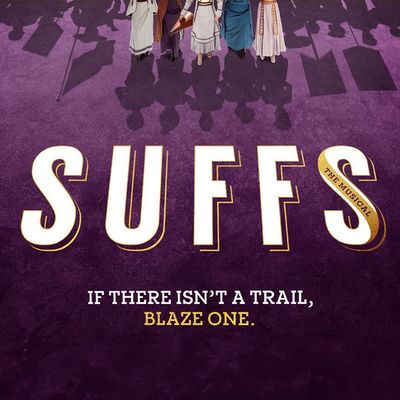
In an exciting and special Women's History Month episode of the podcast Survival Jobs, recorded live at The Museum of Broadway, Co-Host Samantha Tuozzolo sits down with some exceptionally talented and powerful members of the cast and creative team of the highly anticipated new musical, Suffs. The musical is set to start its first preview at The Music Box Theatre on March 26, 2024. Among those featured in this conversation are Ally Bonino (Lucy Burns), Anastacia McCleskey (Mary Church Terrell), Nikki M James (Ida B. Wells), Grace McLean (President Woodrow Wilson), as well as members of the Suffs creative team including Mayte Natalio (Choreographer) and Andrea Grody (Music Director).
During this chat, these women touch on the importance of confidence, mutual support, and advocating for oneself as a woman in the theatre industry. They also discuss the significance of SUFFS coming to Broadway, especially given the current societal climate.
Before wrapping up this important and inspiring conversation, they conclude with a lively game of "Women's History Month Trivia" - you'll have to tune in to see who scored the most points!
Kicking off Episode 83, Jason A. Coombs and Samantha Tuozzolo delve into a spirited mic check, discussing Women's History Month and the necessary changes needed in the industry and beyond for women to achieve equal rights and for societal and industry pressures to be alleviated.
Lastly, the exclusive video interview can be found here on Broadway World, while the audio-only version of the episode is available on popular platforms such as Apple Podcasts, Spotify, Audible, or any of your other favorite podcast apps, as well as The Broadway Podcast Network.
You can support the podcast and the hosts at www.buymeacoffee.com/SurvivalJobsPod and on Instagram at @surivaljobspod | @SammyTutz | @JasonACoombs.
Info on Your Hosts:
- Broadway World Article on our Season 3 Launch Party
- Follow Samantha: Instagram | Samantha's Official Website here
- Follow Jason on Instagram | Twitter.
- Check out Jason's Official Website here
- Check out and support The Bridgeport Film Fest
Important Links:
- Support the citizens of Gaza
- Native Land Map
- US Interior Indian Affairs
- NPR: "How To Help Puerto Rico" Article
- How to Help the People of Florida Article
- Abortion Funds Website
- Plan C Pills Website
- National Write Your Congressman Link
- How to help Uvalde families NPR Article
- Where to Donate to Support Access to Abortions Right Now
Support Us... Please!
- If you're feeling generous, Buy Us A Coffee HERE!
Please don't become complacent:
- Support the Black Mamas Matter Alliance
- Support Families Detained and Separated at the Border.
- Support the AAPI Civic Engagement Fund.
- Support Black Trans Folx here
- Donate to the Community League of the Heights (CLOTH)
- Support the People of Palestine
- How to be an Ally to the AAPI Community
- 168 Ways to Donate in Support of Black Lives and Communities of Color
- The New York Times: On Mexico’s Border With U.S., Desperation as Migrant Traffic Piles Up
- PBS: How to help India during its COVID surge — 12 places you can donate
- Covid quarantine didn't stop antisemitic attacks from rising to near-historic highs
Opening and Closing Theme Music: "One Love" by Beats by Danny | Game Music: "Wake Up" by MBB.
For media inquiries, please contact:
Jason A. Coombs
Co-Host / Co-Producer
Follow "Survival Jobs: A Podcast”:
Website: bpn.fm/survivaljobs
Instagram: @surivaljobspod | @JasonACoombs | @SammyTutz |
Twitter: @SurvivalJobsPod
Facebook: www.facebook.com/SurvivalJobsPodcast
Transcript
This transcript was automatically generated and might contain errors.
[0:02] Samantha Tuozzolo: Hello everyone. Welcome to Survival Jobs, a podcast in collaboration with Broadway World and the Broadway Podcast Network. My name is Samantha Tuozzolo, and this is my amazing co-host, Jason A. Coombs. Hi, Jason. Happy episode three of season three.
[0:24] Jason A. Coombs: Happy season three, episode three. How are you feeling?
[0:28] Samantha Tuozzolo: This is a special episode. Yes, I'm so excited for everybody to hear this conversation. So, everyone, listeners, our faithful listeners, this episode is gonna be a little bit of a different format than you're used to. We're not really talking survival jobs this episode. We're talking women, women's history, women's history month, women's inequality, how to move women forward to be equal. I'm chatting with some of the cast and creative team from Suffs, which is having its first preview on Broadway on March 26th at the Music Box Theatre. Suffs was written by Shayna Taub, directed by Lee Silverman, and it's about the women's suffrage movement and how these women got together to fight for the right to vote.
And then the 19th Amendment was passed. It's an amazing, amazing show. Our conversation goes hand in hand with their show. This is super special and amazing and important. I'm just so grateful that this conversation was able to happen during Women's History Month, and their show is starting previews in Women's History Month, and we're talking all things women, and they're really putting on an important piece of theater, and I can't scream enough for everyone to go. I cannot wait to go, and this is gonna be super interesting and really awesome, and I think it's really important. You know, Jason, I've talked with you a lot about my insecurities as a woman when we do carpets, the way I look, the way I act, what I'm wearing, if my hair is out of place, and I think there's this unspoken pressure or loudly spoken pressure and judgment against women and the way that they look, and so it's so tough sometimes to be an artist in a public eye when you're being videoed and on camera and or on stage, and just trying to give your art out there or do your job to get rid of the insecurities is so tough, and we do chat a lot about that too.
Grace McLean, everyone icon tells such a crazy story, and you'll hear it in this episode about someone coming up to her, sort of disregarding all of her talent and just talking about how sexy she looked, which is crazy. It's crazy. So I feel like I'm rambling, everyone, but this episode's super important. It's something I've wanted to do for a long time. I had this idea a while ago to get some badass women together and just chat, and we did, and so it's gonna be a good one, Jay. I just think that what you're what you did because it's been recorded already. Spoiler alert. It's important, right? I think that the conversations need to continue. Because there is, as we know, you know, women aren't equal as much as people claim they are.
You guys are, there's not, I mean, we're living in a country right now where women don't even have autonomy over their bodies in every state, like dressing in so many ways, which is wild to me that in 2024 we're having we still have to have these conversations, right? With all like the Lizzos and all of the you know the women empowerment movements that's been happening about women's bodies and whatnot. We're still having these conversations because shit is cray and shit is not right. So I appreciate you having this conversation. I'm so excited to see Suffs. I think that's an important show. And honestly, women need to rule the world. I know I say that a lot, and people think I'm joking, but I think this world would be so much better if we had women leaders. I think men need to take a step back, need to step back, sit in the back, and watch the women lead for a little bit, you know.
[4:37] Jason A. Coombs: Preach, sit in the back, men.
[4:41] Samantha Tuozzolo: Yeah, shut the fuck up. Yeah, we've been killing literally killing and destroying shit and making people feel bad about themselves and upholding racist values and white supremacy for literally decades and centuries. So I think we need to take a back seat. So I love that you're doing this, and I'm gonna take a backseat now and shut the fuck up as well. Thank you for all that you do, and I'm excited for this one. I think our listeners will really get a lot out of this.
[5:08] Jason A. Coombs: Thanks, Jason. I'm really excited, and I'm so happy that it happened. Right, because they hosted this conversation, so shout out to them.
[5:17] Samantha Tuozzolo: Yes, thank you. Shout out to the Museum of Broadway, everyone. They donated the space, and they really were so accommodating and amazing, adjusting to all of our schedules, and it's a really beautiful museum. If you haven't been able to check it out yet, please go. I went for the first time right before we recorded this, and I was like, oh my gosh, how have I not come to this museum yet? It's amazing. So thank you to the Museum of Broadway. Thank you to the Suffs team for getting everyone together. Thank you to the Broadway Podcast Network for really helping get this group together and coordinating it. Thank you to Broadway World for coming and you know, recording some amazing video footage.
And I'm so excited for all of you to listen to this conversation. We have four members of the cast and two members of the creative team, the choreographer and music director. Everyone will introduce themselves so you can know who you're hearing from. Thank you for all of your support, everyone and Jason, I love you. Happy Women's History Month. Go see Suffs, peace and love.
[6:39] Samantha Tuozzolo: Hi, everyone. My name is Samantha Tuozzolo. I'm here for Broadway World and the Broadway Podcast Network with some amazing, beautiful, talented ladies from the cast and creative team of Suffs. We're gonna talk all things Suffs, all things women, and all things Women's History Month. Thank you guys so much for being here. I've been wanting to do this round table and have a women-focused discussion for a very long time. And to be with you and to talk about this production right now is just more than I could have dreamed of. So thank you. Before we start chatting, can we go around the table? Can you please introduce yourself and let us know what your role is with Suffs?
[7:18] Grace McLean: Go ahead, Grace. You want to kick it off?
[7:20] Grace McLean: I do. I'm Grace McLean and I play President Woodrow Wilson.
[7:26] Ally Bonino: I'm Ally Bonino and I play Lucy Burns.
[7:30] Mayte Natalio: I'm Mayte Natalio and I'm the choreographer.
[7:33] Nikki M James: I'm Nikki M. James. I play Ida B. Wells.
[7:36] Anastacia McCleskey: I'm Anastacia McCleskey and I play Mary Church Terrell.
[7:40] Andrea Grody: I'm Andrea Grody and I am the music director and music supervisor.
[7:45] Samantha Tuozzolo: I mean, to be at this table with you guys, I'm Samantha Tuozzolo. I will be in the audience of Suffs. Thank you so much. So, like I said, it's Women's History Month for those of you who don't know. This show is focused around women coming together of all different social statuses of different generations to fight for women's rights. So, why is it important for you to be in this production and why is it important now? Anastacia, do you want to start?
[8:14] Anastacia McCleskey: Throw it to me. Why is your survival jobs alum? That's why you get to go home. Why is it important to be in the show? I really wanted to be in this show to honor the women that came before me, and not just the prolific figures that we speak about in this show and the ones that we may know, but like my mother, my grandmother, both my grandmothers, my great-grandparents. It's just important. And right now there's so much happening in our country with women's rights being rolled back. I think it's important for people to come see our show and be inspired. Not just to register to vote and get out and vote, but to get out and beat the pavement and help change history. I also want to be one of those women that people come to the show and they say, oh, I saw Anastacia McCleskey and she inspired me to want to do this or want to do theater or want to change the world, you know.
[9:11] Grace McLean: I love that. Wanna take it, why don't I take the next shot?
[9:16] Grace McLean: My gosh, I want to be you and inspire people. I want to be you.
[9:19] Ally Bonino: Okay. Well, okay, it's great. It's so fun. Yeah, this is gonna be a fun podcast. It's just, it's mind-boggling to me that a hundred years after these women fought so valiantly, and it's not even like the fight started a hundred years ago. This chapter of it sort of had a semi-conclusion, but not really, because voting rights were not achieved for everybody in the same way. And, you know, the fact that that was its own process, and now a hundred years later we're seeing so many attacks on the female body in this country. I mean, in the past week alone, how many states rolled back laws about reproductive rights? The fact that Roe was overturned. It's just the fact that the Equal Rights Amendment has yet to be passed, which Alice Paul founded that movement.
It's just, the fact that we're still talking about it is important because it means that there is still work to be done. And I don't know, I think having these conversations under the auspice of a musical makes it a little approachable, especially for some people who maybe get really overwhelmed by all of this and don't know where to start and don't have any sort of inspiration to pull from. It's like there are so many people to be inspired by, including my dear friend right here. There are so many people to be inspired by. So come and learn about it and leave invigorated and maybe even a little bit angry, you know, like to make a change.
[10:56] Anastacia McCleskey: Be angry. It's okay to be angry for sure.
[10:59] Mayte Natalio: How about you? What does it mean for you to be involved with this production and being one of the lead artistic folks?
[11:08] Mayte Natalio: I echo what these two beautiful people said. And today is funny, we had a run through and I was watching it, and one of the lines in the show is I want my mother to know I was here with my grandma, your great granddaughter to know. And in a time where, you know, books are being banned and history is being manipulated and things like that, it really just hit me. I was like, wow, this is actually how you cement history and how you don't let these people become erased, you know, not just like Stacey said, the people that we talk about, but the movement and everybody who's fought for it. And you know, theater is a great way to do that. My hope is not that we're not like a history lesson. My hope is that people leave this show and Google who these people were and what this was, and you know, and learn a little bit more and share.
But that's what stuck with me the most. And I was like, okay, this is what one of the reasons why this is important. There's people that are actively trying to hide important history and omit parts from children that need to know this. And so it is our job to make sure that stories that need to be told are told and are told in a way that can be embraced because that's the most if you know you're telling the story, and people are like it's not accessible, and if it feels too intellectual or it goes over people's head, that's also not doing the job. But the fact that you were inviting people in and the show is accessible in that way is also important. To quote a very dear friend of ours, it's important that people be in the room where things happen.
[12:46] Jason A. Coombs: Um, I like that guy. Um, catchy tune. Uh, but I think what's really interesting, and I see a trend away. This isn't to say that women haven't been in theater. There are amazing roles and stories about women being portrayed by women. And we just walked through the Museum of Broadway, and you got to see these unbelievable photographs of shows going back, you know, to the 1920s, 1930s. But it's only in recent years in my memory where the producers and the directors and the choreographers and the people who are financing these shows, the people who are actually making the decisions about what gets told and what moves into which theaters, um, because it's a finite resource, right? There's only X number of show theaters on Broadway that can occupy what we call a Broadway show.
And if the people making the decision about which shows get to be presented to the public are not people who look like the women, the people in this room, you know, they might not be representing those stories in the way that we want to. So I love with SUFFS, it's not just a story written um by a woman, about women, it's being produced by women. We have women in positions of leadership in our room, and men as well. This is not we're not, you know, we're not like gatekeeping in that way. I think it's but it's a it's a really an interesting and beautiful breath of fresh air. Um, and I think when we have more and more people of color, people from different backgrounds, people from different, you know, countries in those rooms making decisions, we're gonna have just a greater diversity of stories being told.
And that's exciting. This isn't about um exclusion, it's about inclusion. It's and um, and so that's why it's uh it's important to me. And um and what I think makes our show different than you know, another show. For sure. Andrea, do you have a take on that question?
[14:48] Andrea Grody: Oh boy, I've had many conversations like this about what it means to be a woman in this industry and facing the challenges. And I feel like there were a lot of times when being a woman could have helped me because people wanted to get a woman into the room, and to that I can thank all the people before me who fought and said that this is something important, and that was a phase, and now we're going into a new phase where we have this room where most of the people in the room are female or non-binary, and it's cool to see that change. But that said, I also can think back to the moment when I saw a female music director and said, that is what I want to do. And that was a key moment in my life where I decided to pursue this.
So I feel really grateful to stand on the shoulders of the people who fought to make this path feel so accessible to me. And I also have the experience of being in other rooms and then coming into this room and seeing how the culture can be so different when different voices are at every level, as Nikki was saying, all the way back to who's deciding which shows can be in which buildings, who's deciding where the money is going. Every bit of that can lead to a different experience of what a musical is. And it's fun to see how that manifests in our show. Awesome. Thank you for sharing. Do you know who is the first female music director?
[16:00] Andrea Grody: Kim Grigsby. Shout out. Spring Awakening, Tony Awards. She conducted and I said, That is who I want to be. Shout out. Grace, let's end that question with you.
[16:10] Grace McLean: Well, I have a little story. Please. One of our producers, male producers came up to me. Sweet guy, I really do love him. And he came up to me and he was like, God, Grace, I just I love watching you perform. And it's not, it's not your acting or your singing or your dancing. You just like exude this sexuality. So it's not anything that you're doing on the street. Any of the work. I said, thank you so much. What? And I mean, uh but like, what were you wearing? Tell us a lot of things. Many, many items of clothing. Many items of clothing. I mean, and that was I I think that was the first time I like heard from someone's mouth that that's the way I was being seen. Which was maybe it shouldn't be surprising, but it felt surprising to me.
Um, especially for him to name all of the things. Like all of the reasons you thought you got the part in the audition. Yeah. Right. Um, yeah, so that's just uh that's a funny thing to have to have happened and to know that's in the minds of some people who make really important decisions about the work that you do. Um, but I don't know, I'll just say for myself, like I really care about my acting and my singing and my dancing, and like I think that makes a difference. Um you should care about that. Hello. Thank you. But I it's you know, to to be in a room like we're and the I I maybe somebody's thinking that about me. I don't know, but no one said it. Um it's I know it's like not a thing I have to like be weirdly on guard about.
Um, because I don't want to have to be on guard about that. I want to just do my job. Hannah Cruz, who is also in our show, has said many times that I don't want to speak for her, but I I have felt this myself, and it sounds like you have as well. There is a freedom that you experience when there is not a male gaze on you in a very specific way. There is a freedom to be silly, to explore what it means to like be maybe a little sexy without worrying that somebody is gonna come up to you and be like, hey, baby. You know what I mean? It's like it makes a difference. Like you you know that there's a safety net there. And for me, I didn't realize how loud of a voice that was, that sort of gaze was until it was taken away.
And now not having to think about that, it has left me very open to explore and just sort of live inside of the thing in a way that's your job and do my job like me up. It is the acting and the singing and the but it's interesting too. I think the other thing we're we're saying and is that there is something about having had this experience, which is pretty not which is novel. I've been in one other show in my life that was an entirely female cast with a female uh creative team for the most part, but it was a very dark show about like, you know, I don't know, I killed myself at the end. So it wasn't as fun as SUFFS. Um but um, but there's something about having this experience and then knowing that we can take this feeling and ask for this amount of respect in other rooms.
And so that's the thing that's really uh remarkable. We we comment on this and not to say that we want every experience that we have moving forward to look the way this looks. There's something very specific about SUFFS that makes this feel right, but I also know that when each of us moves into another room, we will take this feeling, this level of safety. And if we have a comment from a person that we find like inappropriate, we'll say, like, you know what, that actually isn't necessary for us to do the show that we need to do. I and it's okay to say that. Yeah. It's been like drilled into us to not say it for so long and not speak up for ourselves.
[20:22] Jason A. Coombs: How do you think the insecurities that have been projected onto you have affected your work in the past? Do you have it? Do you have an experience? This is just part one, and then we're gonna turn it around and be lighter, and we're gonna talk about future and moving forward and changing. But I think this is very important, especially for young women artists here that like at the level. Maybe you guys don't have any experiences to share.
[20:48] Ally Bonino: No, we do. But um go ahead, kick it off. Let us know.
[20:51] Grace McLean: Okay. Um let us know. When I first started working professionally, I told myself that I needed to tamp down on my enthusiasm because it made me seem immature. And I got to a point where I was running a show and I discovered that in fact my joy is my greatest asset. But a lot of this comes from young women seeming too young, seeming like not leaders. I have been told that I look like I graduated high school for a long time. And thank you for the compliment some people would take, but I'm in my 30s. I don't look like I graduated high school. This is what an adult woman looks like, and I am in charge. Thank you. And I I heard this this summer. And I like I just I didn't just graduate high school.
And people say that because that's how we have learned to perceive young women. Young being up to whenever people decide that suddenly we look middle aged and then we're old women. And then there was no middle groundwork. Yeah. But in my 20s, when I was working, there are plenty of men in their 20s who are the young hotshots and they rise. But as a woman, people aren't used to seeing that image. And I did a show where I was conducting, I was very visible, my hair was longer, I had a ponytail, and people commented on that ponytail every day. And most of the time the comment was, oh, it's so exciting to see a woman, and I loved being so visible. But sometimes the comment was, oh, you look so cute.
And I don't look cute. I'm music directing a show. This is what a conductor looks like. And after a while it started to bother me because I felt what was happening in there. I think I really learned I I worked with um composer director theater titan Elizabeth Suedos for much of my 20s. I graduated from college, and she is the reason I stayed in New York because she just kept giving me jobs and nobody else did. Um and I really learned from her that like rage is great. And it's like important and to and it's like scary, but it's good and it's usable and you should use it. Um I I don't really know if there are a lot of roles for like rageful women, but I've I have had the luck to play a few. And weirdly, I'm just gonna say, like, I've I play men a lot.
I'm playing a man in this show. I have played Captain Ahab in musical adaptations of Moby Dick, not once but twice. Um different musical adaptations. And April 15th, please come to Joe's pub. We're doing a one if you're listening to the video. It's gonna be so freaking sick. I am obsessed with this show. Um Amber Gray is in it as well. Um it's gonna be cool. Uh and oh yeah, some friends of mine, my uh the director Annie Tip and the actor Max Jenkins, we want to do a Sweeney Todd and which Max is Love It and I am Sweeney. All of my money. Yes, we shall do it. But I just there's something like interesting about that about like I I just don't know if there are if we tend to see women in roles of like rooted, not like, oh, that witch, oh that hag, oh that crazy woman, but like a rooted, respected kind of like powerful figure that tends to go to the male.
Correct. The power. Isn't that interesting? Isn't it interesting? It doesn't have to be. Correct. Can we can we have some rooted respectful rageful women? Please. Can we, please? And that would come with like giving women outside of the craft the freedom to be rooted and rageful and respected. Which we see like we find like obviously some of the stuff that we perform is a reflection of what we s what we're being asked and out in the world. And and there's we spend so much time hiding in our real lives that it becomes very clear in some of the art that we make or that people have made and that we are a part of that we're playing you know some of those similar tropes and it's like so interesting to see how they change over time um and you asked about like sort of insecurities and as a black young black woman when I fell in love with musical theater I could probably count on my hand how many people I was seeing in shows that were the shows that I loved to watch you know growing up watching you know you know Brigadoon and My Fair Lady you know it was like a white world and I remember in and I didn't really understand how I I fit in there and then I was cast in a production of um Annie when I was like in I was in fifth grade and they was you know not in so many terms were like well you can't play Annie obviously because Annie has to have red hair and therefore Annie is a white person.
[25:49] Nikki M James: And I remember, and these are things that I don't know if anyone ever actually said the words, but those are things that people don't have to say to you for you to understand that that's true. Similarly, a few years later, I was in a musical review, a very bad one in hindsight, a musical that was a review of different musicals, random too, so it was very strange. They were doing like "Little Shop of Horrors," but also "Sound of Music" and also "Phantom of the Opera." And it's like I can't remember how they threaded it all together. I was originally cast to be a part as a young kid, you know, mixed generations, there were older people too in the Von Trapp family, but I was the only little black person in this production.
And then somehow I was not in the Von Trapp section, but I was given like a specialty part in "Little Shop of Horrors" where I didn't sing, I just like walked across the stage in front of the urchins. And I know, I know that the reason why is that somebody in the audience said, "Well, that doesn't make sense that these little Von Trapp children and this one number from 'The Sound of Music' is black and everyone else is white." And so I had like a lot of this messaging at a very early age in this community that I so desperately wanted to be a part of, and it felt like it was about inclusivity and about everybody being like, you know, the land of misfit toys. And then I remember seeing the 1994 production of "Carousel" starring Audra McDonald, who is a legend, and she played a role in this production that was completely colorblind cast.
The entire show was just like, you know, the snow children were like every, you know, they were the United Colors of Benetton. And I remember thinking, "Oh, this, you could do this kind of work at the utmost level, at the pinnacle of story of theater." And I thought, "Oh shit, there's room for me there." And then obviously Audra went on to like be in everything for a number of years. So I got to see her a lot, and she got to become my hero. I saw her play Sarah Brown. I saw her in "Masterclass," and that was a thing, and I didn't even realize until very recently in my career the number of times that that same story that feels like it was my small town in New Jersey, those conversations, those exact same conversations, I was at the center of for a number of professional productions, including Broadway shows, including a Broadway show that is still running, where I was specifically told, "You will not be cast in the show because we are not casting a black actress," after I went through many rounds of callbacks and auditions, many, many, many.
So that is something that I have, you know, I don't even know how you deal with that when it's your livelihood, but that hasn't gone away. That's still very much a part of the conversation that's happening.
[28:48] Nikki M James: And I talk for too long. But that's a thing that is still very present in the way in which I approach work and who I work with and what I say in certain rooms and how I also see theater now too. Like all those things, they taint my ability to really even enjoy sometimes when I go and see work. If I see a show that feels a little lopsided one way or the other, it automatically sort of brings me back to that moment. It's hard for me to experience it like a real audience member. Anyway, that's a lot to say. But it's all true, and it is like our trauma as women, as black women growing up with these dreams, and how do we achieve it if we're not fitting into a box? So, my follow-up question, and Stacey will start with you, is how do we, as this generation of women artists, change it?
How do we use our voices to inspire the next generation to come in every shape, size, color, form, and be able to have the freedom to give their talents and not worry about being too sexy or not fitting into the costume of the person who had that role before?
[30:01] Stacey: You know, I would say I teach a lot, and I would say show up as yourself. That's what I tell the kids. Because for me growing up, I never did not see myself, right? I always felt like I could be Superman or it, nobody really told me, "Oh, you can't," right? Until I got to New York. And then I was told, "You're too dark, your skin looks like this, it's breaking out," because it was when I did "Book of Mormon," it broke out bad, right? "You're too short and too thick, so you need to lose weight." And I still was like, "But I can show up as myself and people love me because I'm lovable, because people like me, you know." But it caused me to lose a lot of confidence. And this is, I don't talk about this a lot, but in my late 20s, going into my 30s, I lost all my confidence.
And it took me so long to climb back up that ladder. And one thing I realized is you have to walk in a room as yourself, fully grounded in the truth of who you are, flat-footed. You cannot allow other people to dictate your career, your passion, your talent, your gift. Because see, this is your vessel, and the gifts and talents that are poured into you actually don't really belong to you in the first place, in my opinion. So use that and go forth and show up as yourself, kick down the doors. We live in a society where unfortunately people have opinions, and some people's opinions are trash, in my opinion. A lot of them are, a lot of them, they are AR. Not just also sometimes keep your opinions to yourself.
[31:39] Stacey: Yeah. When they're not very, and I've actually been in spaces where it hasn't just been men, it's been all types of people to say things, and I'm like, "Did you really just say that to me? Like, why?" But what I realized is I've gotten so much further in my career and in life by just being me, by just loving on me. Also, you are the love of your life. So when you show up and you know that and you remember that you can be so authentic, then you can be free. We were talking about what we're proud of today in class.
[32:09] Mayte Natalio: Class?
[32:11] Stacey: In class.
[32:12] Mayte Natalio: You mean play practice?
[32:14] Stacey: Play and skip practice. I like to call it class because it's a chance to show up and learn something new every day, anyway. But I talked about vulnerability, and in this space with "Suffs," I can be vulnerable with all these people and just be myself. So show up as yourself. I think that's one way that we're gonna be able to kick these gatekeepers out of the way and kick down these doors and create art that is thought-provoking and that moves the needle so far forward that we don't even have the breath to even look back, don't look back.
[32:43] Nikki M James: God, I am here for all of that. Thank you. Maite, how about you? What do you hope we can give to the next generation?
[32:52] Mayte Natalio: I mean, it's exactly what Stacey said. You have to. I feel like one of the insecurities that I used to have was like, I talk too much, I'm too vocal, like I can't keep my opinion. Like, you know, I'm like, you know, just blurting out what I thought or, and you know, at first I was like, "Oh, that's, you know, I should be quiet, I should just, you know, stay in my role and all that stuff," and then I was like, "Fuck that." Like, I'm here because I like doing this. If I want this, if I'm working on this project and I want it to be good, why not? Let's so like I, you know, by being vocal and by being myself, and by being like, "Actually, I have a thought about music," and you know what if we, and by doing that then I just, you end up finding your space yourself in the spaces that belong to you where you belong.
I think that the more you suppress who you are, then nobody knows who you are, and I'm like, the more that you can be exactly who you are, rageful, all this stuff, it's like then I know where Grace belongs, I know who I want this in my room, I want this in my room, and then as that starts to happen, you know, we start getting positions of power and then we can pull people into the room, right? Because if we keep following our truth, then eventually we will be in a place where we keep opening the doors, and I think that that's important because if you're just following in somebody's footsteps, then you have to wait for them to open the door for you.
[34:15] Mayte Natalio: And I feel that way about like literally every part of theater, like literally even choreography. Like I'm like, "No, like I say it all the time, like I want ugly. I don't want that," you know, because so much of like dance is like supposed to be clean and pretty, and I'm like, "No, it's too pretty, it's too clean." And it's because like I want us to feel like real people, I want us to feel like crazy, real, strong, you know, powerful women in every way. And you know, and I also, I don't think like that power, you know, it's sexy to me. Like to, you know, to me, like to see these rageful and powerful and grounded women, to me that's sexy. And I'm like, "That I don't think is what some men would think is sexy." What I'm yearning and what I'm asking for. And I'm like, "This is why it's important for us to be in the room because we all, you know, are in this room, like, oh yeah, that you like these women feel like badasses, you know."
[35:08] Mayte Natalio: And so I just think it's exactly that. I really think that it's, and it's so hard to do, and it does take experience and it does take time. It's not easy to do when you have other people that are in charge of opening those doors for you. So I'm not saying it's easy, but I do say that those losses are just like the room that closed for you is just because there is a room that's right for you. And if you just keep pouring into yourself, if you keep training, if you keep learning, if you keep studying, which is what I think that you should do when those doors close. Whenever I'm off of a job, I'm in a class of some sort of learning something new, it could be something random, but I just feel like you're just putting more into yourself.
[35:52] Andrea Grody: I think there is such power in the word no, and that is something that I am still very much in process of learning. But like when I look back at my life and my career, the number of times I wish I had known that it was okay to say no and that it was okay to advocate for myself. Like, okay, when I was 17, the director of my college program tried to strong-arm me into getting gastric bypass surgery. Yes, she got two other students to do it.
[36:26] Mayte Natalio: What? It's mind-boggling.
[36:29] Andrea Grody: And like I did she pay the bill? Like no, so okay, okay, so teaching because I was so, oh no, she has since stepped down, good with accolades because that's how academia works. But she got two other students to do it, she tried to get me to have it done because I didn't know any better, and this person who is in such a position of power was telling me that if I want to have a career, I had to do this. I looked into it, I went to a doctor, and they were like, "This isn't gonna be covered through insurance, but you can pay out of pocket." So I went to my parents and I was like, "Hey guys, I like need to get this surgery for my career." And thankfully, they were like, "No." But like I had to go back to the director of my program, and I remember feeling such shame walking to that room.
Like I was disappointing her being like, "Hey, so I'm not gonna be able to get this surgery." And she, I will never forget, she looked me dead in the face, and she was like, "Well, then if you refuse to lose the weight, you're gonna have a very difficult time convincing people that you deserve to be in these rooms."
[37:34] Andrea Grody: Deserve! Correct! Deserve! To this day, I walk on stage, I hear her voice. I walk into a room, even in "Suffs" sometimes, and I hear her voice, and I'm like, "I have to work five times as hard to convince these people that I deserve to be here because I am a bigger body in this industry." And had somebody told me as a 17-year-old, because that's how old I was when I came to college, I moved to New York City when I was 17, which is a crazy thing to do. Like your brain is not fully formed. I feel like it's still a mushy sponge anyway. But to move here at 17, if somebody had empowered me to say no, to know what my boundaries are and to respect them and to say, "Hey, I'm not comfortable with you asking me to get gastric bypass surgery."
[38:24] Nikki M James: Absolutely no. You know what I mean? And it's like, I think as a plus size performer, I am always and a people pleasing perfectionist, I'm always trying to get people to like me. And there is such power, and I think abandoning that. And like Maite and Stacey said, sitting so firmly in yourself and your uniqueness. Like, you know, today I'm feeling my body. Tomorrow I might not be, but like it has been such a journey to love myself and accept myself and to know that the word no is okay. It's not a negative thing. 100%. And like I am so inspired by this younger generation. They have such a vocabulary in a way that I did not have access to. I didn't know that it was okay. And like I watch some of my friends who are Gen Z, because I'm cool, I have Gen Z friends.
Um they're teaching me about TikTok. It's thrilling and terrible. But like I watch them advocate for themselves, and it's so empowering, and it makes me the tiniest bit sad because I'm like, oh, I didn't have those tools. I didn't know that it was okay to no, I did have those tools. I didn't know it was okay to access those tools. So I think if they just keep listening to them, their themselves and their gut and just know that no is okay. No is okay. When you go home tonight, I want you to write this lady's name on a piece of paper. You can burn it, put it in a Ziploc baggie, fill the baggie with water and put it in the freezer because we need to freeze that energy out of you. I do that a lot.
I freeze people. I don't see I don't freeze, I burn. I write it down and then freeze it and then burn it. I'm free. Freeze out some names I need to do that with. Yeah, but we need to remove her from our brains. Fun time. Thank you guys for being so vulnerable and open.
[40:11] Grace McLean: Yeah, social. And can we also like just this in this room and in the future, like be thoughtful and kind about what it is that you say to other people when you're putting your own S H I T, because that's gaslighting, right? So, like when you're putting your own, like who hurt you, boo, and why do you need to then send that energy forward? Like, we can all decide that whatever those painful moments are, they can stop right fucking here. Like the challenge is that people get into plays positions of power who have not done the work to take good care of themselves, and then they let that shit roll downhill. And I've seen that so much in this industry. There's so much weird like hazing, and I went through this, therefore you must.
And it's kind of like that's bullshit. Like, it sucked for you. Why would you want it to be someone else's story? Like, it's always been this way. And my response is, I am so sorry that it was that way for you. It need not be that way anymore. But you need to go to therapy, you, the person in power, so that you can heal your own shit to not trickle it onto me, or you can heal your own unhappiness and not be negative about things I make or what I'm confident in. These people who are spewing this negativity are unhappy with their own lives and unhappy with their own journeys and their art. So they see you succeeding and you feeling good and you feeling confident, and they're like, no, no, you need to go get cashers, it's terrible.
[41:41] Nikki M James: It's like I I'm not gonna lie, I'm gonna be very candid with y'all. When I found out that this was going to Broadway, my initial thought was okay. How do I lose 50 pounds in the fastest way possible before we start this process? Not a single person on this creative team has ever said anything about my body. This is also one of the beautiful, thank you, as are we all, but it's like this is one of the first times where I am playing a character where the weight has nothing to do with it, it. It's not mentioned, it's not a punchline, it's not a byproduct of anything, any sort of device in the show. I am free to just be in this body in this piece, inhabiting this badass fucking warrior of a human.
Lucy was insane. Like it's an honor to be inside of her. But like the fact that my first thought was, how do I lose this weight? When the first thought should have been, how cool is it that I can be on this stage and be the representation that I did not have when I was a kid? Like that is the shift that I'm working on extensively. But it's like it stays with you. It lingers in your body, and the releasing of it is hard sometimes. So we're gonna freeze and burn and we're gonna freeze and burn. And I think a constant theme, like everybody's been saying, it's work. It's not, it's not all of a sudden we choose to be confident and we choose to keep it going. It's work, it's effort for us to believe in ourselves and love ourselves. Who said someone said we love ourselves the most? Love of our lives. Thank you. But how can we be if we still have the trauma? Because we have to work every single day at it.
[43:19] Andrea Grody: Um yes, please. It's such a power. I'm a voice teacher. I teach outside of when I'm not music directing, and music directing is also teaching. And it's such pressure to be aware of the things that you say, and everyone has that story of something someone said to them once that sticks with you forever. I have them as well. And one of the things that we also have from our process is a process of apologizing, dealing with conflicts, moving on, being forgiven, being welcomed back. And I've been so grateful for the work that we as a CEFs company have done to deal with tension points and be able to move on from them because not having those skills is also challenging because then every time something happens and I feel like I've made a mistake, we were just saying, Did I say something dumb?
I go home and I worry about it, but I don't know what to do about it. And one of the things that the younger generation has brought, that our process has brought, that the change in the culture has brought is tools to deal with the fact that we do make mistakes. And if someone says something, you can move through it, and hopefully no one will ever have to deal with statements like that again. And then also we can create a culture of saying the positive things. And the things that people have said to me that told me I could be here also stick with me. And the more we hear those, then those are the messages we can give people. Not you can't do this, but you can. And the person who believed in me is the reason I'm here, and I want to be that person for as many people as I can.
[44:35] Nikki M James: That's really beautiful. So, as we all know, when the 19th Amendment passed, it did not give all women the right to vote. This cast is very diverse. We have non-binary actors, we have actors of color, we have actors with disabilities. How do you think the representation in this cast shows how far we've come, but also how far we still have to go?
[44:59] Grace McLean: I mean, and that's one of my favorite parts of the way that we're telling the story is that we acknowledge the fact that it was not an inclusive as inclusive as uh you know when you're little, you're like, and women got the right to vote. It's like not all women, and then there was more work to be done. But I also think that it's important to also know that that black women helped the white women get the right to vote. Like it actually, there was there was stood by their side. It took all of that, and then the work. So I just, you know, I mean, but that's why I love history, and I I think that it's important to understand those things because you know it's easy to be to for that those stories to be told very plainly without the nuance and without without understanding the work that it took.
Um I love how diverse our our company is. Um, I think that you know there's diversity, not just I think it's what people always think like ethnic diversity, but I think like there's a there's diversity and ability. Um I also think there's diversity in um you know training. I feel like a lot of times like you know, a show with everybody went to the same school, I'm like, that's not diverse. You're all making the same choices. You know what I'm saying? So I I feel like that's to me, like that's diverse. Um, but I yeah, I think it's a really it's actually like the most heartbreaking part of our show when you come see it, is that when that fact becomes very when as an odd example, you want to celebrate this thing, and then you're like, oh no, the truth of the matter is many women could not celebrate at that time.
So um it's a it's a hard pill to swallow, but I'm proud that we are including that in this story and that we are um that we're not washing over it or like making, you know, like a quick sentence that it it's it's like we also see the work and that it's you know, and it and it's shown how it it didn't um succeed in the way that it should have.
[46:46] Ally Bonino: You Shana early on was really I I've been involved in the development of this musical from a very, very, very long time. And I was doing uh production of 12th night musical adaptation of 12th night that Shaina Taub wrote at the Delacourt Theater in Central Park, and Shayna and I shared a dressing room and I remember her talking about um that she was going up to do a week's worth of research and writing on this piece that she was doing about the suffrage movement. That was back in 2016. So long ago. Um, I was 10 then.
[47:20] Grace McLean: Yeah, a whole pandemic in between.
[47:23] Ally Bonino: But um, I I I love I there's a few things like I love that Shayna was so thoughtful about approaching the story without ignoring history, but also because this is also what we're dealing with right now. There are movements in our current culture where we all know where we want to go, but we're not as necessarily sure that we all have the same um approach to how we get there or reasons for wanting to get there, and in that we must bond together, but also recognize that we are not all the same. We're not a monolith, you know. We think there was a women's march recently, you know, with the pink hats and all that kind of stuff. And there was a lot of questions even then about what does it mean to include who can be included in this march for women, like and to not gatekeep what what that means.
And I love that Shayna was was wanting to explore that, especially in in this particular show as it relates to the the difference between the black suffragists and the white suffragists, but then also being really aware that if she decided to turn this show into a black and white thing, that she was then going to be portraying on stage the exact thing that she was hoping to be fighting against, and to be able to walk that line, I've seen and I've what I love about working with Shayna and Lee and Andrea and and Maite is how much rigor there was in all the decision making. No decision was made easily, no decision was made flippantly. We're trying, and in that it's wonderfully and beautifully imperfect, and I'm sure there were going to be people who are gonna find moments to nitpick about, but I know, having been a part of this, that every single decision and thought was made with love and sometimes with a heartbreak for what we couldn't include.
Nothing that was is left out is left out without you know real sense of mourning and loss because we have two and a half hours to tell this story, and people need to go to the bathroom in the middle. So, like, so we actually only have two hours and 15 minutes. And and so that's what I love about this, and that's when you say we want people to leave here and and Google and look it up. This is just a beginning, this is an offering. The show ends, our show ends with an offering to the audience that says, please keep marching. That means that we don't end our show. Our show doesn't end. Our show is about the continuation of a conversation, of a journey, of a fight. And um, it's really deeply profound to be a part of something like that that is not asking that is not saying we made it perfectly, but we but just because we couldn't do it perfectly didn't mean that we shouldn't do it.
[50:07] Grace McLean: Um, and also if you're not gonna go do the work yourself, keep your thoughts to yourself. Thank you.
[50:13] Nikki M James: You know, yes, thank you. I think I have something to say, but I don't quite know, so we'll find out.
[50:18] Ally Bonino: It's we will it's about um history, I think, and um the way that like things in the past, because they happened in the past, can sometimes seem like they were inevitable.
[50:31] Grace McLean: Oh, yeah, and then that happened, and then this happened.
[50:34] Ally Bonino: Um that's just not true. And I think that there is something about seeing the like big old struggles that these particular people faced to get something done was not inevitable. And it took a long, long, long time. And um, I think that that uh hopefully is can be less a source of of hope to those of us who are like trying maybe to get things done now, and um knowing that uh nothing is nothing is written in stone, and we do have the power to change things if we keep working at it and if we keep working at it with each other.
[51:19] Grace McLean: And there is something about like yes, it took a lot of different these these particular activists were not a monolith. They came from all different sides, and sometimes it takes like a lot of chipping away at a thing from so many different angles to get that thing done. So when it seems like things are at odds, maybe they are actually working towards something like we can't sometimes we can't know until until it's done. But yeah, I think that's what I wanted to say.
[51:48] Mayte Natalio: It's very profound.
[51:49] Andrea Grody: Very profound.
[51:51] Samantha Tuozzolo: Do you want to jump in on that question?
[51:53] Nikki M James: I mean how to even finish it out. I think yeah, it's it's the the idea of the offering is what really gets me at the end of our show. It's not finite. And their work was not finite. It didn't, it never ended. We we're still seeing it today. We're still seeing it today, that we're still working toward it. And you have such an opportunity to get involved. I mean, like the the opening line of the Constitution is we the people. It's we the people. I feel like it's so easy to forget that because you have these people in these buildings with all this power who are telling you how it should be. And should is never a good word. It's should it's it's not helpful in any way, shape, or form. And and what's good for you may not be good for me, may not be good for the the country or the community at large.
And we have such a beautiful opportunity and obligation to use our voice. And I think that is what Shana has done so beautifully, and living inside of this piece every day. There's an opportunity to see that that voice in action, even you know, as a performer, being here, to having this conversation. These are not conversations that I feel like we have in regards to our industry all the time, and it's very refreshing and very hopeful. And I I don't know. I And we wear really pretty costumes.
[53:18] Grace McLean: We wear really pretty costumes.
[53:21] Mayte Natalio: That's a thing for you.
[53:21] Grace McLean: And hats.
[53:22] Nikki M James: So many good hats.
[53:26] Mayte Natalio: But I hear they're shout out to the costume designer.
[53:28] Andrea Grody: Yeah.
[53:28] Mayte Natalio: Paul Tazwell. That's part of it too. Like it's also like, it's also like an unbelievable beautiful celebration, this show. It's like it's a fight, but it's also it's a it's so much about we forget because right now it's it's also there are all these unbelievable beautiful moments of friendship. And I really love seeing women in conflict and in and in and in friendship. And how that they can exist in in seconds. Uh people can be against each other and also love each other and for each other and angry with each other. And there's a lot of that, and there's so much beautiful joy, and because it's written in the script, it is how we actually exist as a company. By the way, I was going to say, like at this table, I feel you guys loving each other. And I'm like, let me into the subs lab.
[54:21] Ally Bonino: Yeah, come, uh, be a subgirl.
[54:22] Grace McLean: Oh my god.
[54:23] Ally Bonino: Put me in.
[54:24] Nikki M James: Hello, casting.
[54:25] Grace McLean: This this substance. I'm the podcast host. I'm behind on I'm behind on my dudes, but I am equity.
[54:31] Mayte Natalio: Done that yet.
[54:32] Ally Bonino: Oh my god. That's something to what?
[54:35] Grace McLean: Okay, save it for off camera.
[54:37] Mayte Natalio: Yeah, no, I was gonna say this stuff is a podcast podcast host, this stuff is a school teacher.
[54:42] Grace McLean: It writes itself.
[54:43] Mayte Natalio: It writes itself. Incredible. Thank you for, I think I just got initiated. And so I'm so grateful.
[54:48] Grace McLean: And there's a secret handshake. We'll teach it to you.
[54:50] Nikki M James: Oh my gosh, thank you. I can't wait. So I had nine million other questions to ask you guys, but you'll just have to come be a guest on survival jobs. You can do a revival and come back.
[54:57] Ally Bonino: Yes, I'd love to.
[54:59] Samantha Tuozzolo: Um we're gonna end with a really quick, fun women's history month trivia. Game. So we will do that. But before we jump to the game, in one word or a couple, because one is so hard. What do you want people to walk away from watching this show feeling? And I mean, we just talked about that so much, but in one word, what do you want people to walk out of there being either inspired by, changed, feeling?
[55:27] Grace McLean: Who wants to start?
[55:29] Ally Bonino: Invigorated is my word.
[55:32] Nikki M James: Okay, radicalized.
[55:36] Mayte Natalio: Unflinching.
[55:42] Andrea Grody: Pride.
[55:44] Anastacia McCleskey: Hopefully empowered.
[55:47] Grace McLean: Relentless.
[55:49] Ally Bonino: I lied. I do have one more quick, quick question. We'll go around the table. If you could share one quick piece of advice for a woman who is wanting a career in the arts, but maybe feeling that insecurity, they're not seeing themselves. They've been told to know too many times. What is your advice to that woman to keep going?
[56:07] Mayte Natalio: Oh, I always say lean into your weird. Your weird is your asset. Lean into it. Trust, trust your gut and your impulses because they're probably not they're probably, they are the right thing.
[56:20] Andrea Grody: Um, work with your friends. Look, look right and left, and not just keep looking at the shiny names. Collaborate with your people.
[56:26] Nikki M James: I love that.
[56:29] Ally Bonino: If you don't see it, write it.
[56:31] Nikki M James: I love that too.
[56:34] Mayte Natalio: The only one that can hold you back is you.
[56:36] Grace McLean: Also eat the cake.
[56:38] Nikki M James: Eat.
[56:40] Grace McLean: Thank you. I wish we had. I need that permission. I'm I'm there with Maite. Find your people. The people you want to work with and share the time with are the people you want to work with.
[56:50] Samantha Tuozzolo: Thank you guys so much. I just reached down for a prop. Just jump just don't pay attention yet. This is props. Before we play our quick game, I want to thank you guys so much. I will get emotional because I have visioned this conversation for so long. And it was more than I could have hoped. You guys are brilliant, smart, inspiring, talented, only sometimes sexy.
[57:16] Mayte Natalio: When your talent doesn't matter.
[57:18] Samantha Tuozzolo: Women, and I feel so honored to have shared this conversation with you, to have shared this space with you. Everybody goes see Suffs.
[57:28] Ally Bonino: Of course.
[57:28] Samantha Tuozzolo: I'll I would sit here for three more hours, but there's no time. We have to see shows and shit. So this is a dog that the Museum of Broadway gave us. Okay, is everybody ready for a woman's three months movie?
[57:39] Grace McLean: Okay, great.
[57:40] Samantha Tuozzolo: Okay, question one. Who was the first woman to receive e-got status? Number one, Helen Hayes, two, Audrey Hepburn, three, Barbara Streisand.
[57:52] Mayte Natalio: Grab the dog.
[57:53] Grace McLean: Barbara Streisand?
[57:54] Samantha Tuozzolo: Wrong.
[57:54] Mayte Natalio: Incorrect.
[57:55] Grace McLean: Audrey Hepburn.
[57:56] Samantha Tuozzolo: Incorrect.
[57:58] Mayte Natalio: Correct.
[58:00] Grace McLean: One point.
[58:03] Mayte Natalio: I like that. Process of elimination.
[58:05] Nikki M James: Yeah.
[58:05] Grace McLean: I was gonna say Whoopi, but she wasn't even on there.
[58:07] Nikki M James: I hope she wasn't on there.
[58:09] Grace McLean: I was like, I guess I don't know the answer to this. Who is the first woman to co-anchor a new show?
[58:16] Ally Bonino: One yes.
[58:17] Nikki M James: Barbara Walters.
[58:18] Samantha Tuozzolo: Oh my gosh! Double points!
[58:19] Mayte Natalio: You didn't even need the multiple choice.
[58:22] Samantha Tuozzolo: Double points for Nikki.
[58:23] Grace McLean: Obsessed with her.
[58:25] Mayte Natalio: I'll put it in center.
[58:31] Samantha Tuozzolo: Okay. Third question. Who was the first African American woman to receive the Nobel Prize for Literature? One, Bell Hooks, two, Toni Morrison, three, Alice Walker.
[58:45] Anastacia McCleskey: Yes, Stacey.
[58:46] Grace McLean: Oh shit. Wait a minute. I thought I knew. One, Bell Hooks, two, Toni Morrison.
[58:51] Mayte Natalio: Correct!
[58:52] Grace McLean: Yes.
[58:54] Samantha Tuozzolo: Next question. Who was the first woman to be inducted into the Rock and Roll Hall of Fame?
[58:59] Mayte Natalio: I just realized. Are you looking at these answers? Your handwriting's not that good, bro.
[59:03] Grace McLean: One, Ella Fitzgerald, my handwriting.
[59:06] Nikki M James: I died.
[59:09] Mayte Natalio: Good.
[59:09] Grace McLean: Even better. One, Ella Fitzgerald, two, Aretha Franklin, three, Joni Mitchell.
[59:16] Nikki M James: Rock and roll.
[59:18] Mayte Natalio: Oh, a thing.
[59:19] Grace McLean: Aretha?
[59:20] Mayte Natalio: Correct.
[59:21] Grace McLean: Yeah.
[59:22] Mayte Natalio: She's got two points.
[59:23] Grace McLean: She's winning.
[59:24] Mayte Natalio: You have two points.
[59:25] Grace McLean: Oh, I got two. I think double.
[59:27] Mayte Natalio: Oh, wow. Really? Good paying attention, you guys.
[59:31] Grace McLean: I didn't know we were all this competitive. This is fantastic.
[59:33] Nikki M James: I mean, you guys are good as well.
[59:35] Mayte Natalio: Which soldier.
[59:37] Grace McLean: Field hockey.
[59:38] Mayte Natalio: I have PTSD from that's a Suffs thing.
[59:41] Grace McLean: Okay. Got it. Noted. Which soldier fought in the American Revolutionary War disguised as a man? Say it and I'll know it. One, Deborah Sampson. Two, Ruby Bradley. Three, Ofa Mae Johnson.
[59:56] Ally Bonino: Ofa Mae Johnson.
[59:57] Mayte Natalio: Incorrect.
[59:59] Grace McLean: True?
[1:00:00] Mayte Natalio: Incorrect.
[1:00:01] Grace McLean: Damn.
[1:00:01] Mayte Natalio: Is it the other one?
[1:00:02] Grace McLean: Correct!
[1:00:06] Mayte Natalio: The answer is one. Deborah Sampson.
[1:00:12] Grace McLean: I love that name. I could guess. The drunk history about her. I'm so upset that I didn't remember it.
[1:00:18] Nikki M James: We should have a such drunk history.
[1:00:21] Grace McLean: That would be so host.
[1:00:23] Mayte Natalio: And I plan to do that.
[1:00:27] Grace McLean: That was I missed it. I was just planning my like subs hosting the drunk history.
[1:00:33] Mayte Natalio: I missed the joke.
[1:00:35] Samantha Tuozzolo: Would you guys call me the subs podcaster?
[1:00:37] Grace McLean: I love it.
[1:00:38] Samantha Tuozzolo: Miss a podcast.
[1:00:39] Mayte Natalio: This podcaster.
[1:00:40] Samantha Tuozzolo: Okay. Two more. Which African American woman became the first female billionaire due to her own endeavors?
[1:00:49] Mayte Natalio: Madame CJ Walker.
[1:00:50] Grace McLean: Incorrect.
[1:00:51] Mayte Natalio: It was the young girl. Do you want the multiple choice?
[1:00:54] Grace McLean: Yeah, that's a multiple choice.
[1:00:55] Mayte Natalio: One, Beyonce, two, Serena Williams, three, Oprah Winfrey.
[1:00:55] Grace McLean: Oprah Winfrey.
[1:01:00] Mayte Natalio: Correct.
[1:01:04] Grace McLean: Madam was millionaire.
[1:01:05] Mayte Natalio: Yes.
[1:01:06] Grace McLean: Did I say billionaire?
[1:01:07] Mayte Natalio: You didn't.
[1:01:08] Grace McLean: You didn't say my.
[1:01:09] Mayte Natalio: You said design millionaire.
[1:01:10] Grace McLean: I'm so sorry. My diction wasn't correct.
[1:01:14] Mayte Natalio: She does.
[1:01:14] Grace McLean: Oprah, can I borrow literally? Can I borrow? Can you fund Survival Jobs Podcast? Thanks.
[1:01:22] Samantha Tuozzolo: Okay, last question. I keep wanting to call you Lucy.
[1:01:25] Ally Bonino: That's okay.
[1:01:26] Samantha Tuozzolo: Allie. I'll be in character is in the lead. Thank you. Nikki close behind. You could really bring it back. We have two or three.
[1:01:32] Mayte Natalio: I have three.
[1:01:33] Grace McLean: Wow.
[1:01:33] Mayte Natalio: Which of the following women was the first former first lady to be elected to the U.S. Senate? One, Hillary Clinton. Two, Michelle Obama. Three, Nancy Reagan.
[1:01:40] Ally Bonino: Hillary Clinton.
[1:01:48] Samantha Tuozzolo: Sorry, let's go.
[1:01:49] Mayte Natalio: Race is in the game.
[1:01:51] Grace McLean: Is this the end?
[1:01:52] Mayte Natalio: So two, we're tying for second.
[1:01:54] Nikki M James: You're tied for second.
[1:01:56] Grace McLean: I th you you know what? You're not a loser. You did not lose no losers at mind. No losers of mine.
[1:02:02] Mayte Natalio: And you showed us no losers on my own.
[1:02:04] Grace McLean: That's why that's why I put her in the last. I thought I was easy giveaway. She had a glass of water the first day, and it's still in the rehearsal studio.
[1:02:13] Mayte Natalio: No.
[1:02:14] Grace McLean: Yes. Are you saying?
[1:02:15] Mayte Natalio: It's over on the music table. There's water still in there.
[1:02:18] Grace McLean: Barely.
[1:02:19] Mayte Natalio: Just barely. It's actually I don't know much about the stuff. Maybe I don't see all the TV. Somebody's been brought in.
[1:02:25] Grace McLean: No one touched me. She sat through it one hour of our first day of music rehearsal, and I thought, that's so badass because even I think this is boring. You know what I mean?
[1:02:39] Mayte Natalio: Music rehearsal is boring.
[1:02:41] Grace McLean: Oh no, in front of the LTC. I know. I'm sort of making a joke, but like, to just she was really sitting there, like following along and being like, oh, I did love. They're learning that bottle line. It was not bad. She was following along the show by now. I'm completely unaware of any of this because I was leading a music rehearsal.
[1:02:58] Mayte Natalio: You were while Hillary Clinton was there in the Secret Service and also a camera was filming me, and that is just not a thing I'm used to while leading music rehearsals.
[1:03:04] Grace McLean: You were a champion.
[1:03:05] Mayte Natalio: So it was a thing.
[1:03:06] Grace McLean: You were amazing. Alright. That is iconic. It was intense.
[1:03:09] Mayte Natalio: From the ponytail to that. Like, look at how far.
[1:03:13] Grace McLean: There you go. Fuck those people that told you you were cute, not the people in the music room.
[1:03:17] Samantha Tuozzolo: And there's it. Thank you guys so much. Here you go you can hold the dogs for now. Congratulations on winning the trivia.
[1:03:25] Mayte Natalio: Thank you so much.
[1:03:25] Samantha Tuozzolo: Again thank you guys so much. I can't say thank you thank you thank you thank you thank you. Everybody go see Suffs. Let's all say go see Suffs music history month.
[1:03:37] Ally Bonino: Yay!
© Broadway Podcast Network, All Rights Reserved