

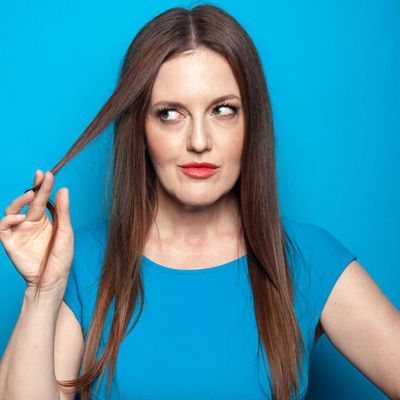
Jennifer Simard, one of Broadway's funniest ladies, stops by the podcast to talk about Company, comedy, and Disaster! Director of Marketing Nella Vera hosts... Read More
From the show: The 54 Below Podcast
Guests
Featured Shows
About
Jennifer Simard, one of Broadway's funniest ladies, stops by the podcast to talk about Company, comedy, and Disaster! Director of Marketing Nella Vera hosts.
Jennifer Simard is a two-time Tony Award®, four-time Drama Desk Award, two-time Drama League Award, and Lucille Lortel Award nominee, who most recently played the role of Sarah in the Tony Award® winning Broadway revival of Company. She is also a co-host of the Broadway Podcast Network’s “The Fabulous Invalid.” Broadway credits include: Mean Girls (Mrs. Heron/Ms. Norbury/Mrs. George), Disaster! (Sister Mary Downey, Tony® nomination); Hello, Dolly! (Ernestina); The 25th Annual Putnam County Spelling Bee (opposite Mo Rocca); and the companies of Sister Act and Shrek the Musical.
For more information about Jennifer's upcoming show, visit 54Below.com/JenniferSimard.
The 54 Below Podcast is hosted by Nella Vera and Kevin Ferguson, and produced by Michael Allan Galvez, with support from the 54 Below marketing staff.
Original artwork design by Philip Romano.
Follow Nella on Twitter and Instagram at @spinstripes.
Transcript
This transcript was automatically generated and might contain errors.
[0:00] Nella Vera: Good evening, everyone. Welcome to the fabulous 54 Below. Before we get started this evening, just a polite reminder, please take this moment to silence your cell phones and also there's no flash photography, please. Welcome to the 54 Below podcast. I'm Nella Vera, the club's director of marketing. Our guest today is a two-time Tony Award nominee who is known as one of Broadway's funniest ladies with credits that include Mean Girls, Disaster, Hello Dolly, and Sister Act. Most recently, she played Sarah in the Broadway revival of Company. On January 20th, she returns to 54 Below with her solo show, Can I Get Your Number? Jennifer Simard, welcome to our podcast.
[0:46] Jennifer Simard: Thank you for having me, Nella. It's a privilege to be here. And hello, Patrick, who's on our audio today. Thank you for taking such good care of me.
[0:54] Nella Vera: We are so excited to have you at 54 following the absolute spectacular success of Company on Broadway. When your name was announced in our office, people were literally cheering and lost their minds. So you have so many fans in our office. Can you tell us what that experience, what Company was like? I mean, it was groundbreaking, critically acclaimed production of a Sondheim show with Katrina Lenk leading the amazing company. And who is not obsessed with Katrina Lenk? So can you tell us a little bit about that process and how you became involved with it and what it was like?
[1:28] Jennifer Simard: How much time have you got? Because I don't know if you heard something happened right in the middle of production. I was happily ensconced in Mean Girls on Broadway, and if I had had my druthers, I would have stayed there forever. It was one of the best jobs I've ever had. And I guess it was summer of 2019. I got an audition that August for Company. Now, I was familiar with Marianne Elliott's work, having seen Warhorse, and I'd never done a Sondheim show on Broadway, or in New York City, that is. And I thought, well, I'd be a fool if I didn't at least go in and meet this wonderful creative team. Not thinking at all, I stood a shot. So I took a page out of Bryan Cranston's handbook. There's a YouTube video where he gives his number one piece of advice to actors, which is to go in and don't try to get the job.
Go in and do what you do, which is act. So I interpreted that as, you know, make the choice that you see as the role. And they'll either want it or they don't. And much to my surprise, I made a choice and they wanted it. So I guess I found out that fall that it was gonna be me. So we started that January, and it was heady stuff, and we were coming in hot and about to land that plane on the runway when, uh, COVID happened, right? The coronavirus. So we were on pause like everyone for about 18 months or so thereabouts. So coming back was a much different experience than where we'd left it in many regards, and I think we're all well versed in what those are, so I won't spend the time to talk about that now. However, the psychological and emotional impact was there, and I think it deepened everyone's performances, to be frank, and that was a positive outcome.
[3:20] I will say that Katrina Lenk was an exemplary leading lady, and I think it's important for listeners to know that because it's not just her talent, it's how you carry yourself as a company leader. And I truly can't say enough good things about her, and people need to know that it's really hard to be the rudder on a ship. And when you're the lead, it is a de facto responsibility that you have, and some people do it better than others. And she was what I would aspire to be if I were in her position. It was wonderful to work with my dear friend Christopher Sieber. We've been friends for almost 30 years. So when I found out that he was my spouse, I thought this is wonderful news. And I think since that show, he's, while we were always friends, I think we've graduated to lifers. He's a lifer now. Because we went through so much together. And it bonds you in a way that is a bit indescribable, but I have no doubt people with empathy absolutely understand what I'm talking about.
[4:23] And the last thing I want to say, because I always like to keep it real, and no one brings a party down better than Jennifer Simard. When the show closed, I guess it's going on four months now. It's about four months. I am very happy again. I think I achieved my happiness again around November 15th. But to be perfectly honest, I think I had a bit of a delayed response to the pandemic that many of my colleagues had to cope with. I always knew that Company was gonna come back. So I didn't have, I had a different kind of processing. I mean, I always knew. We all, we never, none of us knew how it was gonna go out. None of us knew. I guess there's comfort in the fact that it's happening to all of us or none of us.
So I didn't have to deal with the piece that a lot of my colleagues had to deal with, which is I don't have anything on the horizon, even if we do come back, right? Yeah. So I really do think I had a bit of PTSD, to be honest with you. And post-closing, I've closed shows before, but this time was different. It wasn't normal sadness about a show closing, it was very strange, and that's what I attribute it to. And I'm happy to say, through a help of a lot of good friends and other people, I'm so filled with joy again and hope. And I'm just loving my life and loving what's coming forward. But that's the end tale to that long saga was that I had a lot of pent-up feelings that while you're doing the work, you just don't have time to deal with it. I'm like, just keep your head down and do the work.
[5:47] Nella Vera: Yeah.
[5:48] Jennifer Simard: But now that it's over, I think I was able to grieve what we'd all been through for the first time. That's probably the most succinct way to say it.
[5:54] Nella Vera: Yeah, I think that's true because I think especially those of us who knew we had work to do, as soon as we were able to, we just jumped right in.
[6:03] Jennifer Simard: Yeah.
[6:04] Nella Vera: And we didn't have a pause, and it was crazy insanity for months and months trying to restart the engine of what, like for us at 54 Below, trying to restart that engine. And we had been planning for it throughout the pandemic. We'd been still meeting, even though we weren't in the office, and we were saying, Okay, when we're ready to start, here's what's gonna happen. And so we had also that crazy run-up, and then now there's a lull, and now we're not a lull, but just, you know, we've paused to think about what this has meant. So I do think that that's happening to a lot of us. I will say seeing Company, one of the first shows I saw back.
[6:40] Jennifer Simard: Did you feel that from the audience? Because I think at one point I was crying just from the lyrics when the doorbell rings and in comes Company when we'd had no company for two years, and yeah, just so many people were having a reaction to that scene and to the lyrics. And I don't know if you felt that from the audience.
[6:58] Nella Vera: Yes.
[6:59] Jennifer Simard: People used to ask me what were you looking forward to the most? And I always used to say it was that moment you mentioned when we all come straight downstage in the opening number, Here Comes Company. And the orchestra is revealed, and it's a very dramatic moment. And you could feel that from the audience, the collective trauma we've all been through, we had all been through. And I think to hearken back to what we were just talking about in conjunction with this question, human beings, in my opinion, are not meant to be on red alert that long. And when Broadway came back, we were still on red alert because of Omicron, you know, went to Delta to Omicron. So it was sort of never-ending, and it's still ongoing. I don't know how those poor people in Ukraine are doing it. Can you imagine?
[7:46] Nella Vera: No, I literally just had the same thought while you said that.
[7:50] Jennifer Simard: Yeah, I was thinking about you.
[7:51] Nella Vera: You did.
[7:52] Jennifer Simard: Of course, because they have a global pandemic and, oh, I don't know, war. I just can't even imagine. I do want to say that my favorite lyric in regard to what you talked about, besides what we just discussed, was a lyric that my partner Christopher Sieber sang. Everything's different, nothing's changed, only maybe slightly rearranged. And that is indeed what it felt like when we came back. Ah, Sondheim. I just, my heart, every lyric's incredible. You also went on a few times during the run of Company for Joanne. How was that? How did that come about?
[8:28] Jennifer Simard: Well, of course, my role was Sarah, but anyone who's in a Broadway show knows that every principal needs two covers. And the fabulous Nikki Renee Daniels, as well as playing Jenny, was one of the Bobby covers, and of course, I was one of the Joanne covers, and we were in the unique position of being in the show eight times a week and then having this thing looming there that we were never sure if we would do it or not. And because of COVID, of course, not only were we each out of the show with COVID and our wonderful covers went on for us, yes, she went on as Bobby and I did go on as Joanne for well over a week. And it was wonderful in two ways. Number one, well, more than two ways, but these are the two that come to mind.
What you just said to me was so wonderful to hear about 54 Below cheering when they found out I was in Company. And I'm always shocked to hear something like that, followed by incredible gratitude. I've been doing this, oh, I should tell you this, the day that we're doing this interview, everyone, this today, December 7th, is the 2022 is the 30 year anniversary of my moving to New York City.
[9:43] Nella Vera: Oh wow, congrats.
[9:45] Jennifer Simard: But I moved here 30 years ago and when you tell someone something like you just said, it makes me feel the same way I felt when I went on for Joanne because the theater community just came out of the forest and supported me like a bunch of wonderful comforting trees and they put their long arm branches around me and I felt so taken care of and so loved and I'll never forget it. So theater Twitter, they were just, I wasn't expecting any of it. So that was wonderful because I felt very supported. And it was also wonderful because my original foray into this business was playing many characters. I was in Forbidden Broadway, that's the show that moved me to New York City. And while I was certainly not doing a Patti LuPone impression in the least in Company, I'm very comfortable playing different characters.
I was in the original company of I Love You, You're Perfect, Now Change. So it was a long time before I played just one role. And I like tapping those different colors because Joanne is the polar opposite of Sarah. One is Veronica and one is Betty, you know, so I really enjoyed it. Yeah, I really enjoyed it just from an acting point of view. And it was fun.
[11:06] Nella Vera: Yeah, I did. I remember seeing just Twitter being overwhelmed with some art is going on for Joanne and I was out of town that week and I was like, oh my God, why am I out of town this week? Oh, but everybody I knew like ran to the theater, you know, it was just, it was wonderful to see, but that is the theater community, you know, when we, somebody we admire and love and when we see things like that or other covers or in other shows are going on, people do want to go see and support, especially with a show that's as beloved as Company was where we were seeing it multiple times anyway.
[11:41] Jennifer Simard: Yeah, exactly. So I understand that during your time with Company that Stephen Sondheim was able to attend some rehearsals and the first preview. How was that for the company for you? And what was it like performing knowing he was in the audience?
[11:58] Jennifer Simard: Well, I loved it. He used to say if you have fun, the audience will have fun. And it's something I try to remember to this day and hope to take with me moving forward. I thought it was really good advice. He did come to our first preview on November 15th, and I'm one of those people that really believes opening night is first preview. It's the first night you have a paying audience. So in my mind, even if the show changes, one best be ready. And I felt so excited. He was there. The audience went bananas for him. And then I'm truly sorry if this sounds self-serving, but I have to tell you the story because it made me feel so good. And Stephen's not around anymore, and I think people like to hear any and all stories about him.
But our lead producer, Chris Harper, was sitting next to him or in the same general vicinity. And of course, my big scene is in act one. And during intermission, allegedly Stephen was flipping through his program and he was like, Who is she? Who is she? How do I know her? How do I know her? And he was reading that he was like, Oh, that's how, oh right. Oh, I, and they, and he said, She's fabulous. And I was like, it's like he forgot I was in it maybe, uh, before the pandemic. It was so cute. And then after the show, we were standing in the back of the house, and again, the Marianne Elliott called me over, said, Jennifer, come here. I want Stephen to tell you what his favorite moment in the show is.
And I said, Oh, okay. And he said, When you throw that present at the end. And I was just, or favorite new moment, I guess, and he just loved it. And I, um, I love he loved to laugh, and I felt so grateful to have made him laugh. I didn't have the, Sarah doesn't have a song in Company. So I'm really charged with that task. And I figured even if no one else likes me, if Stephen likes me, I'm okay.
[13:50] Nella Vera: How fantastic. Well, of course he loved it. We all loved it.
[13:53] Jennifer Simard: Yeah, and seeing him in a theater is such an incredible experience. I sat behind him at Sweeney Todd downtown, that little space with the pies when Norm Lewis was on, and it was just such an incredible, you know, to think that he still goes to see his shows after all of these years when he was with us. It's such a great gift to the community to have had him in the audience. And it, you know, there will never be one like him, and just amazing. I want to talk about Disaster! because I'm a little obsessed with this show. When it was running, when it started previews, I had been going through a bad time in my life. And so I wasn't really aware of the shows on Broadway. And something came across my email and I was like, Disaster!, what is that? And hadn't heard much about it because I'd really had my head in the sand. And then I saw, oh, Adam Pascal's in it, and you know, who doesn't have a crush on Adam Pascal?
[14:48] Jennifer Simard: So I was like, let me buy a ticket and see what it is. And I laughed, I don't think I've ever laughed harder in a theater. Just brilliant, brilliant, you know. Thought why was I out of it for so long that I hadn't heard much about it? And so, but in a way it was great because it was such a surprise. I didn't know anything about it. Came in, who makes a show about a floating casino? This is crazy. So when you got this script, did you think that it was gonna work? Like reading the comedy in it and the timing and everything. Like what did you think when you first read this script? Okay, so two things. Number one, it was written by my good friends Jack Platnik and Seth Rudetsky, who with whom I was doing sketch comedy and other events with from the time I moved to the city at 22 years old.
So I knew it was gonna work inherently because they're two of the funniest people I've ever known. Second, I had seen I guess workshops of the show is the best way to describe it, or a version of it at the Triad Theater on 72nd Street when I wasn't a part of it. And then when I did get to be a part of it, I guess it was summer of 2013, fall of 2013. I read it and the blueprint was there. And the great thing about Jack and Seth is they're so open to one's input to contribute your own artistry. So we developed a lot of things together. One of the stories that Seth tells all the time is six weeks before the Broadway production was to start rehearsal, we lost the rights to the song that I used to sing as the nun was Stevie Wonder's sign seal delivered.
And it had been so successful, we were really scared. And so we worked up a version of Never Can Say Goodbye, which I think I was gonna say arguably, but I would actually say inarguably was actually better in the long run, and it made more sense with the show. But it's also a lesson in not being afraid to go back to the drawing board and to try to work through your fear because sometimes in loss is great opportunity. I remember telling him I was it was over Thanksgiving when I found out, and I said, you know what, Seth, we're not just gonna make it work, we're gonna make it better. And even if we hadn't made it better, you have to try and go in with that mindset. I'm really grateful for the opportunity, and for them letting me I've fill in the gaps where I thought I could, and by gaps, I mean the negative space.
You asked me about the script. I really believe in comedy, it's so important to know how you come in and out of a scene. What is going on in the negative space in the commas between the words, and they really were on board for all of that. So I appreciated them.
[17:45] Nella Vera: You received a Tony nomination for your role as Sister Mary Downey. Do you remember where you were when you found out? And were you surprised? Or do you were you kind of like expecting just because the reviews had been so great for your performance?
[18:00] Jennifer Simard: Hopeful, not expecting. I would be lying and disingenuous if I said I wasn't hoping for that. I was in Cold Spring, New York, and I said to my husband, let's go somewhere that's public, so that if it happens, it's not a home or an apartment. It's not someplace where we may not be years from now. But if it's in a public spot, we can always revisit it. And I said, here are my caveats. I want to be in a place that I love so that if it's the best news, we can always come back there and celebrate. And if it's not the best news, I can come back there because it fills my heart. So the place we chose was the bandstand Gazebo in the village of Cold Spring in upstate New York. It's right on the Hudson River.
And it looks out over West Point to the you know, to this just to the left, if you're facing the water, I guess southwest, and then up to the right is Storm King Mountain. And my oldest brother was a West Point grad. So I'd been going to that region with my family since I was 12 years old. So I thought, hey, there were so many great performances that year. Any one of them could have been nominated. And as a matter of fact, so many who deserved to be just there weren't enough slots. It's not like I was better than these people, it's that it guess it just happened to be my time, and I'm grateful for it. But I thought if it doesn't happen, I'll always have joy right here rather than disappointment.
So and as it turns out it went my way and of course I burst into tears. My brother, my younger of the two brothers texted me, yes, with big exclamation points and it was life-changing. It's there's no time like the first time and I I'll never forget it for the rest of my life. Yeah I mean I think I was I was so happily surprised only because we tend to reward dramatic actors more. And so when a somebody who you know is nominated for a comedic role that's so wonderful and different because we you know that's not that's still I think comedy doesn't get it to do as much and I say that because I my significant other is a comedy writer and so I know how difficult it is and the timing and you know everything about it is sometimes can be technical and we just for whatever reason we tend to lavish praise on the straight plays and the dramatic roles so it was you know a win for the comedians and the and the non dramatic yeah.
[20:36] Jennifer Simard: Because here's a secret I guarantee you every funny actor that you can think of would be an exceptional dramatic actor is an exceptional dramatic actor. I can do drama I did it you know uh I did Shakespeare for goodness sake but in this career you kind of go where your bread and butter is and where it takes you more than when you take it sometimes and it can't be the same in reverse I would say it can't be said in reverse. Not every dramatic actor can do comedy. So have more respect, people.
[21:06] Nella Vera: Yeah, exactly. I mean, when I think about people like Ricky Gervais, or who can do those and has done those or Robin Williams, the great comedians who can also do drama, yeah.
[21:17] Jennifer Simard: So it was great, it was wonderful. How did you start performing? And when did you discover that you could do comedy along with drama?
[21:25] Jennifer Simard: I was always well rounded as a kid, but I was fortunate enough to grow up near a beautiful vaudevillean house called the Palace Theater in Manchester, New Hampshire. It was built in 1915, and so I had access about 20 minutes from my home, and that's so important for a child. I think Janine Tessori said it about fun home. You know, you have to see it to be it. So my parents used to bring me and my brothers to the theater during the summer. There'd be family specials and discounts, all that stuff. We went to go see theater. So I think I started doing it at school. There was a talent show, I think, when I was seven years old. My oldest brother got sick and couldn't do it, so I stepped in for him.
And then I think I worked with my first company of grown-ups when I was nine in that theater I told you about. But meanwhile, I was doing softball, I was a good student, I wasn't sure what I wanted to do. I think it was around age 16 that I really decided. And again, I was doing local theater, and that bug that had been bit by just wouldn't go away. So I I think that's when I knew, and it was around age 16 as well that I realized how funny I I I was capable of being. I had many idols, and Madeline Kahn was one of them, the late great, so funny, and my mother was a very funny woman. And hearkening back to what we just talked about, I believe under every happy clown, you'll see a sad clown if you pull back the layers enough. And so I had had some experiences that were painful, and I think that really brought about the funny, to be honest.
[23:04] Nella Vera: Yeah. It's also a way to cope sometimes, right?
[23:08] Jennifer Simard: Yeah, exactly. Maybe make a joke about that insecurity or that thing that you don't like. Or channeling, channeling whatever experience that might be for you into something positive. And for me, it was humor. You've played such a wide variety of roles, practically defining this notion of character actress. To what do you attribute this capacity for versatility?
[23:33] Jennifer Simard: Interesting question. Many avenues I could go down. What I want to say is, what is your calling? And my calling was always the character actresses. I just knew it. During I Love You're Perfect Now Change, for example, I could play the ingenue, but I was also playing the character parts, right? So, and that in by definition is a character actress. You do one, you do the other. And I was really drawn to those women, let's say in the movies, the Thelma Ritters, you know, when I saw Rear Window, I didn't want to be Grace Kelly, I wanted to be Thelma Ritter. When I saw Barbara Berry in an HBO production of Barefoot in the Park, and I have to say, side note, she and I became very friendly during my run as company.
She was the original Sarah, of course, and company. When I saw that, she was with the fabulous Bess Armstrong. I didn't want to be Bess Armstrong, I wanted to be Barbara Berry. And I was 11 years old. And I looked at this woman who was very much not 11 years old. I said, I want to be her. So I think it's like anything in life. What speaks to you? What calls you?
[24:39] Nella Vera: Oh, that's so brilliant. You're known for making these bold comic choices. What would you say to theater students who are hoping to work in comedy?
[24:48] Jennifer Simard: First of all, no one knows you better than you. So definitely keep an ear open and an eye open to experienced people and listen to them. But at the end of the day, you have to listen to your gut and your instincts. I would say to look at what I was talking about before. What do I mean by the negative space? If you're looking at a a Monet painting, let's say, of water lilies and a bridge, don't just look at the bridge. Don't just look at the lilies. Look at the other things that might be there that you never thought of. You don't want to upstage the scene, meaning you don't want to draw focus from the words and other people, of course, but you have to not be afraid to experiment to look at things on an angle instead of straight on.
Not only the negative space, but the the space that's more askew is where you find the magic. You have to not be afraid to fail. You have to throw spaghetti on the wall and see what sticks, and most of it won't. When I was doing Hello Dolly in my entrance for Ernestina, we went through so many different ideas, and many of them didn't work. And you have to be willing to fail, is what I would tell them. Be willing to fail.
[26:00] Nella Vera: Did you ever consider going, you know, the second city SNL route rather than the fact that I'm in New York is not wasn't the plan.
[26:09] Jennifer Simard: I was actually going to go to Second City. I was planning on moving there. But as it turns out, I ended up moving to New York through many different reasons. But a friend of mine got me an audition for Forbidden Broadway, and I came down and again didn't think it was gonna happen. And it did, Gerard Alessandrini called me in New when I was living in New England and said, 'Do you want to move to New York? I said, Yes sir, I do. So life, what did John Lennon say? Life is what happens when you're busy making other plans. So yeah. And I again I would have loved to have done Saturday Night Live, but that's just not I never got an audition. It's just it's just not where my path took me. So it was very funny when I did Mean Girls and there's Lauren Michaels as my lead producer, you know.
I should have gone up to him. I should have said Boy, did you miss your chance It's so funny I know so many brilliant theatrical comedic actors who are like yeah I never heard bad after my SL audition and I'm like and got a step further than I did. Sometimes I look at the cast and I'm like well, you know, you're just as good as those people but anyway I'm happy that everyone's working and being brilliant on Broadway.
[27:19] Nella Vera: Tell us about your upcoming show at 54 Below and where the inspiration for it came from.
[27:24] Jennifer Simard: I'm really excited about it. It could have many titles by the way but we settled on it could have been Second Banana it could have been Leading Ladies. We settled on Can I get your number because I'm basically doing an homage to all of the amazing leading ladies I've worked with or many of them because to be honest it would be a three hour show if I did all of the leading ladies I've worked with whom I love. I know we kick you out after 75 minutes. I got it's perfect. It's good timing. But I uh I have been lucky enough to make a career essentially being the second banana in many shows and I have had the incredible fortune of working with people I grew up admiring my whole life. And in all of these shows, or many, not all of them, but in many of these shows, I had a lot of fun, funny stuff to do.
And then I would listen to them do the 11 o'clock number and be cheering right along with everyone else. So I'm gonna sing a lot of those, a lot of those great, great songs that we all know and love with true stories along the way. That's the great thing about this show is that pattern, whatever pattern there is, really isn't invented. It's all true stories, and they're if I do say so myself, pretty hilarious, with some touching stuff in between, because like I said, at the end of the day, I'm a sad clown after all.
[28:43] Nella Vera: Well, we could not be more excited for your show. Thank you so much for joining us today. It's been a real pleasure and an honor, of course.
[28:53] Jennifer Simard: The pleasure and honor is all mine. Thank you for having me.
[28:57] Nella Vera: So, for everybody listening, we have some tickets left for Jennifer's performances on January 20th and 21st. Not a lot. So if you're interested, better snap up those last few tickets that are remaining. 54below.com. And again, it's January 20th and 21st at 54 Below.
[29:18] Nella Vera: You've been listening to the 54 Below Podcast, part of the Broadway Podcast Network. Subscribe and rate us on Apple Podcasts or your favorite podcast app.
© Broadway Podcast Network, All Rights Reserved