

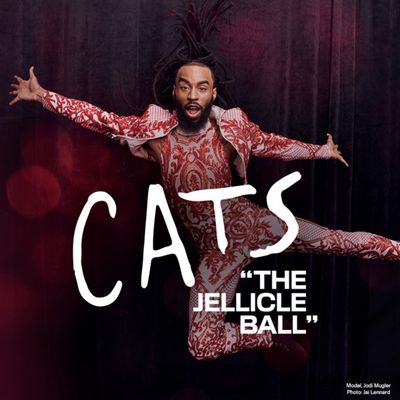
Throughout the summer, we are working with the Perelman Performing Arts Center reimagined production of CATS called CATS: "The Jellicle Ball" to bring you a series of episodes with the cast and creative team... Read More
From the show: The Wrong Cat Died
Guests


Miniseries Inclusions

Featured Shows
About
Throughout the summer, we are working with the Perelman Performing Arts Center reimagined production of CATS called CATS: "The Jellicle Ball" to bring you a series of episodes with the cast and creative team.
We were live at BroadwayCon 2024 with Omari Wiles and Arturo Lyons, the choreography team behind CATS: "The Jellicle Ball," to chat about reimagining the hit classic and their inspiration drawn from Ballroom culture in New York City. Plus, we invited the audience to learn choreography from the show! This live podcasting event was presented by the Broadway Podcast Network.
- Check out Omari on Instagram: @omari_wiles
- Check out Arturo on Instagram: @arturo_thaengineer
- Check out CATS: "The Jellicle Ball": pacnyc.org/whats-on/cats-the-jellicle-ball
Produced by:
Alan Seales & Broadway Podcast Network
Social Media: @TheWrongCatDied
Transcript
This transcript was automatically generated and might contain errors.
[0:00] Mike Abrams: There's a cat over here. There's a cat over there. And the wrong one died. And the wrong one died.
[0:14] Mike Abrams: Yes, yes, we are good. Okay. All right. Welcome, everybody. Welcome to LIVE at BroadwayCon.
[0:21] Mike Abrams: This is the, yeah, this is The Wrong Cat Died, the podcast for exotic castastrophe.
[0:26] Mike Abrams: I am excited because for the past two months, I have been doing events with the Perlman Performing Arts Center production, CATS The Jellicle Ball. I've done a bunch of episodes with the cast and the creative team, and I cannot be more thrilled to have the two choreographers here today, Omari Wiles and Arturo Lyons, to talk about the show, the choreography, the ballroom scene, and everything in between.
[0:50] Mike Abrams: So just to kind of set the stage, this is being recorded for the podcast, so we're going to have the audio here. I'm going to ask some questions. I would love for you all to ask some questions, so I'll open up at the end there as well. And then for anyone who wants to learn, the second half of this is going to be a workshop where if you have seen on TikTok and Instagram and all kinds of social media, there's been a really, really cool stretch of choreography that they created that has gone viral, and they are going to teach you that. So I'm excited. I can't dance, so I hope some of you all can, and we'll learn that. So welcome, and thanks everyone for being here. Thank you guys for being here.
[1:27] Omari Wiles: Thank you for having us.
[1:28] Mike Abrams: Okay, I want to start with, I always love to ask people about their CATS history, but my first question is actually for both of you is, when you heard about this idea, when you heard the concept was brought to you, and it was CATS, what was your initial reaction, and how did you approach this?
[1:47] Omari Wiles: Well, when Bill came to me with Josie, who is the gender consultant, dramaturgic consultant as well too, when they brought this idea to me, I at first, I was shocked because I did not think that, why would we want to change it up? I am a CATS fan as well too, so I was like, why would we want to change it up? In what way could we even reimagine it? And then as a choreographer, as a dancer, I'm like, how am I going to make something that is so beautifully danced better, right? Or to even match to that, so it was really a shock, but then again, in the show, in the musical itself, it being a ball, that is what made sense. So it had to be called CATS, the Jellicle Ball, in order for us to really be able to focus the energy of that world into this one room, which would be the ball.
[2:54] Arturo Lyons: Awesome. What about you? What was your first reaction when you heard about this?
[2:59] Arturo Lyons: Shocked, because Amari called me and said, hey, we need another choreographer. You want to do it? And I'm like, um, hell yes. So, I mean, of course, we've all seen CATS before, but to put our own spin on it, it just got my brain going crazy. I'm like, how can we do this? This is going to be fun. So, yeah.
[3:23] Mike Abrams: How much did you know about CATS? You said your fans? I mean, was it a show you'd seen a bunch, or was it you know CATS the way everybody knows CATS because it's been around for 40 plus years?
[3:33] Omari Wiles: Well, I haven't seen it live. I had a VHS.
[3:37] Arturo Lyons: Okay. 1998 movie.
[3:40] Omari Wiles: Okay, so you knew that. Did you dance it growing up, or did you?
[3:43] Arturo Lyons: No, just for me, it was more of the costumes and the theatrics and the lights. I'm a big fan of those things.
[3:53] Omari Wiles: Okay. Loves the production. Loves to put on a production. For me, I mean, growing up in New York City, a lot of the public schools, you know, they would take us out on field trips. I believe every year I had volunteered to go on the field trip to go see CATS. And for me, it was the dancing. That is what drew me to the show. I'm also a Leo, so anything feline, I was like, perfect.
[4:27] Arturo Lyons: Okay, okay.
[4:29] Omari Wiles: So, yeah, but that's what drew me to it. So, yeah, my connection behind it.
[4:35] Mike Abrams: So, I know you did workshops. This has been two plus years to bring it to the stage.
[4:40] Omari Wiles: Four.
[4:41] Mike Abrams: Four. Okay, four plus years. I've been talking to y'all for two plus years, so four plus years of it. I love it. Where do you start with something like this? You obviously have source material that you're working on, and you have the idea. What's the beginning of this idea to bring to life?
[4:59] Omari Wiles: Well, the first part was the characters. Each cat, what did that mean? And even the word cat. For us, we had to make it the metaphor that cat was the category. That is the persona, that is the energy, that someone is coming from the everyday life that they live to then coming into this ball and walking that cat, being that category, embodying that category. So, for us, it was taking the word cats and really making it make sense in this world and how it relates to each category in ballroom.
[5:33] Mike Abrams: Okay.
[5:34] Omari Wiles: And then finding the right category for each character as well, too. That was the beginning of the storytelling and answering those questions.
[5:42] Arturo Lyons: Okay. Anything to add?
[5:45] Omari Wiles: No. Perfect. No notes. Okay. So, I want to hear a little bit about, obviously, the cats that you watch the VHS and you went to see in field trips had Gillian Lynn or even the more recent one had Andy Blankbeer. These are choreographers that are extremely well-known. How do you balance putting your spin on it, but also taking something that people know and from choreographers that are legends?
[6:10] Arturo Lyons: I think just being truthful and honest to the score, because a lot of the score isn't changed. It's just some undertones under it. So, we didn't change that. So, it felt authentic to the show and put our own spin on it choreography wise.
[6:28] Omari Wiles: Yeah. Okay.
[6:30] Arturo Lyons: Yeah. I mean, we wanted to give an O to the original form as well, too, in respect to it. But we also wanted to show how much technique is invoking and how much technique is in the way that we express ourselves in this community, in the queer community.
[6:50] Omari Wiles: And so, that was something that felt, again, like Arturo said, authentic. And again, the score is not heavily changed. There are some beats that are added, some accents that are added. But we really wanted to make sure that we did not also challenge ourselves as choreographers, just like those choreographers challenge themselves to have to create a show from the score. And the score is not easy. The score is not easy. But that was the challenge. And I think if we didn't have that challenge, then it wouldn't be as great as it is.
[7:31] Mike Abrams: Yeah. So, one thing that has been fun to hear from the cast, and has been what I've found fascinating to hear the differences, is you have some ballroom dancers that are with you, and you have some theater, Broadway dancers with you. Tell me about teaching the voguing and that technique you talked about with the non-ballroom dancers. Because I've heard a little bit, they talked about how they were surprised at how much goes into it.
[7:57] Omari Wiles: Yeah. Every time we had a rehearsal, they had an extra rehearsal. We had a workshop before rehearsal. They had to train in voguing before they started the actual choreography, just so they understand the technique and everything that goes into it.
[8:19] Arturo Lyons: Yeah. It was like the Jellicle School.
[8:21] Omari Wiles: Jellicle School. Voguing School.
[8:23] Arturo Lyons: Jellicle School of Girls.
[8:24] Omari Wiles: Jellicle School of Girls.
[8:25] Arturo Lyons: Yes. That's what it was giving. You remember that. It was not also... I mean, just like any actor, they have to... It's method acting, right? You have to be a part of it. You can't just say, oh, here's my character. Here's the role. Be it. Myself, Arturo, and our assistant, Shireen Rahimi, together, we made sure that they had the right information and training to be able to do it, especially with the time that we were given as well, too.
[8:56] Omari Wiles: It was like, all right, we have this much information, but we have to find a way to teach it to you that also feels authentic and real for you. So then when you are acting, when you are dancing, it doesn't feel forced. And not everyone in the show needed to be a perfect voguer or a perfect dancer, but you needed to be able to understand the groove, the theatrics, the drama of it. You needed to be able to embody what that was. So it was beautiful to see the marriage of both worlds.
[9:32] Mike Abrams: Yeah. So that's, I think, a great segue into the next question, which is we're at BroadwayCon, so this is a group of people more on the Broadway, I would assume, side of things than the ballroom side of things. So what do you hope people learn about the ballroom community, or do they need to know about the ballroom community when they go see this? If they have the opportunity to still go see it, it's still running here, or you've seen it, what's the hope with the ballroom? What's this audience need to know from the ballroom culture to enhance and amplify the experience?
[10:04] Omari Wiles: Well, I can tell you this. The directors, Jalen and Bill, and the creative team have done such a great job that you don't even have to have much knowledge to come into the ball, into the Angelica Ball to know what's going on. We have really painted out the picture very clear, whether it is through the music, through the costume, through the storyline, through the projections that you see on the wall as well, too. But I always do encourage people when they come to the ballroom to come to the ballroom.
[10:33] Omari Wiles: To do your research a little bit, you know what I'm saying, and look into ballroom culture, you know, documentaries like *Paris is Burning* or *How Do I Look* or the *Kiki* documentary, or just going on YouTube and watching some of the balls that you see. I think, again, you don't need a dictionary in front of you, but you need to just be open to the feeling. You need to be open to how these actors really express themselves and how they're capturing ballroom. Because again, like at a ball, we would have just burst out; it's a song and dance, right? But in our world, I feel like those moments of bursting out to song and dance is also this imagination world that exists in all of us. You know how many days and how many times I walk down the block thinking and dancing to my own theme song?
You know what I'm saying? Like if that happens, I'm not gonna sit and sing out to the world, but in my heart, in my mind, I feel like that's what musical theater does; it allows us to do that. Yeah, I think once you are open, as you come in, you will leave feeling free because the show allows so much to come into you, and you'll feel you'll leave feeling angelical. You'll leave feeling like, "Oh wow, now I need to go to a real ball," because if this isn't any indication of what it's like, I need to go.
[12:09] Arturo Lyons: By show of hands, who's seen this production yet? Okay, okay, then I definitely gotta make sure we leave time for questions. So let me ask you some rapid fire, and then we're gonna open up to you all. I want to hear questions from the audience. So, okay, if you could play one cat, who do you want to go on as? Rapid fire.
[12:28] Omari Wiles: Macavity.
[12:46] Arturo Lyons: Oh my god, I don't know.
[12:47] Omari Wiles: Come on!
[12:57] Arturo Lyons: I would say maybe Munkustrap.
[13:09] Omari Wiles: Oh yes, yeah, okay, magical. I'm gonna say, performers aside, character-wise, which cats do you vibe with most and which cats do you not want to hang out with?
[13:15] Arturo Lyons: Macavity, I vibe with the most, okay? Because Macavity in this show is so extra and so funny. I would have to hang out with him as Macavity all the time because I know it's going to be so much fun. And who I wouldn't vibe with is maybe Gus.
[13:31] Omari Wiles: Gus? Okay.
[13:31] Arturo Lyons: Oh, Gus is so quiet. It's so, oh, like Gus, come on!
[13:45] Omari Wiles: Oh my god, okay, for me, oh my god, this is why we work so well together. Okay, someone I would vibe with, the cat that I would vibe with the most, oh my gosh, okay, I would probably say Jennyanydots, yes, because we would sit and sit and sit and have a kiki of a time. So I know, yeah, mother-father vibe it would, yeah, I'm like father dots.
[14:18] Arturo Lyons: Okay, yeah.
[14:25] Omari Wiles: And then, oh my god, a cat that I could not...
[14:33] Arturo Lyons: Okay.
[14:39] Omari Wiles: See, it is kind of hard, right? Okay, maybe a Cassandra.
[14:44] Arturo Lyons: Maybe a Cassandra energy. It's a lot of energy. I think I feel like we'll be bad at each other all the time, like, "Girl, no, I won!" "No, girl, you won!" "No, girl, I won!" Right? It would be like, it would be an all-day competition, I think. And then again, like I said, I'm a Leo; it wouldn't work.
[15:03] Arturo Lyons: So you want to hang out with her mom but not her?
[15:10] Omari Wiles: Yeah, yeah, leave your children at home, don't worry. Jenny, Jenny, Cassandra is doing too much for me. No, but I love, I do love Cassandra's character in the way that their story expresses themselves coming up as a virgin voguer. But yeah, just outside of the kiki, I would have to hang out with the mother.
[15:28] Arturo Lyons: Okay, okay, yeah. Emma's putting in work. If you see, she's everywhere.
[15:34] Omari Wiles: Everywhere.
[15:40] Arturo Lyons: Favorite song? Let's tweak this to choreograph. Like, what was your favorite one to actually build your dance around?
[15:40] Omari Wiles: I would say Victoria's solo.
[15:52] Arturo Lyons: Oh my god, it's so hard, right? I mean, they're all so good. We did such a great job at tomorrow.
[16:02] Omari Wiles: Probably the Jellicle songs.
[16:06] Arturo Lyons: Yeah, and my favorite song to listen to is probably the Jellicle songs.
[16:14] Omari Wiles: Yeah, and my favorite song to listen to is *Name of the Cats*.
[16:20] Arturo Lyons: Okay, that's my favorite. Okay, so if you were going to join one of the houses of the cats, the house of dots, huskies, who are you joining? If you're joining one of the houses.
[16:27] Omari Wiles: I mean, I do say I'm Father Dots.
[16:33] Arturo Lyons: Okay, lots of dots. Well, if you're a dad, then I'm definitely not in that house.
[16:41] Omari Wiles: Yeah, I'm with Macavity.
[16:47] Arturo Lyons: Macavity? Yeah, if you—I know you have your own house in real life. If you were going to recruit a cat for your house, which cat are you recruiting?
[16:55] Omari Wiles: See, oh yeah, okay, he recruited a couple of cats. I have done my recruiting over the time. It's only right. So yes, I have recruited a couple of cats, but I can't reveal them because they haven't debuted yet.
[17:08] Arturo Lyons: Oh, okay. When is that happening?
[17:15] Omari Wiles: I mean, they keep—they have this show going on. Yeah, I've been asking the same thing, like, when are you coming out? But the show just keeps getting extended, so I have to keep extending their debut. Yeah, it's like, oh my god. But no, I do, but I will say this, and you will have to guess, but there are three cats that have been recruited within the house of Orichi, and then there is one cat, the DJ actually, Capital Chaos, he is in the house of Orichi and is one of the music engineers within the house of Orichi. So he's already one of my children, but there are three that I have been able to follow on social media, and we'll see him eventually.
[17:58] Arturo Lyons: Who are you recruiting?
[18:05] Omari Wiles: I don't know, Amari already smashed everybody.
[18:12] Arturo Lyons: Okay, Amari reported everybody.
[18:17] Omari Wiles: No, I didn't. I got—I got—I'm so good, trust me, guys. Amari said, "Hey, when they're being a Richie."
[18:25] Arturo Lyons: Yeah, anybody gonna say this to some of you guys here tonight? Yeah, I'm watching.
[18:31] Omari Wiles: Yeah, yeah, this—that's what the workshop's about.
[18:38] Arturo Lyons: Yes, it's the audition.
[18:42] Omari Wiles: Okay, before we open up audience questions, my thesis for this podcast has been I don't think Grizabella's the right Jellicle choice. So I think your production has made that argument a lot harder. But I want to ask you, if you are making a Jellicle choice, who are you picking and why?
[18:52] Arturo Lyons: Okay, no, no, seriously, because we really didn't make it up, and we made it hard. Like, Grizabella, everyone for years, even myself, when I watched *Cats* the original, I was like, "Why Grizabella?" I was like, "What?" I was like, "Why not Gus? Yes, he's been around for so long." Yes, I was like, "What happened?" But in this version, you see the reasons why Grizabella deserves to be that choice. Who's your choice?
[19:13] Omari Wiles: But who's my choice? He said Gus. He just said Gus.
[19:19] Arturo Lyons: Yeah, he said Gus.
[19:19] Omari Wiles: No, he didn't say Gus.
[19:27] Arturo Lyons: I did say Gus. That wasn't—that you're a liar. I said Gus.
[19:32] Omari Wiles: You said I'm putting Gus on the tracker.
[19:32] Arturo Lyons: Gus is getting the vote on the tracker. All right, so your answer is Gus.
[19:39] Omari Wiles: My answer is Gus, and I'm sticking with it.
[19:46] Arturo Lyons: There you go. So originally when we had our conversation, we always said Munkustrap, but I'm thinking now Munkustrap.
[19:53] Omari Wiles: Well, yeah, Munkustrap does work in your show.
[19:53] Arturo Lyons: Work.
[19:53] Omari Wiles: Munkustrap deserves to go.
[19:53] Arturo Lyons: I love it.
[19:53] Omari Wiles: Yeah, okay, okay, let's open up to some audience questions. Raise your hand if you... Thank you so much for coming. I was just curious, what did you feel like this version's choreography needed to be in terms of its relationship to the source material to have the thesis you were going with? Because it would make sense if you just wanted to use to make an entirely new point because the thesis is, yes, it's about individuality, but it's about a very particular kind of it. But it also would make sense if you wanted to use an existing platform of a franchise people are aware of. So how did you combine them? How did you make this your own while connecting back to the source, quote unquote, sources?
[20:35] Omari Wiles: Well, when I look back at the choreography, original choreography, there's so much iteration going on. There's so—it just was like, okay, well, we got that in catwalks, we got that in ballroom. You know, let your hips do the talking, let your legs do the walking. So it made sense to think about the choreography being queer, the nightlife of what that is. And if a ball happens in the middle of the night into the wee hours of the morning, then that feeling felt...
[21:07] Mike Abrams: Welcome back to The Wrong Cat Died, live at BroadwayCon! I’m here with the incredible choreography team behind CATS: "The Jellicle Ball," Omari Wiles and Arturo Lyons.
[21:37] Omari Wiles: Thank you for having us!
[22:07] Arturo Lyons: Yes, thank you! We’re excited to be here.
[22:36] Mike Abrams: So, let’s dive right in. How did you both get involved with this reimagined production of CATS?
[23:08] Omari Wiles: Well, it all started with a passion for dance and theater. We both have backgrounds in choreography and performance, and when the opportunity arose to work on CATS, we jumped at the chance.
[23:28] Arturo Lyons: Absolutely! We wanted to bring something fresh and new to the classic while respecting its roots.
[23:55] Mike Abrams: That’s fantastic! Can you tell us a bit about how you drew inspiration from Ballroom culture in New York City for this production?
[24:22] Omari Wiles: Definitely! Ballroom culture is all about expression, community, and storytelling through movement. We wanted to infuse that energy into the choreography, making it vibrant and relatable.
[24:49] Arturo Lyons: Yes, and we also wanted to highlight the individuality of each character in CATS, much like how each performer in the ballroom scene has their own unique style.
[25:16] Mike Abrams: That sounds amazing! How do you think the audience will react to this new take on the choreography?
[25:43] Omari Wiles: We hope they’ll be excited and moved by the performances. Our goal is to create a connection between the characters and the audience through dance.
[26:10] Arturo Lyons: Exactly! We want them to feel the joy and the struggle of each character as they dance.
[26:39] Mike Abrams: I can’t wait to see it! Now, for those in the audience, we have a special treat. Are you ready to learn some choreography from the show?
[27:04] Omari Wiles: Yes! We’re going to teach you a few moves that capture the essence of CATS: "The Jellicle Ball."
[27:34] Arturo Lyons: Let’s get everyone up and moving!
[28:04] Mike Abrams: Alright, everyone, let’s get ready to dance!
[28:34] Omari Wiles: Follow our lead, and don’t be shy!
[29:04] Arturo Lyons: Remember, it’s all about having fun and expressing yourself!
[29:34] Omari Wiles: Let’s show everyone what we’ve got!
[30:04] Arturo Lyons: Here we go!
[30:34] Omari Wiles: And remember, just let the music guide you!
[31:04] Arturo Lyons: We can’t wait to see your moves!
© Broadway Podcast Network, All Rights Reserved