

Bienvenidos y gracias por acompañarnos en esta edición especial de Why I’ll Never Make It! En esta segunda parte de mi serie sobre historias hispanas, escucharán a mis invitados anteriores compartir sus propias historias y experiencias en español... Read More
From the show: Why I‘ll Never Make It
Guests
Featured Shows
About
Bienvenidos y gracias por acompañarnos en esta edición especial de Why I’ll Never Make It! En esta segunda parte de mi serie sobre historias hispanas, escucharán a mis invitados anteriores compartir sus propias historias y experiencias en español.
- Roberto Araujo y Final Five
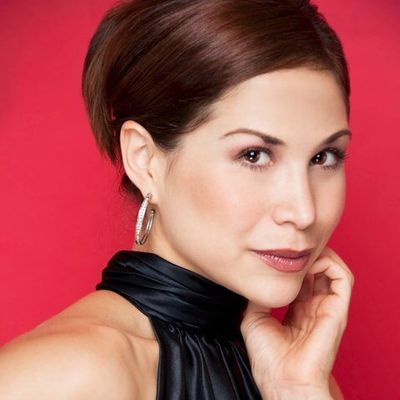
- Bianca Marroquín y Final Five
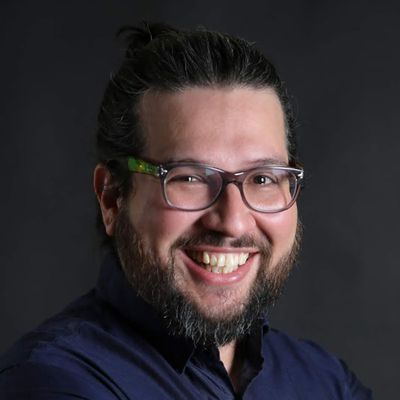
- Luis Salgado
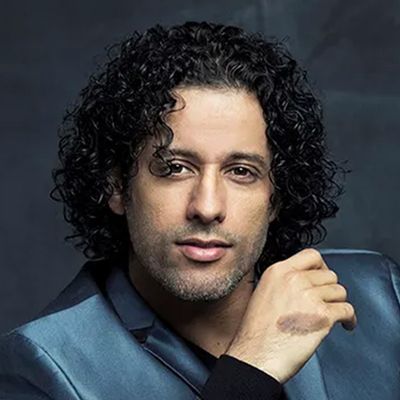
- Jaime Lozano y Final Five
- Alina Alcántara y Final Five
- Tadeo Martinez y Final Five
- Cecy Trevino (part 1 and part 2)
En este episodio no habrán entrevistas, sólo historias hispanas vividas y contadas por los propios protagonistas.
Sitio Web - whyillnevermakeit.com
— Why I’ll Never Make It is an independent production of WINMI Media and Patrick Oliver Jones. To support the ongoing efforts of this podcast please subscribe or donate. Thank you!
Transcript
This transcript was automatically generated and might contain errors.
[0:00] Patrick Oliver Jones: Hola y bienvenidos a una edición muy especial de Why I'll Never Make It. And despite three and a half years of studying Spanish, that's about all I know. So in this second part of my series on Hispanic Stories, you're going to be hearing from previous guests of this podcast in Español: Roberto Araujo, Bianca Marroquín, Jaime Lozano, Luis Salgado, Alina Alcántara, Tadeo Martinez y Cecy Treviño. Okay, vaya, ya basta de mí. No preguntas. Solo hay historias hispanas en sus propias palabras.
[0:58] Unknown Speaker: Soy un actor mexicano. Llevo 20 años en Nueva York and llevo más de 20 años como actor. Empecé mi carrera en la ciudad de México, donde empecé a hacer mucho teatro musical. En México hice varios musicales y después empecé a trabajar con Disney. Cuando terminé mi temporada con Disney, hice un doblaje en español para la película José el Rey de los Sueños. Yo soy la voz cantada en español del personaje de José, and particularly I think I had much support to have much theatre musical in States. When you're in Mexico rode by Latinos, no teaches of the differences that are. And the difference the different that the work not that I was at Nueva York during 20 years that I did that for tradition or considered more in paper specific.
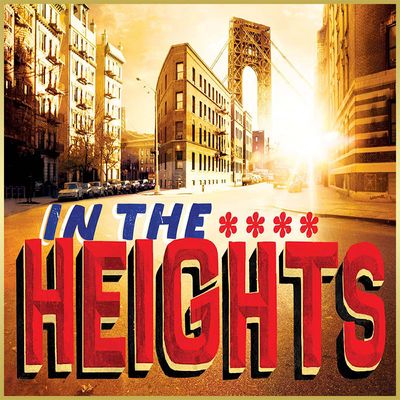
If you say that Latino would say that it's more of Mexico or Puerto Rico, like Cuba. There are different nationalities and different accents that not the same, which categorizes in one and not know how the different accents of Latin America, the Hispanic America. And as much time in States, more of a racism that I have in the industry. In the shows that I didn't have the only Latin. And in the shows that were shows Latino, like In the Heights, or West Side Story, there was not Latina doing papers Latin. Look what we are doing in the day, we can a society, the group that we are. The community theatral in States can be, and it's difficult for the people. Oh no, you don't see this because I am Latin. But this is the moment in the campaign and in representation that we have in the real life and in the scenario.
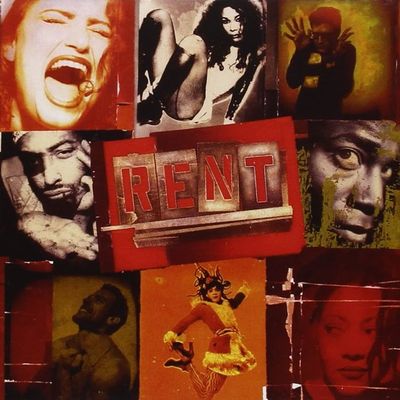
[5:49] Bianca Marroquín: My name is Bianca Marroquín. I was very important to see what I'm saying. What is what I said when I was grand, bailarina professional. This was the first time that I was in the three years I dedicated to bailarina, entrenched, and other disciplines like flamenco, jazz, tap, folkloric. I didn't opportunity. And I in this appending my experience in theatre musical, of what I did for seven or eight functions in the semana, resistance, discipline, compromises. And I appreciate much. My second opera in Mexico was Rent. And in Rent was swinging more of a person in a production, the preference, quasi sort of the role of her in the case, but I think I think I'd like to do Fantasma and the Opera. I appreciate much in Rent, an experience, Fantasma, capital of dance, and swing of the world of baile of the bailerina de Vedas and Men GB.
In this moment we were in the swing. And I have 23 years, 24 years, and a crecement enormous and my car, for 31 tracks of cantantes of opera, cantantes bailarina of ballet classical. My second, Chicago. From my personal principal from Roxy, my story and the audition. But I was at Chicago at the six months, I received the invitation to cruise from Mexico to Broadway with the protagonist of Roxy, and I appreciate English. And the Broadway and Mexican trying to have the people who are this, who have this Broadway. And this has been a great part of the mission that I have in this world is to record the people, inspiring and motiving the people who listen to the winning. Clearly, we should realize your switch.
[11:38] Luis Salgado: Hello, my name is Luis Salgado, I'm from Puerto Rico, with much orgasm. I'm an artist who has the opportunity to work in the tablets of Broadway, as in the world, and the Circo del Sol. I think I am very fortunate to have what I am after the nine years and comparing it with the world in different manas, tanto as a director, choreographer, but maestro. It was a retool to convict and be excited in an industry so in a year not necessarily so receptive to the experience latina.
[12:43] Luis Salgado: I was part of a generation that the community latter in music dental of the tablets of Broadway. Musicals like In the Heights, where they had a number of Latin artists, people like Tony Girode, Nina Lafarga, Mandy Gonzalez, Manuel Miranda, Olga Meredith, and musicals like On Your Feet, where I compare to El Cioè Román, Andrea Burns, and Ana Villafaña. For me, there was a great idea in this coming and in this people like Sergio Trujillo, choreographer and director, who have a community to build. For me, obviously in my career from Puerto Rico to Nueva York, it was not perfect English, having accents to take a person, how this accent natural that you have, etc. I think the day that I auditioned for Lion King, in this audition, I don't know what it was, a music cheat.
They said you have your music, and you said, Music cheat, we need you to sing your A bars, barrage of it, chocolate. These types of things definitely are things that are grass in the world of our artistic life, but also important, because I'm going to buy and compare these errors that you were in the new generations for sure the same. For me, I'm Latin, it's patria. For me to be Latin is the palms, and know that this is part of my essence. This is with me, nothing. When I enter the scenario, these Puerto Ricans are with me, nothing like actor. In each part of the baile that I do, salsa, merengue, hip hop, the funk, the jazz, the theatre lyric. My people are with me, my friends were with me, my friends are with me.
And I think I'm extremely sorry of the life in which I'm a life of invitation to be more than more opportunities of what we were. You consider a historian that in a moment were muttered. And I feel that in the future there exists this button of the mute in any of our history. I hope that the kid, Angela Hicari Salgado, the liberty to explain with preoccupation of that it is, or that it is more or the life that I saw, for the idea that he is, or the cultural. Persecular. Amen.
[16:55] Jaime Lozano: Hello, my name is Jaime Lozano, I'm originally from Monterrey, Mexico. It's north of Mexico, a few hours, three or four years many in Texas, Texas. I practically in Monterrey and my family after I had the opportunity to go to study a maestro in composition of the musical in the world. In this moment my life, my life totally. I applied this maestry since English. I didn't know in English in this moment. This was one of the most grand, because I appreciate English. But in that moment I understood 15 or 20% of what the people were all the days in language with cabinet. It was very difficult for me to see the conversations. In the way of trying to enter it. Struggling is the English. And then I have a moment that I appreciate a lot of English.
And vice versa, when you're talking in English, no one, and it has to be in Spanish, because there's other manner. And so the Spanish has been like a part of what I'm a part of my culture, to be in this place as an immigrant. And it has been one of those retour that I had immigrant, the idioma, an idioma, and not absolutely in English in that. I'm here, I don't know to any of those two ladies. I don't belong, I don't belong to any of both sides. I'm in the middle, and it's very complicated. And there's a reto that I have with my hair. My hair is here in the city of Nueva York, there's now 4 years of life. But at the same time, the Students, the city is Nueva York. He is Mexican by those, but it also has a culture, that we can private of this culture American, this culture anglo that we have.
Respect of the same manner, amateur of the same manner, and say that it is 50% Mexican and 50%. It is 100% ambassador. And those rettings and all these historians are part of what I'm human and artist. In a pace that we are, a sense we acceptable, and other ways not discriminate, we can show patates of life, and we're necessary. The second time we are battery with the idioma, in the pace, how extra, extra family, how extraordinary what I was an commodity, because definitively much commodity in our pay of origin, and other pain a bit more, a lot more for one, and a more for the gent that is at me, in this case, my hair, my hair.
[24:38] Alina Alcántara: Hola, my name is Alina Alcántara. So I'm an actress, I'm located in the heart of Orlando, Florida. And it's a pleasure being introduced by my colleague, my family Patrick, or Patricio. I was in 2017. We were in a production of The Señor, or Man of La Mancha, a production local in Orlando. It was another interesting, and we were organized that I am Dominican, my Republican Dominican. I was in the States, I was in the city of New York, the capital of the world, the Great Manzana. And we moved to Santo Domingo when I had already 10 years of life. Orlando has been my home for 30 years. For example, in the case, I'm in the States, but I talked about Spanish in my house. The Ubana, because I can say that it was my name, the Cuban who speaks English, so I'm Spanish in the world.
And I had this privilege to be completely bilingual, too, idiomas. But among people of my generation, not all have this privilege. It's a great. It's a regard to this identity so unique that is my Latinity, my hispanity, my Dominicana, my Afro-Latina, because I categorize myself as Afro-Latina orgullosamente.
[28:26] Tadeo Martinez: When I pick the scenario, and when I was here to it, my name is Tadeo Martinez, I am from Monterrey, Mexico. Being an actor for me, a reality, and this is the representative, not only to me, but representing my pain and my community to a voice, and part of the lucha that luchard and continue luchar. I think the arte and the culture, as we have during this pandemic, it is incredibly poderoso. It's incredibly necessary. And I feel like the importance and the privilege that I serve as an artist during this time inseguro. And in reality, I'm very motivated and agreeable and emotional for continue appreciation, continue to continue lucharies, and creating in the industry and put the number of my place in the world.
[30:43] Cecy Trevino: Hello, my name is Cecy Trevino, so I'm from Monterrey, Mexico. And let me talk a little bit about my experience and what I'm saying in the musical. Basically, the group of professionals who are in theatre or who have the professional, or questions of other things, have the experience of theatre. And we should have this opportunity with this virtual platform. Now our objective is our concept of what is the musical and a virtual platform and make this opportunity to have theatre. And the idea is that it's something that I'm part of something, and for one question or another, I had the opportunity to do it. But I had the opportunity to have it. But in other occasions when we have teachers physically, I think it's a great opportunity because we design these abilities or appending and continue with your passion, that's what I'm gonna do.
Nunca no hay limites for this. In serious, limit because you are directing to personal professionals when we have absolutely nothing of how musically or in the interpretation and all this. Entonces Broadway Mania, and I'm gonna have the opportunity to be part of this and develop these abilities.
[34:29] Unknown Speaker: Spanish is not my first language, and she was such a big help as I was putting these episodes together. It's artists like these who can inspire us all. Where we present the many voices dentro of our culture latina or Latinex. Creo que es muy importante, especialmente in those times tan turbulent in which we are living socially, politically, culturally. Una voice for expressing, dentro de la nación, dentro del global en the which habitamos. Yo personally because we dig orgosa Latina, orgullosa Dominicana American, compared to part of my history, compared to orgul from what I'm talking about that we have in this society, in this world, who are bringing those voces, are bringing a lot of privilege, who are bringing a reconocimiento, the popularity, for the life that we are living in this world. Bendiciones for our own people of this program, and thank you for starting with us.
© Broadway Podcast Network, All Rights Reserved